Shape comparison Worksheets for Ages 6-9
3 filtered results
-
From - To
Unlock your child’s potential with our engaging Shape Comparison Worksheets designed for ages 6-9! These printable worksheets make learning shapes enjoyable and interactive by helping children identify, compare, and contrast different shapes. Tailored to develop critical thinking and spatial awareness, each worksheet combines fun illustrations with practical exercises. Ideal for both classroom settings and at-home practice, our worksheets are perfect for young learners eager to enhance their mathematical and cognitive skills. Foster creativity and confidence in your child with Kids Academy’s top-quality, expertly crafted shape comparison worksheets. Join us and watch your child thrive!
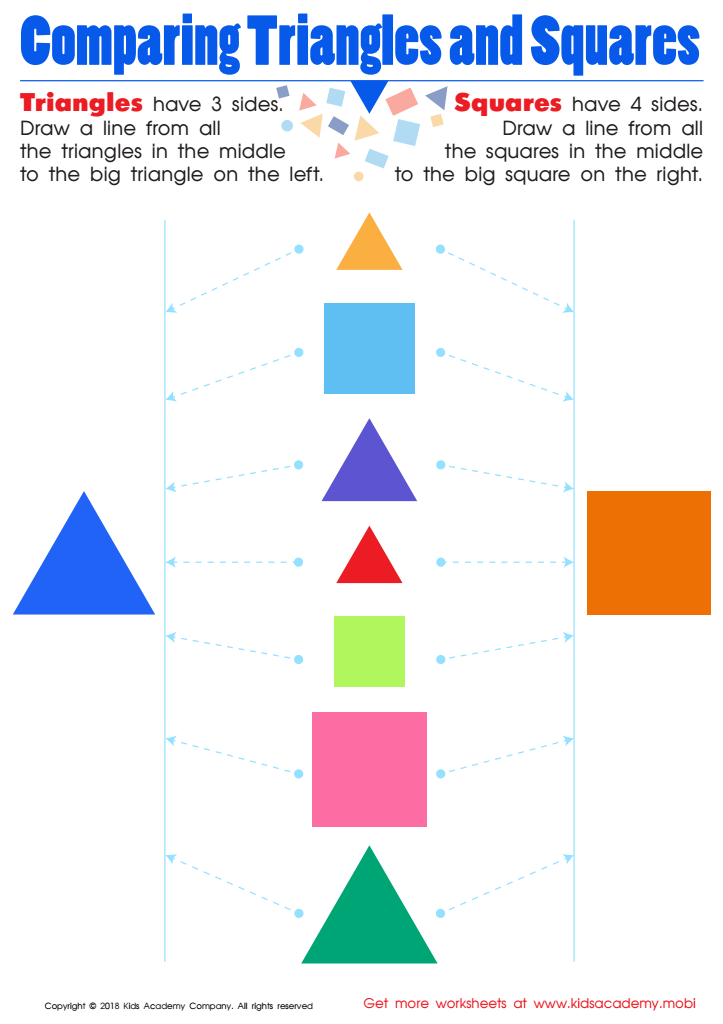
Comparing Triangles Squares Worksheet
 Assign to My Students
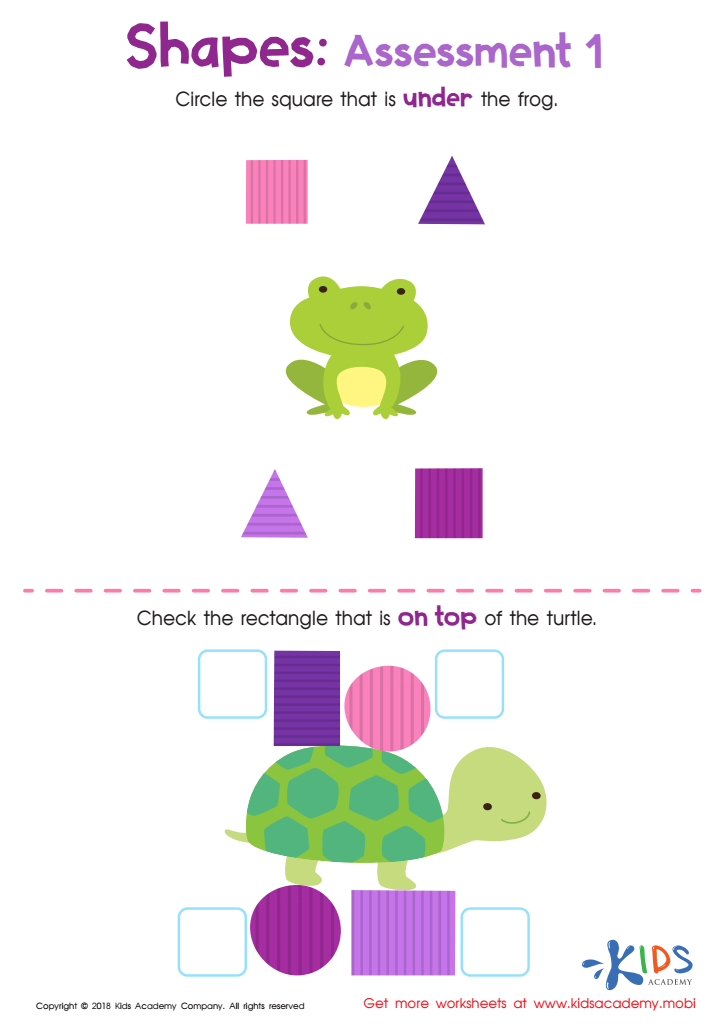
Geometry – Assessment 1 Worksheet
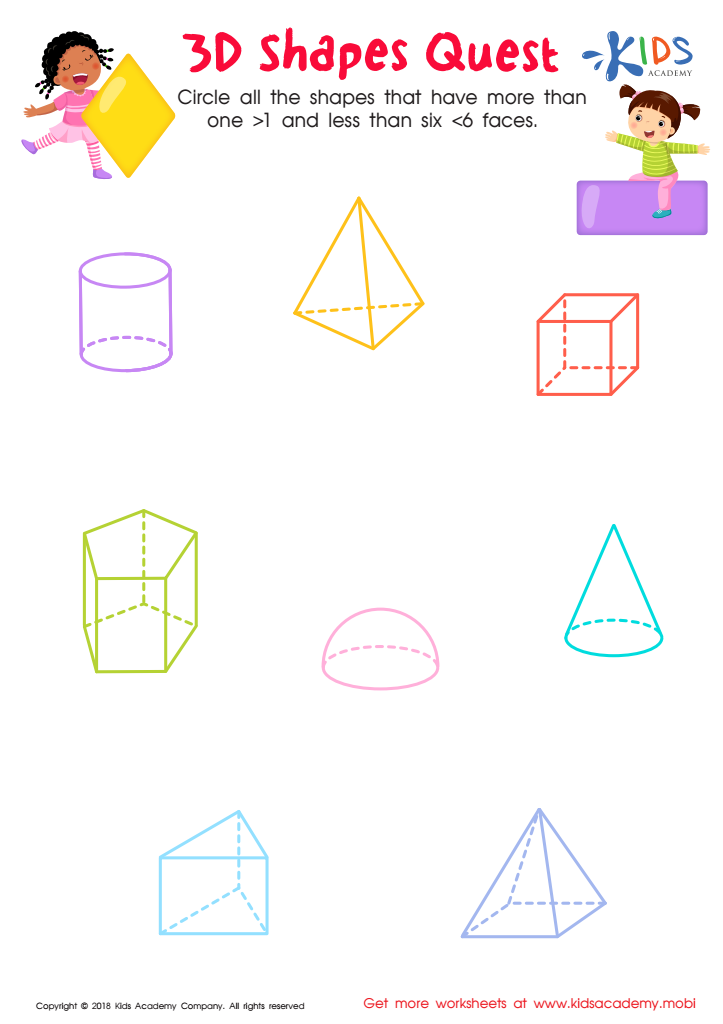
3D Shapes Quest Worksheet




.jpg)



Caring about shape comparison activities for children aged 6-9 is crucial as they significantly enhance cognitive development and foundational math skills. This age group is a critical period for developing spatial awareness, a key component in understanding more complex geometrical concepts later on. By comparing shapes, children learn to recognize patterns, an essential skill not only in math but also in understanding the logic that underpins science and technology.
Shape comparison activities also bolster visual perception and discrimination, enabling children to notice minute differences and similarities. This skill translates beyond academics; for instance, it aids in reading as children differentiate between similarly shaped letters.
Moreover, learning shape comparison encourages critical thinking and problem-solving. Children apply reasoning to determine how shapes are alike or different, improving their analytical capabilities. These activities fuel creativity by allowing children to explore how different shapes fit into each other, fostering imaginative play and conceptual thinking.
Finally, engaging in shape comparison strengthens fine motor skills. Tasks often involve tracing, drawing, or using manipulatives, which help refine hand-eye coordination. For parents and teachers, focusing on shape comparison is an investment in a well-rounded education, laying a foundation for future academic and life skills.








