Subtraction skills Worksheets for Ages 6-9 - Page 2
28 filtered results
-
From - To
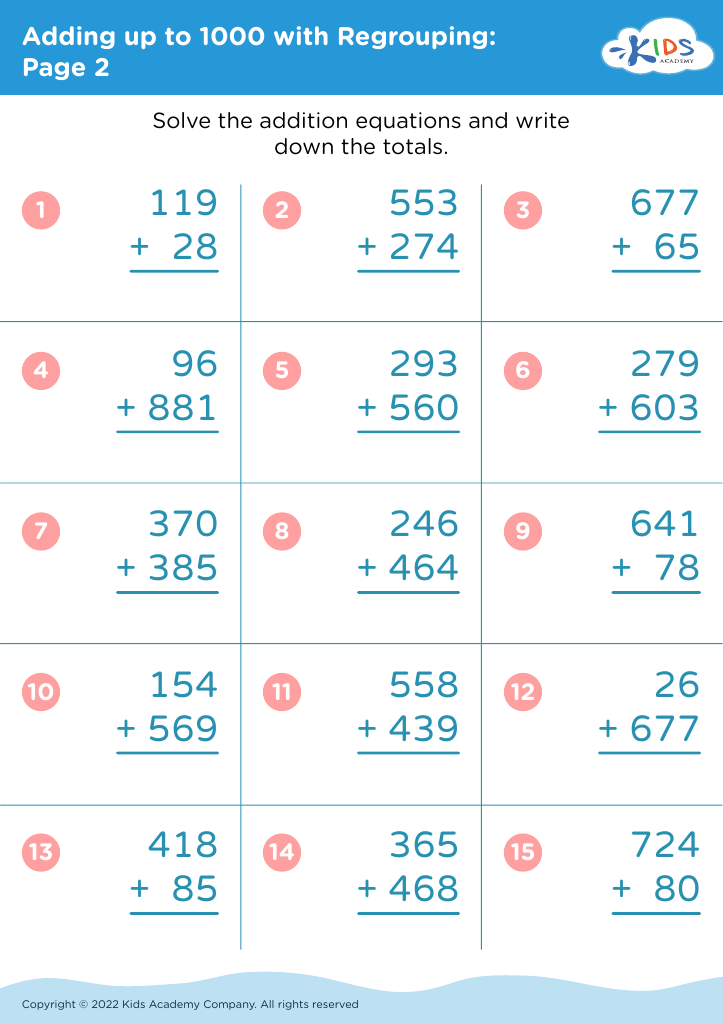
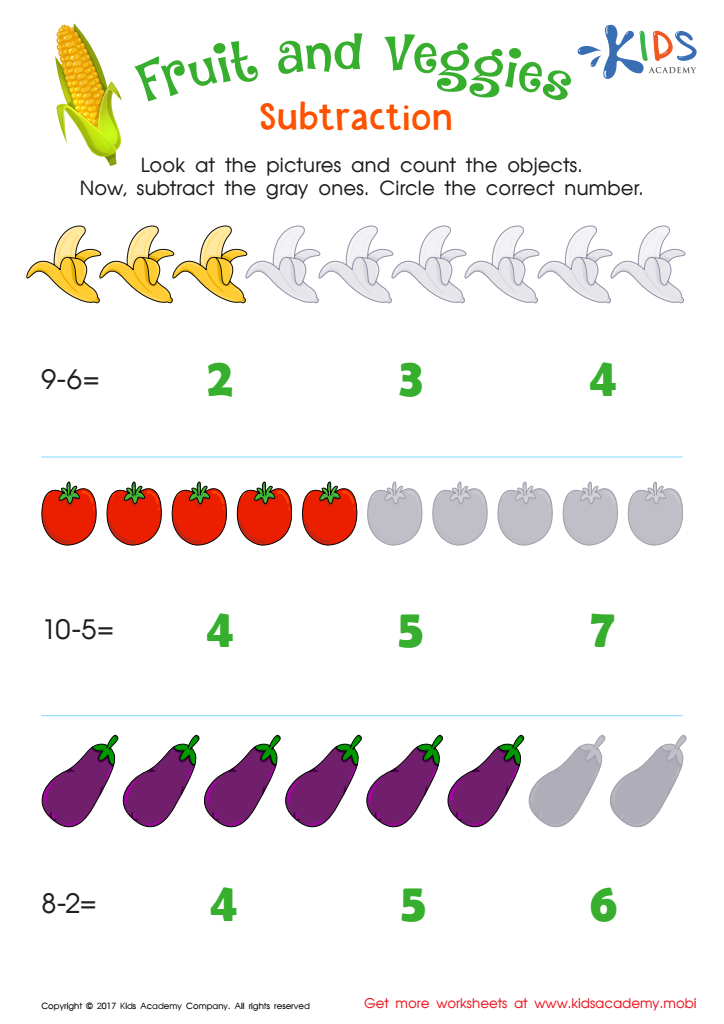
Fruit and Veggies Subtraction Worksheet
 Assign to My Students
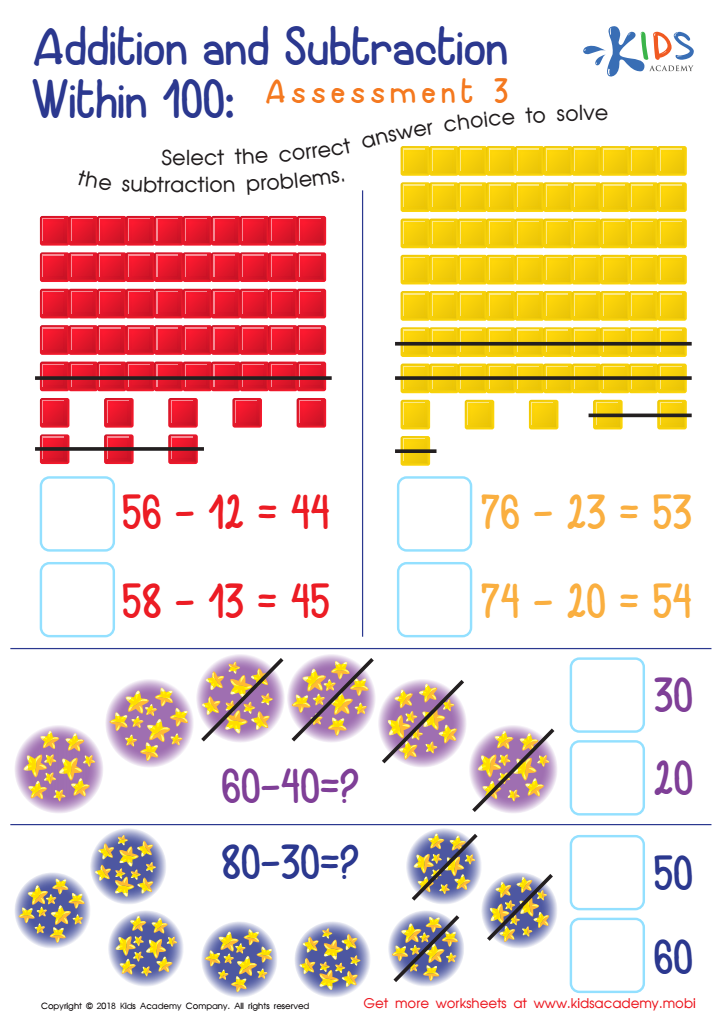
Addition and Subtraction Within 1: Assessment 3 Worksheet








Subtraction skills are essential for children aged 6-9, as they form the foundation for more advanced mathematics and critical thinking. During this developmental stage, children are transitioning from concrete to abstract thinking; mastering subtraction helps them understand number relationships, quantities, and problem-solving strategies.
Proficient subtraction skills enable children to tackle real-life situations, such as managing money or sharing items, which builds their confidence and autonomy. These skills translate into everyday tasks, fostering a sense of responsibility and equity among peers.
Moreover, strong subtraction abilities support overall academic success. Many interdisciplinary subjects, including science and social studies, require basic math skills for data interpretation and critical analysis. By ensuring children develop these fundamental skills, parents and teachers lay the groundwork for lifelong learning and mathematical fluency.
Engaging with subtraction also promotes cognitive development. It sharpens children's analytical thinking, encouraging them to balance and evaluate options when solving problems. Therefore, both parents and teachers must prioritize the development of subtraction skills, creating fun, interactive learning experiences that strengthen children's mathematical understanding and build a positive attitude towards learning. This commitment ultimately sets the stage for future success in both mathematics and beyond.








