Times table familiarity Worksheets for Ages 6-9
3 filtered results
-
From - To
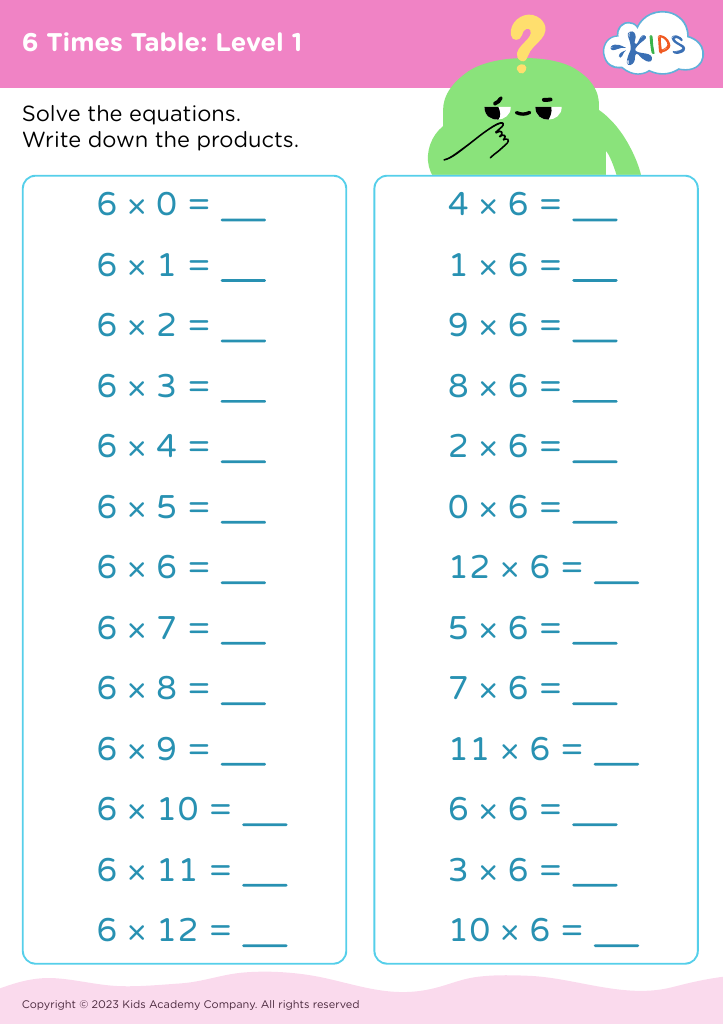
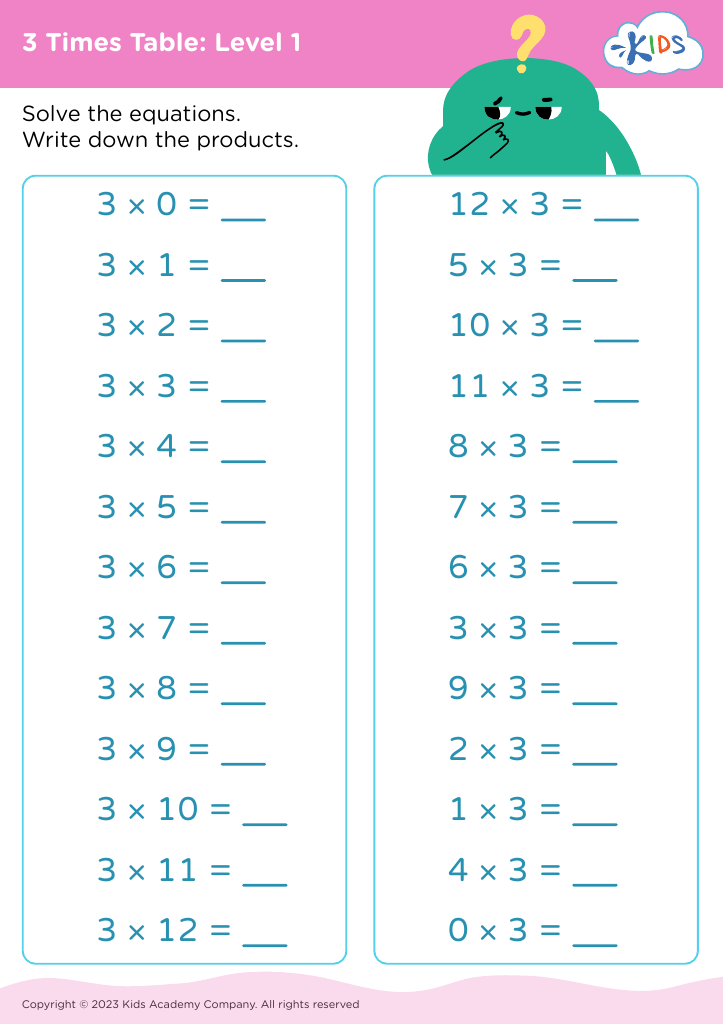
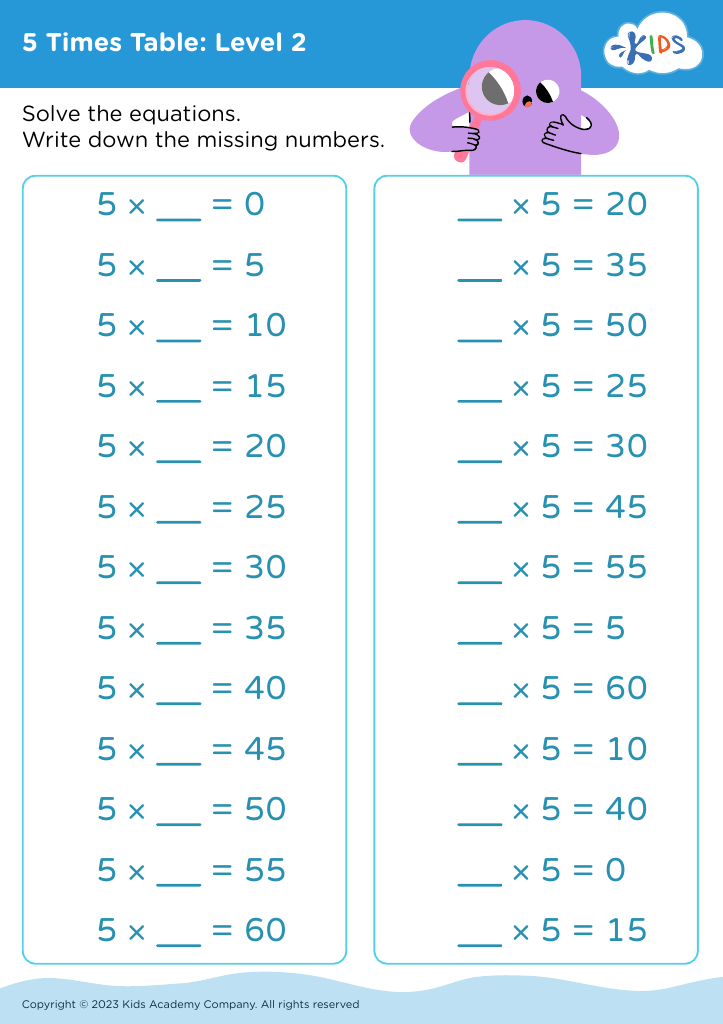
Unlock your child's math potential with our engaging Times Table Familiarity Worksheets for Ages 6-9! Designed to make learning multiplication fun and interactive, these worksheets offer a variety of activities that cater to different learning styles. Kids will build confidence in their math skills through colorful visuals, engaging exercises, and straightforward instructions. Our emphasis on repetition and practice allows young learners to easily grasp times tables, paving the way for future math success. Perfect for home schooling or classroom use, these worksheets encourage mastery of multiplication in a stress-free and enjoyable environment. Start your child's math journey today!


.jpg)



Familiarity with times tables is crucial for children aged 6 to 9, as it lays a strong foundation for their mathematical development. At this stage, children are transitioning from concrete understanding of numbers to more abstract mathematical reasoning. Mastery of times tables enhances their computational skills, enabling them to tackle more complex arithmetic, such as multiplication and division, which become increasingly important in higher grades.
Furthermore, times table proficiency boosts confidence in mathematics. A strong grasp of these foundational concepts helps reduce math anxiety often experienced by young learners. When students can quickly recall their multiplication facts, they demonstrate improved problem-solving skills and can approach tasks more independently, fostering a positive attitude towards math.
For parents and teachers, encouraging times table familiarity not only primes students for future academic challenges but also reinforces important life skills such as persistence and discipline as they practice and master these essential facts. Incorporating fun activities and games into learning can maintain engagement and a love for math. Ultimately, investing time in developing this skill prepares children for a variety of future learning experiences, ensuring they are well-equipped for academic success and everyday problem-solving situations.








