Understand number relationships Worksheets for Ages 6-9
5 filtered results
-
From - To
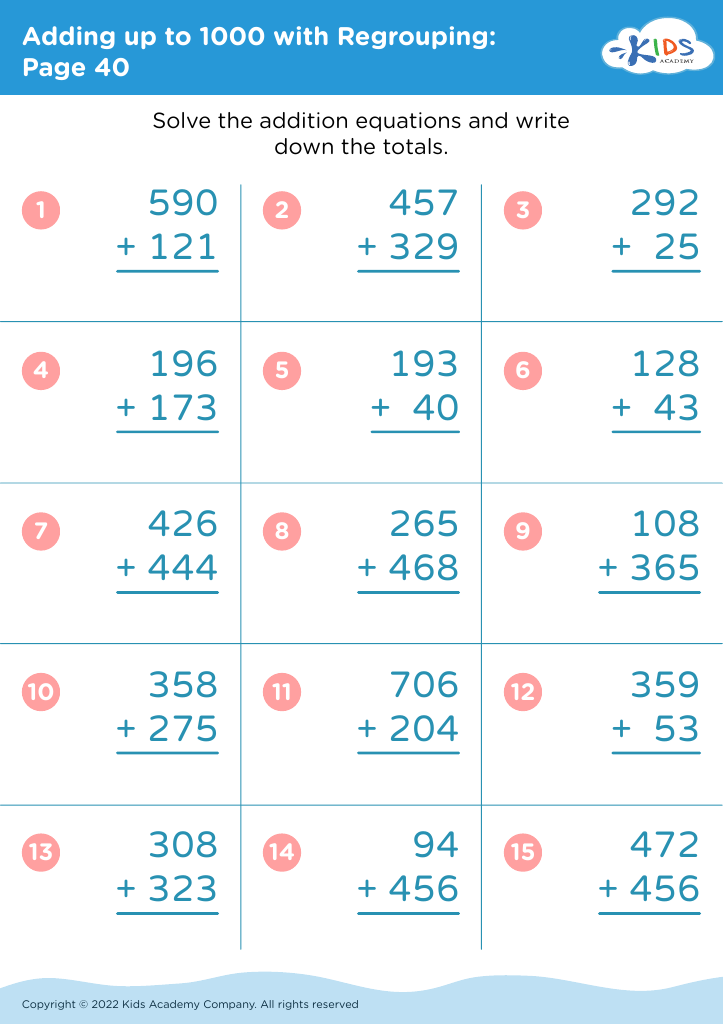
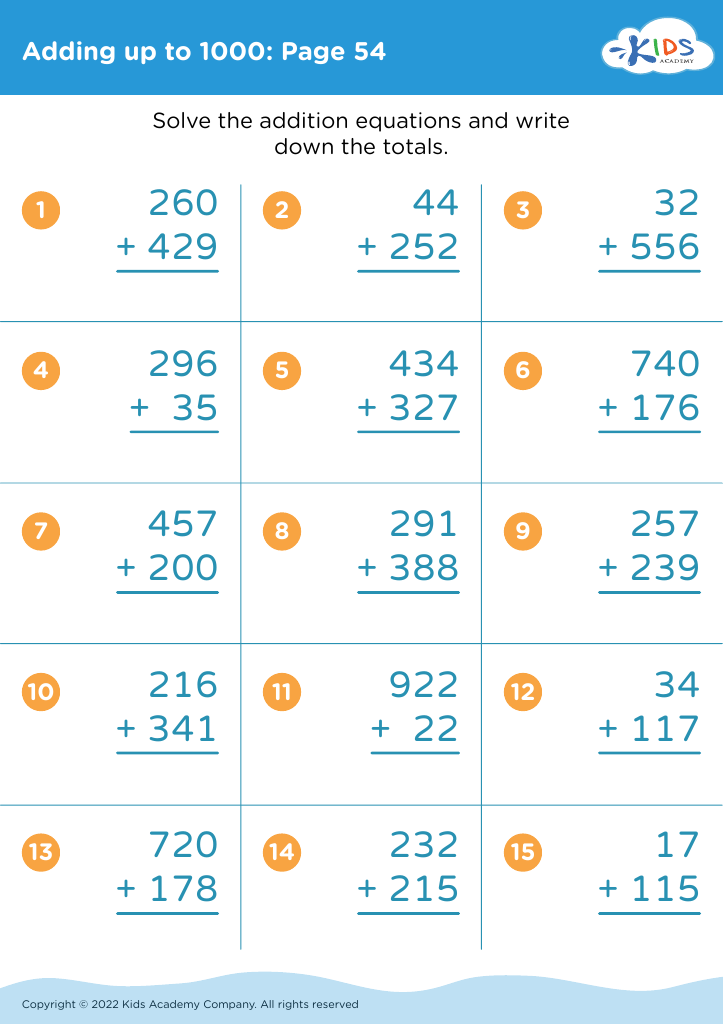
Explore our engaging "Understand Number Relationships Worksheets" tailored for children ages 6-9! These worksheets are designed to enhance mathematical comprehension by helping young learners grasp essential concepts like comparing numbers, recognizing patterns, and understanding the relationships between quantities. Our carefully crafted activities foster critical thinking skills and promote a strong foundation in math, making learning both fun and effective. Ideal for classroom or home use, these worksheets encourage kids to explore numbers through colorful visuals and creative exercises. Support your child's journey to numerical fluency and confidence with our comprehensive resources today! Perfect for early learners eager to build their math skills.
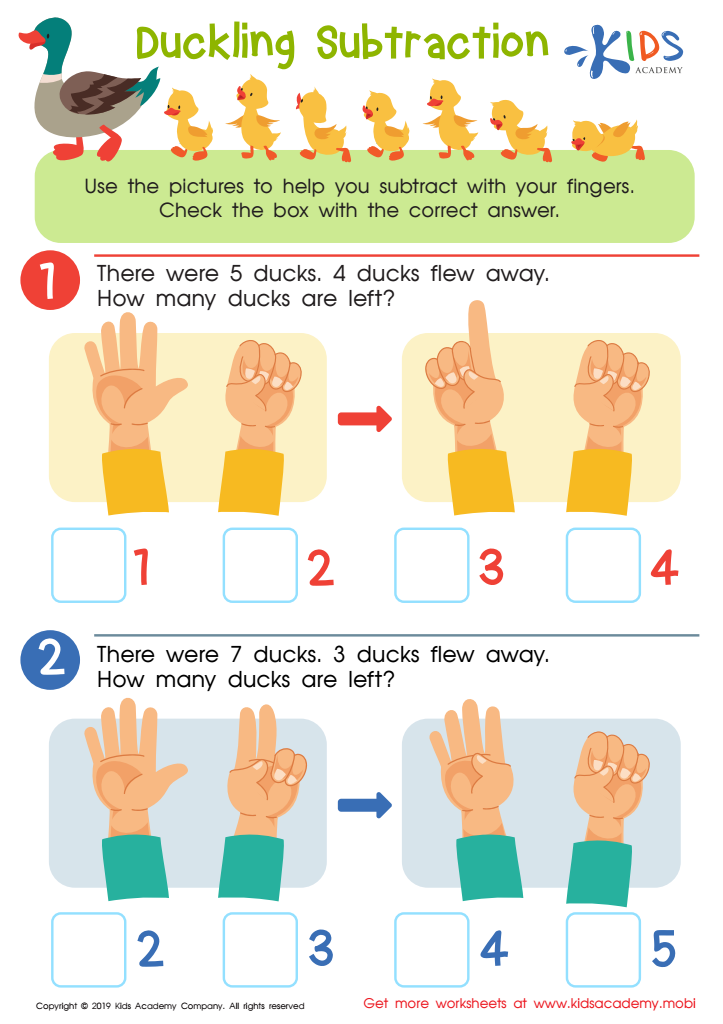
Duckling Subtraction Worksheet
 Assign to My Students





.jpg)

Parents and teachers should prioritize helping children aged 6-9 understand number relationships because this foundational knowledge is crucial for their overall mathematical development. At this age, children begin to gain a deeper understanding of how numbers interact, including concepts of addition, subtraction, multiplication, and division. Grasping number relationships empowers children to develop effective problem-solving skills and critical thinking.
Additionally, understanding number relationships aids in the formation of mental math strategies. Rather than relying solely on algorithms, children learn to see numbers as part of a larger system, allowing them to approach mathematical problems from various angles. This conceptual understanding fosters a positive attitude towards mathematics, reducing anxiety and building confidence.
Furthermore, a strong foundation in number relationships helps bridge to more complex math topics like fractions, decimals, and algebra. These skills are not only essential for academic success but also influence real-life applications, such as budgeting and measuring, as students grow.
By supporting children in understanding number relationships, parents and teachers lay the groundwork for a lifetime of mathematical competence and encourage a love for learning that extends beyond the classroom.








