Understanding perspectives Worksheets for Ages 6-9
3 filtered results
-
From - To
Welcome to our "Understanding Perspectives Worksheets" designed for children ages 6-9! These engaging worksheets aim to enhance your child's ability to recognize different viewpoints and develop empathy. Through fun activities and scenarios, kids will learn to identify emotions, interpret character actions, and articulate their thoughts on various situations. Our resources promote critical thinking and communication skills, making them perfect for home or classroom use. Each worksheet is crafted to encourage discussions and reflection, helping young learners understand the importance of perspective-taking in everyday life. Download now to foster a sense of empathy and deeper understanding in your child today!
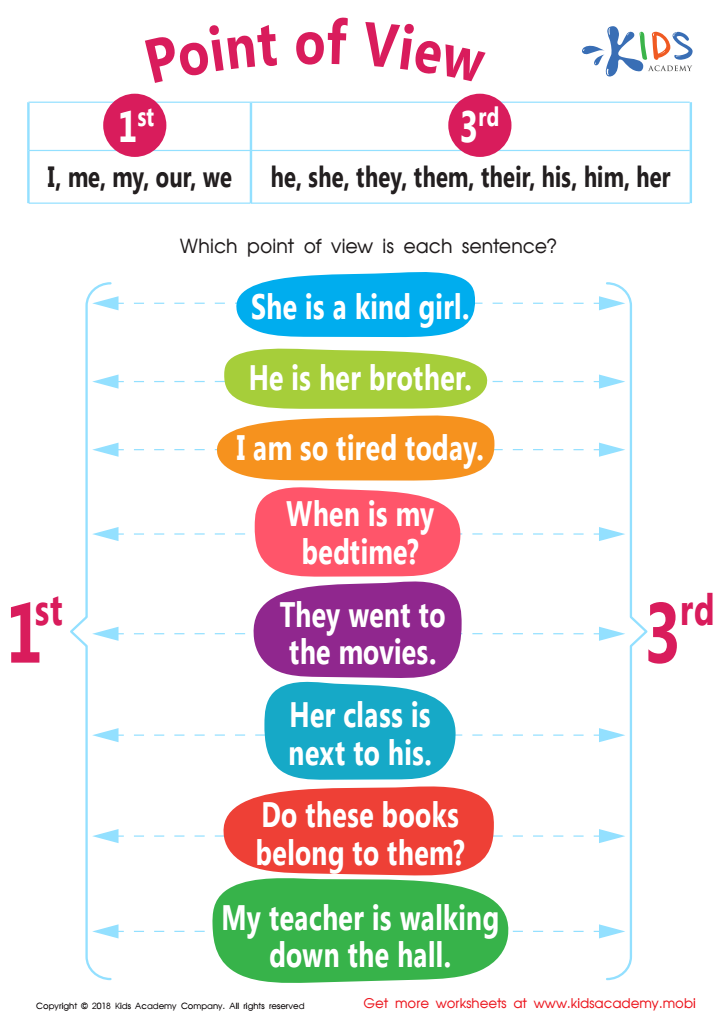
Point of View Worksheet
 Assign to My Students
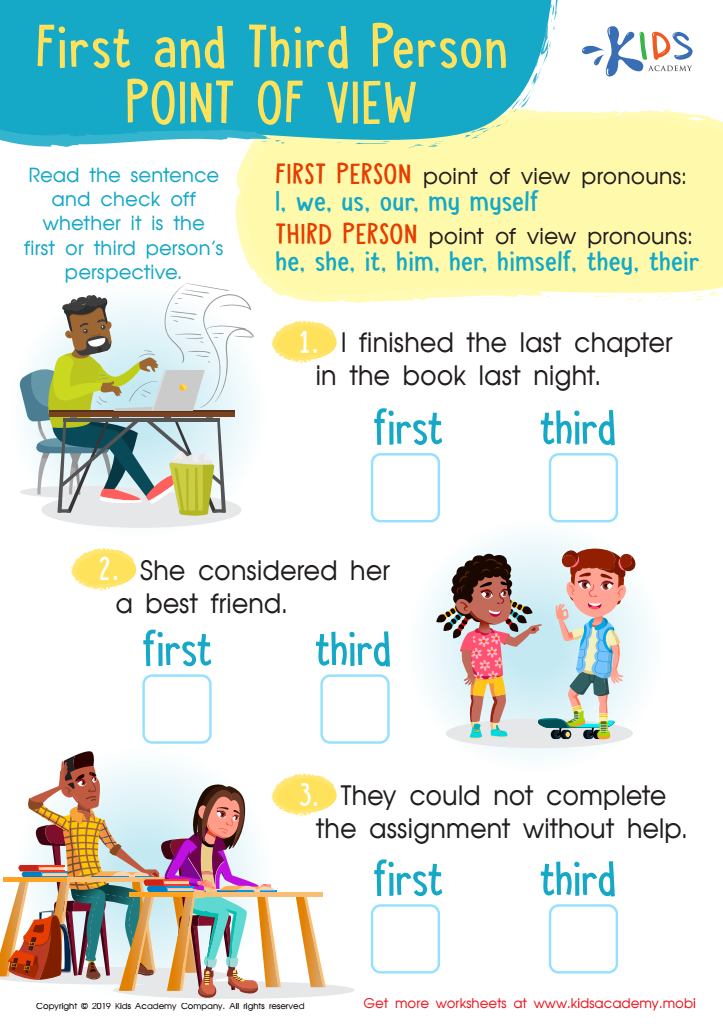
First and Third Person Point of View Worksheet
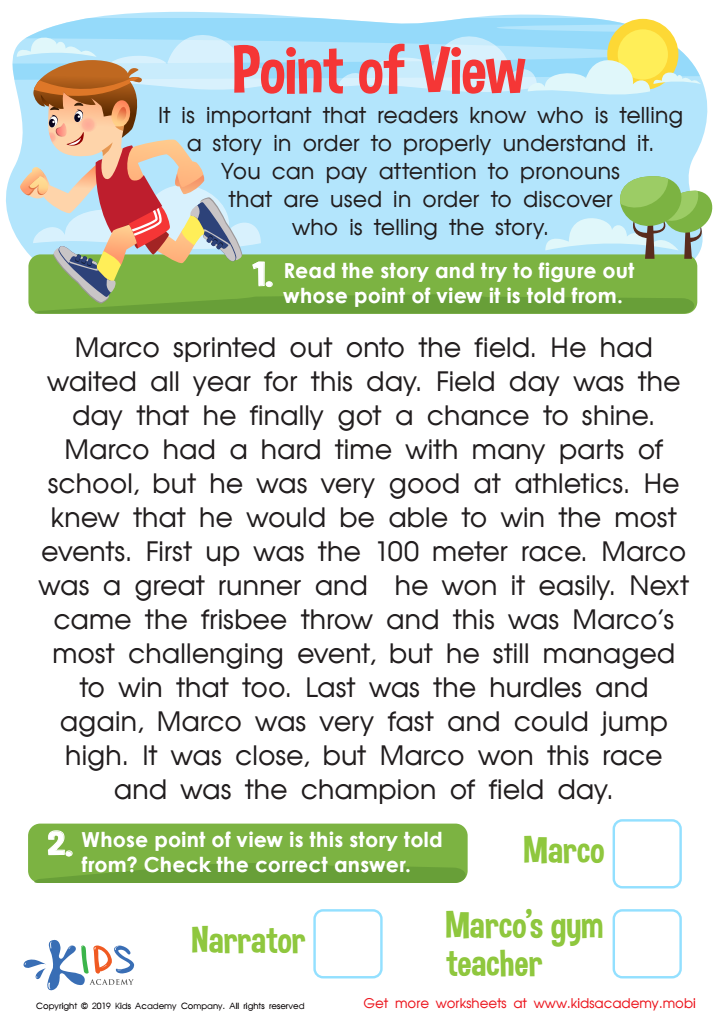
Point of View Worksheet







Understanding perspectives is crucial for children aged 6-9 as it lays the foundation for empathy, social skills, and effective communication. At this developmental stage, children start navigating complex social interactions and learning to recognize that others have different thoughts, feelings, and viewpoints. By fostering perspective-taking, parents and teachers can help children develop emotional intelligence, which enriches their relationships and enhances their ability to collaborate and resolve conflicts.
Moreover, teaching perspective-taking encourages critical thinking. Children learn to analyze situations from multiple angles, promoting open-mindedness that is vital in a diverse world. This skill is integral for classroom discussions, group work, and even imaginative play, where understanding character motivations can lead to more enriching experiences.
Furthermore, exploring different viewpoints helps prevent bullying and promotes inclusivity, making children more tolerant and accepting of differences. As they explore diverse perspectives, children become more aware of societal issues, leading to a more compassionate generation. Therefore, parents and teachers should prioritize teaching understanding perspectives, equipping children with the social-emotional skills necessary for both personal success and contribution to a cooperative, understanding community. Introduce activities, discussions, and stories that highlight different perspectives to nurture these essential skills.








