Understanding sequencing is essential for children ages 6-9 as it develops critical thinking and comprehension skills. Our expertly designed sequencing worksheets at Kids Academy help young learners master the art of arranging events logically. These engaging printable worksheets incorporate fun activities and relatable scenarios, making the learning process enjoyable and effective. Children will practice ordering sequences, retelling stories in the correct sequence, and honing problem-solving abilities. Perfect for both classroom and home use, our sequencing worksheets provide a solid foundation for reading and writing success. Elevate your child's learning experience by exploring our vast collection of sequencing resources today!

Check out this FREE "Understanding sequencing" Trial Lesson for age 6-9!

Counting to 9

Favorites
With answer key
Interactive
  • 6-9
  • Understanding sequencing
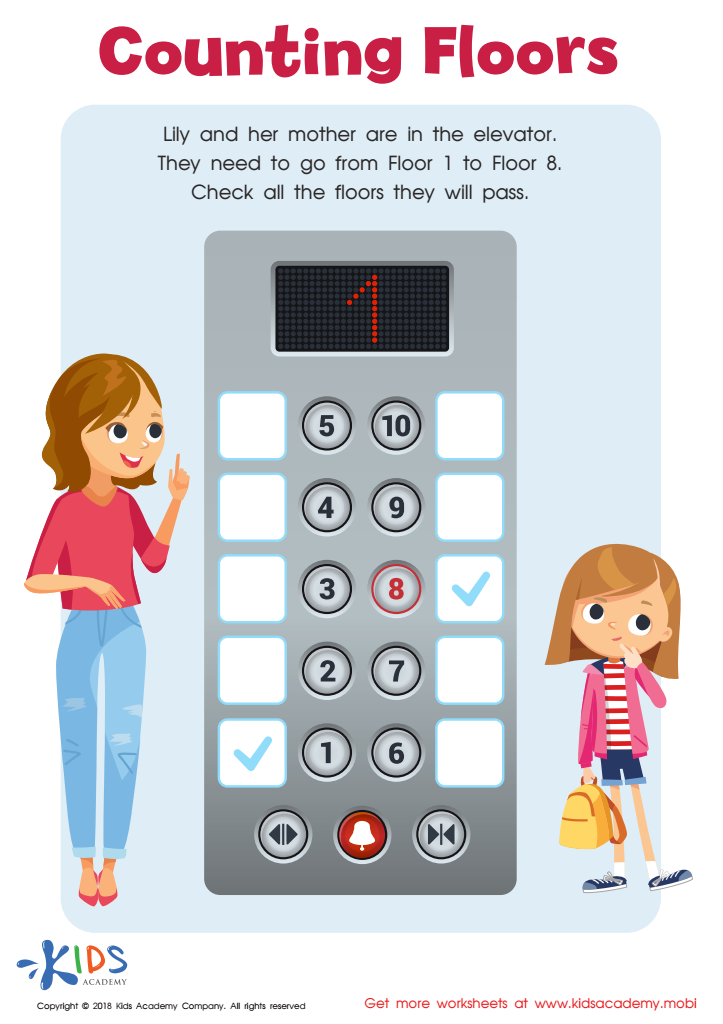
Counting Floors Worksheet

Counting Floors Worksheet

Take your kids on an elevator ride and have them help you. With this worksheet, little ones meet Lily and her mom. They're taking an elevator from Floor 1 to Floor 8. Ask them to check the floors they pass and help the two reach their destination.
Counting Floors Worksheet
Worksheet
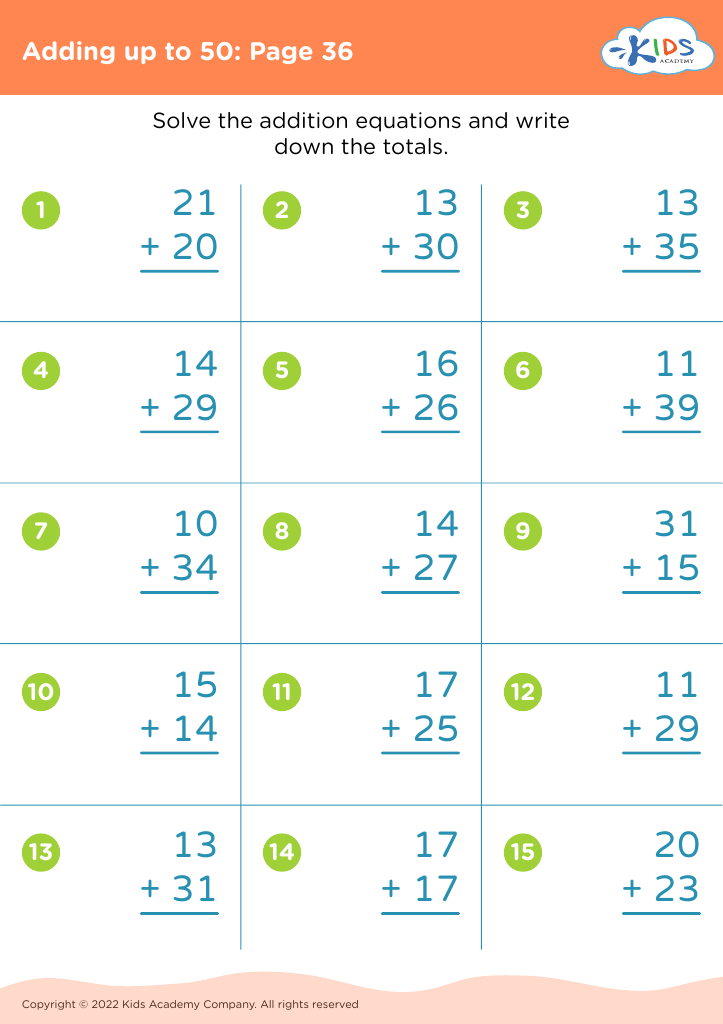
Adding up to 50: Page 36

Adding up to 50: Page 36

Adding up to 50: Page 36
Worksheet
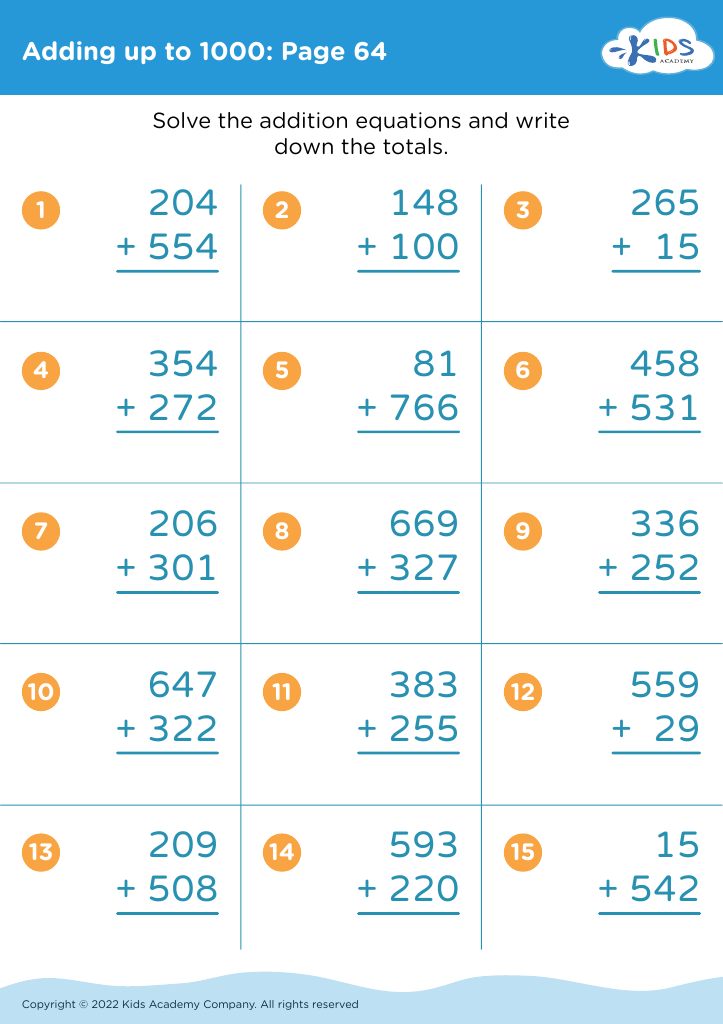
Adding up to 1000: Page 64

Adding up to 1000: Page 64

Adding up to 1000: Page 64
Worksheet
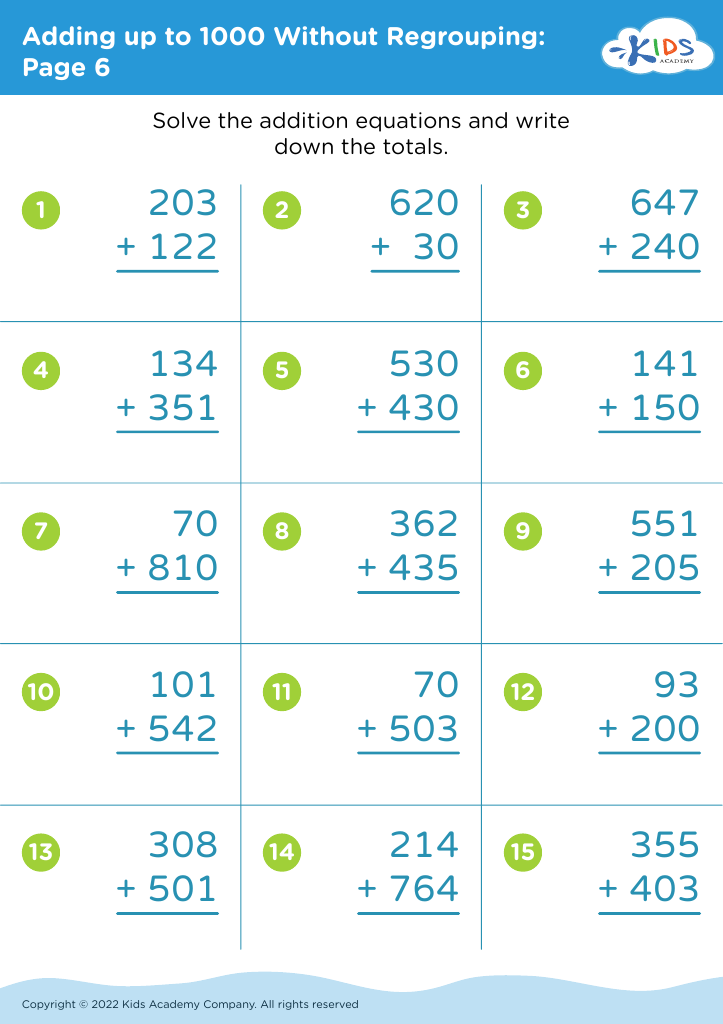
Adding up to 1000 Without Regrouping: Page 6
Worksheet
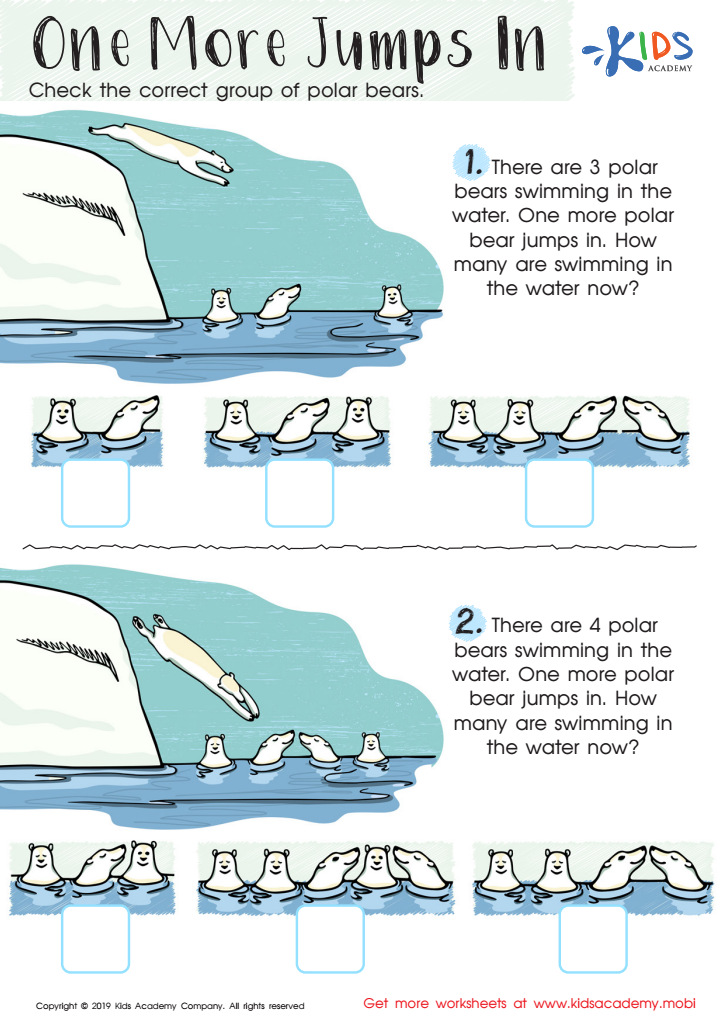
One More Jumps In Worksheet

One More Jumps In Worksheet

Polar bears live in the Arctic which is always cold and snowy. Show your kids pictures of polar bears swimming in the water. Read the text and help them count correctly to answer the questions in the first and second sections.
One More Jumps In Worksheet
Worksheet
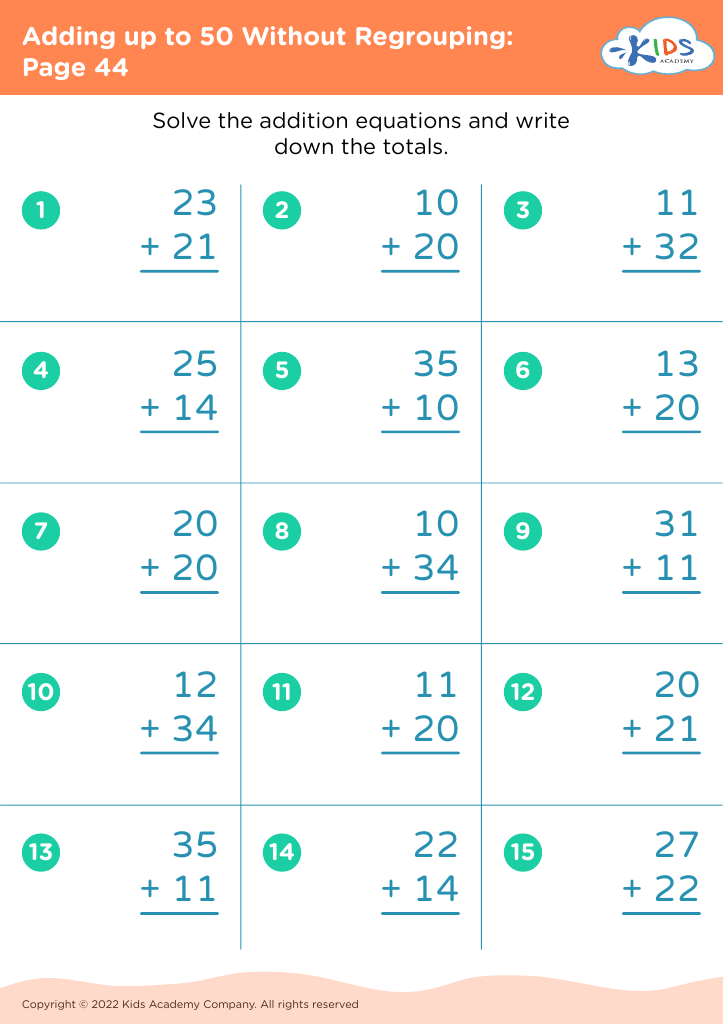
Adding up to 50 Without Regrouping: Page 44
Worksheet
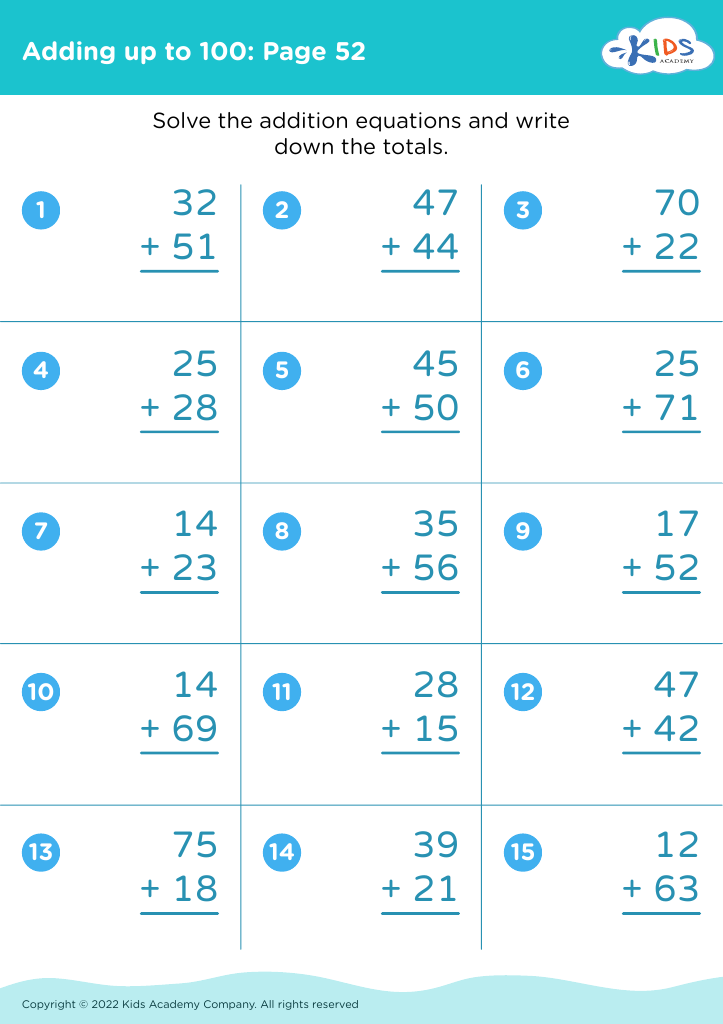
Adding up to 100: Page 52

Adding up to 100: Page 52

Adding up to 100: Page 52
Worksheet
Build the Stairs Worksheet Preview

Build the Stairs Worksheet

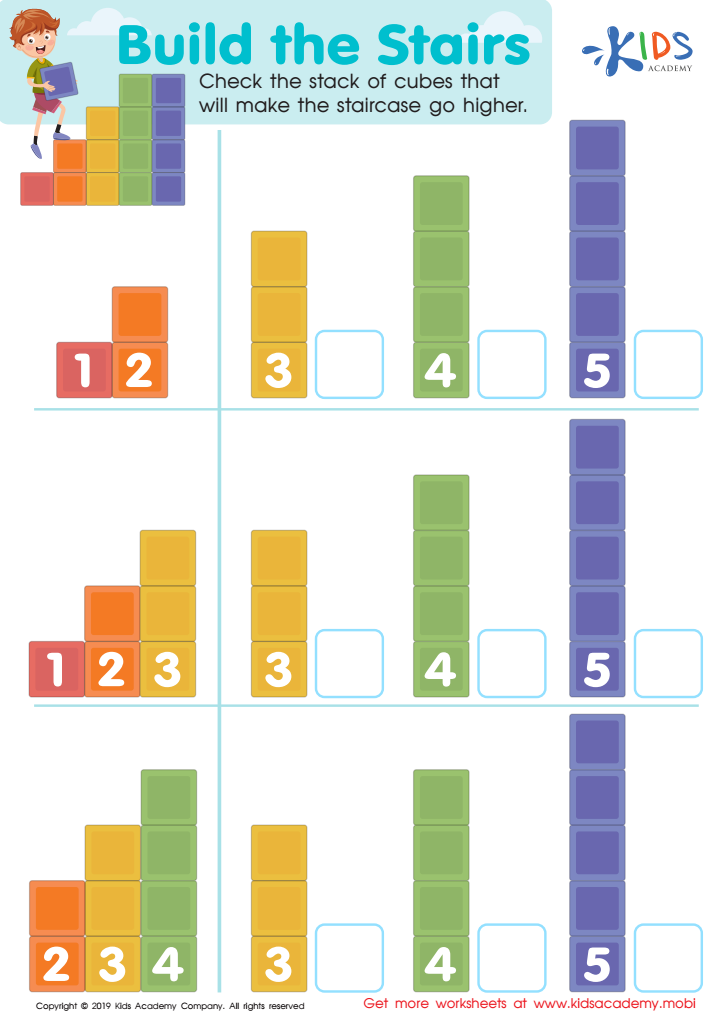
Does your kid need help counting numbers? Make it fun with a staircase math worksheet! This printable PDF uses stairs to help your preschooler practice counting. Let them build the staircase by picking the next highest number as they go up! It's an interactive way to teach counting and sure to please your little one.
Build the Stairs Worksheet
Worksheet
Sequence: A Day at the Park Worksheet
Sequence: A Day at the Park Worksheet

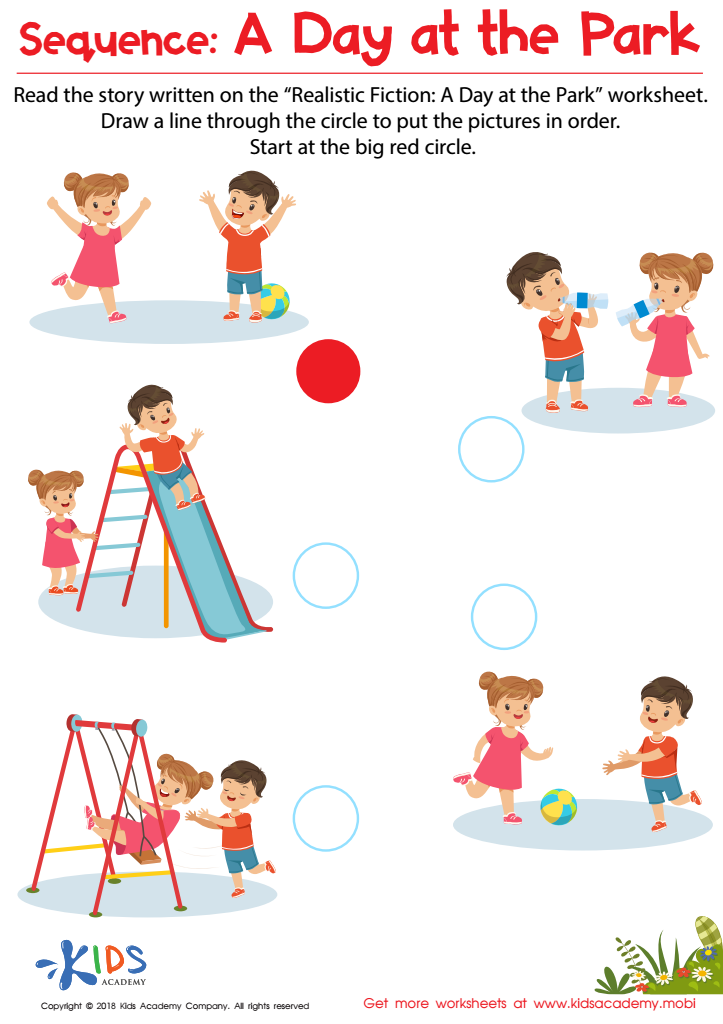
Help your child sequence the events of the story they just read with this activity! Start with the big red circle and draw lines to the other circles next to the images in the correct order. It's a great way to practice their reading skills! Try this downloadable worksheet today!
Sequence: A Day at the Park Worksheet
Worksheet
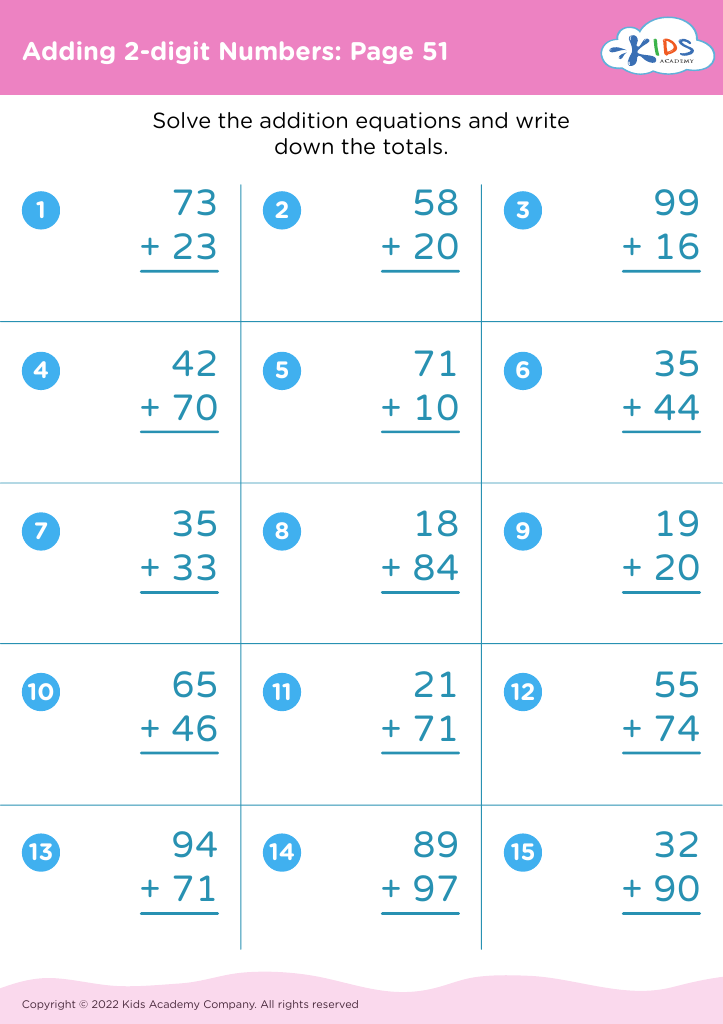
Adding 2-digit Numbers: Page 51

Adding 2-digit Numbers: Page 51

Adding 2-digit Numbers: Page 51
Worksheet
Ladybug Line Up Worksheet

Ladybug Line Up Worksheet

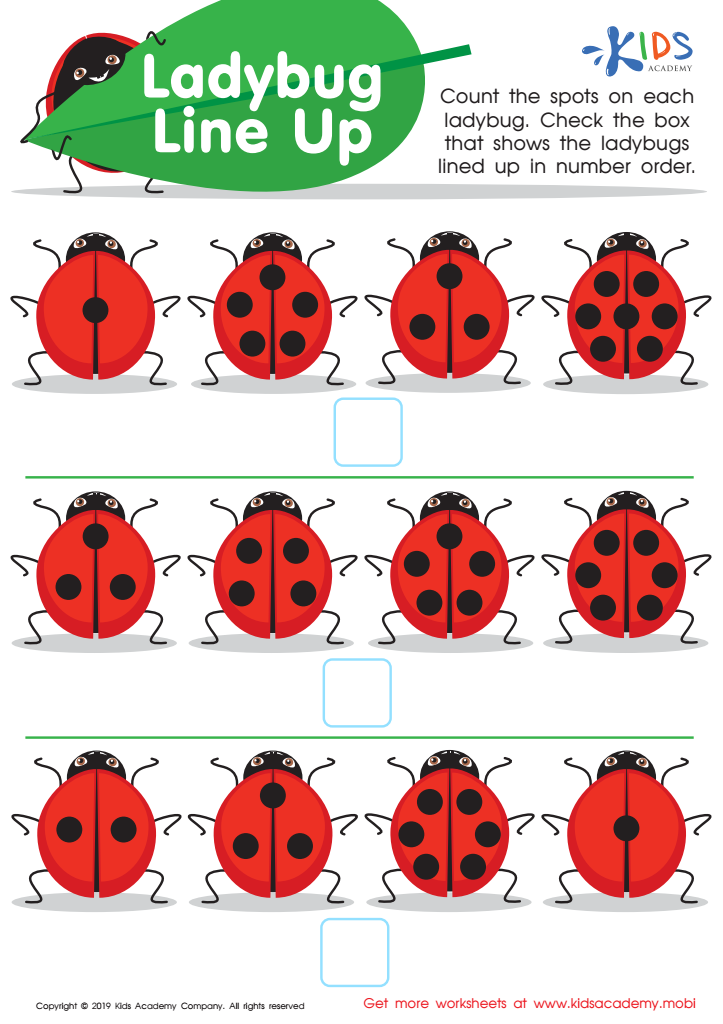
Count the spots on the back of each ladybug in the three groups. Help kids check the box under each group that shows the ladybugs in proper number order. Ladybugs are an adorable insect with unique spots. This worksheet encourages counting and ordering.
Ladybug Line Up Worksheet
Worksheet
The Tortoise and the Hare Worksheet
The Tortoise and the Hare Worksheet

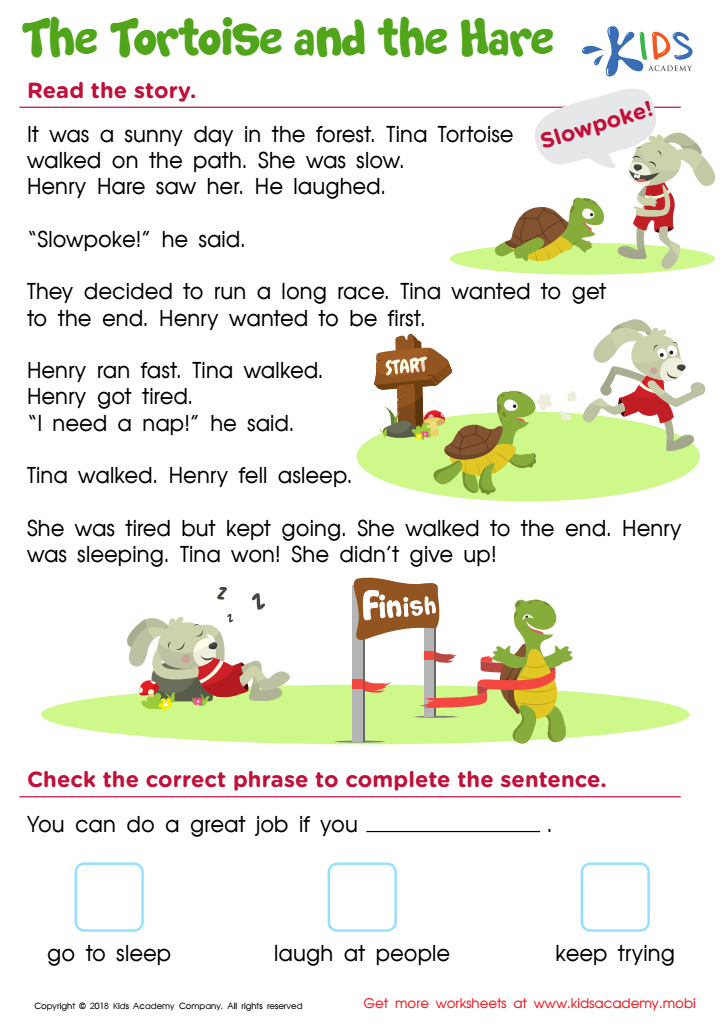
Help your child uncover the hidden moral in a classic children's tale with this free downloadable worksheet. Joyful illustrations bring the story to life and help young readers visualize the events. With your help, they can answer the question and fill in the blank with the phrase that serves as the story's lesson. Check the box to complete the worksheet!
The Tortoise and the Hare Worksheet

Worksheet
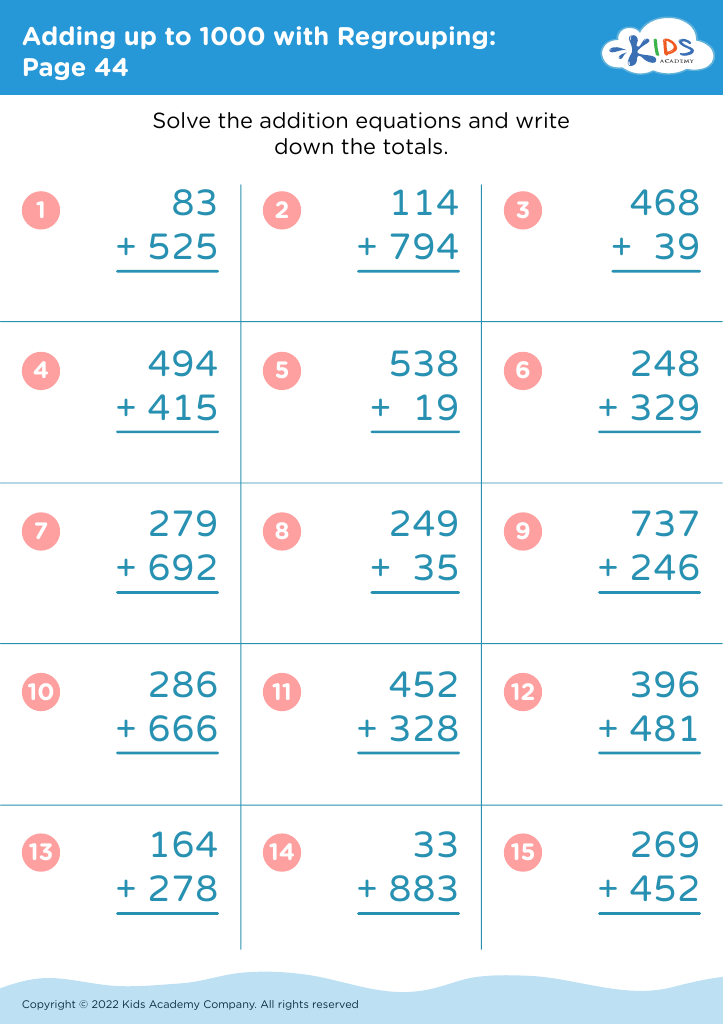
Adding up to 1000 with Regrouping: Page 44
Worksheet
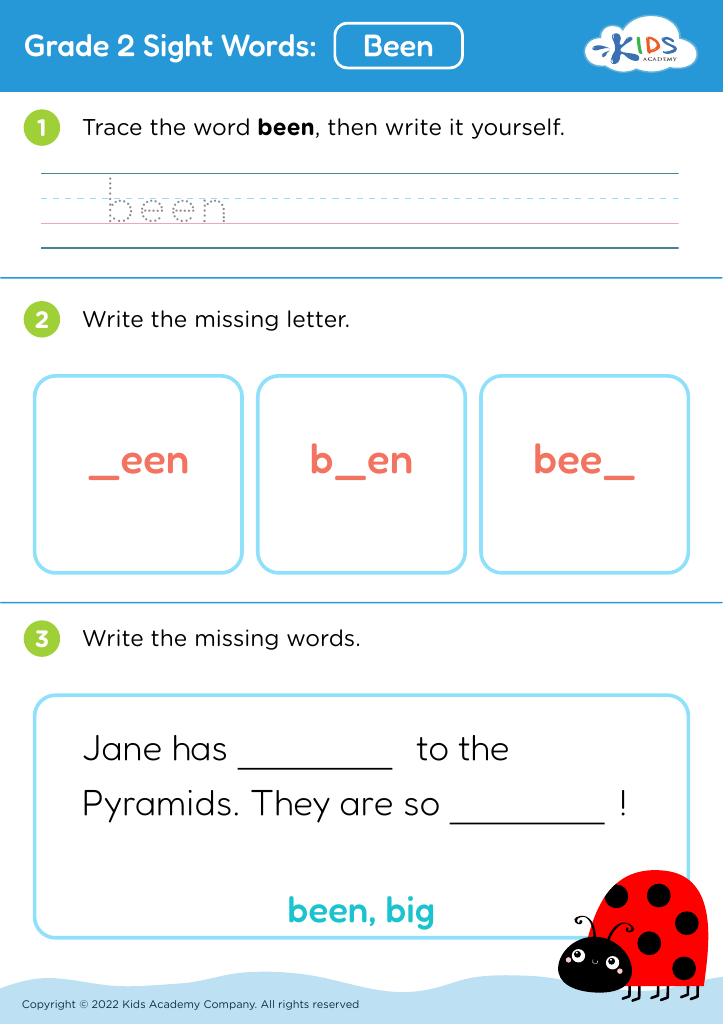
Grade 2 Sight Words: Been

Grade 2 Sight Words: Been

Grade 2 Sight Words: Been
Worksheet


Understanding sequencing is crucial for children aged 6-9, as it lays a solid foundation for both academic and everyday skills. At this age, children begin to grapple with more complex concepts in reading, writing, mathematics, and daily routines that require a clear understanding of order and steps.

From an academic standpoint, sequencing aids in reading comprehension. When children understand the order of events, they can better grasp the flow of a story. This enhances their ability to summarize tales, predict outcomes, and develop greater empathy with characters by following their journeys. It also facilitates writing skills; knowing how to organize thoughts sequentially enables children to narrate stories logically and cohesively.

In mathematics, sequencing is vital for understanding patterns, counting, and problem-solving. Arranging numbers or actions logically allows children to follow and formulate mathematical operations with greater ease.

On a social and emotional level, sequencing helps children manage daily routines, such as getting ready for school and completing tasks in the correct order. This sense of organization boosts their confidence and fosters independence.

Parents and teachers who emphasize sequencing can provide tools for lifelong learning and problem-solving, crucial for both academic success and everyday life. Understanding sequencing stands as a pivotal building block that supports young learners in becoming effective communicators and logical thinkers.