Understanding shapes Worksheets for Ages 6-9
6 filtered results
-
From - To
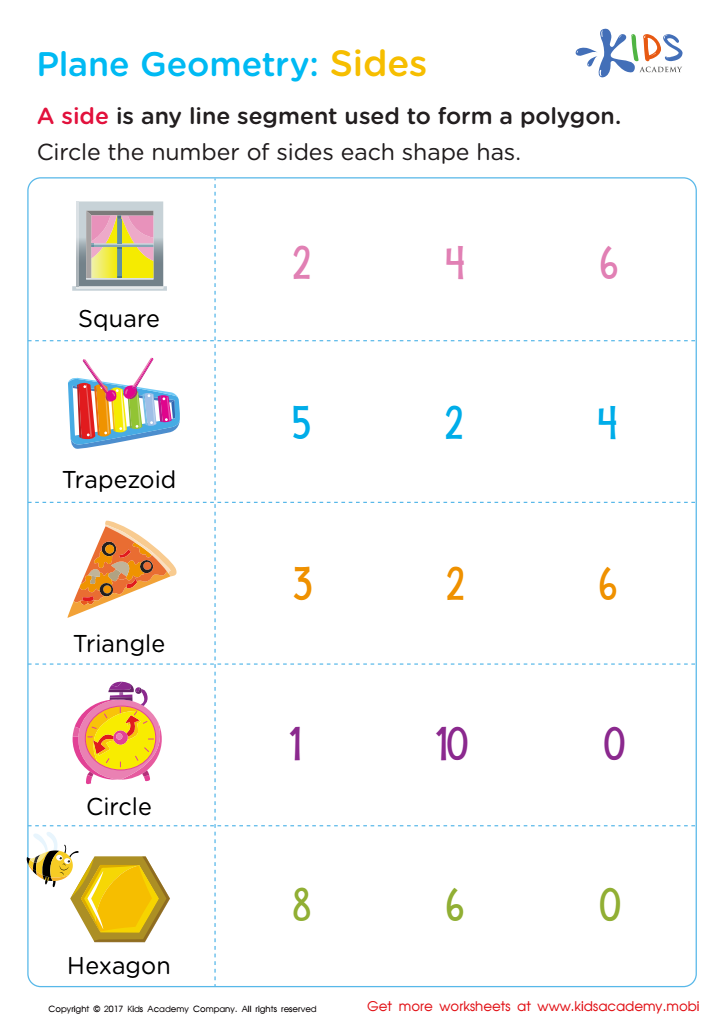
Unlock the world of geometry for your 6-9-year-olds with our "Understanding Shapes Worksheets." Designed to make learning fun and engaging, these printable worksheets help young learners easily grasp shape recognition, properties, and spatial awareness. Your child will journey through identifying, comparing, and drawing various shapes while solving challenges that solidify their understanding. Perfect for classroom or home use, these activities boost critical thinking and foundational math skills. Spark curiosity and confidence in your child's geometric abilities with our expertly crafted worksheets, aligned with educational standards and tailored for versatile, stress-free learning.
 Assign to My Students
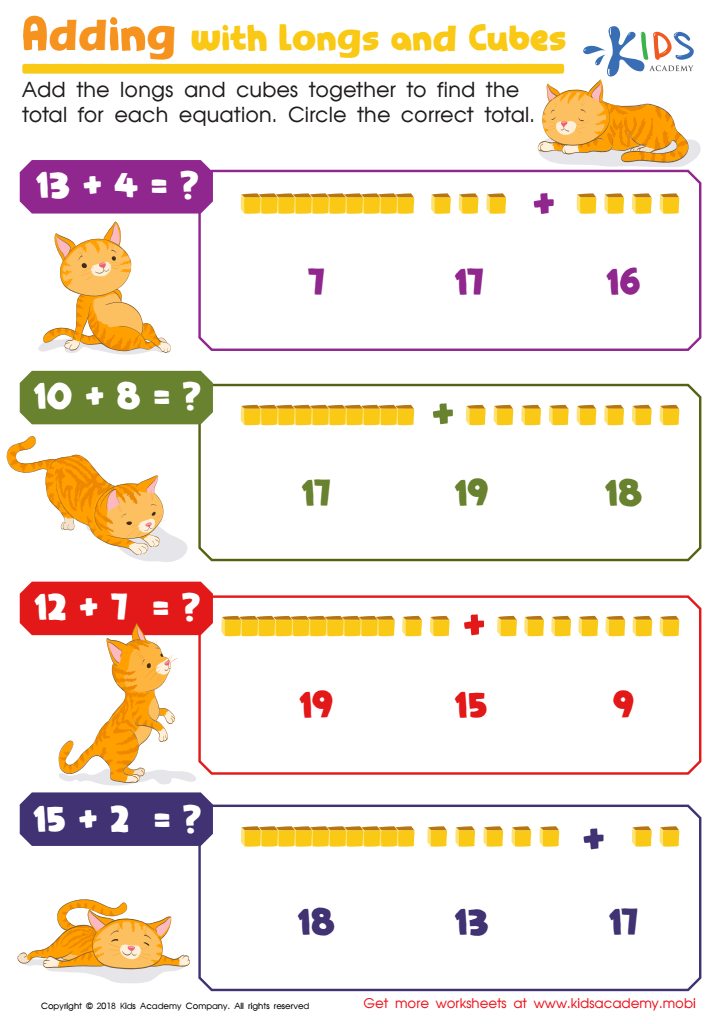
Adding With Longs and Cubes Worksheet
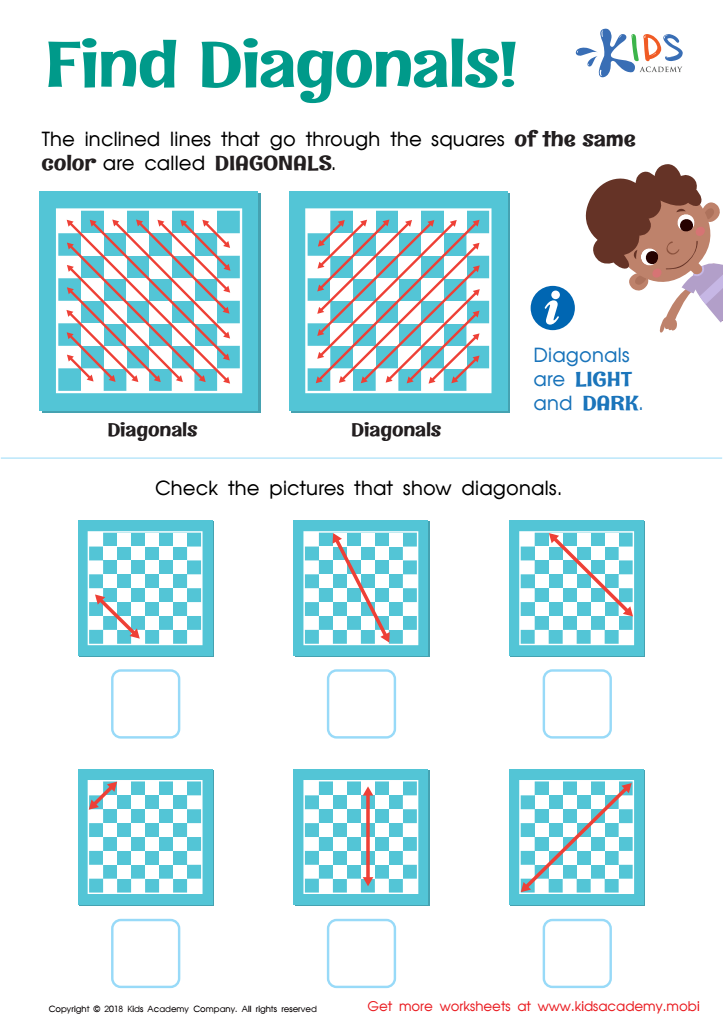
Find Diagonals Worksheet
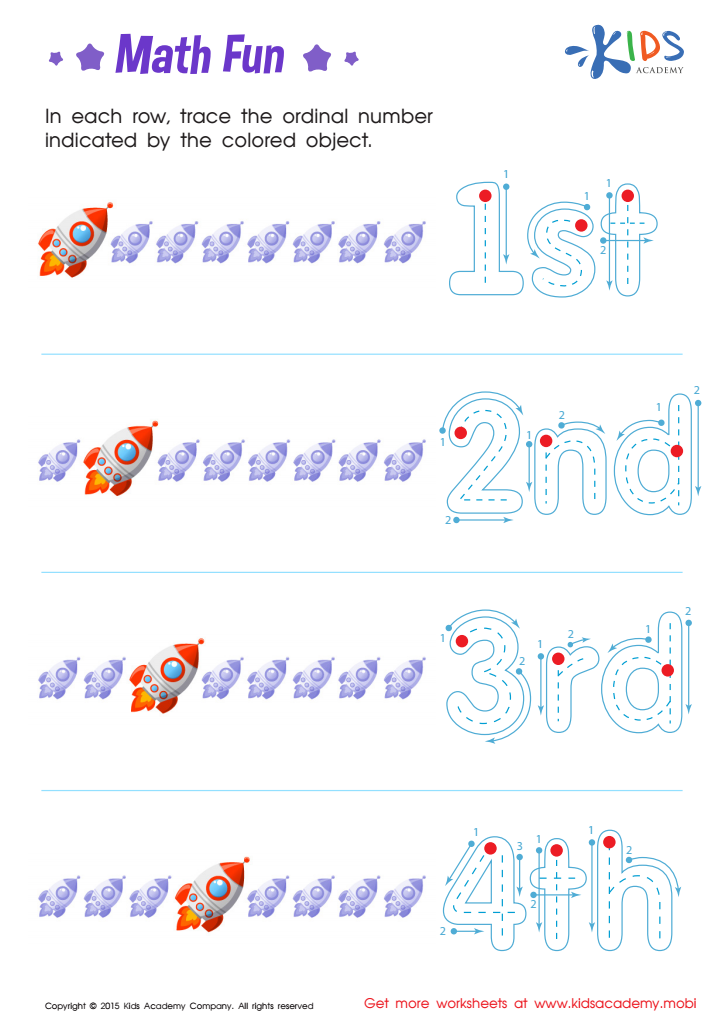
Ordinal Numbers: Math Fun Worksheet
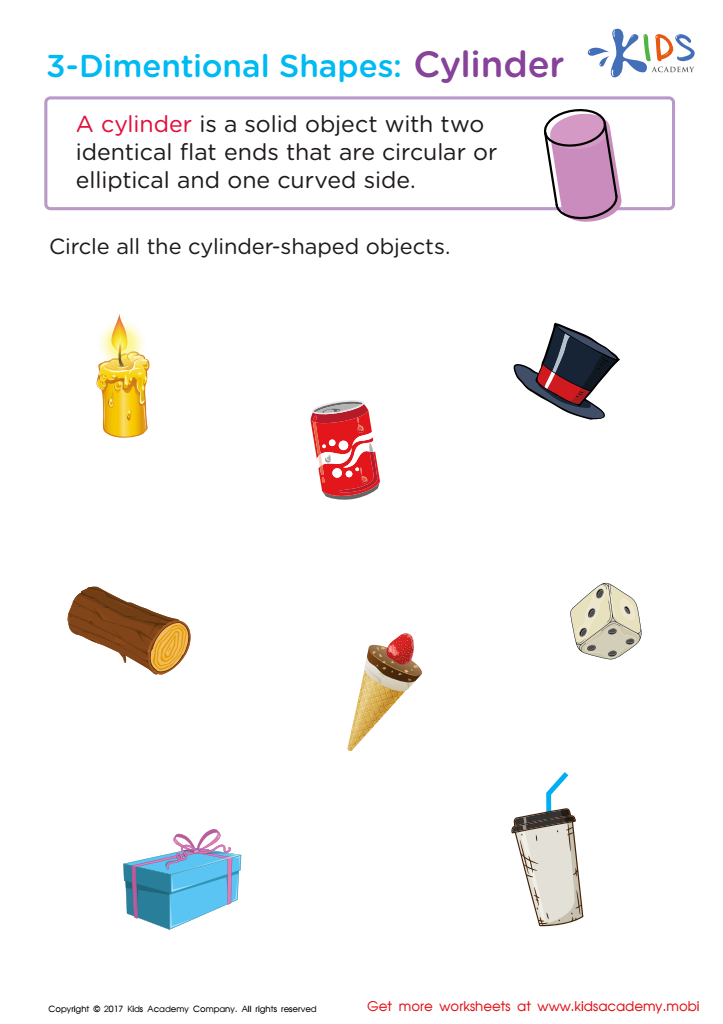
Three–Dimensional Shapes: Cylinder Worksheet








Understanding shapes at ages 6-9 is crucial for a child's development for several reasons. Firstly, it lays the foundation for geometric thinking, helping children recognize and categorize the world around them. Basic geometric shapes like circles, squares, and triangles form the building blocks for more complex mathematical concepts they'll encounter later in their schooling.
Shapes also aid in the development of spatial awareness. Being able to identify, compare, and manipulate shapes improves a child's ability to understand and navigate space, which is essential for tasks ranging from playing sports to reading maps and even assembling puzzles. Additionally, these skills cultivate better problem-solving capabilities, both in and out of an academic context.
From a developmental perspective, understanding shapes enhances cognitive skills such as memory, recognition, and logical reasoning. It also strengthens fine motor skills as children draw, trace, and build shapes, both in two-dimensional and three-dimensional forms.
Furthermore, shapes are deeply embedded in everyday life skills and academic areas, including art, science, and technology. For example, understanding shapes can improve a child's ability to decipher patterns in nature, comprehend molecular structures in science, and engage in early coding exercises where geometric understanding is key.
In short, understanding shapes is not just about recognizing different forms; it’s about building a toolkit for future learning and everyday problem-solving. Therefore, parents and teachers should prioritize shape-related activities to support the overall development of their children.








