Understanding water cycle Worksheets for Ages 6-9
3 filtered results
-
From - To
Discover our engaging "Understanding Water Cycle Worksheets" designed for children ages 6-9. These interactive resources aim to teach young learners about the essential stages of the water cycle, including evaporation, condensation, precipitation, and collection. Our worksheets feature vibrant illustrations and fun activities that make learning about this vital natural process enjoyable. These materials support the development of critical thinking skills and enhance understanding of science concepts through hands-on exercises. Perfect for classroom use or at-home learning, our worksheets cultivate curiosity and encourage exploration. Dive into the fascinating world of the water cycle and inspire young minds to appreciate nature's wonders!
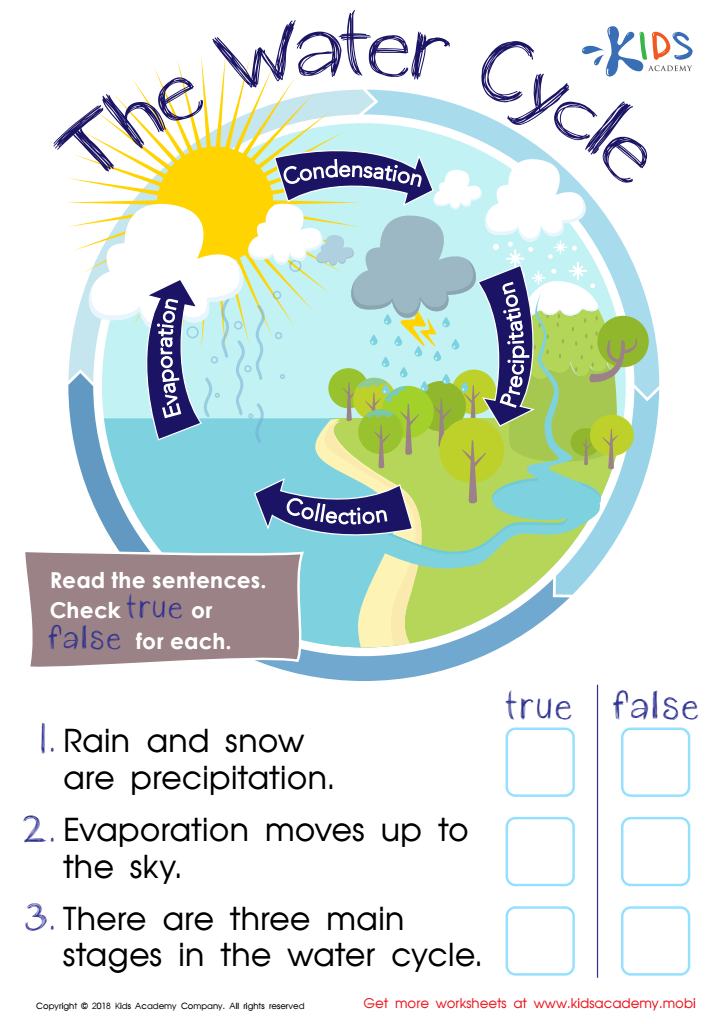
The Water Cycle Worksheet
 Assign to My Students
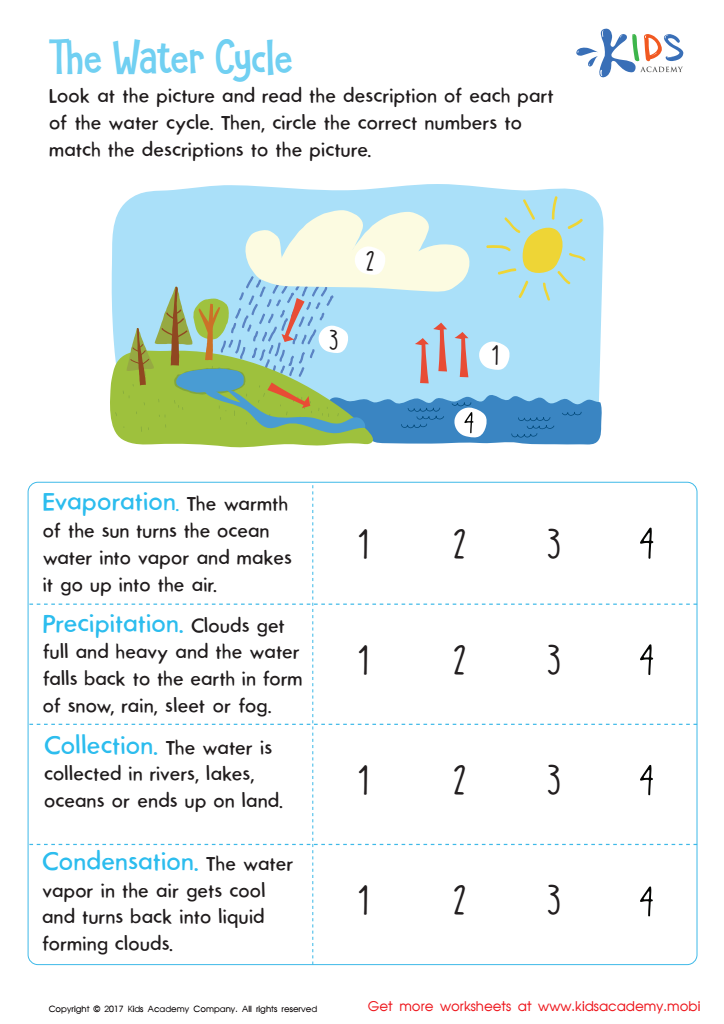
The Water Cycle Worksheet
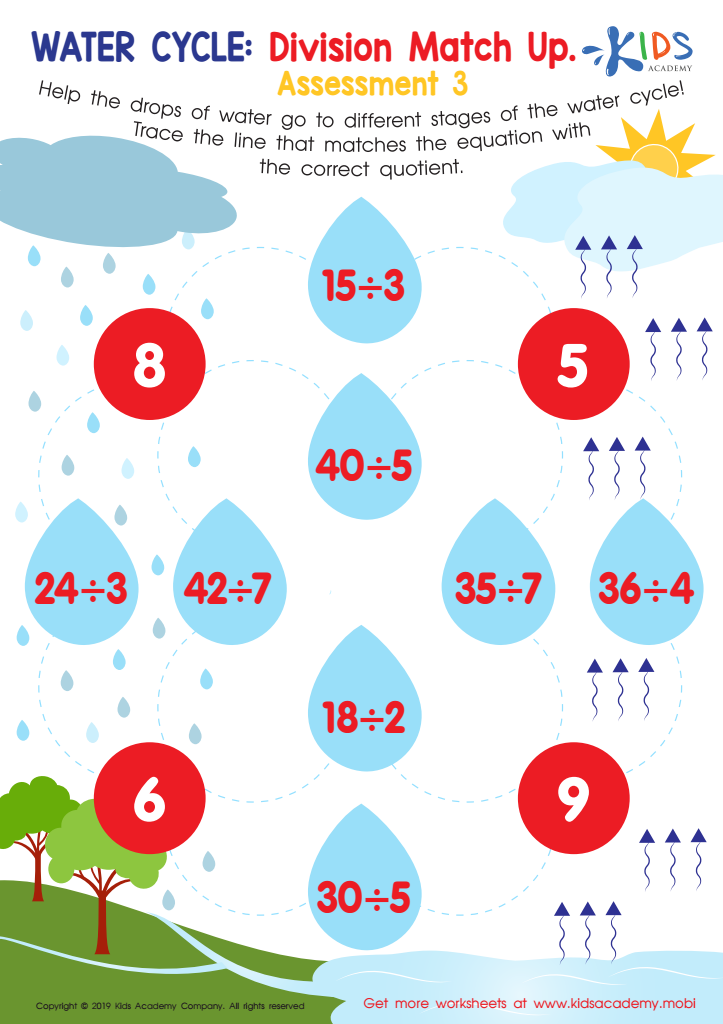
Water Cycle Division Match Up Assessment 3 Worksheet








Understanding the water cycle is crucial for children ages 6-9 as it forms a foundational aspect of their environmental education. At this age, children are naturally curious and eager to explore the world around them. Teaching them about the water cycle fosters a deeper awareness of nature's processes, highlighting the importance of water in our daily lives and ecosystems.
Parents and teachers should care because a grasp of the water cycle enhances critical thinking and scientific inquiry skills. Children learn about evaporation, condensation, precipitation, and collection, which helps them make connections between weather patterns and environmental changes. This knowledge nurtures responsible behaviors towards water conservation, encouraging kids to prioritize sustainable practices from a young age.
Moreover, the water cycle is interconnected with various subjects such as geography and biology, allowing for interdisciplinary learning experiences. Engaging activities, like experiments or nature walks, can make learning about the water cycle dynamic and memorable, instilling a lifelong interest in science.
In essence, understanding the water cycle empowers children to appreciate the environment, embrace stewardship, and recognize their role in ecological balance, making it a vital topic for parents and educators alike.








