Word association skills Worksheets for Ages 6-9
3 filtered results
-
From - To
Enhance your child's vocabulary and critical thinking with our engaging Word Association Skills Worksheets designed for ages 6-9. These interactive worksheets help young learners make connections between words, improving their language comprehension and cognitive abilities. With fun activities such as matching words, finding synonyms, and creating creative sentences, your child will develop essential reading and writing skills in an enjoyable way. Perfect for use at home or in the classroom, our resources cater to diverse learning styles and encourage exploration of language. Foster a love for words and boost confidence with these engaging educational tools tailored for early learners!
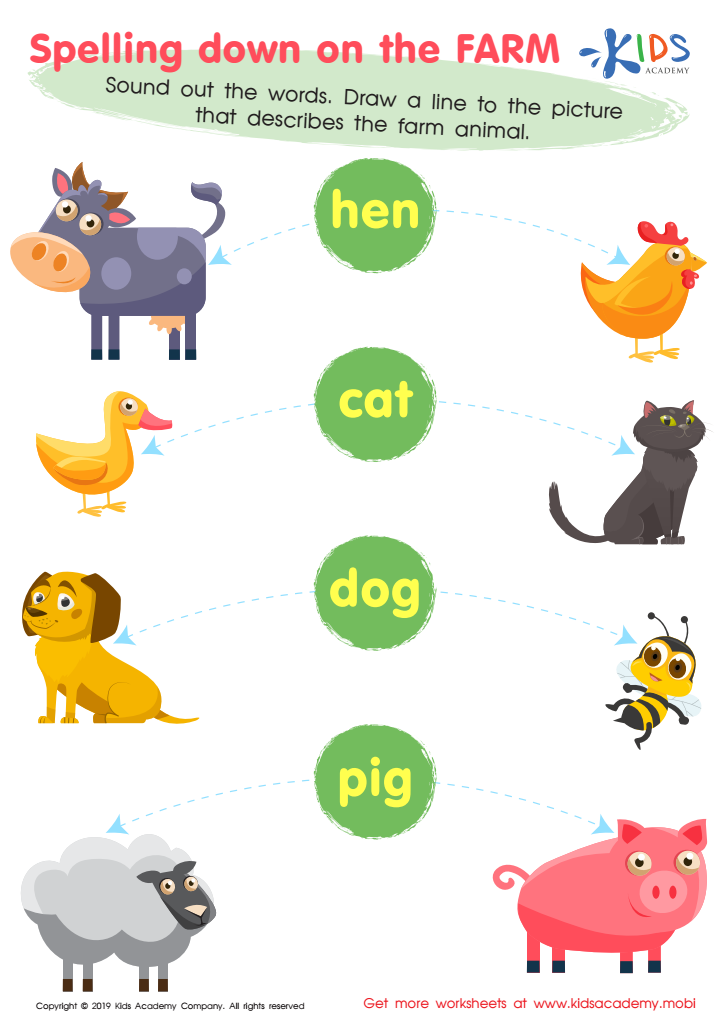
Spelling Down on the Farm Worksheet
 Assign to My Students
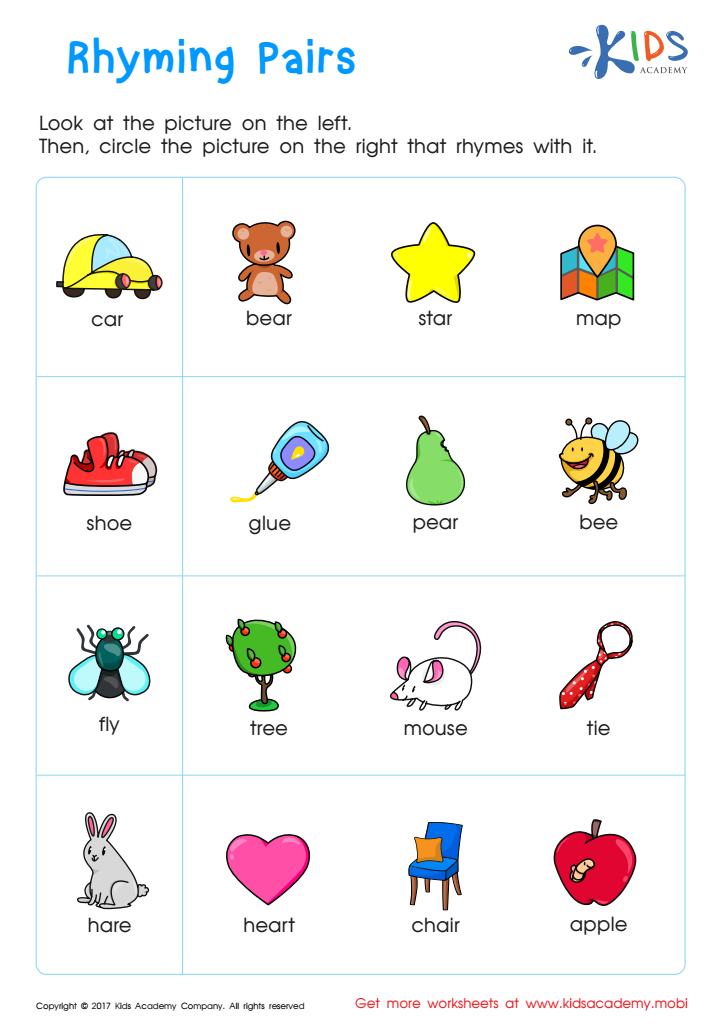
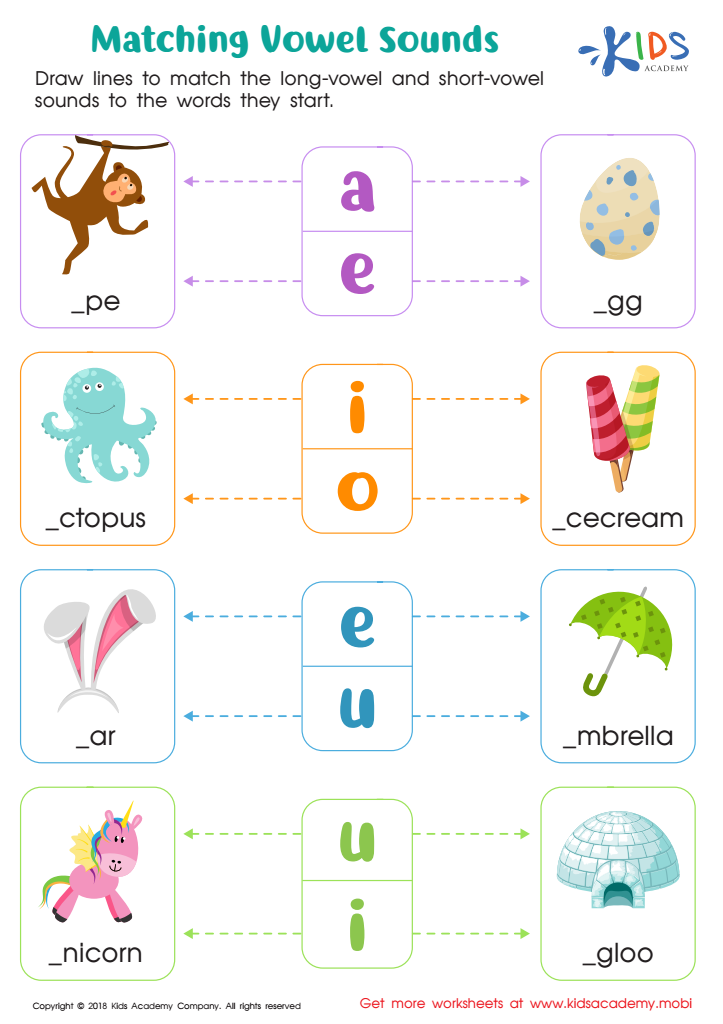
Matching Vowel Sounds Worksheet


.jpg)





Word association skills are crucial for children ages 6-9, as they form the foundation for effective communication, reading comprehension, and vocabulary development. At this stage, children are rapidly expanding their language abilities, and encouraging word association can greatly enhance their cognitive development. Through games and activities that link words with similar meanings, sounds, or contexts, children begin to understand relationships between words, which improves their ability to express thoughts clearly.
Moreover, strong word association skills promote critical thinking and creativity, enabling children to make connections between different concepts. This skill also assists in literacy development, helping kids decode unfamiliar words during reading by relating them to known ones. Teachers and parents should incorporate word association exercises into learning routines, fostering an engaging learning environment where children can explore language.
In addition, these skills can enhance social interactions; children who can articulate their thoughts and connect ideas with peers often build stronger relationships. By prioritizing word association skills, adults provide children with essential tools for academic success and effective communication, setting the stage for lifelong learning and emotional intelligence. Ultimately, fostering these skills can lead to greater confidence in both social and educational settings.








