Word formation understanding Worksheets for Ages 6-9
3 filtered results
-
From - To
Explore our engaging "Word Formation Understanding Worksheets" designed for children ages 6-9! Our thoughtfully crafted resources help young learners develop essential language skills by breaking down the process of word formation. Through fun activities such as matching, filling in the blanks, and identifying root words, these worksheets enhance vocabulary and comprehension. Ideal for both classroom and home learning, they encourage creativity and critical thinking. Our interactive approach ensures that kids will enjoy the journey of discovering how words come together, fostering a lifelong love for language. Empower your child's learning experience with these valuable tools today!
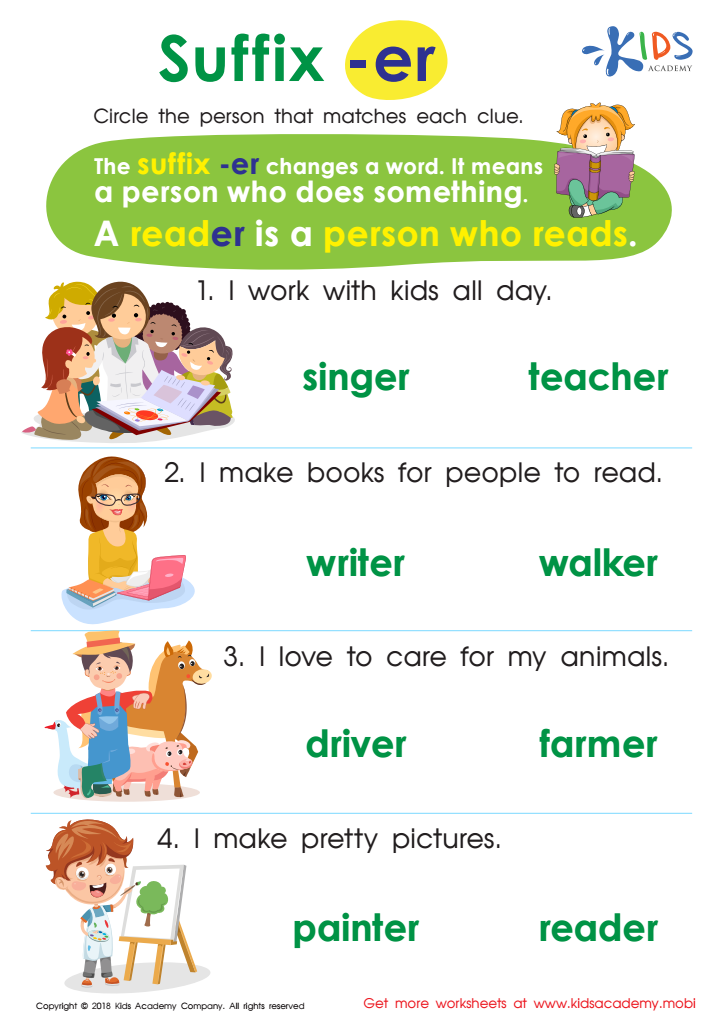
Suffix –er Printable Worksheet
 Assign to My Students
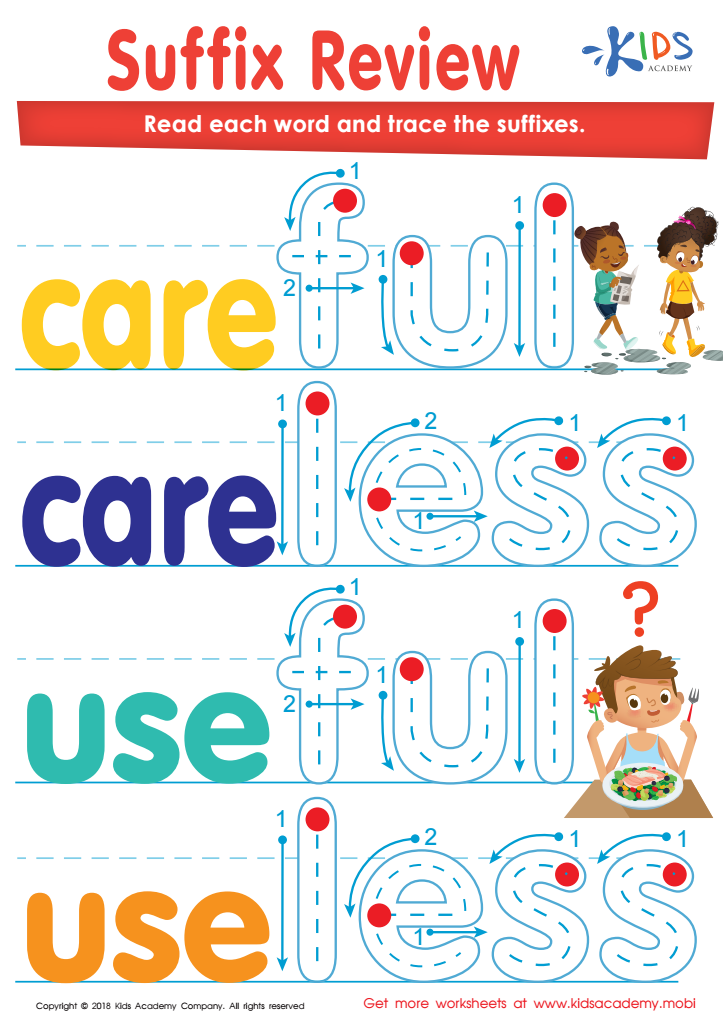
Suffix Review Worksheet
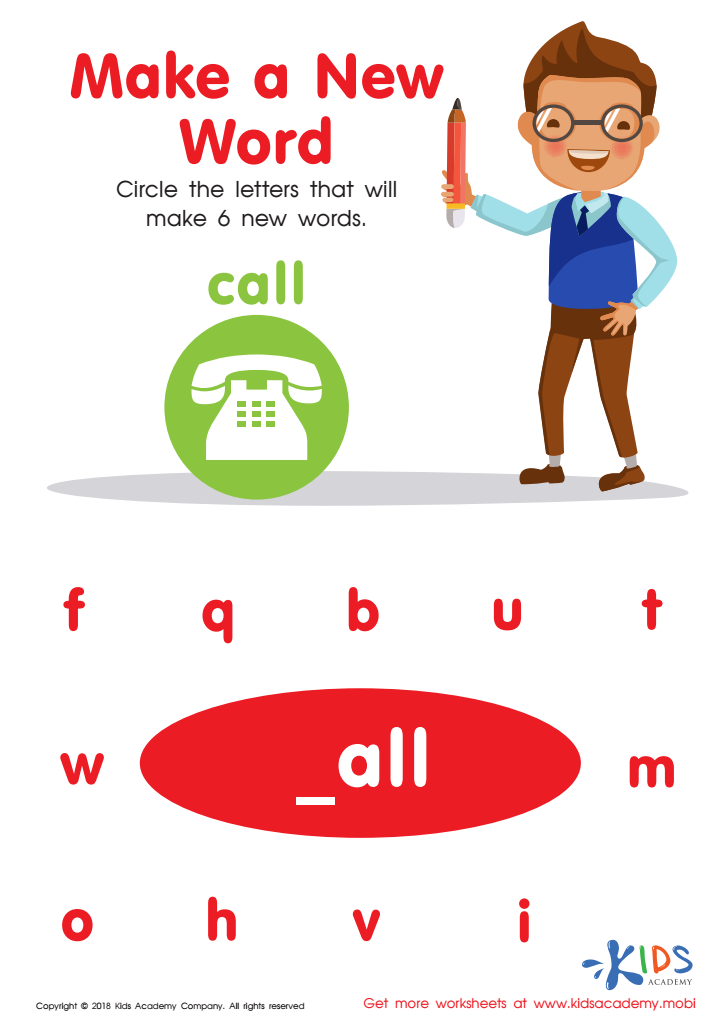
Make a New Word Worksheet








Understanding word formation is crucial for children aged 6-9, as it plays a significant role in their overall literacy development. During these formative years, children are increasingly engaging with reading and writing, and a solid grasp of word formation can enhance their decoding and comprehension skills. By recognizing how prefixes, suffixes, and root words combine to create new words, students can significantly expand their vocabulary and improve their ability to infer the meanings of unfamiliar words.
Additionally, a foundational understanding of how words are constructed aids in spelling, enabling children to tackle complex words with confidence. Teachers and parents should encourage exploration of word patterns and build familiarity with language rules, fostering not just rote memorization, but also critical thinking and creative language use.
In the classroom and at home, activities that emphasize word formation, such as word games and creative writing exercises, can make learning engaging. This approach equips children with essential skills that lay the groundwork for future academic success, enhancing their communication abilities, encouraging a love for reading, and empowering them to express their thoughts clearly. Overall, prioritizing word formation knowledge gives children the tools they need to navigate language effectively in a rapidly changing world.








