Understanding fractions Adding up to 1000 Without Regrouping Worksheets for Ages 6-9

Filters

13 filtered results

Clear all filters
Favorites
With answer key
Interactive

13 filtered results

Difficulty Level

Grade


Boost your child's math skills with our "Understanding Fractions Adding up to 1000 Without Regrouping Worksheets" designed for ages 6-9! These engaging worksheets introduce young learners to the fundamentals of fractions and addition in an easy-to-understand format. Your child will gain essential math abilities without the complication of regrouping. Perfect for classroom and home learning, these worksheets make understanding fractions fun and straightforward. Developed by educational experts, our resources foster mathematical confidence while ensuring foundational concepts are solidified. Help your child excel in math with our effective and enjoyable worksheets today!
Check out this FREE Trial Lesson on Adding up to 1000 Without Regrouping for age 6-9!

Match Exactly the Same

Favorites
With answer key
Interactive
  • 6-9
  • Understanding fractions
  • Adding up to 1000 Without Regrouping
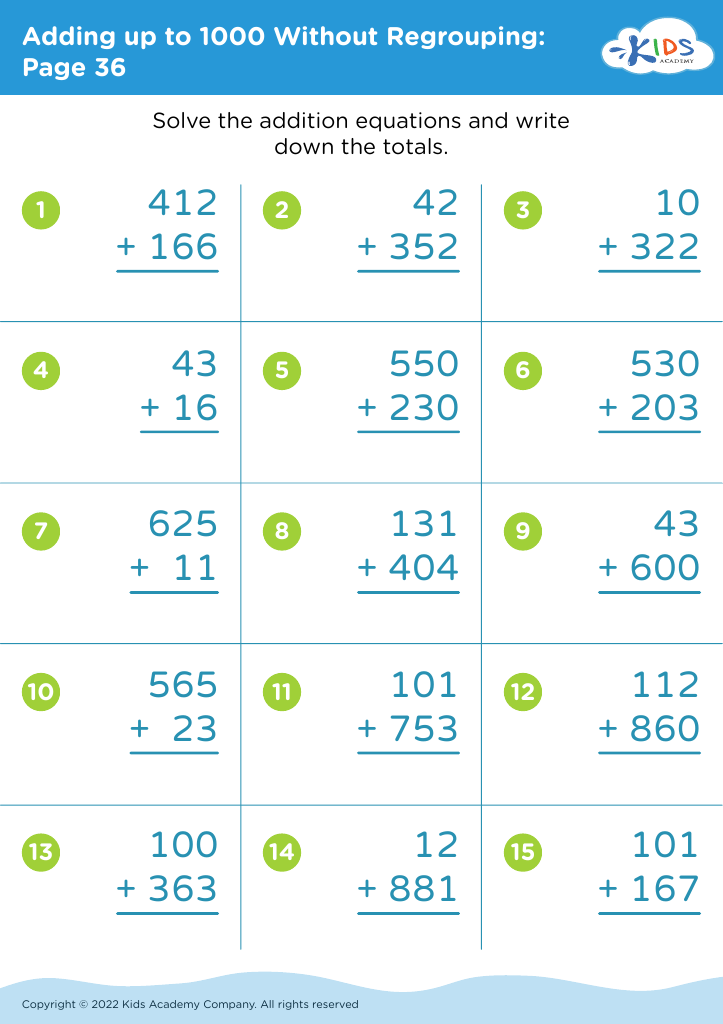
Adding up to 1000 Without Regrouping: Page 36
Worksheet
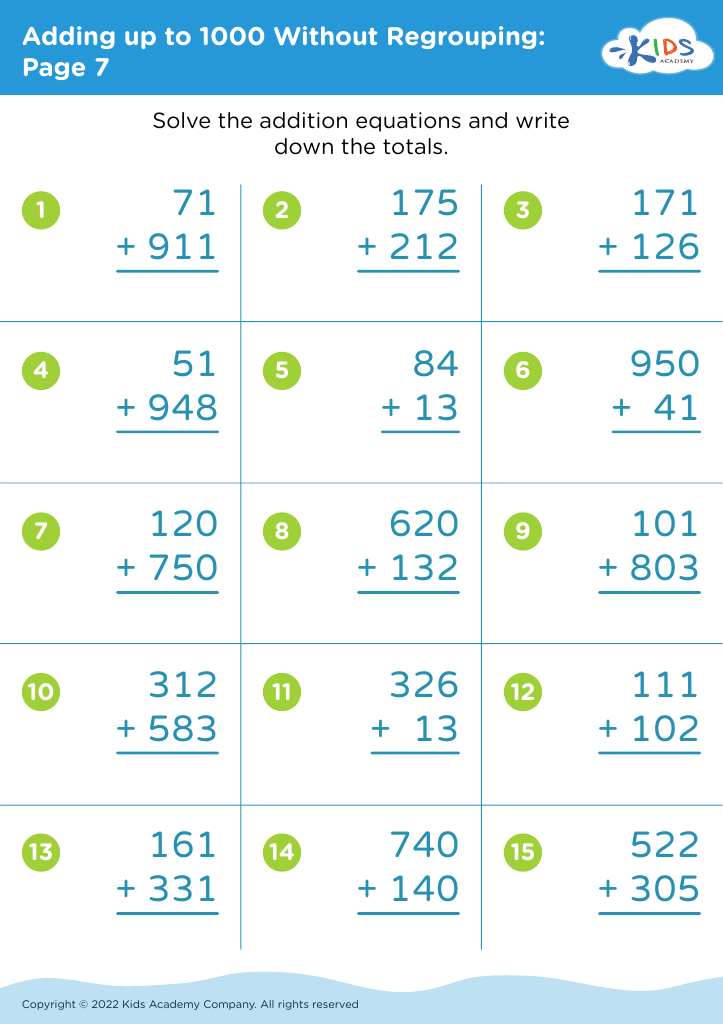
Adding up to 1000 Without Regrouping: Page 7
Worksheet
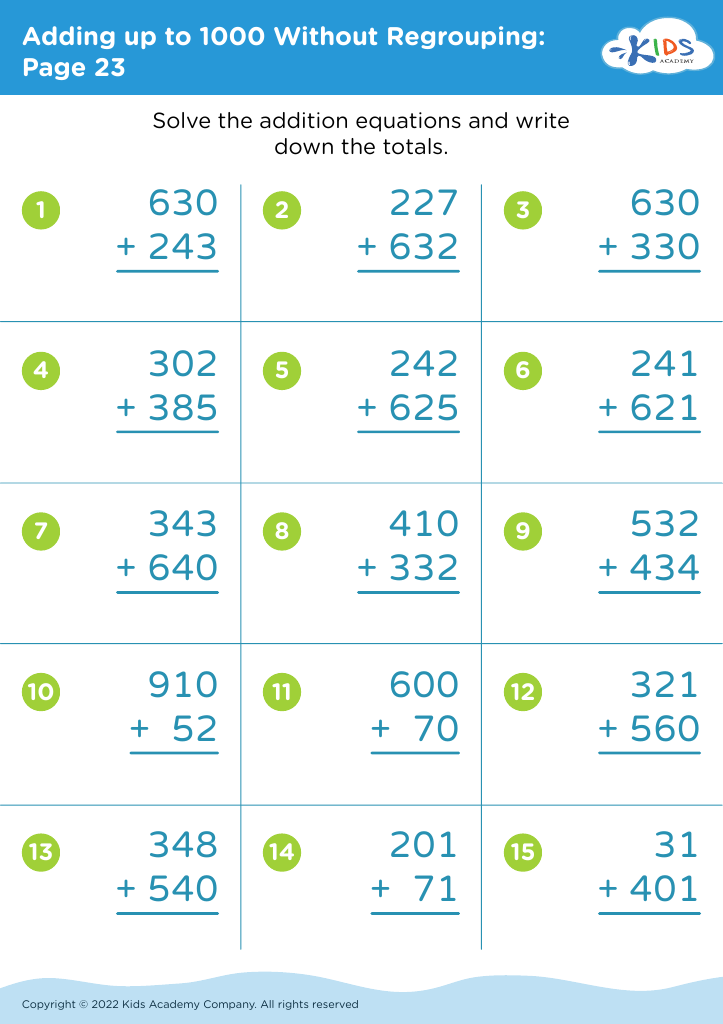
Adding up to 1000 Without Regrouping: Page 23
Worksheet
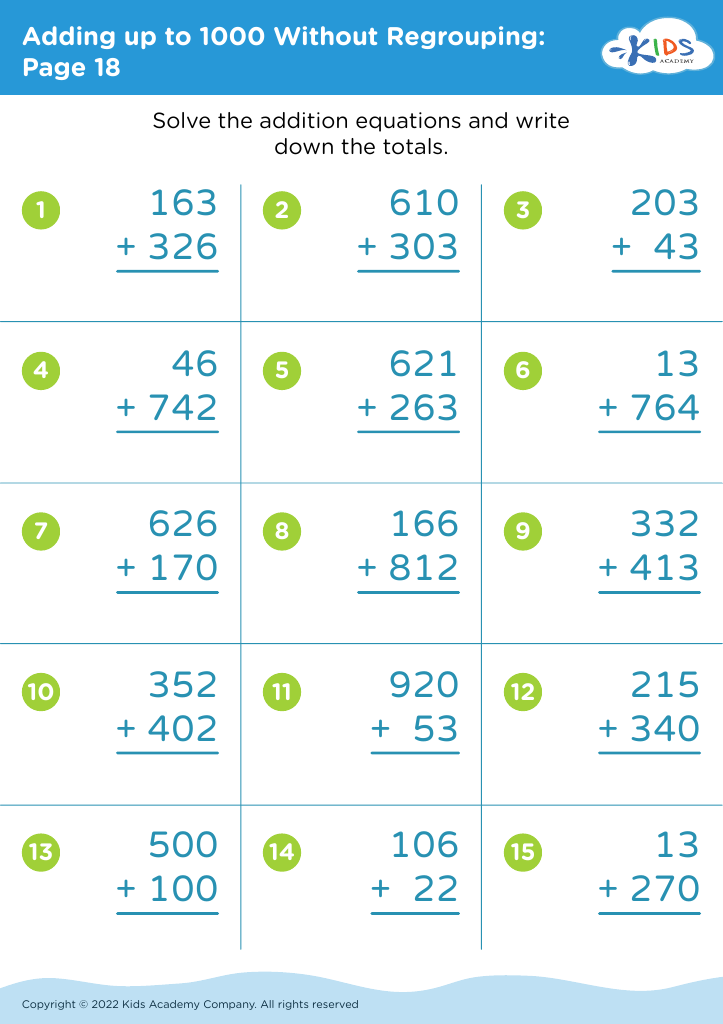
Adding up to 1000 Without Regrouping: Page 18
Worksheet
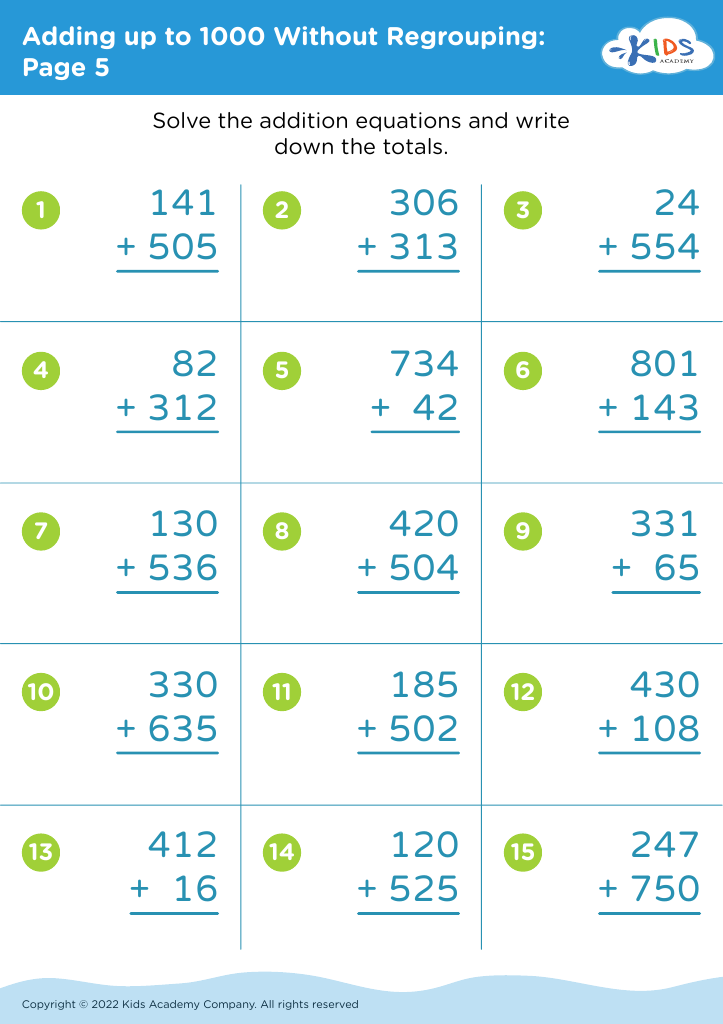
Adding up to 1000 Without Regrouping: Page 5
Worksheet
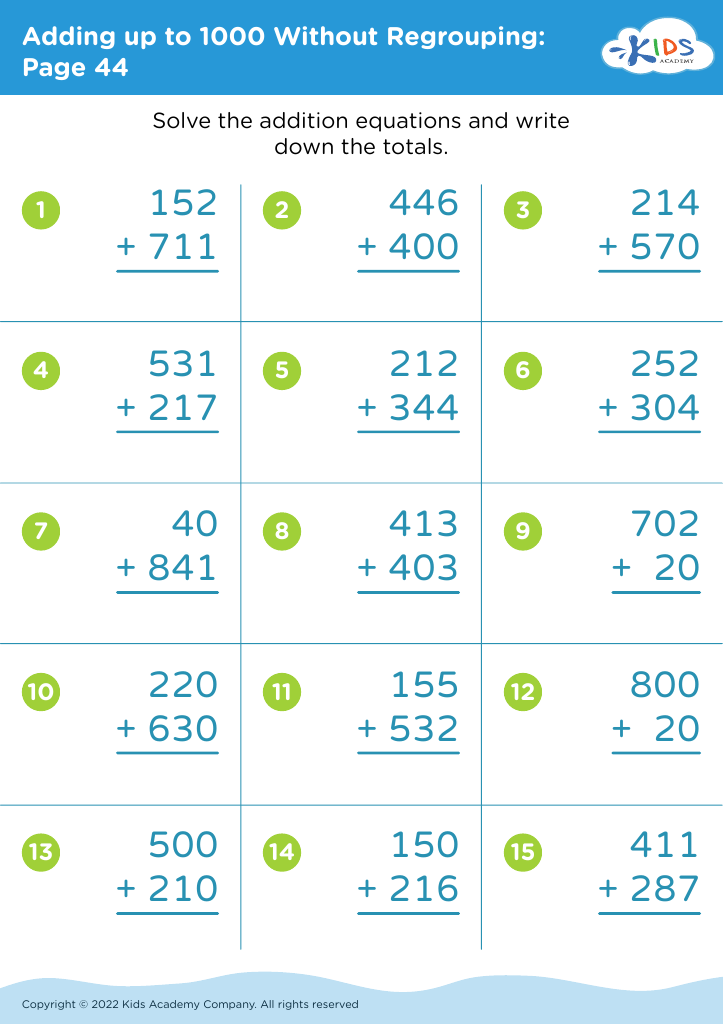
Adding up to 1000 Without Regrouping: Page 44
Worksheet
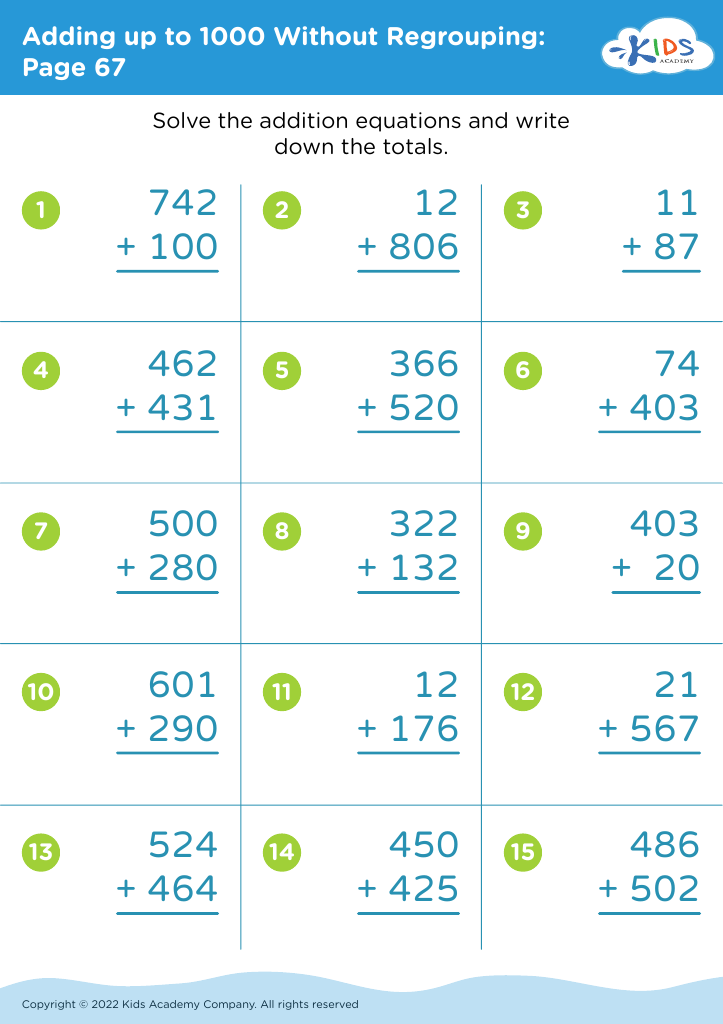
Adding up to 1000 Without Regrouping: Page 67
Worksheet
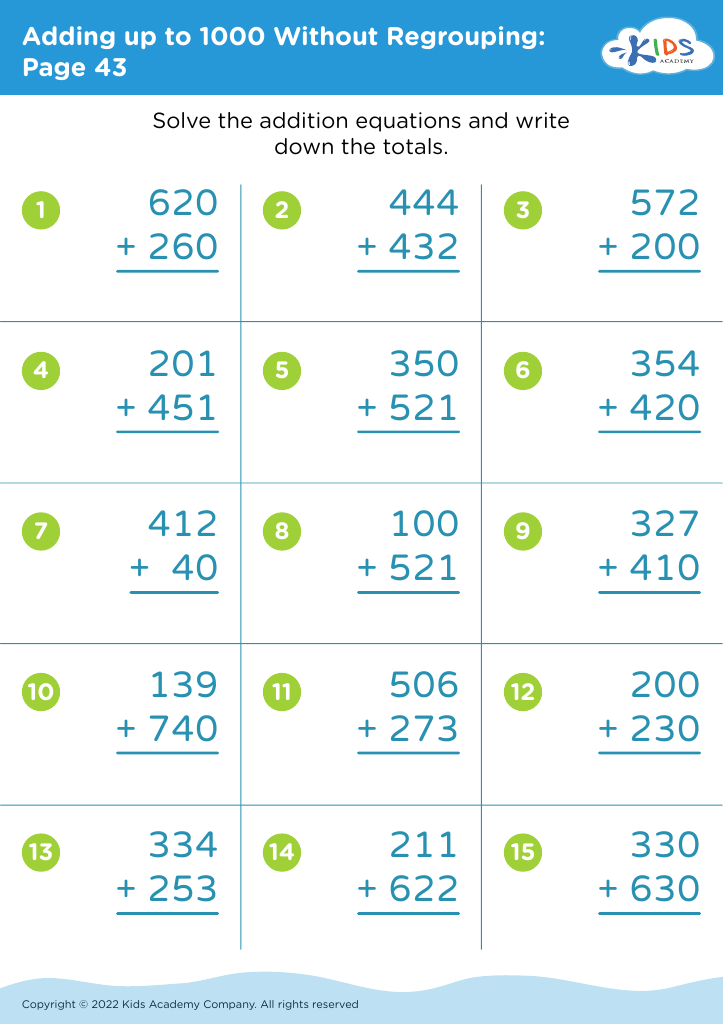
Adding up to 1000 Without Regrouping: Page 43
Worksheet
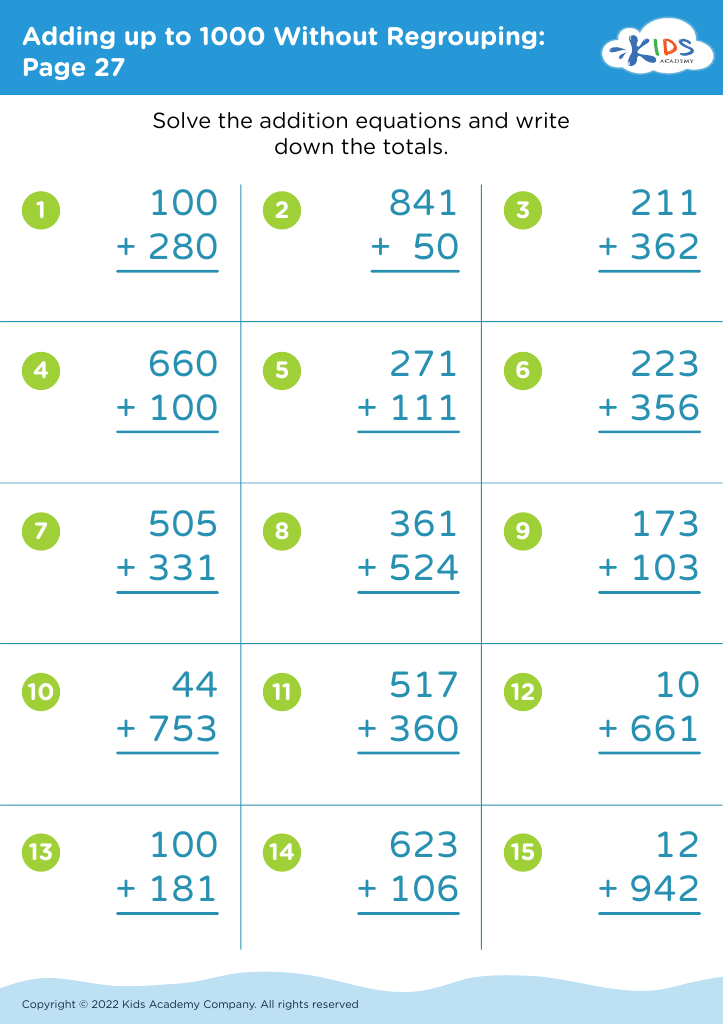
Adding up to 1000 Without Regrouping: Page 27
Worksheet
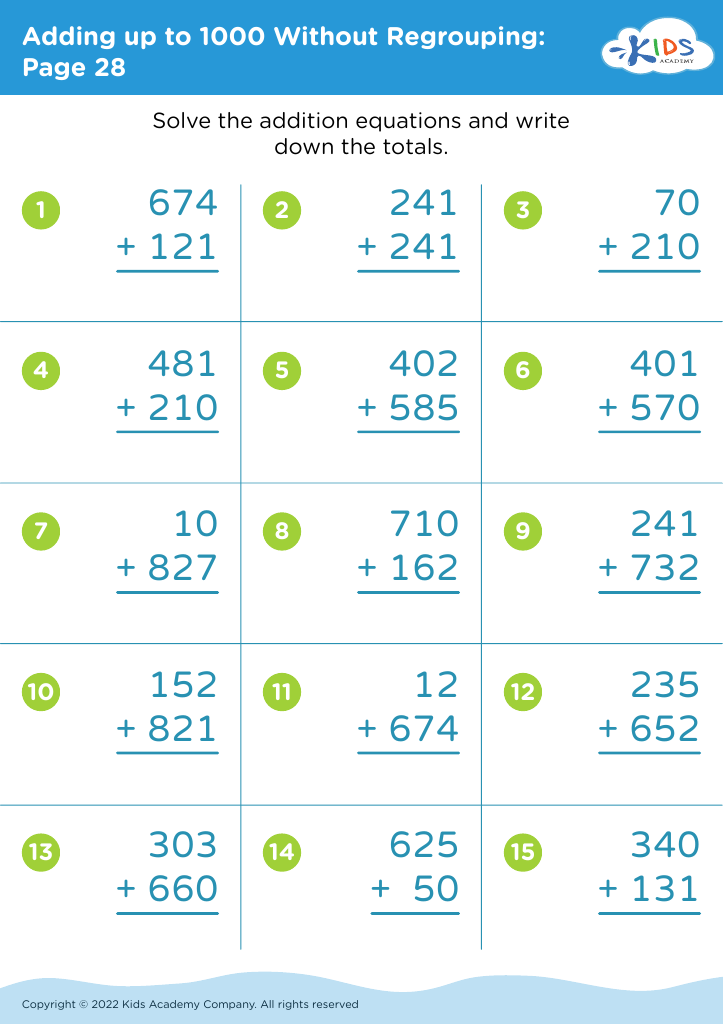
Adding up to 1000 Without Regrouping: Page 28
Worksheet
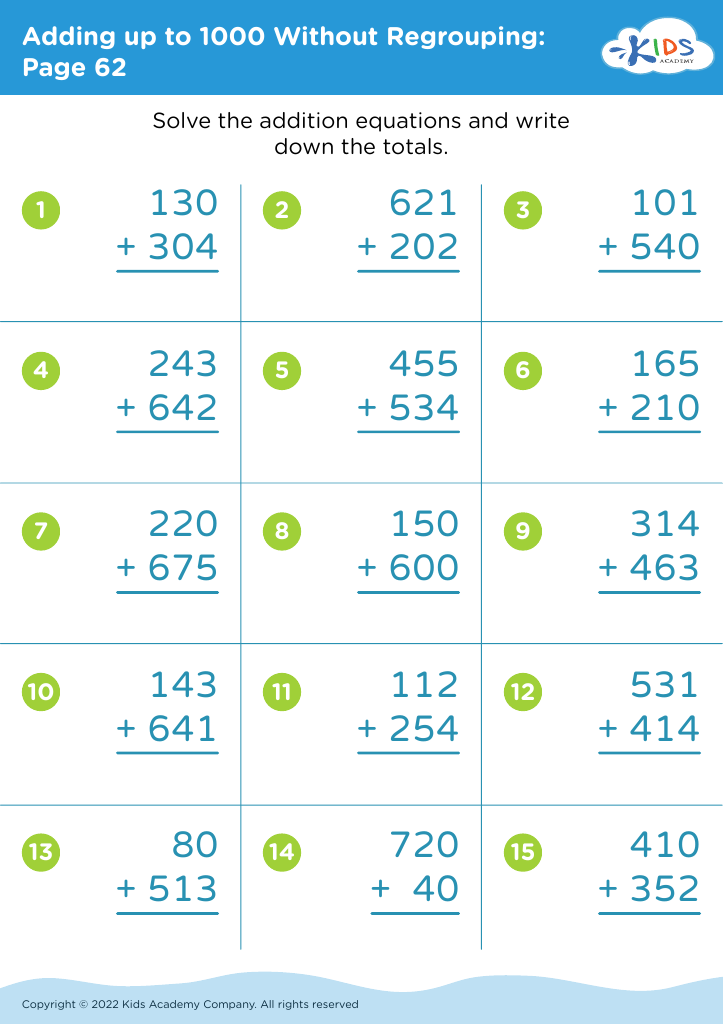
Adding up to 1000 Without Regrouping: Page 62
Worksheet
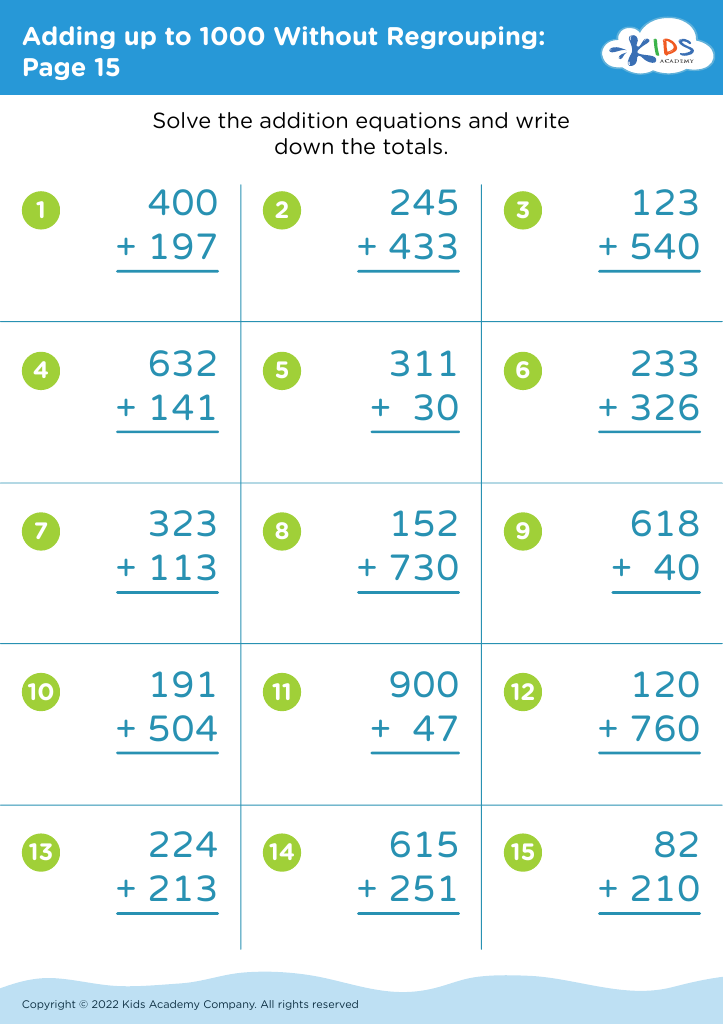
Adding up to 1000 Without Regrouping: Page 15
Worksheet
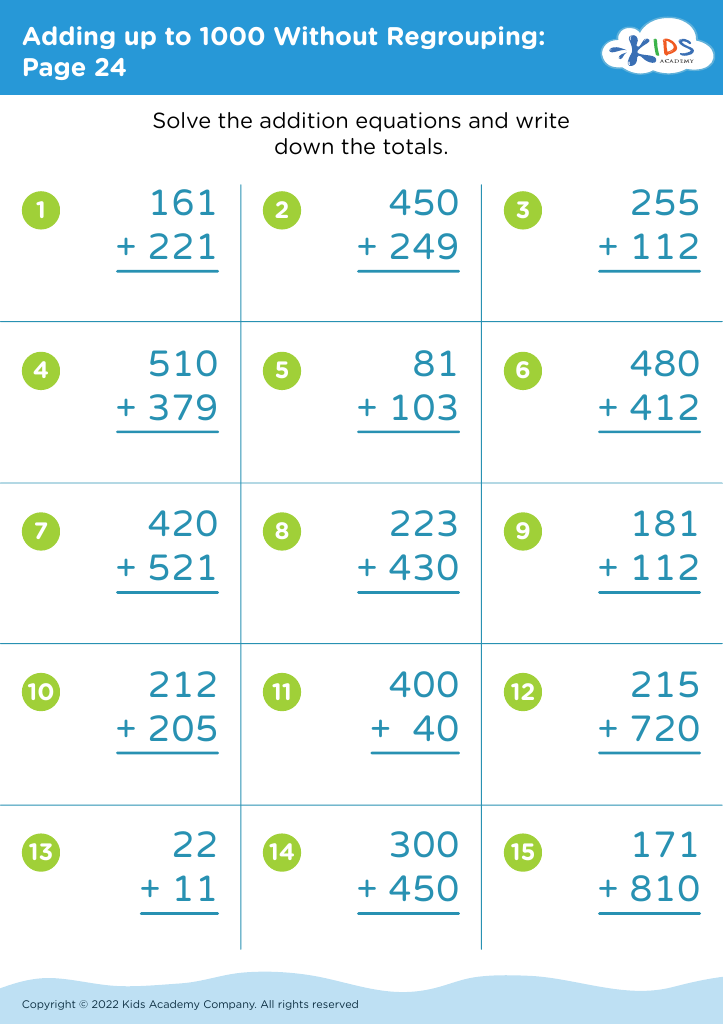
Adding up to 1000 Without Regrouping: Page 24
Worksheet


Understanding fractions and learning to add up numbers without regrouping are essential skills for young children aged 6-9 because they form the foundation for more advanced mathematical concepts. First, grasping fractions helps kids comprehend parts of a whole, an important skill not just in math, but in everyday life. For example, knowing about halves, thirds, and quarters aids in sharing tasks like dividing snacks or playing games that involve scores.

Adding numbers without regrouping, up to 1000, fosters number sense and mental math skills. At this stage, children enhance their ability to manipulate numbers and understand their properties, making future arithmetic operations like subtraction, multiplication, and division smoother. It builds confidence, as kids see that math can be manageable and fun.

Moreover, these early math skills are critical for academic success. Proficiency in basic math affects performance in subjects beyond mathematics, as it can help develop logical thinking and problem-solving abilities. Parents and teachers who prioritize these concepts ensure children are prepared for more complex math topics, promote a positive attitude towards learning, and support overall cognitive development. Investing time and effort in mastering these skills is an investment in the child's educational journey and future opportunities.