Improve reading skills Adding up to 1000 Worksheets for Ages 6-9
13 filtered results
-
From - To
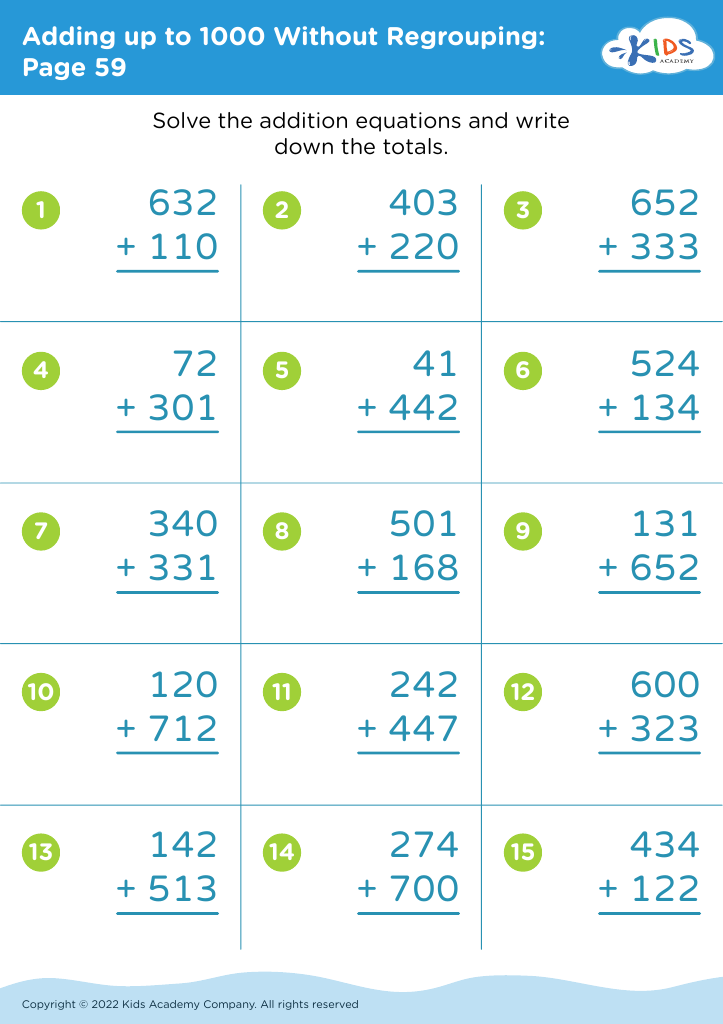
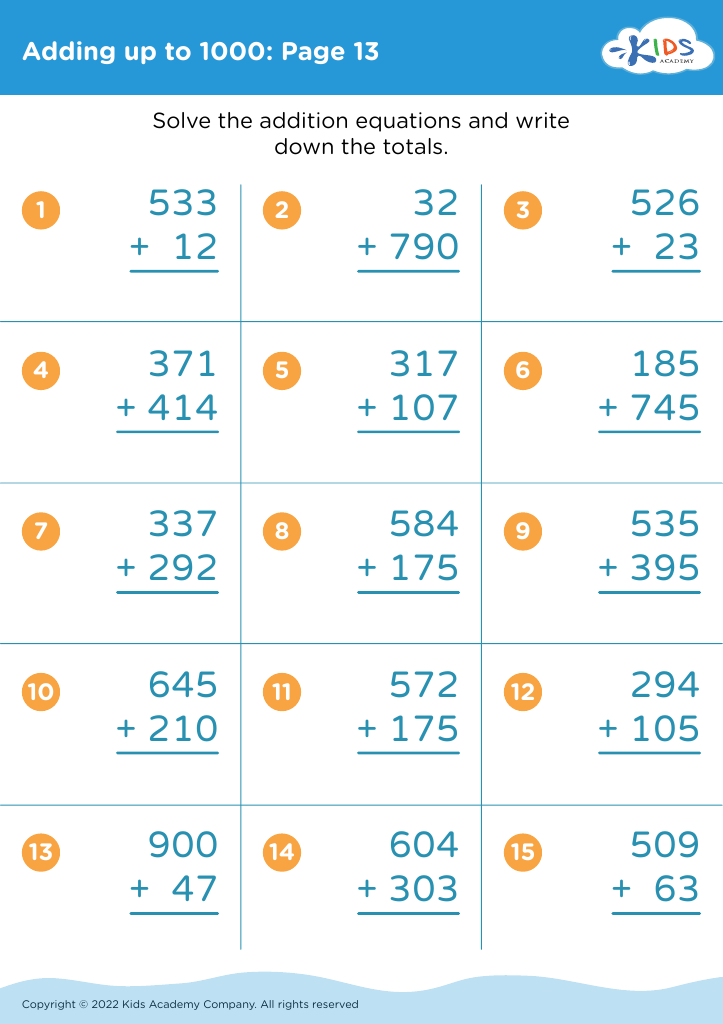
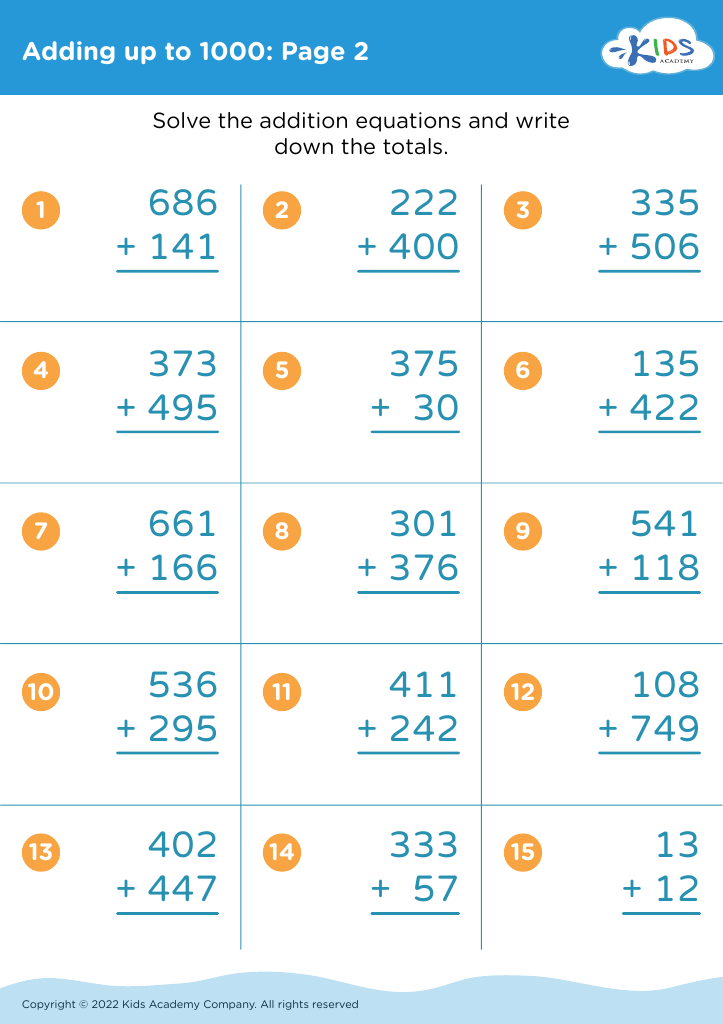
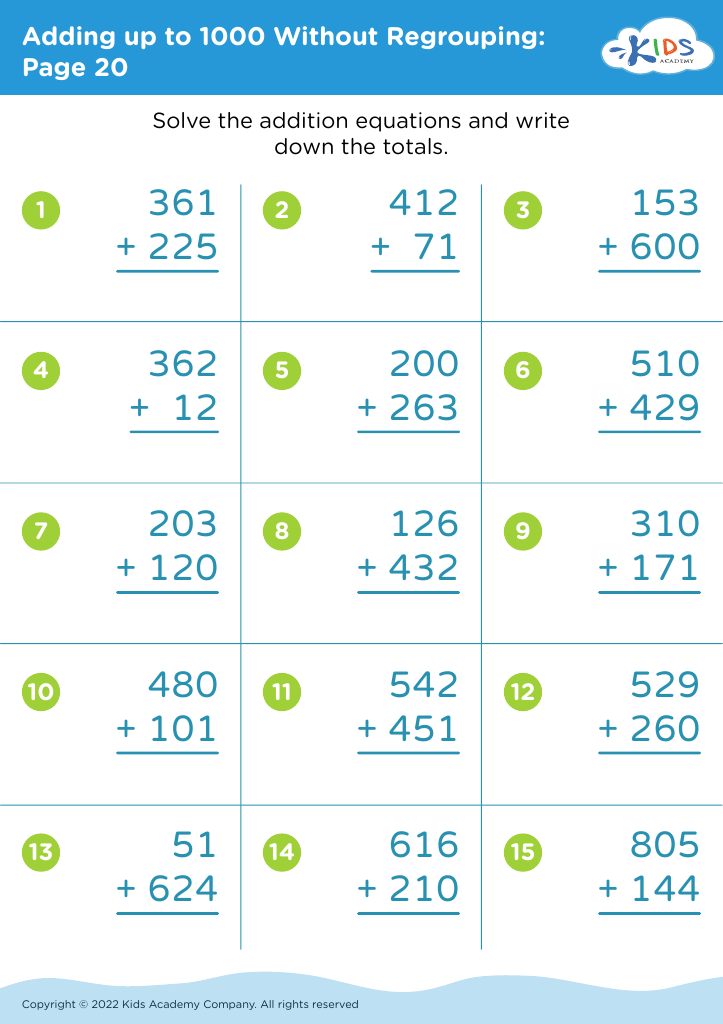
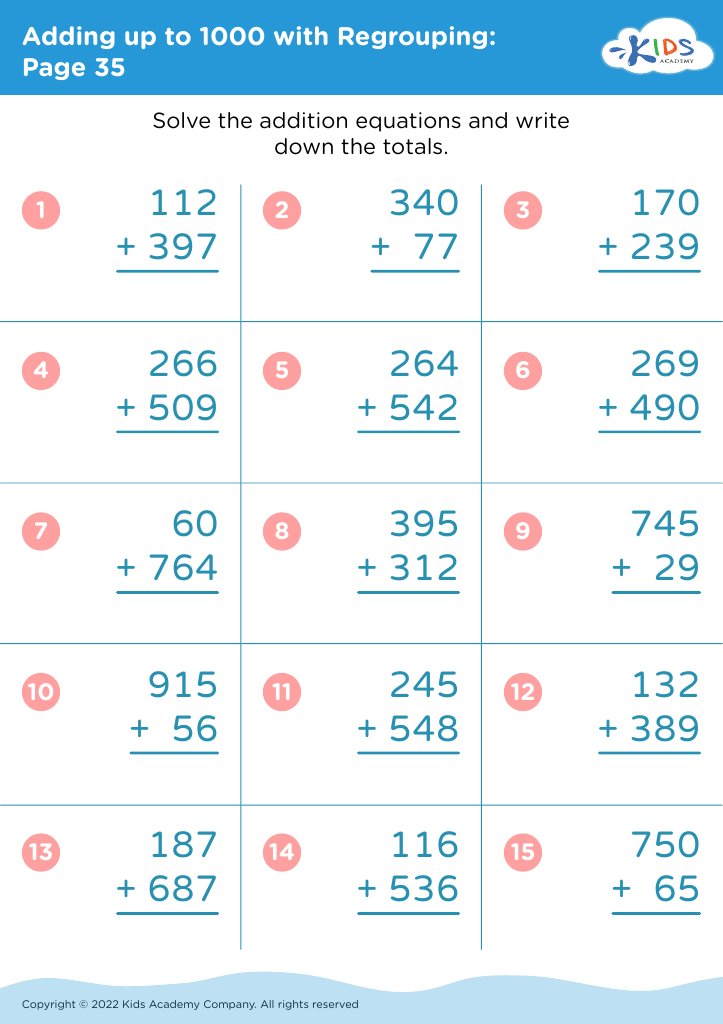
Enhance your child's reading and math abilities with our "Improve Reading Skills Adding Up to 1000 Worksheets" specifically designed for ages 6-9. These engaging worksheets combine essential reading practice with fun math problems to solidify understanding and boost confidence. Perfect for independent practice or guided learning, each carefully crafted worksheet helps young learners grasp addition up to 1000 while simultaneously improving comprehension and critical thinking skills. With colorful visuals and age-appropriate challenges, our worksheets make learning enjoyable and effective. Ideal for parents and educators seeking to support kids' academic growth with well-rounded, skill-building activities.
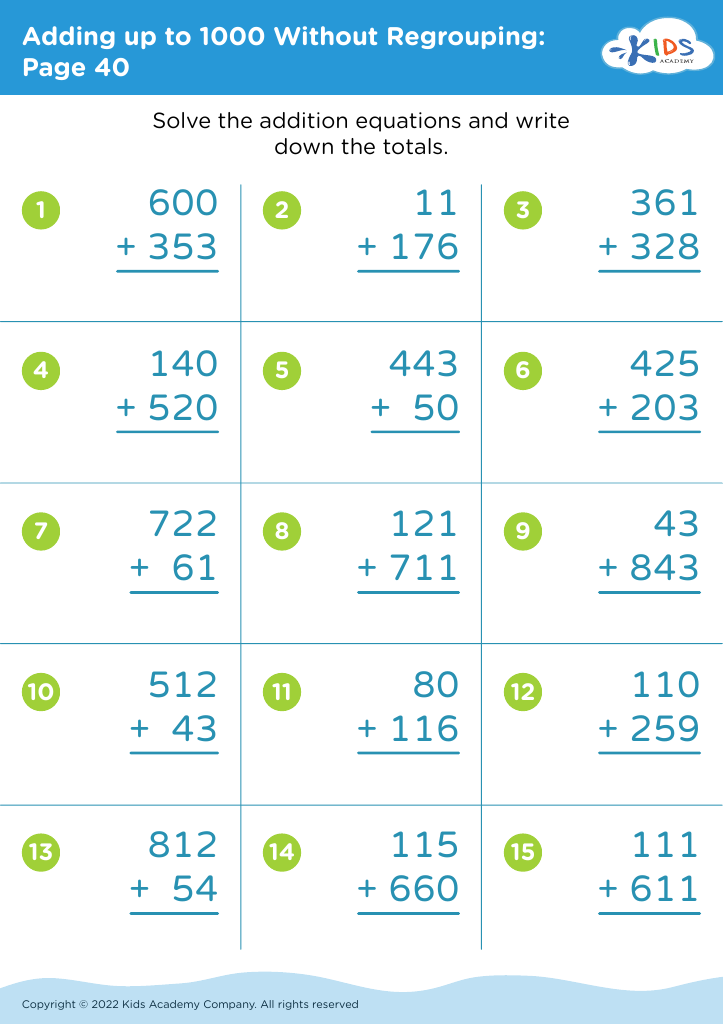
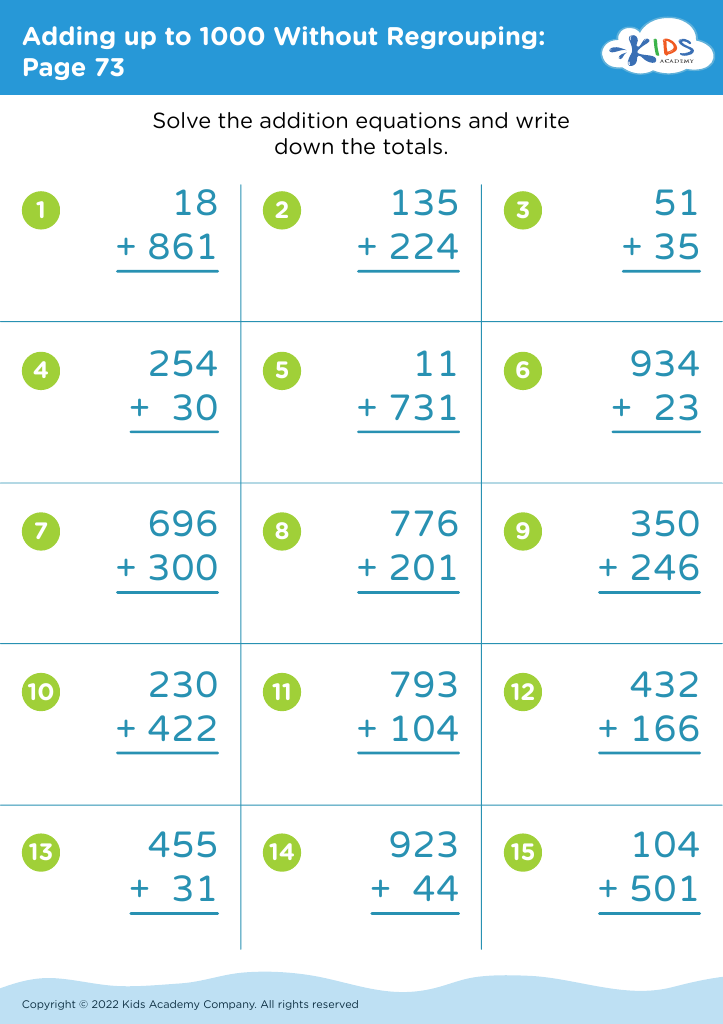
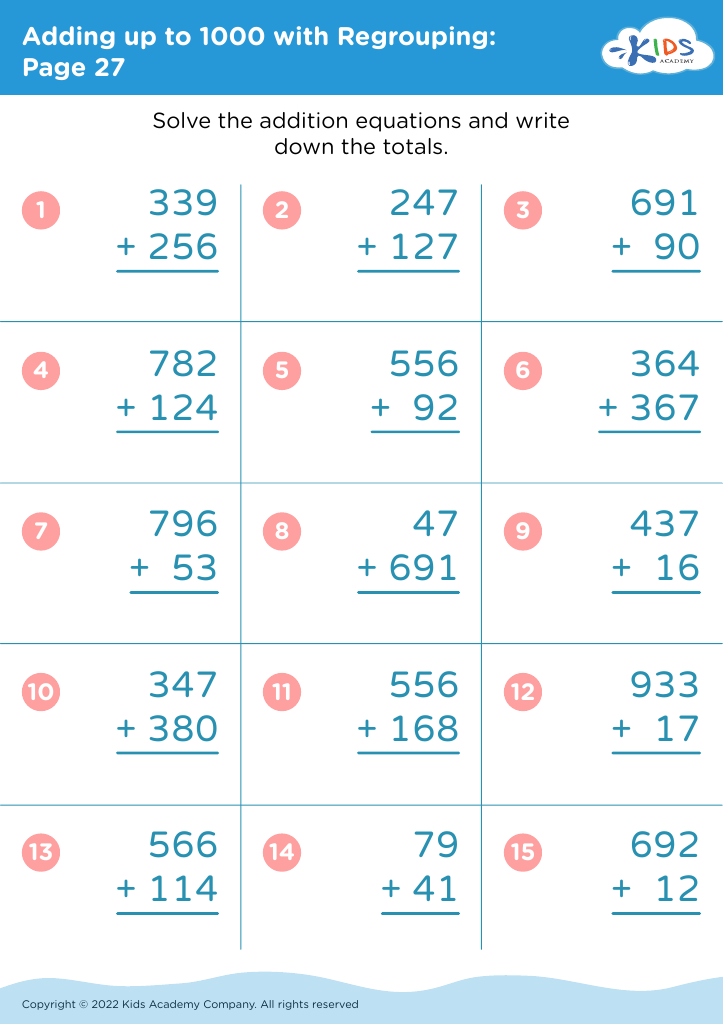
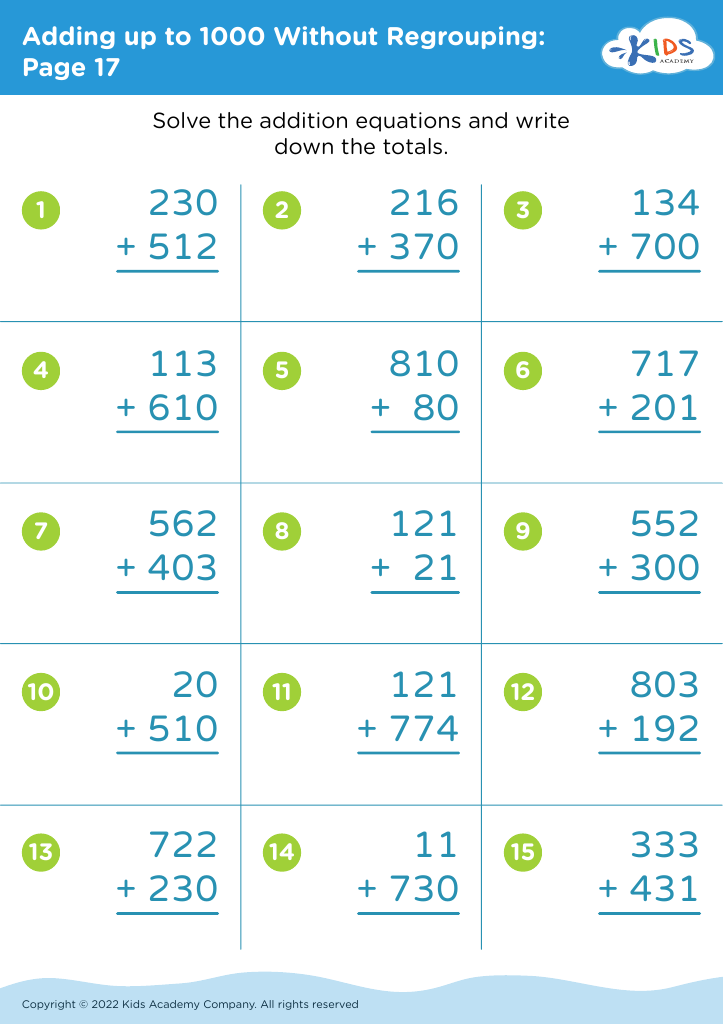
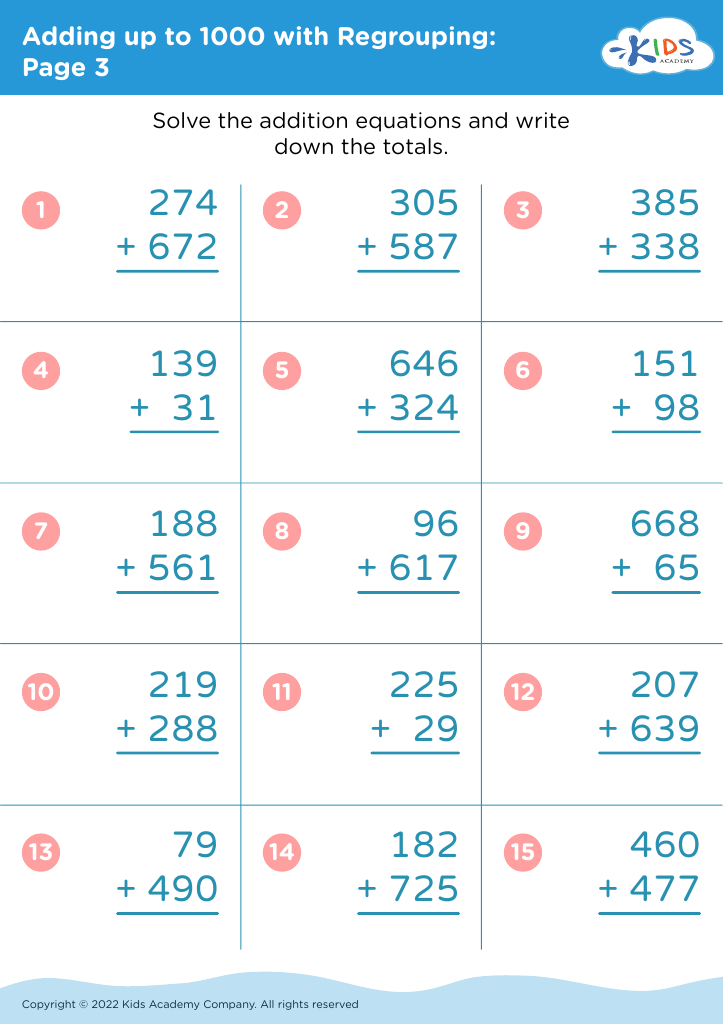
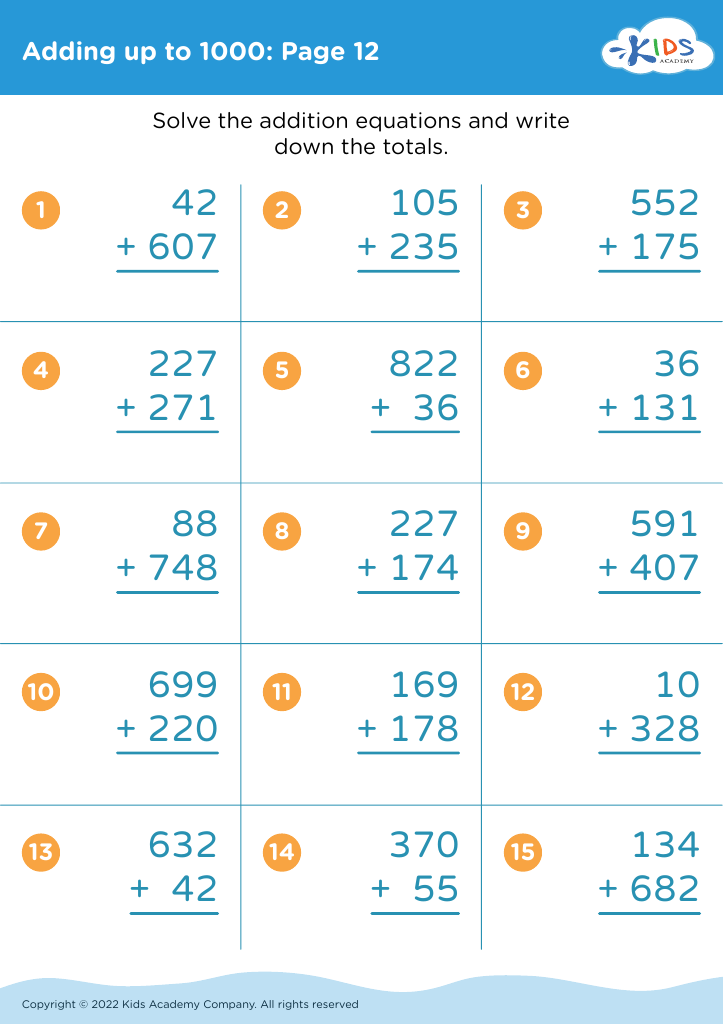
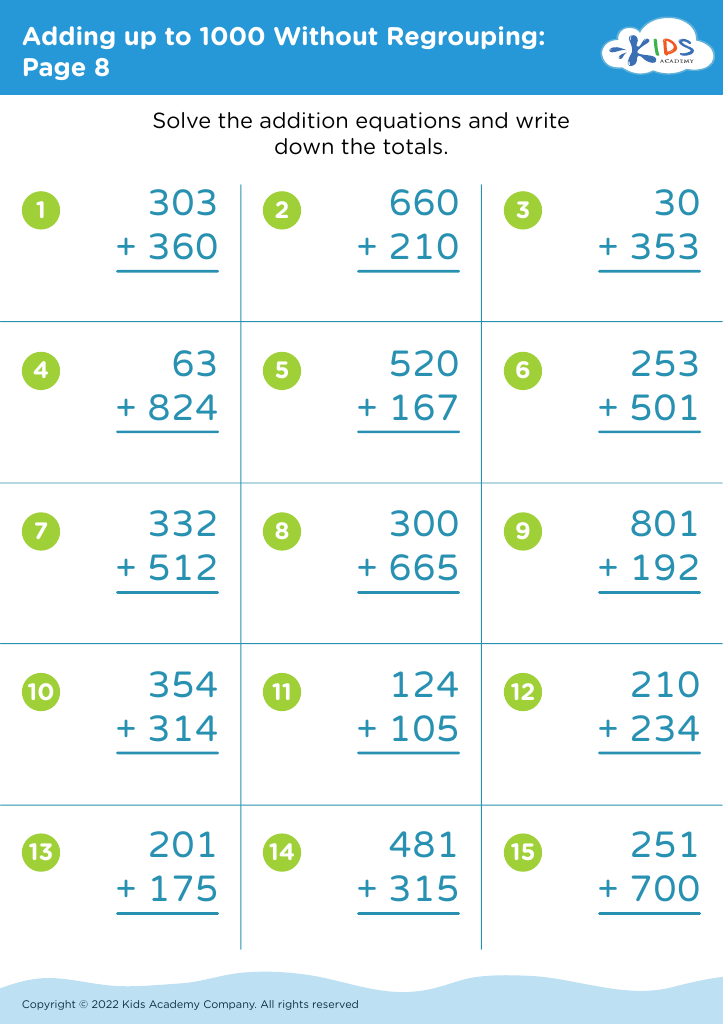
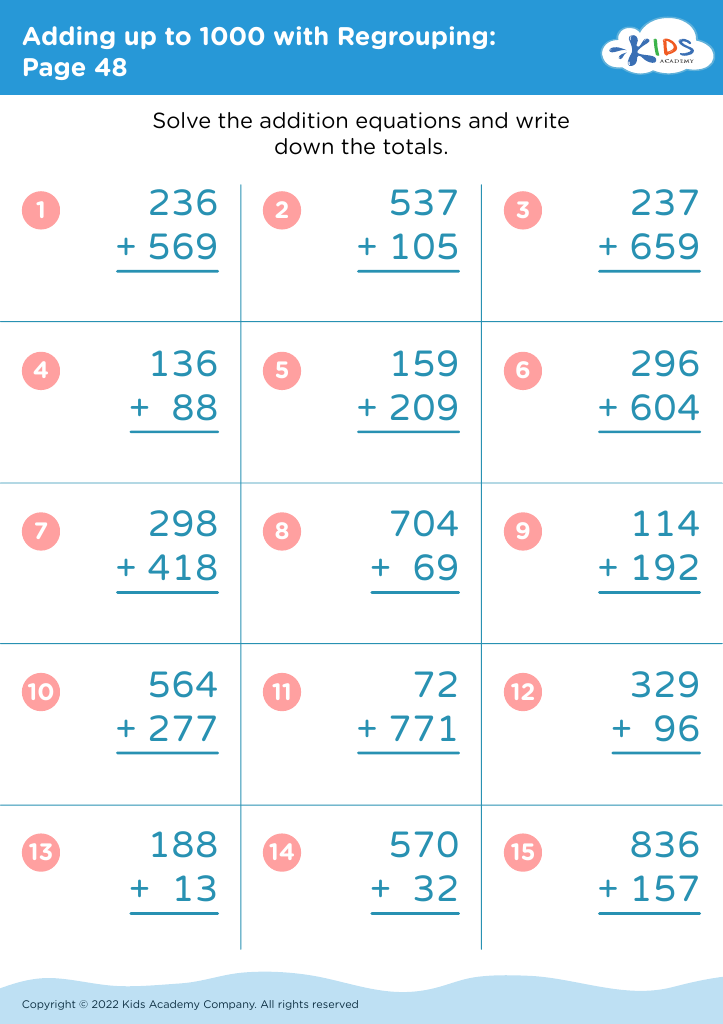



Parents and teachers should care about improving reading skills, such as adding up to 1000 for ages 6-9, because foundational literacy and numeracy are crucial for a child’s academic success and cognitive development. At this age, children are at a pivotal point where their brains are highly receptive to acquiring new skills. By mastering reading and basic arithmetic, they build the confidence and competence needed for more complex tasks.
Reading skills, including comprehension and fluency, empower children to understand and engage with a variety of subjects, from science to history. Enhanced reading abilities support a lifelong love of learning and curiosity, opening doors to exploring different fields of knowledge. Improved literacy also directly impacts social and communication skills, providing children the tools they need to express themselves and understand others in their daily interactions.
Similarly, acquiring the ability to add up to 1000 sharpens a child's mathematical thinking and problem-solving abilities. Early numeracy fosters logical reasoning and analytical skills that are applicable in real-life situations, such as handling money and measuring time. Proficiency in math encourages a growth mindset, resilience in overcoming challenges, and a sense of accomplishment.
Thus, nurturing these skills early on contributes significantly towards forming well-rounded, confident learners capable of excelling academically and socially.








