Filters

44 filtered results

Clear all filters
Favorites
With answer key
Interactive

44 filtered results

Difficulty Level

Grade


Check out this FREE Trial Lesson on Adding up to 1000 for age 6-9!

T

Favorites
With answer key
Interactive
  • 6-9
  • Understanding fractions
  • Adding up to 1000
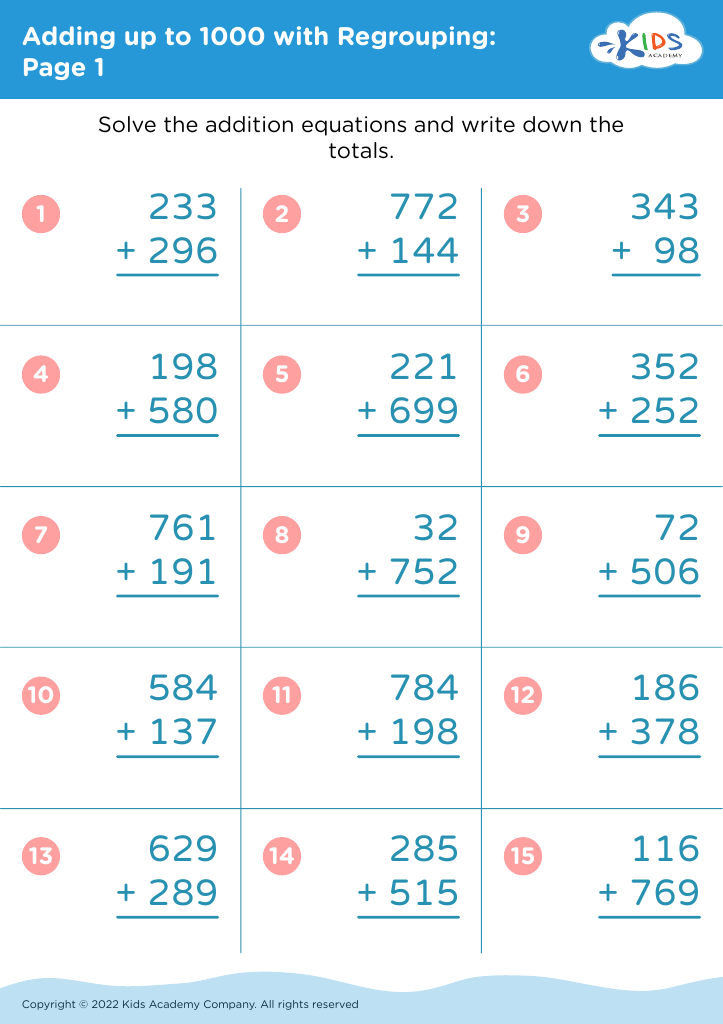
Adding up to 1000 with Regrouping: Page 1
Worksheet
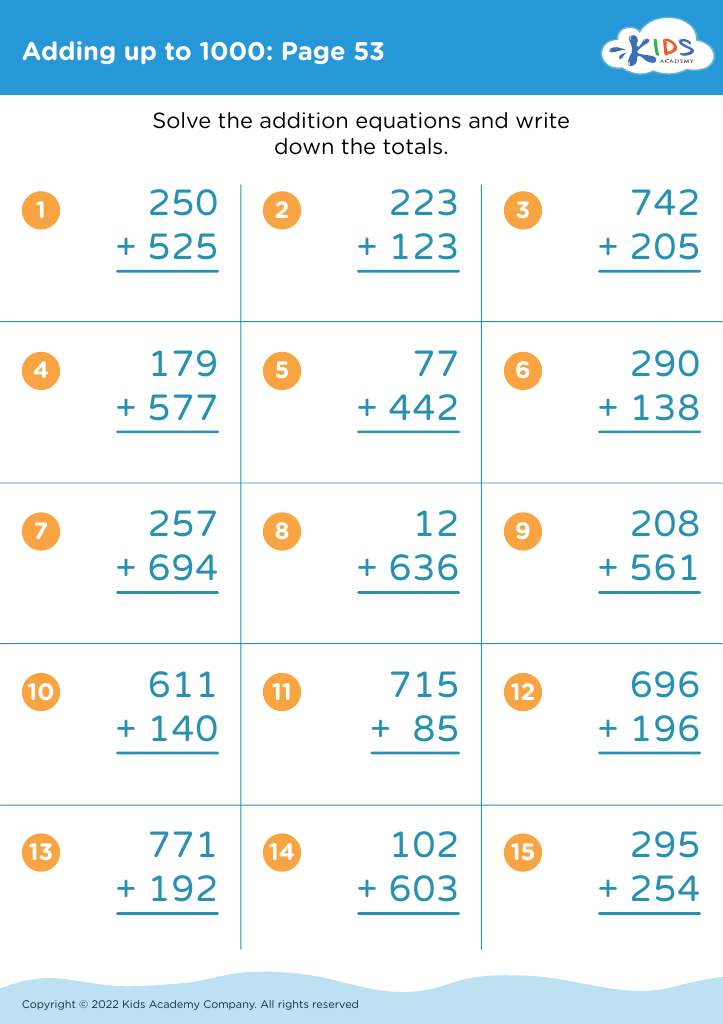
Adding up to 1000: Page 53

Adding up to 1000: Page 53

Adding up to 1000: Page 53
Worksheet
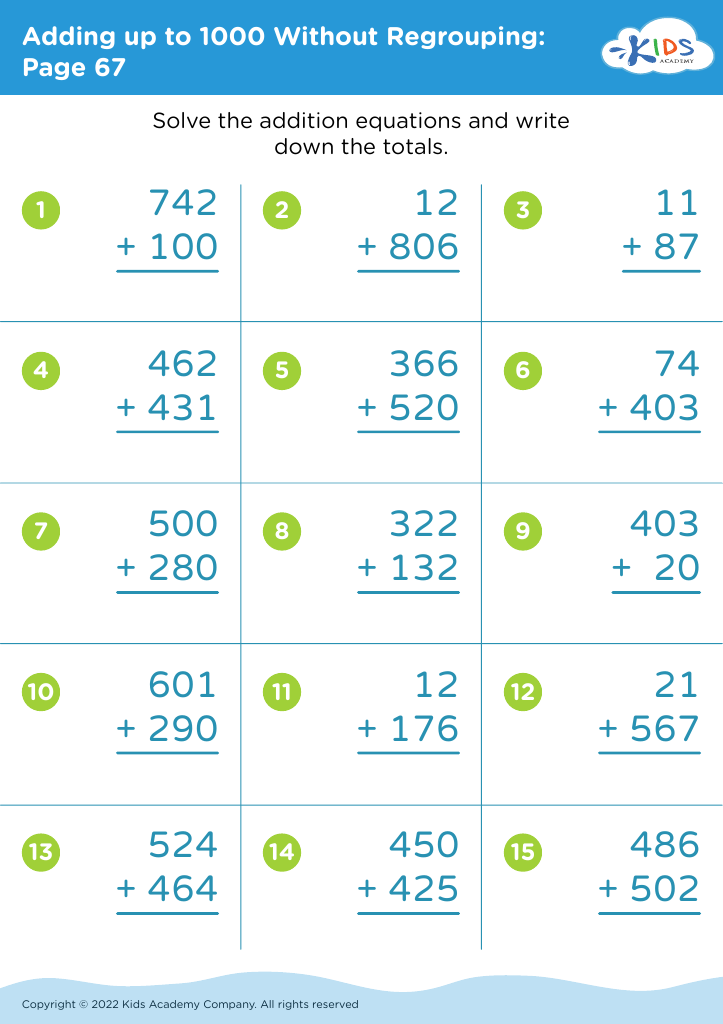
Adding up to 1000 Without Regrouping: Page 67
Worksheet
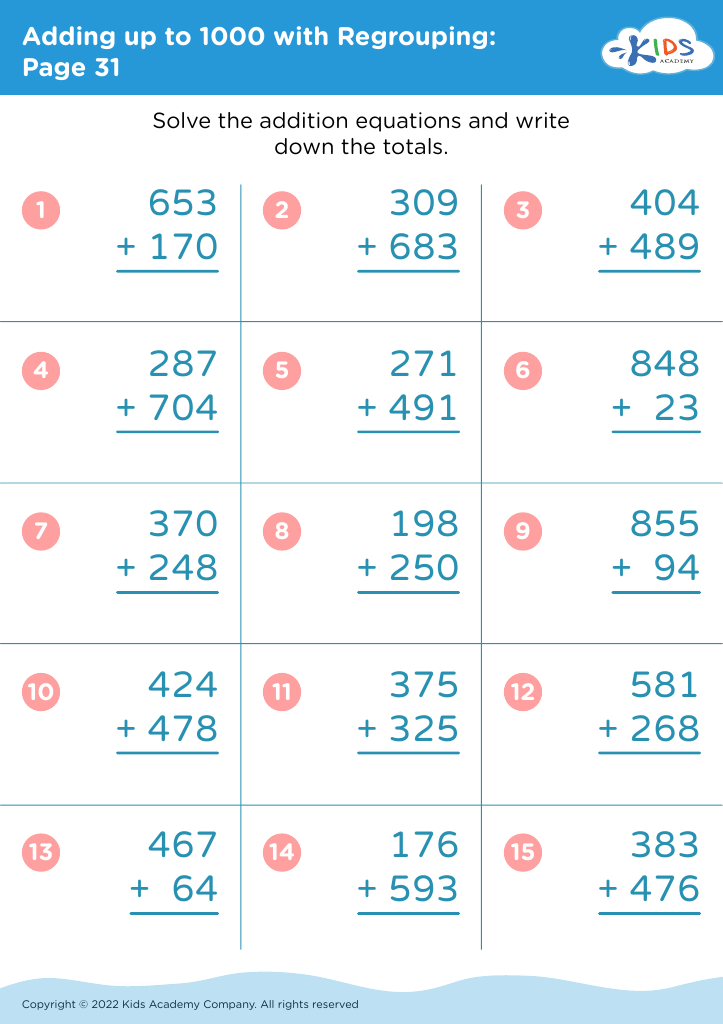
Adding up to 1000 with Regrouping: Page 31
Worksheet
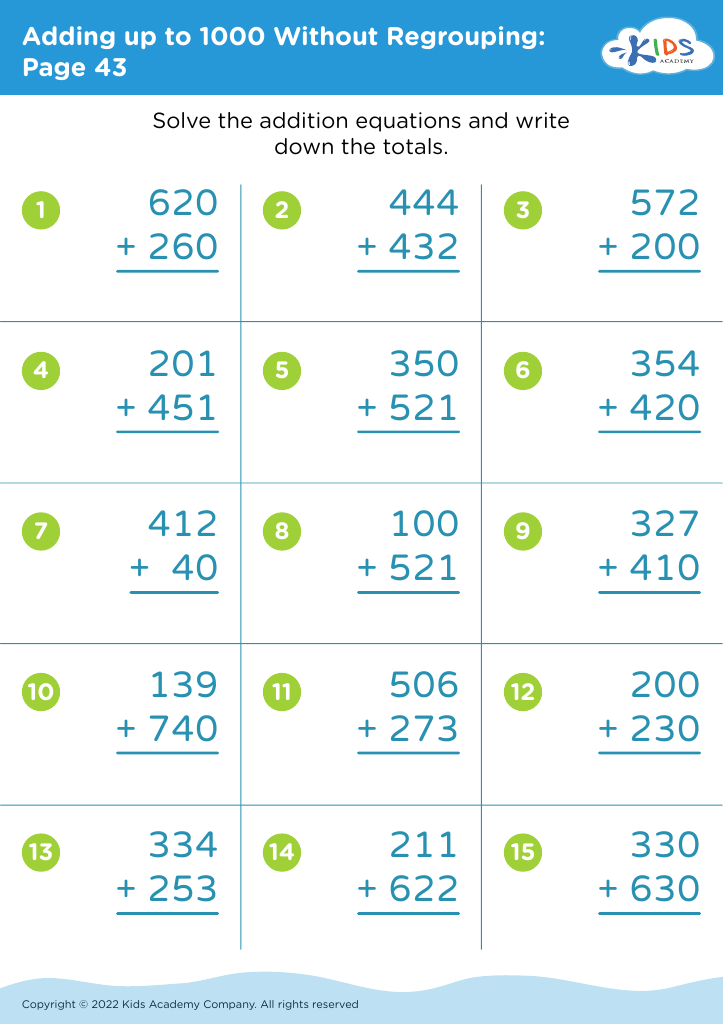
Adding up to 1000 Without Regrouping: Page 43
Worksheet
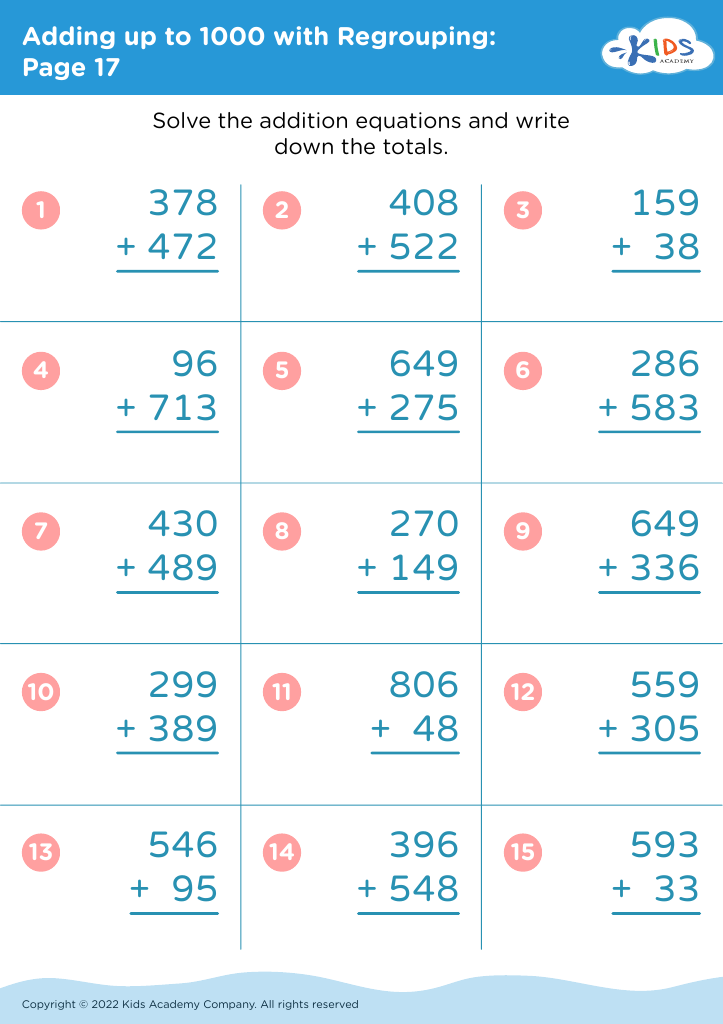
Adding up to 1000 with Regrouping: Page 17
Worksheet
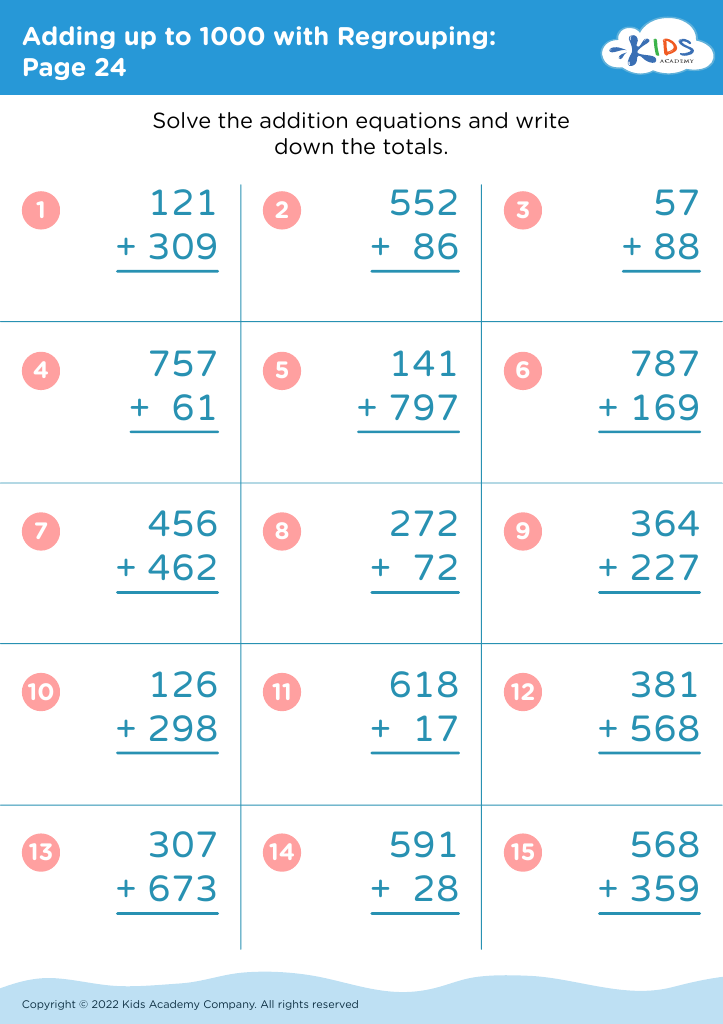
Adding up to 1000 with Regrouping: Page 24
Worksheet
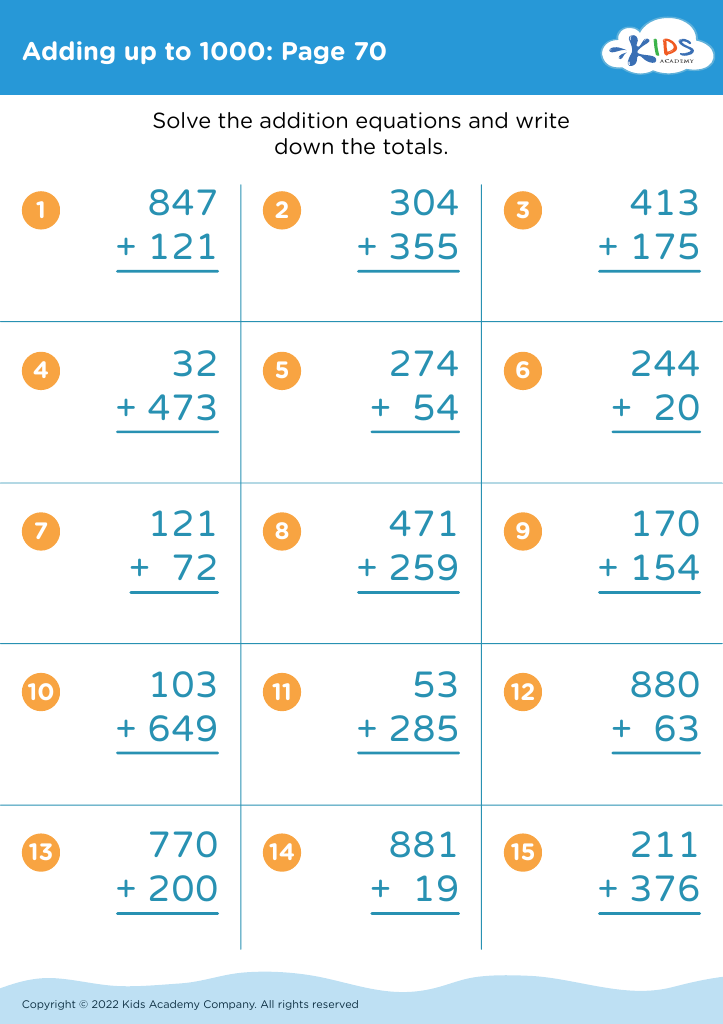
Adding up to 1000: Page 70

Adding up to 1000: Page 70

Adding up to 1000: Page 70
Worksheet
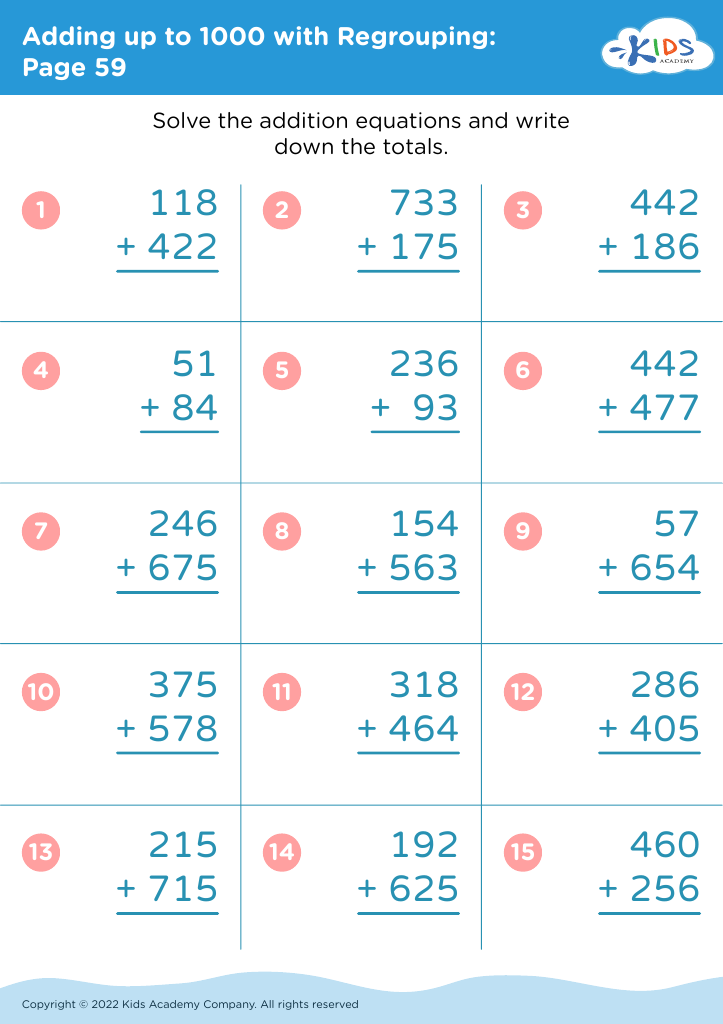
Adding up to 1000 with Regrouping: Page 59
Worksheet
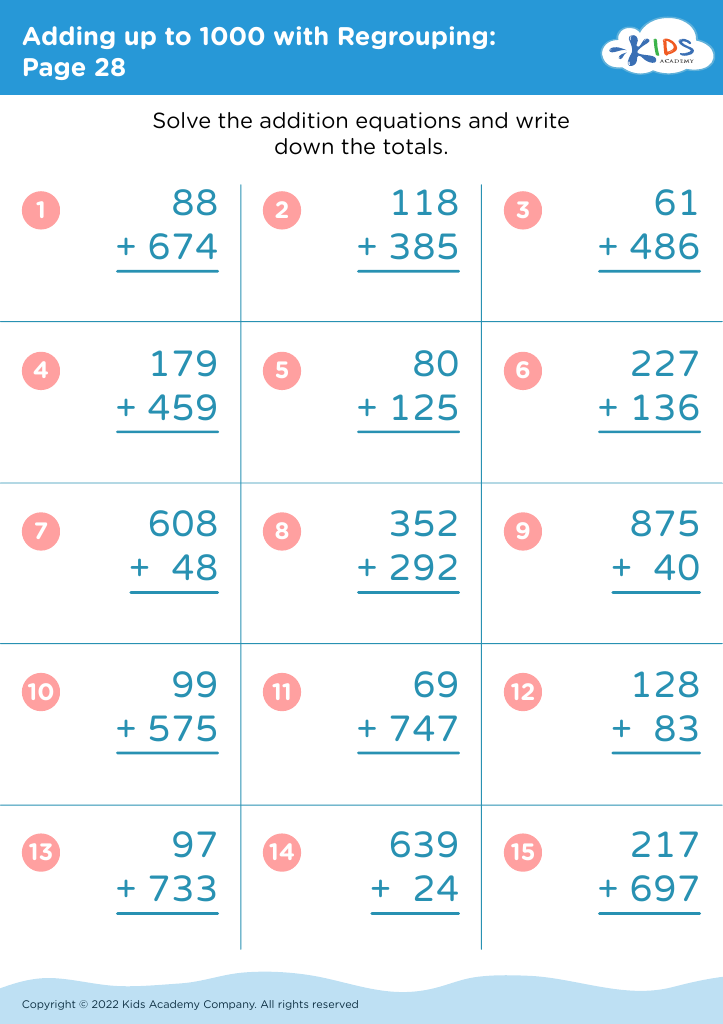
Adding up to 1000 with Regrouping: Page 28
Worksheet
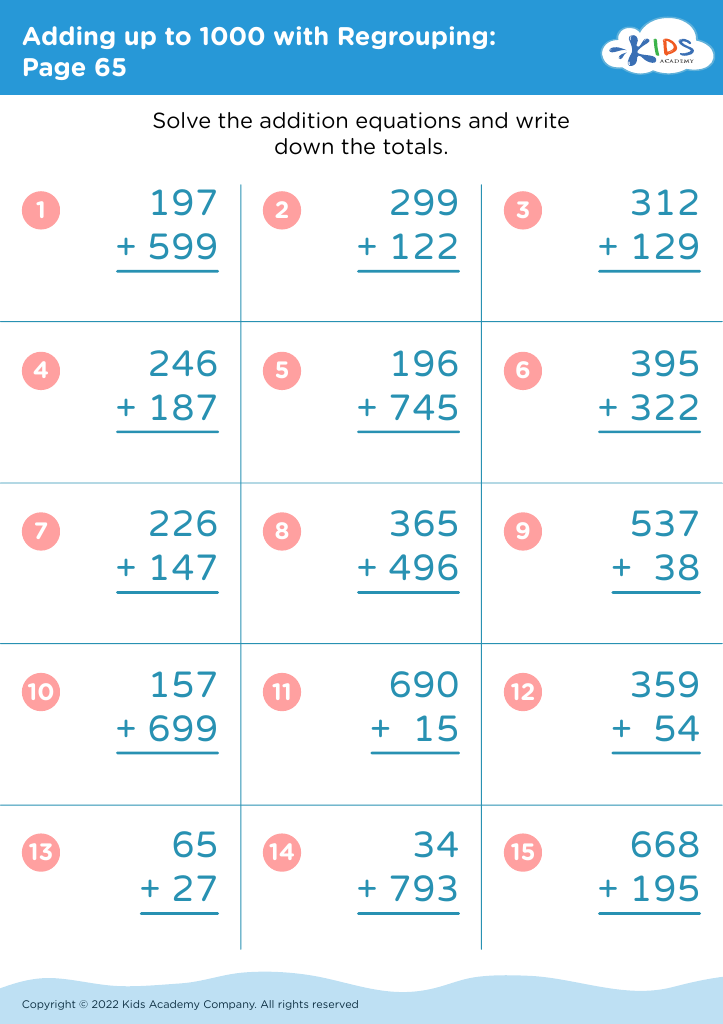
Adding up to 1000 with Regrouping: Page 65
Worksheet
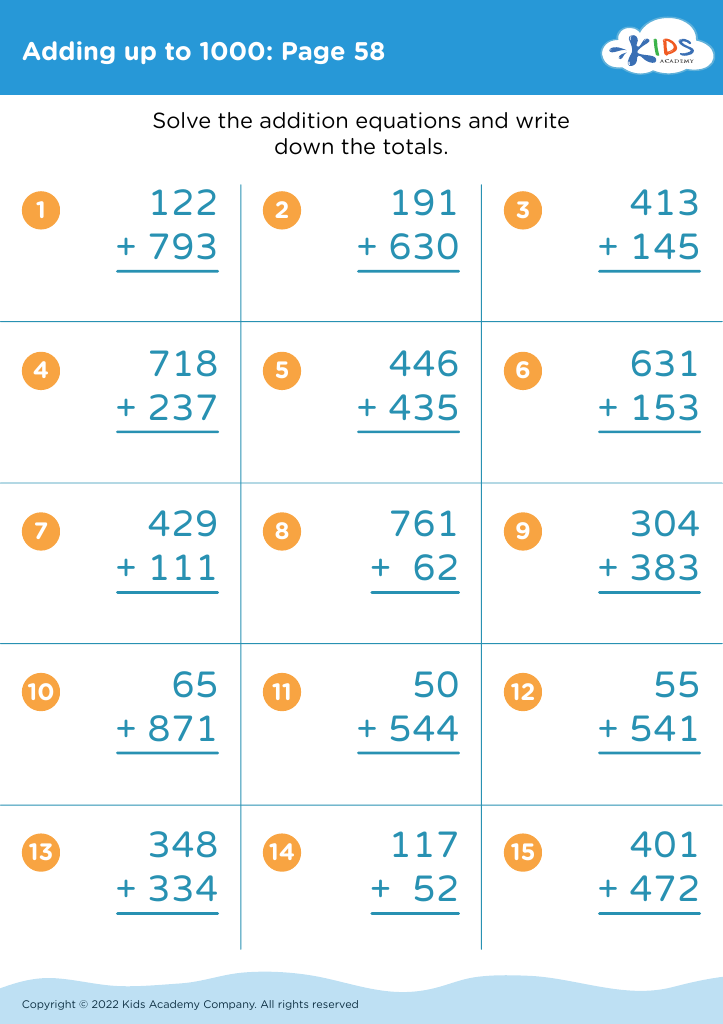
Adding up to 1000: Page 58

Adding up to 1000: Page 58

Adding up to 1000: Page 58
Worksheet
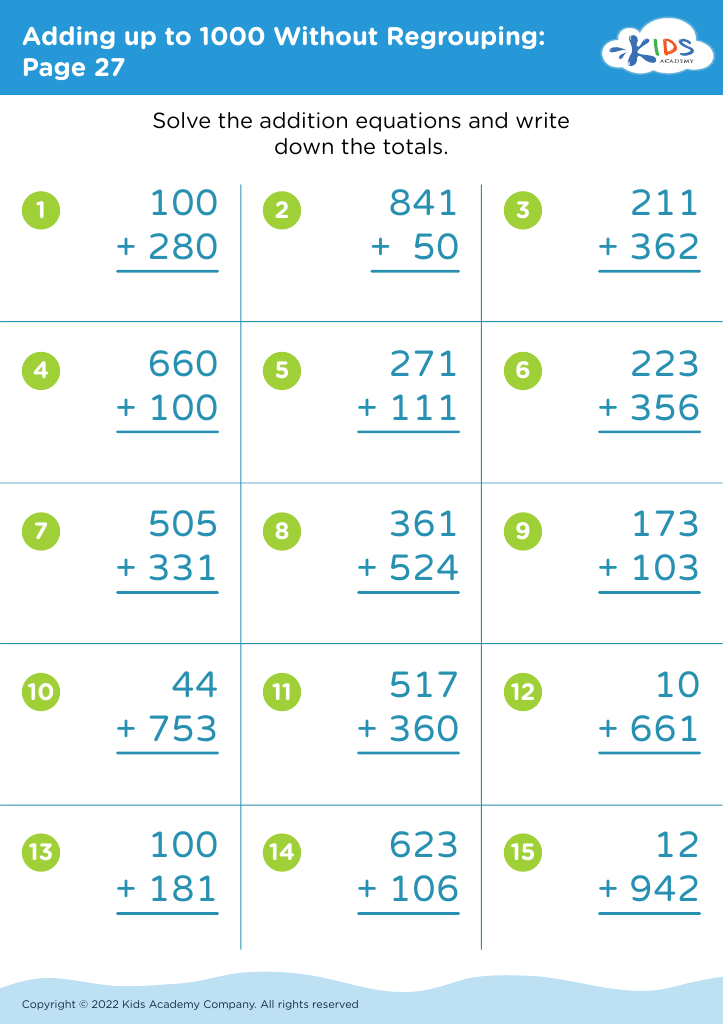
Adding up to 1000 Without Regrouping: Page 27
Worksheet
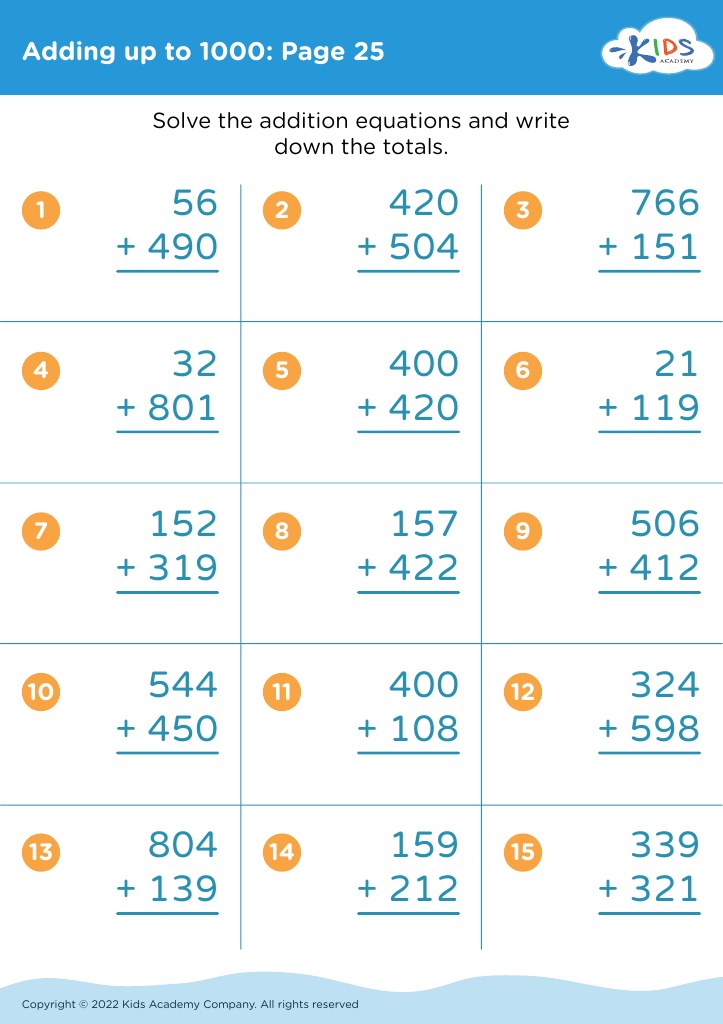
Adding up to 1000: Page 25

Adding up to 1000: Page 25

Adding up to 1000: Page 25
Worksheet
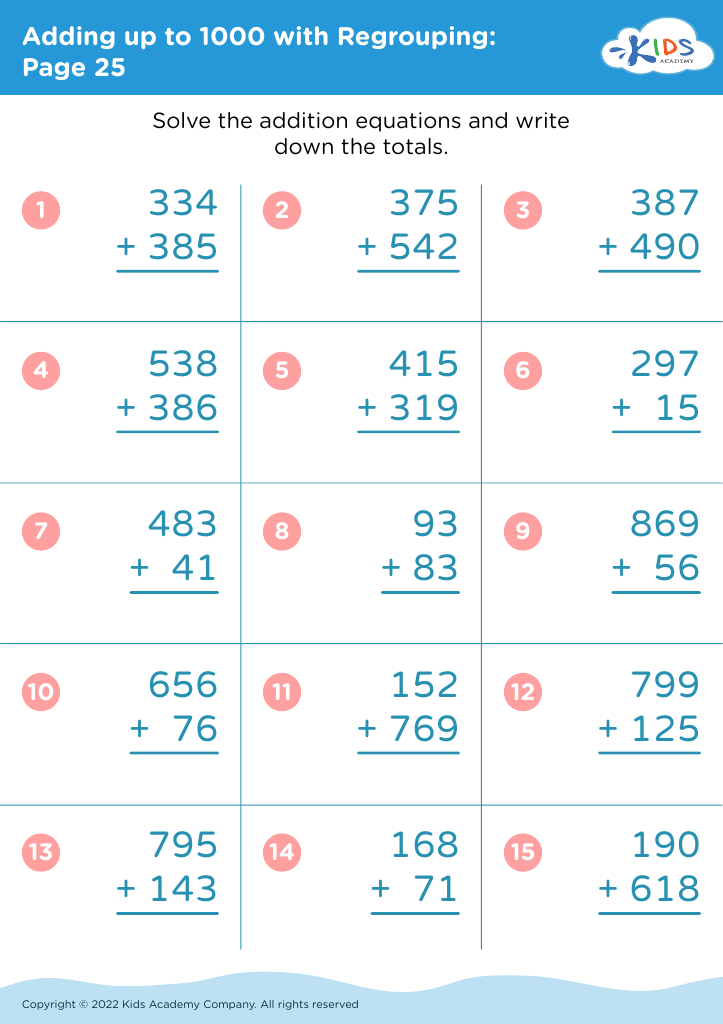
Adding up to 1000 with Regrouping: Page 25
Worksheet
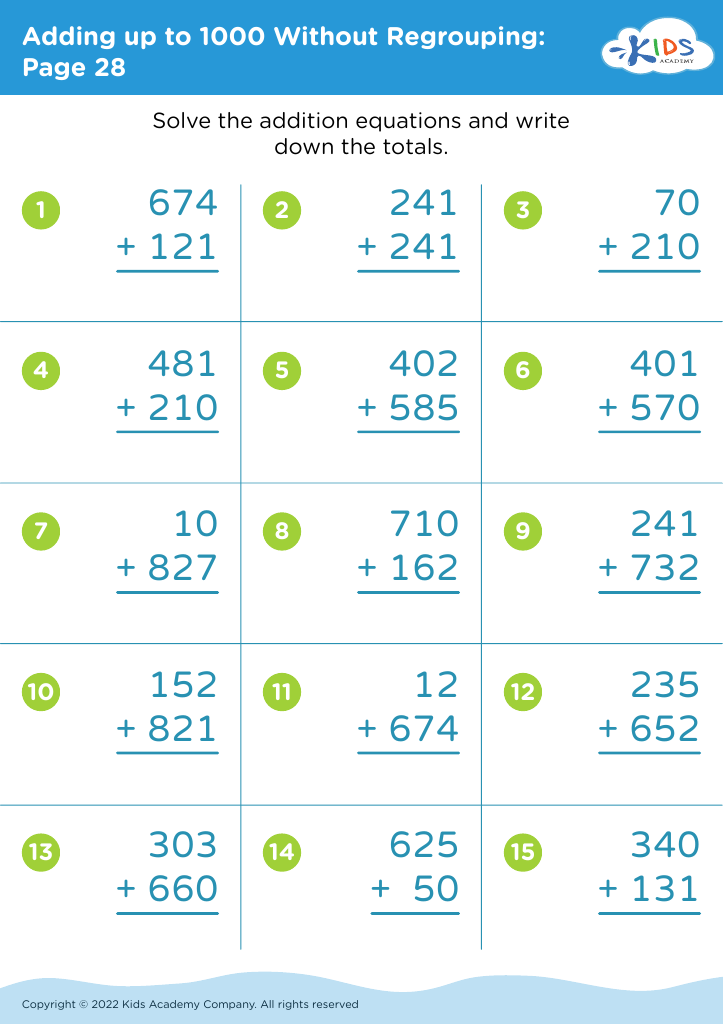
Adding up to 1000 Without Regrouping: Page 28
Worksheet
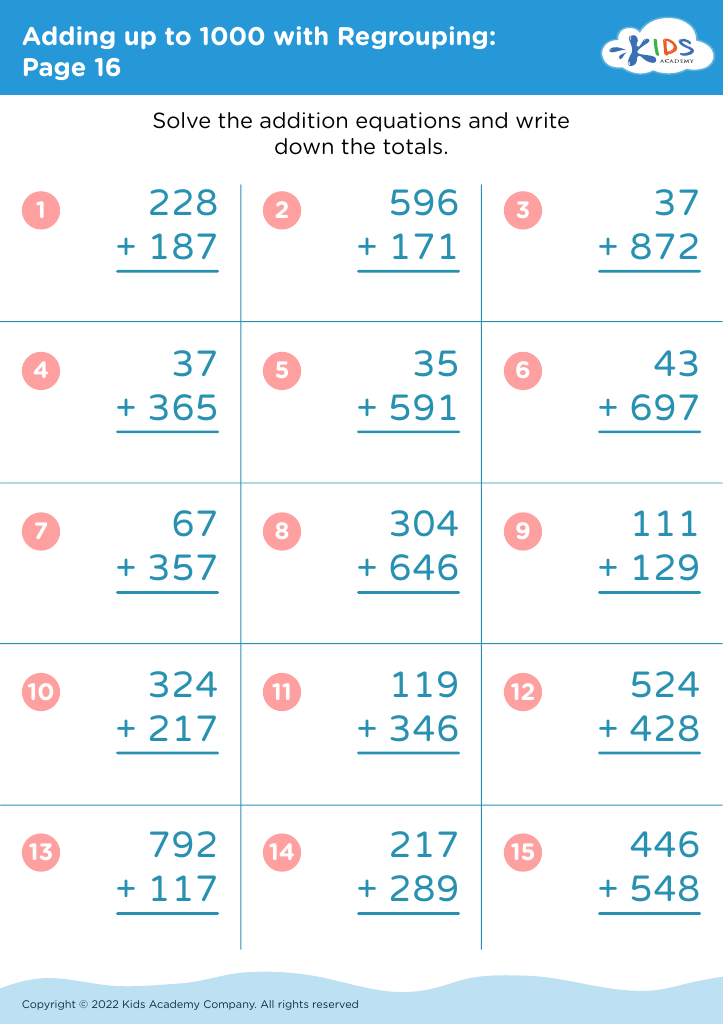
Adding up to 1000 with Regrouping: Page 16
Worksheet
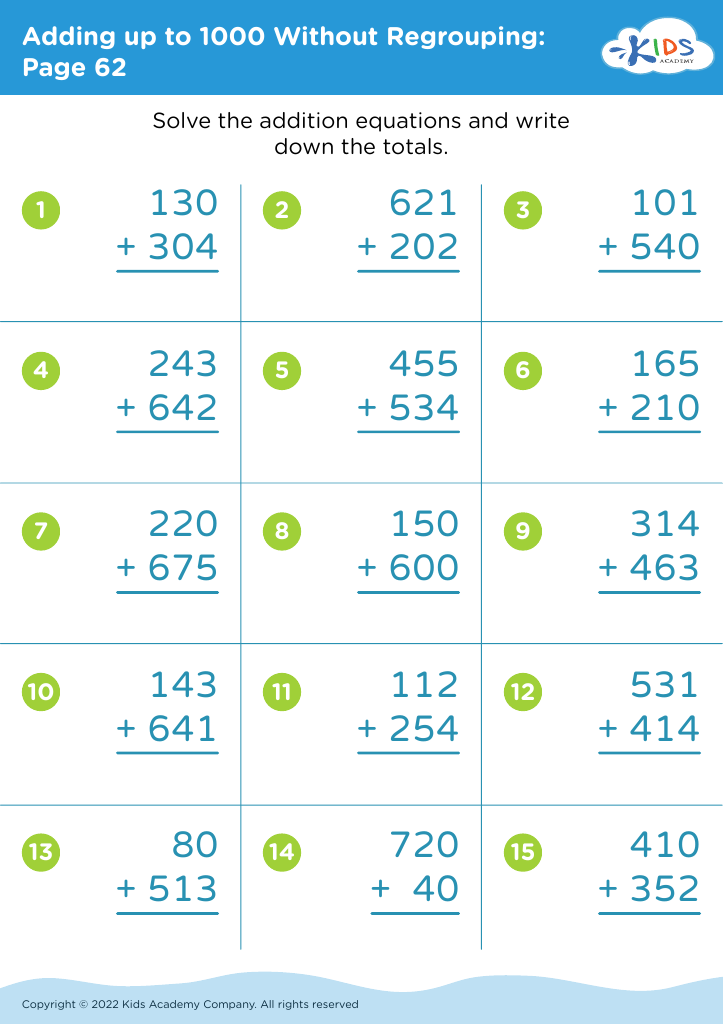
Adding up to 1000 Without Regrouping: Page 62
Worksheet
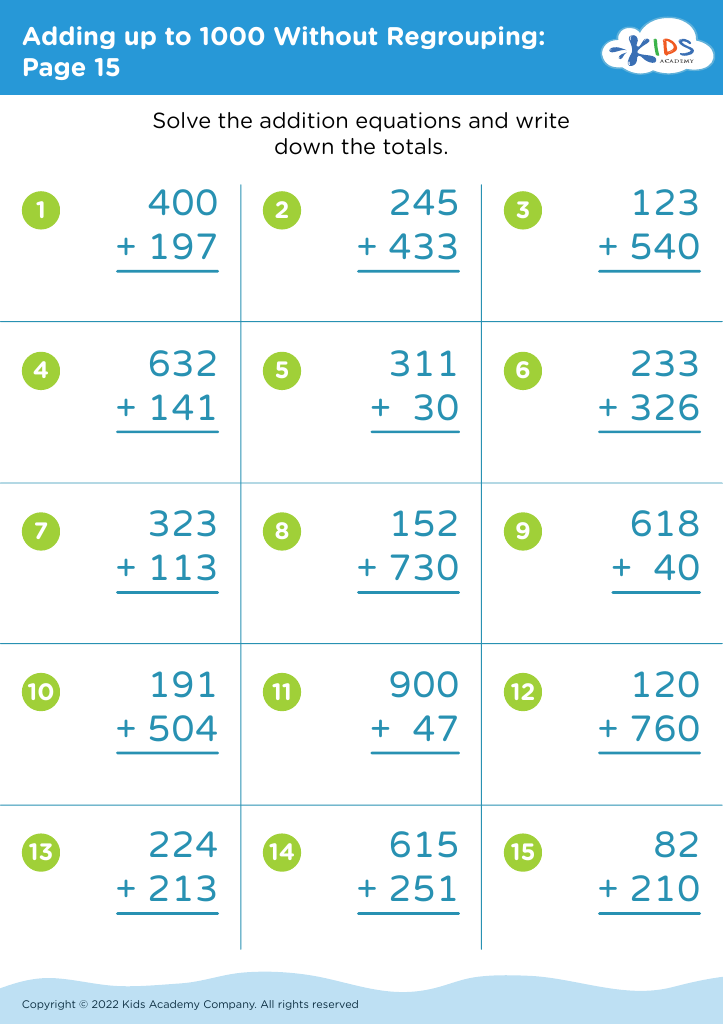
Adding up to 1000 Without Regrouping: Page 15
Worksheet
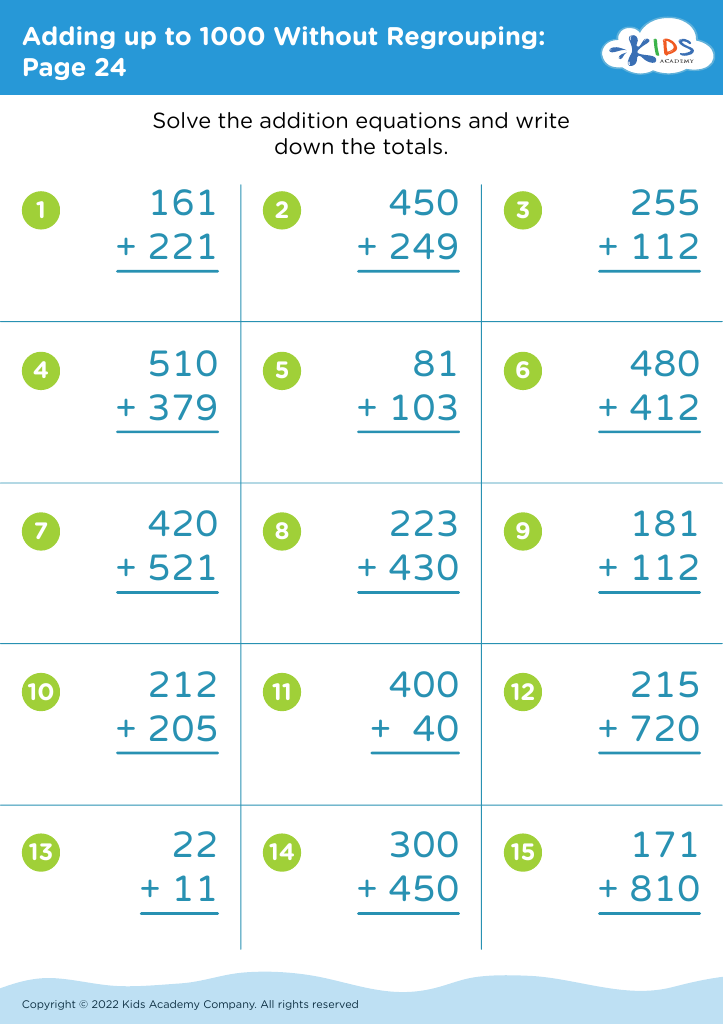
Adding up to 1000 Without Regrouping: Page 24
Worksheet


Understanding fractions is a crucial foundation for mathematical literacy, especially for children aged 6-9. During this developmental stage, children are forming the cognitive skills necessary for more complex concepts, and grasping fractions can enhance their problem-solving abilities and number sense. Fractions not only represent parts of a whole but also build understanding for future topics such as ratios, proportions, and percentages.

By introducing fractions, parents and teachers can show children how to navigate the world around them, from figuring out pizza slices to interpreting measurements in recipes. Mastering fractions can also help with their understanding of adding up to whole numbers, like 1000. By learning to add fractions that sum up to larger numbers, kids develop a deeper understanding of numerical relationships and the concept of equivalency.

Moreover, teaching fractions can promote critical thinking and reasoning skills. As kids learn to manipulate fractions and see how they relate to one another, they become capable of making informed calculations and decisions later on. Helping children comprehend these concepts paves the way for academic success and nurtures a positive attitude toward math, ensuring they are equipped with essential skills for future learning.