Counting skills Addition and Subtraction Word Problems Worksheets for Ages 6-9
11 filtered results
-
From - To
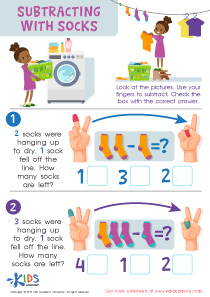
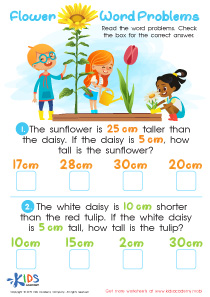
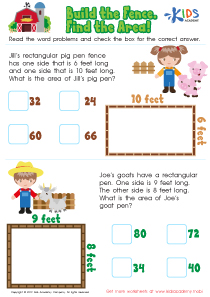
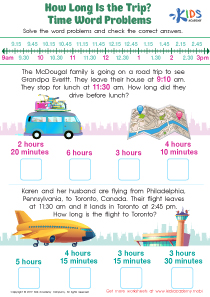
Explore our engaging "Counting Skills Addition and Subtraction Word Problems Worksheets" designed specifically for kids aged 6-9! These worksheets help children develop essential counting skills through fun and interactive word problems. Students will practice their addition and subtraction abilities in a real-world context, enhancing their mathematical understanding and problem-solving skills. Each worksheet features colorful illustrations and relatable scenarios to capture children's interest, making learning enjoyable and effective. Our resources support early grade teachers and parents in reinforcing basic math concepts while building confidence in young learners. Equip your child with the tools they need to succeed in math with our unique worksheets today!
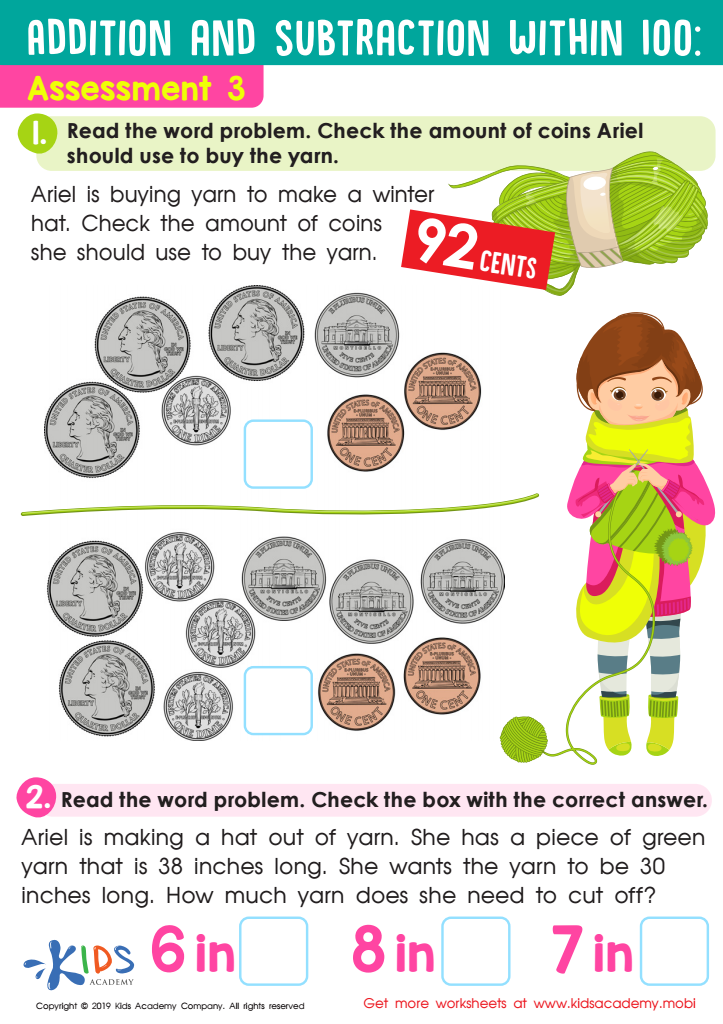
Assessment 3 Math Worksheet
 Assign to My Students
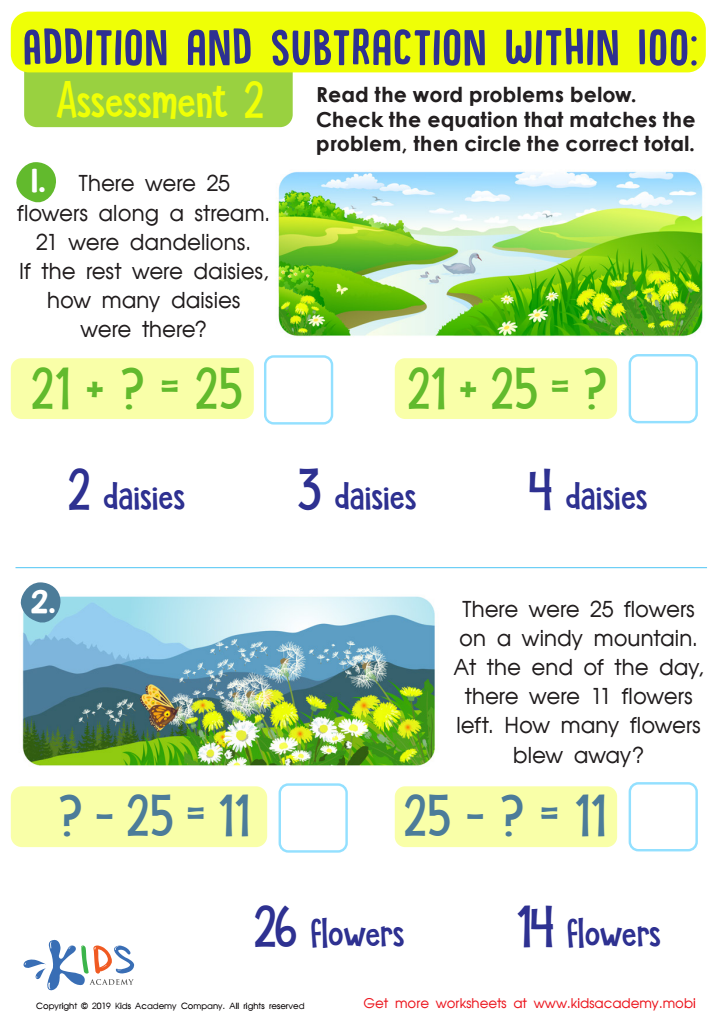
Assessment 2 Math Worksheet
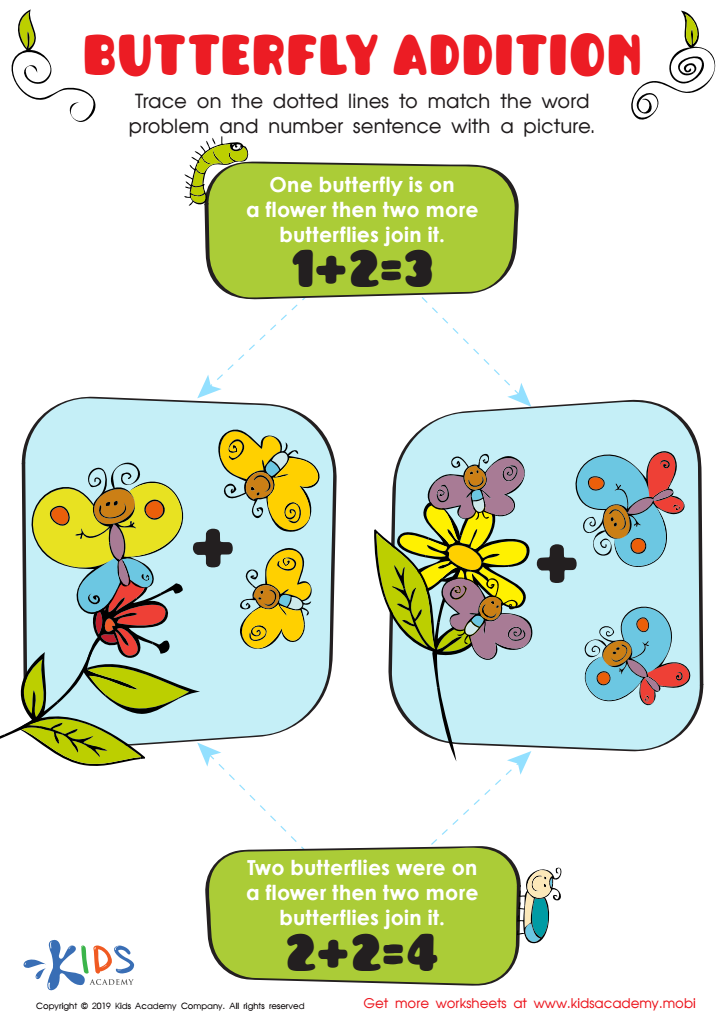
Butterfly Addition Worksheet
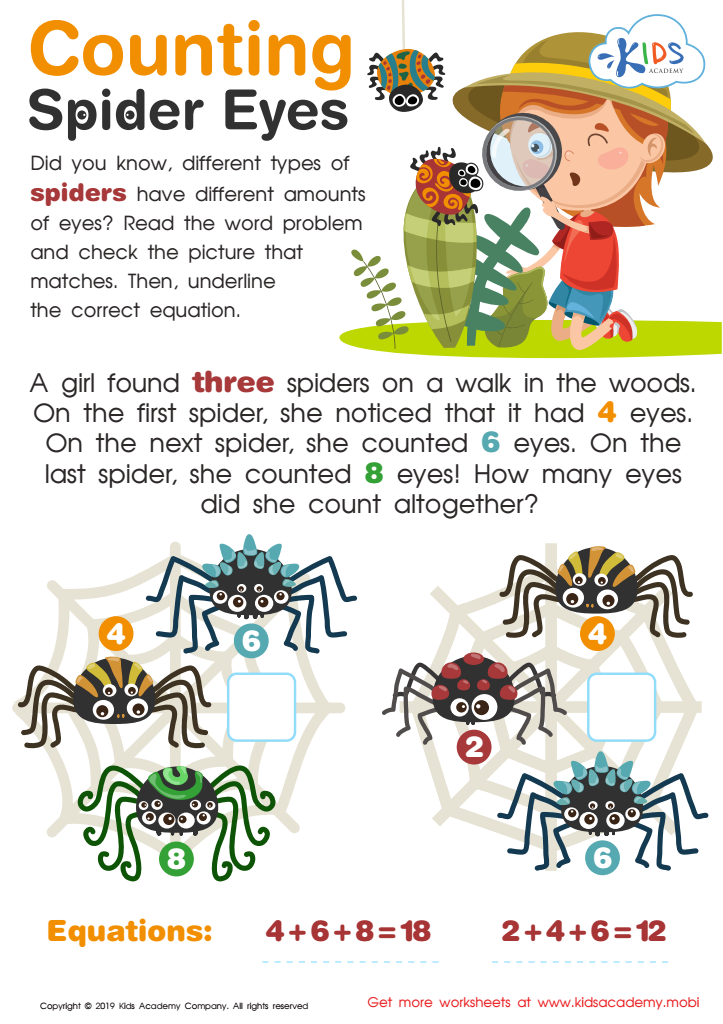
Counting Spider Eyes Worksheet
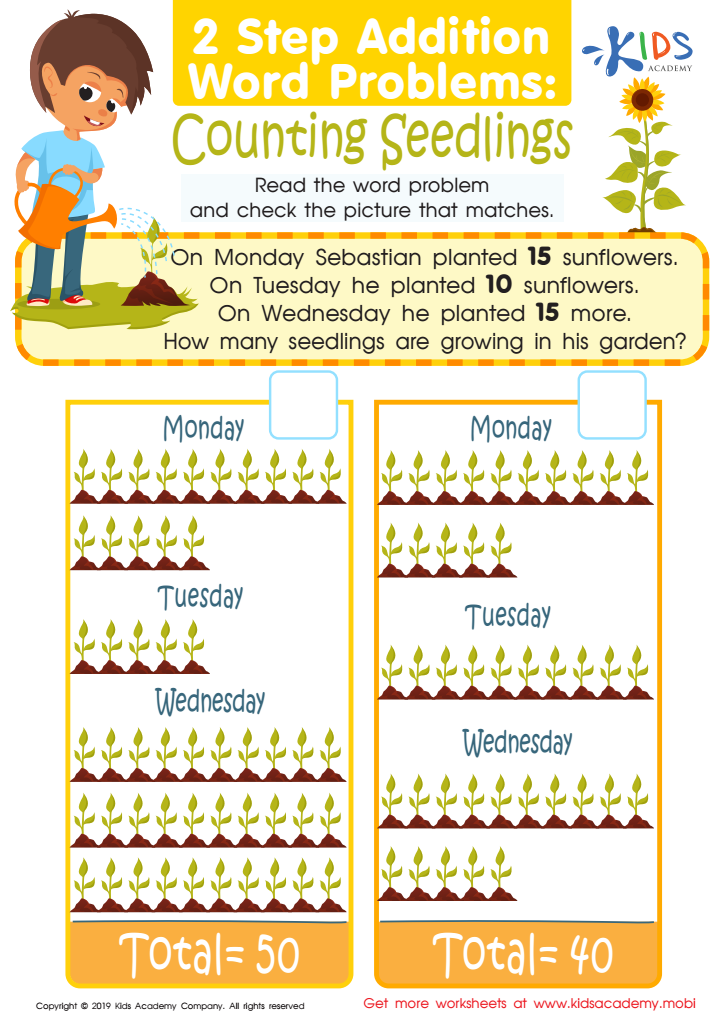
Counting Seedlings Worksheet
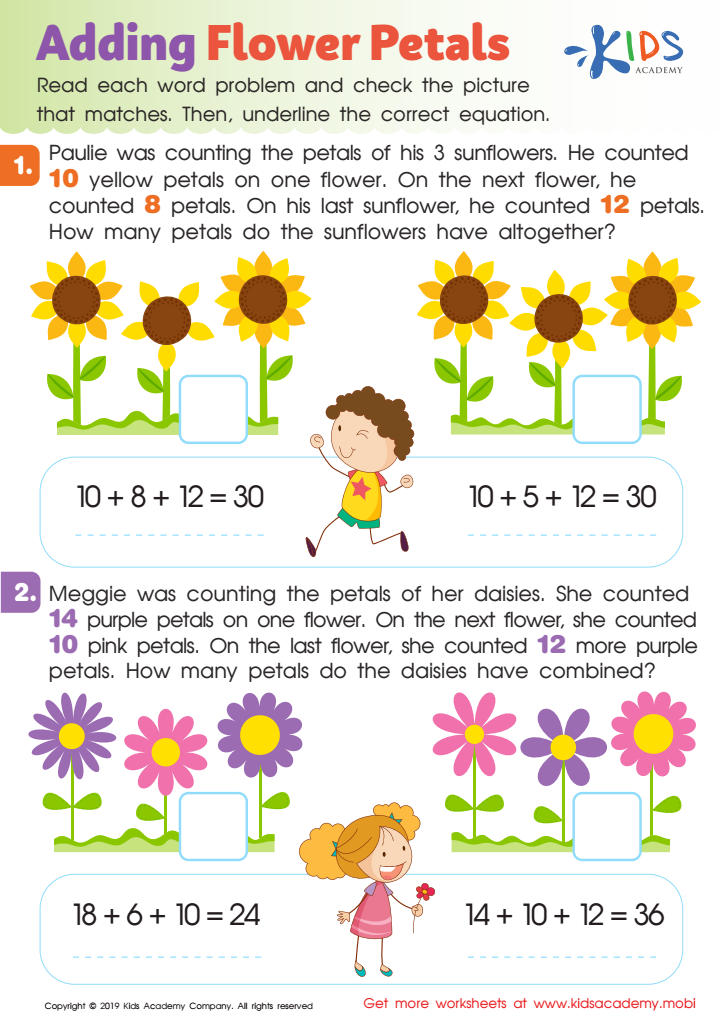
Adding Flower Petals Worksheet
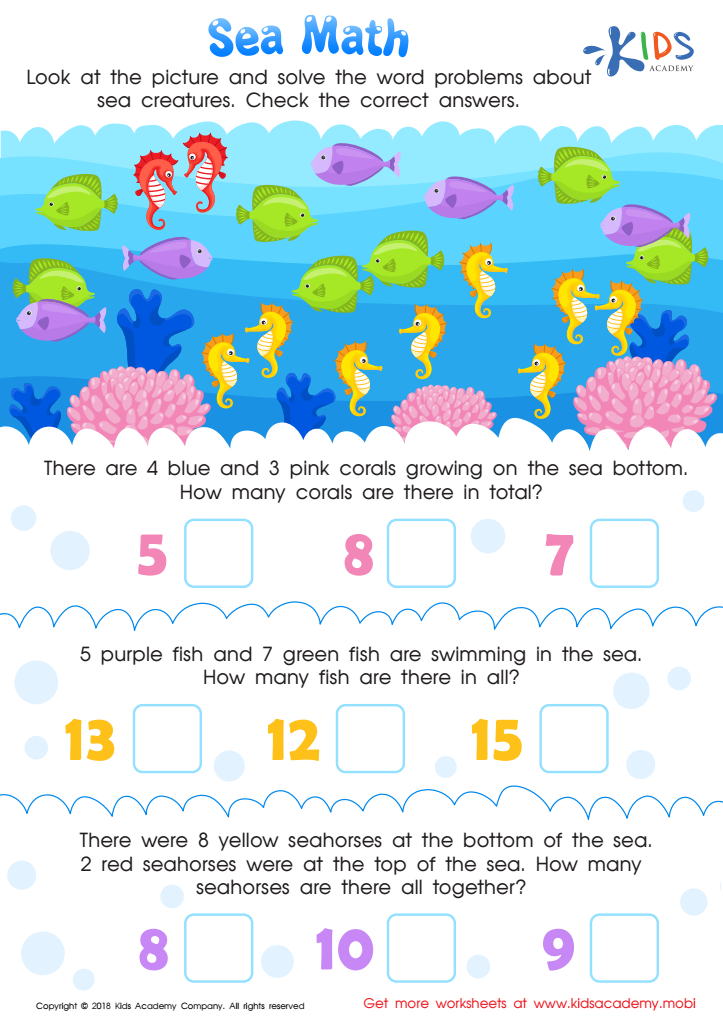
Sea Math Worksheet
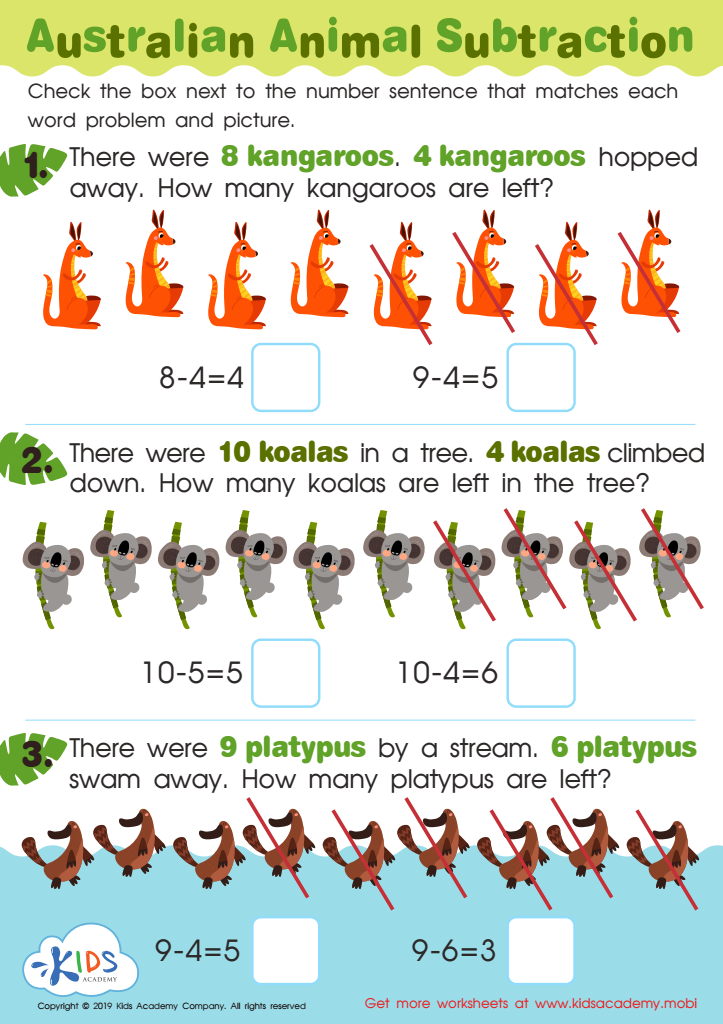
Australian Animal Subtraction Worksheet
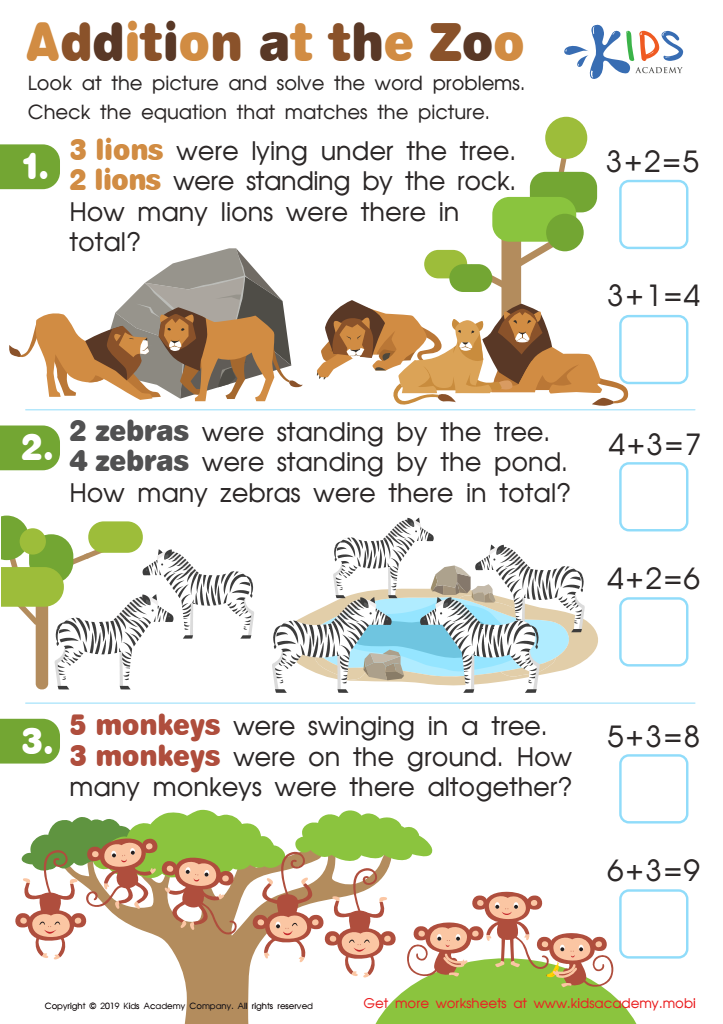
Addition at the Zoo Worksheet
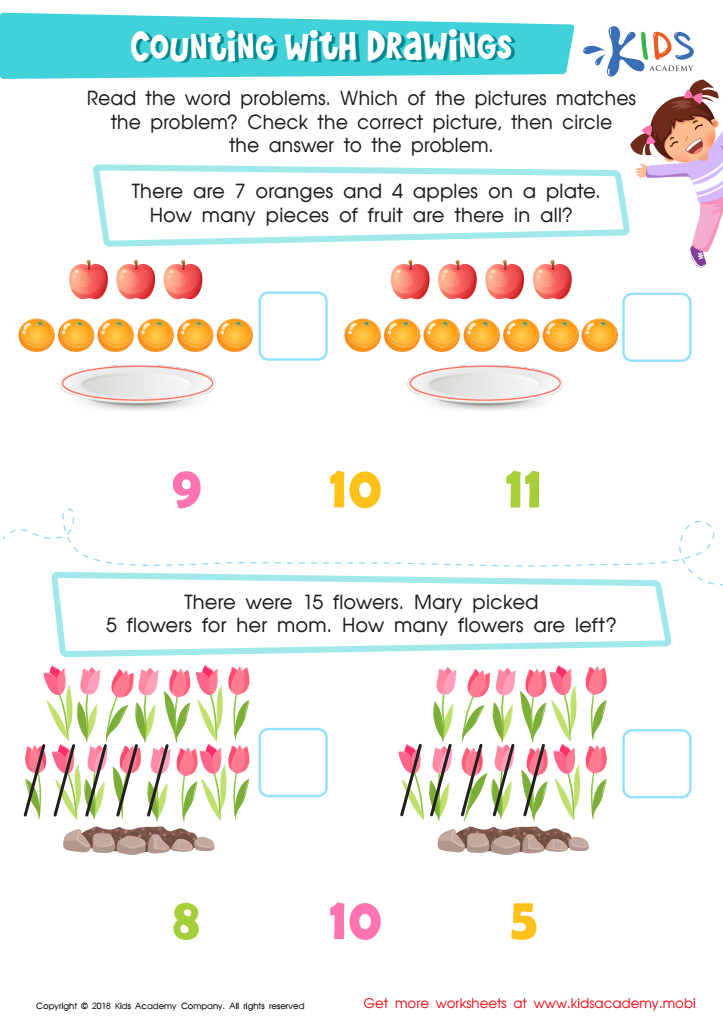
Counting with Drawings:Fruits & Flowers Worksheet
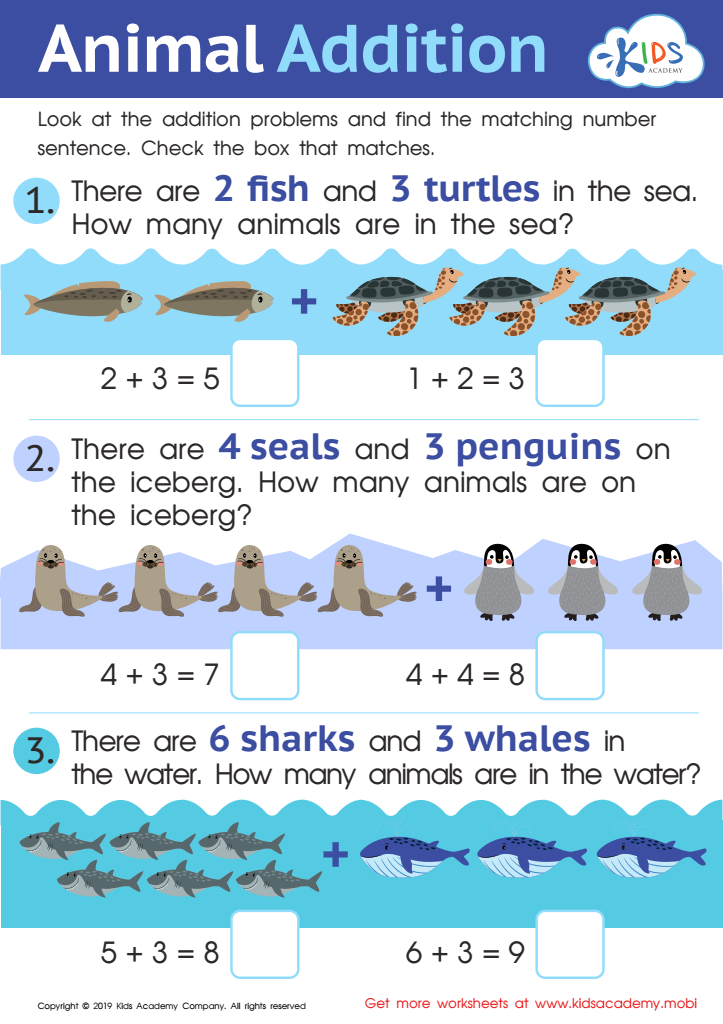
Animal Addition Worksheet








Counting skills, along with addition and subtraction word problems, are foundational components of early mathematics education for children aged 6-9. These skills build a strong numerical understanding that is crucial for students’ overall cognitive development. First, mastering counting lays the groundwork for all mathematical learning. Children learn to recognize numbers and their values, enabling them to perform basic arithmetic operations.
Word problems, in particular, help students apply their mathematical knowledge to real-world situations, fostering critical thinking and problem-solving skills. By interpreting the language of these problems, children enhance their analytical abilities, making connections between math and everyday life. It also aids in developing their comprehension skills, requiring them to read, understand, and manipulate information.
Moreover, fostering good counting and arithmetic skills in early education helps prevent future difficulties in math. Since mathematics is cumulative, a strong foundation is essential; struggling with addition and subtraction can lead to gaps in knowledge that widen as students advance in school. Ultimately, by investing time in reinforcing these skills, parents and teachers help equip children with the necessary tools to be successful learners, giving them confidence and encouraging them to engage positively with mathematics throughout their academic careers.