Fraction identification Addition & Subtraction Worksheets for Ages 6-9
5 filtered results
-
From - To
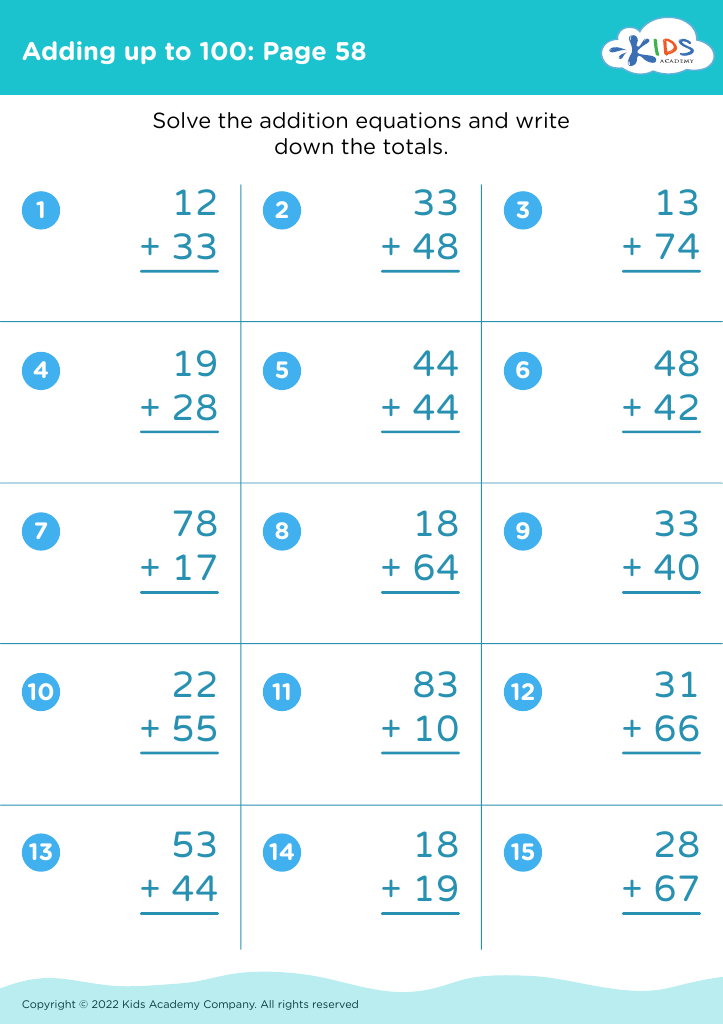
Enhance your child's mathematical skills with our Fraction Identification Addition & Subtraction Worksheets tailored for ages 6-9. These engaging, educational resources focus on helping young learners identify, add, and subtract fractions through a variety of fun exercises. Perfect for use at home or in the classroom, these worksheets guide children through basic fraction concepts using thoughtfully designed illustrations and step-by-step instructions, ensuring they grasp and enjoy learning. Developed by educational experts, these activities aim to build a strong arithmetic foundation, boosting your child’s confidence and proficiency in math. Visit Kids Academy to explore and download now!








Parents and teachers should prioritize teaching fraction identification and the basic operations of addition and subtraction for children aged 6-9 because it lays a critical foundation for future mathematical skills. Understanding fractions fosters a child’s number sense—the intuitive ability to understand and work with numbers—which is vital for comprehending more complex mathematical concepts in later grades.
At this young age, children are in a prime developmental stage for grasping new concepts, and introducing fractions helps cultivate logical thinking and problem-solving abilities. When kids practice fraction identification and manipulation, such as adding and subtracting fractions, they develop a crucial understanding of whole-part relationships. This knowledge transcends mathematics, promoting practical life skills like dividing a pizza among friends or understanding ratios in recipes.
Additionally, early exposure to fractions can boost a child’s confidence in math, preventing math anxiety as they progress in their education. Engaging children with visual aids, hands-on activities, and real-life scenarios makes learning fractions enjoyable and meaningful, fostering a positive mathematical mindset. Establishing these skills early ensures that children are well-prepared for more advanced topics in mathematics, such as algebra and geometry, and enhances their overall academic success.








