Handwriting improvement Addition & Subtraction Worksheets for Ages 6-9
4 filtered results
-
From - To
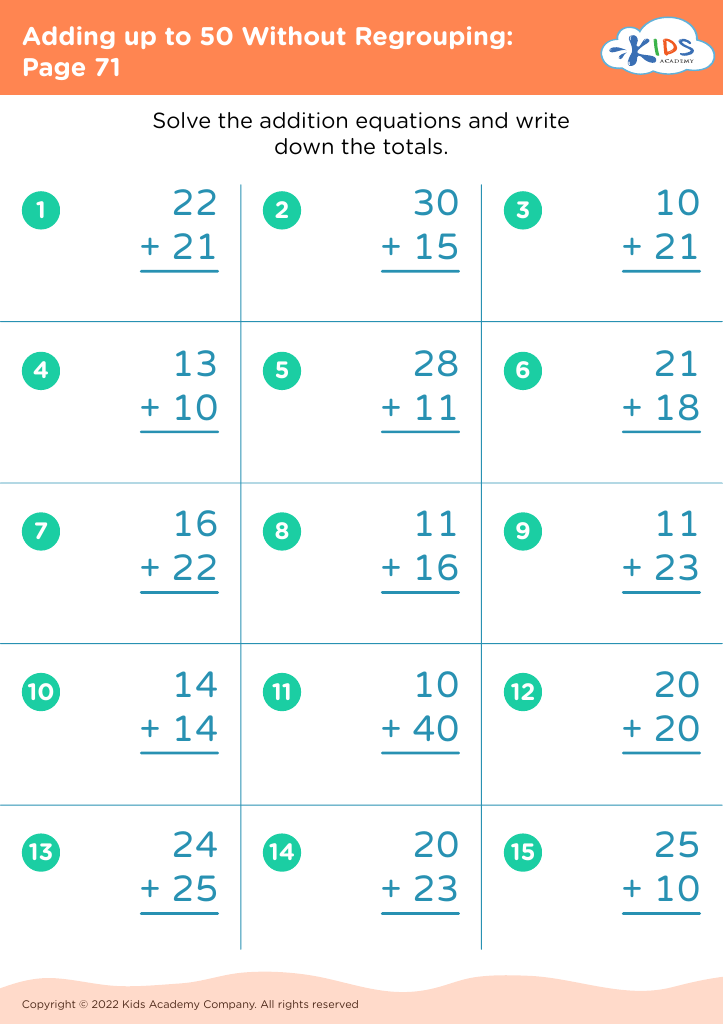
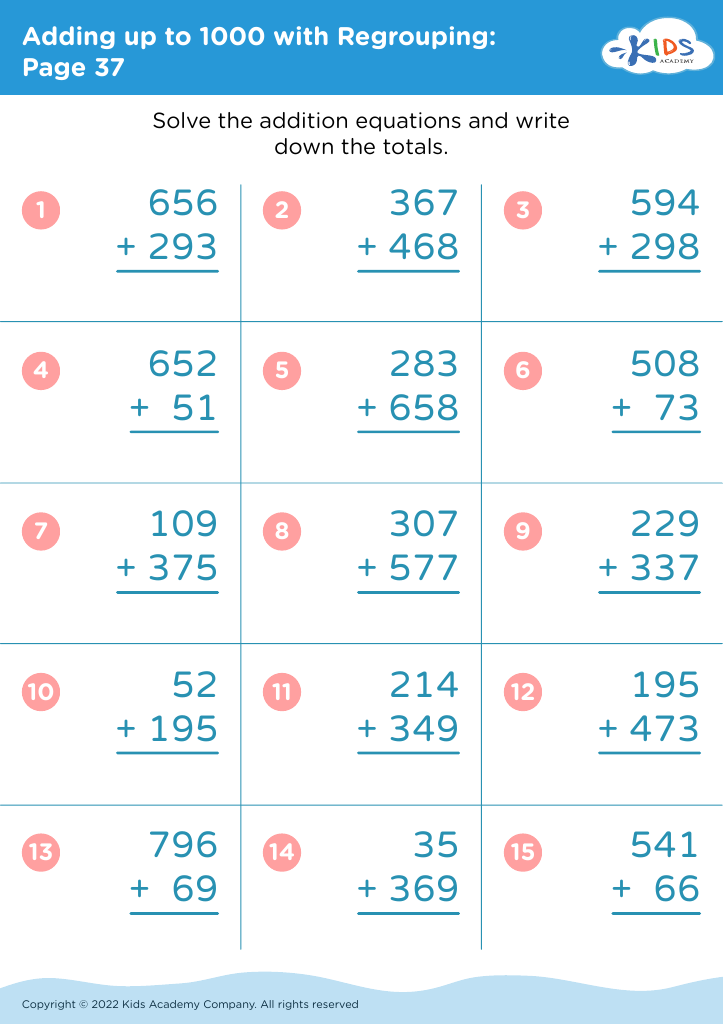
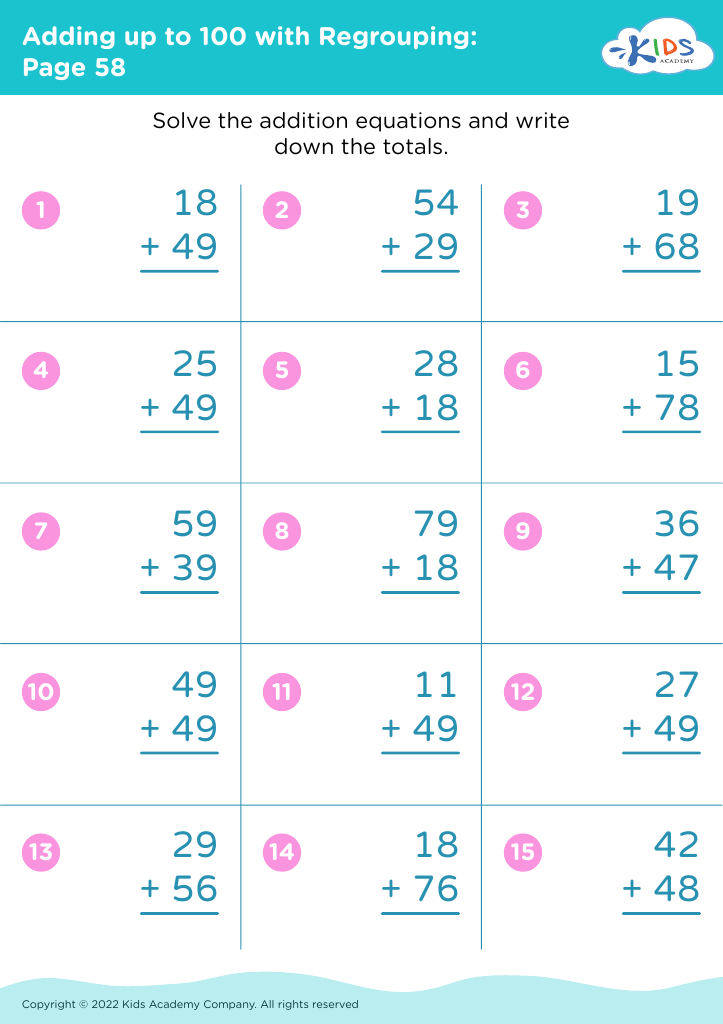
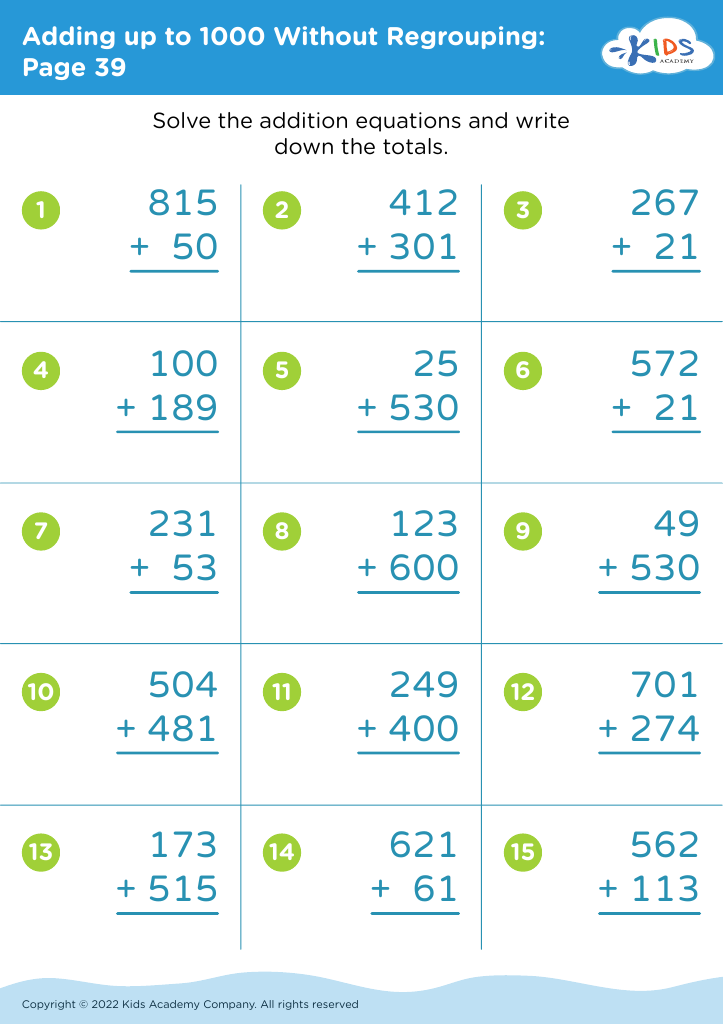
Enhance your child's mathematical skills and handwriting with our engaging Handwriting Improvement Addition & Subtraction Worksheets, designed specifically for ages 6-9. These worksheets offer a perfect blend of math practice and handwriting refinement, allowing young learners to develop clear, legible writing while mastering fundamental addition and subtraction concepts. Fun and interactive, each worksheet features colorful graphics and age-appropriate exercises that make learning enjoyable. Track progress easily with a variety of problems designed to challenge and inspire confidence. Foster a love for math and writing in your child today by exploring our collection of effective, printable worksheets!








Parents and teachers should prioritize handwriting improvement alongside addition and subtraction for children aged 6-9 because these skills are foundational for academic success. Clear and legible handwriting builds confidence, as children can express their thoughts and ideas effectively on paper. When students master handwriting, they can focus more on content rather than struggling with how to form letters or numbers, enhancing their overall learning experience.
In addition, developing strong handwriting skills creates a connection with mathematical concepts, such as addition and subtraction. Writing down numbers neatly allows children to organize their thoughts and calculations, minimizing errors and frustration. This clarity can lead to better understanding and retention of mathematical operations.
Moreover, emphasizing handwriting at a young age can influence future academic performance. Strong handwriting skills are linked to improved written communication, an essential aspect of education that will follow students throughout their academic journey.
Additionally, fine motor skills honed through handwriting practice directly contribute to developing coordination necessary for various tasks. By fostering a love for both writing and mathematics, parents and teachers can support well-rounded development, equipping students with the essential skills they need for lifelong learning.








