Improve reading skills Addition & Subtraction Worksheets for Ages 6-9 - Page 2
29 filtered results
-
From - To
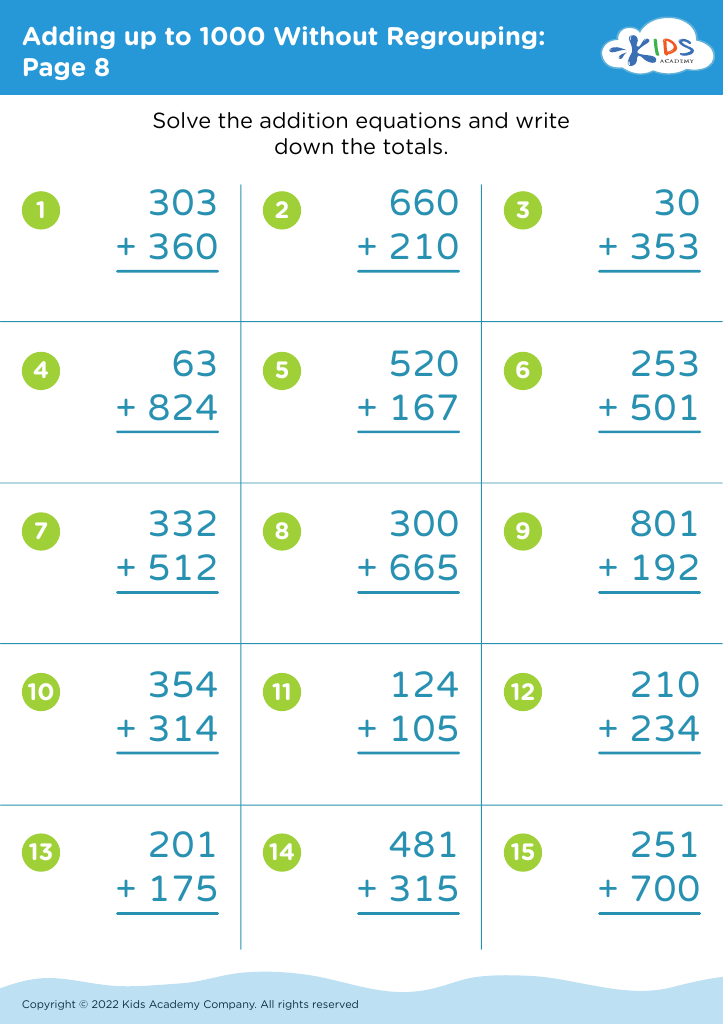
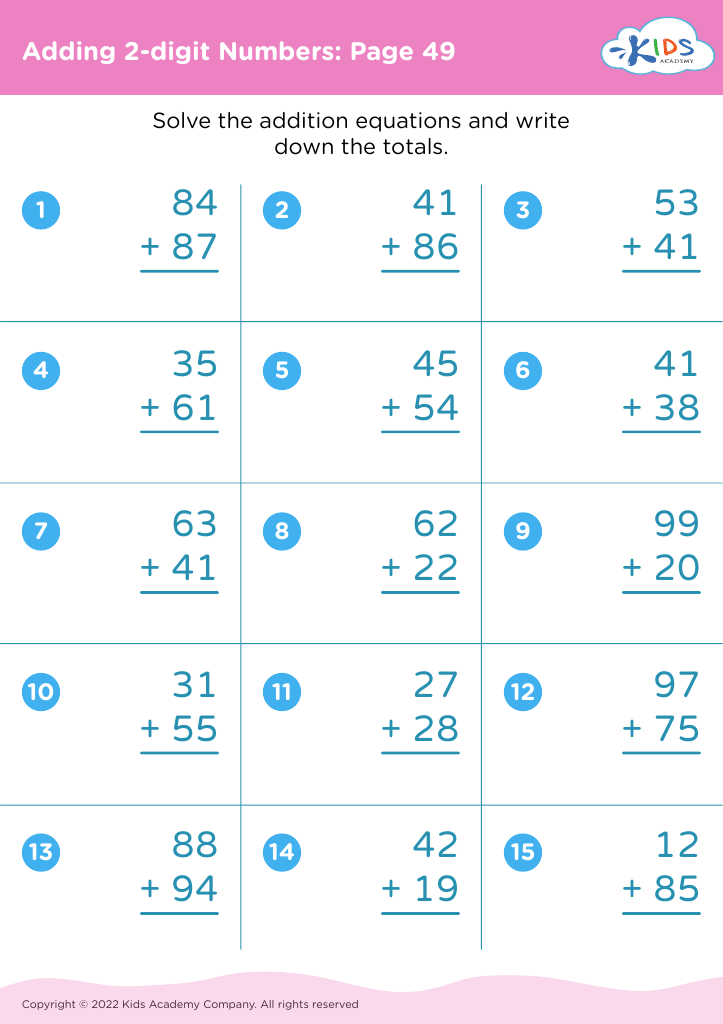
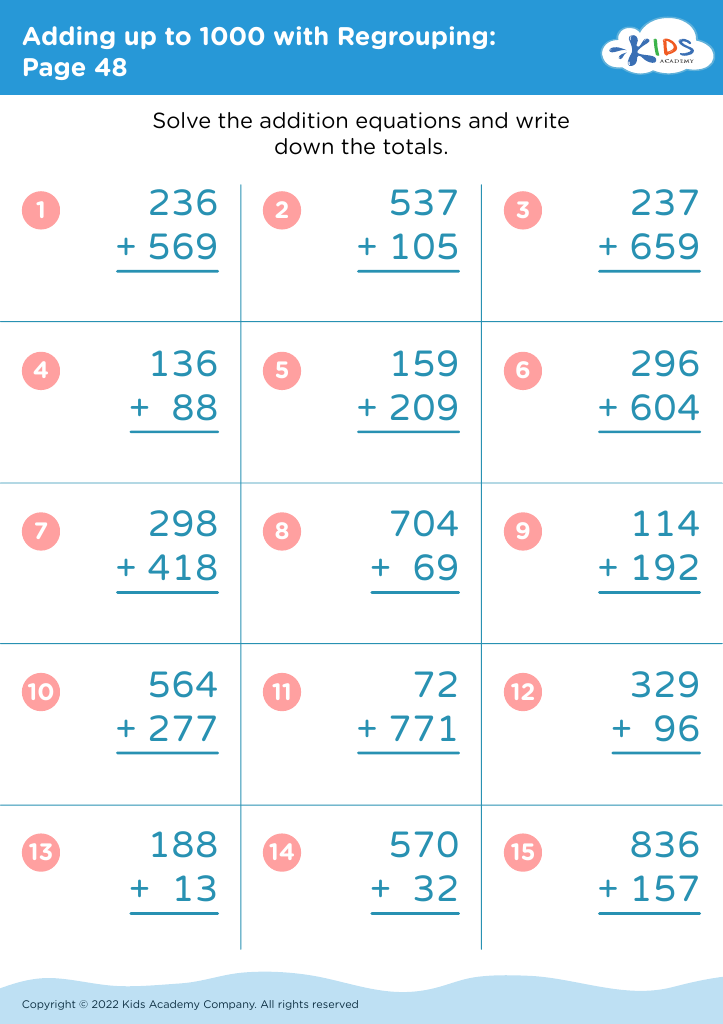
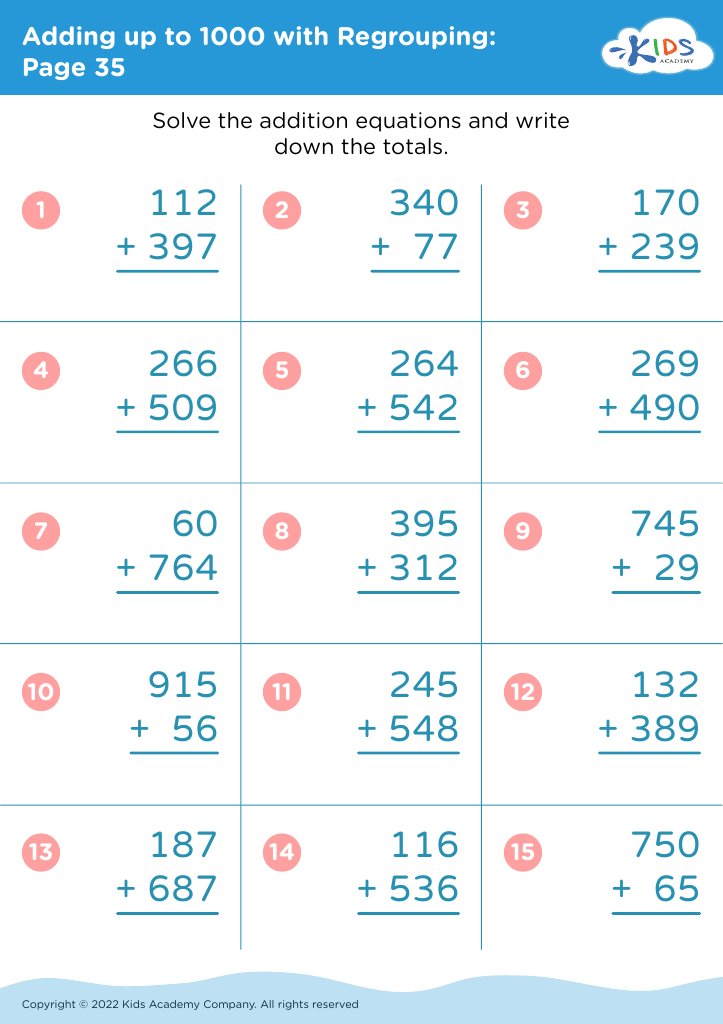
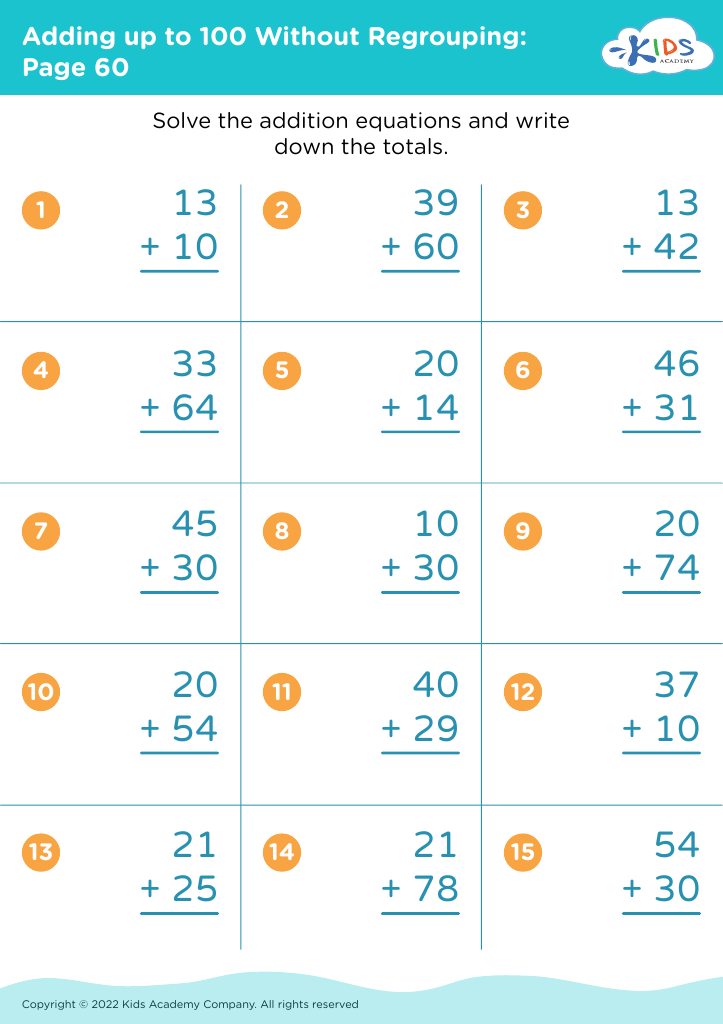





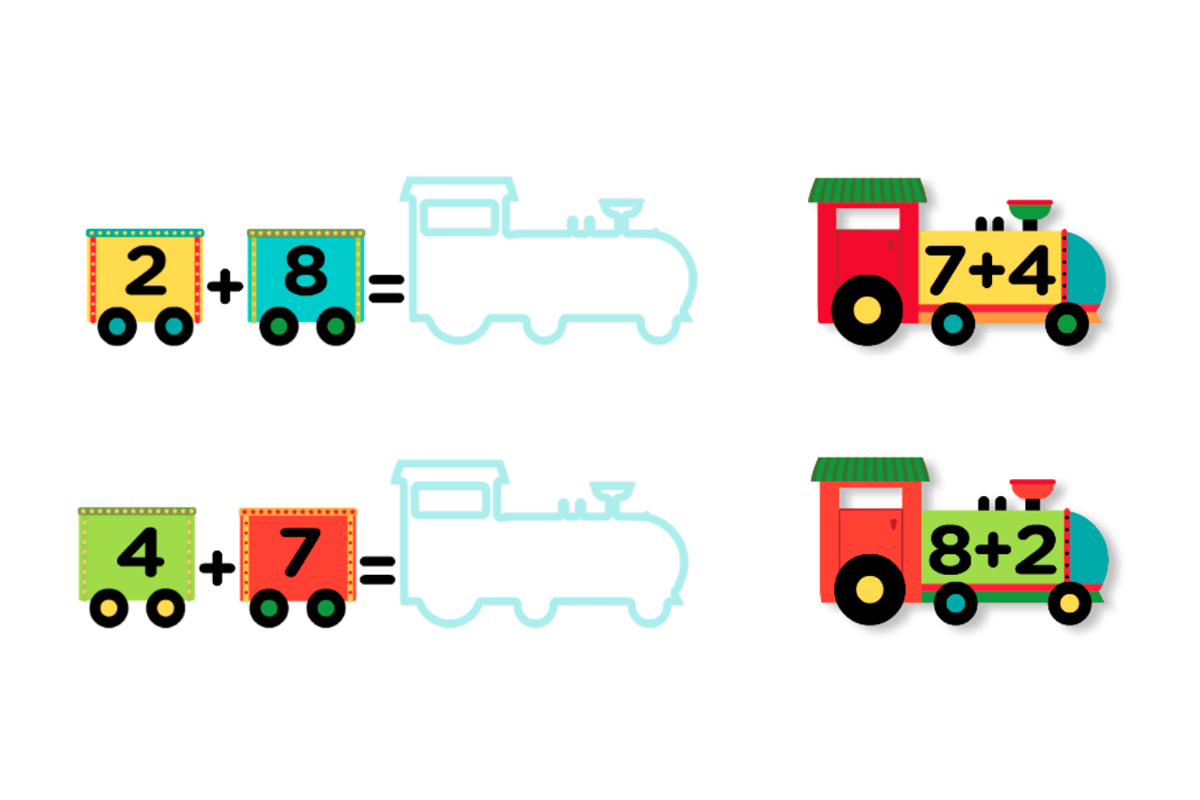


Improving reading skills alongside addition and subtraction for children aged 6-9 is crucial, as these competencies lay the foundation for future academic success and lifelong learning. Strong reading skills enhance comprehension across subjects, allowing children to grasp instructional materials effectively. When children can read well, they are better equipped to understand math concepts, follow problem-solving steps, and apply mathematical vocabulary, bridging the gap between language and mathematics.
Additionally, mastering addition and subtraction helps children develop critical cognitive skills, such as logical reasoning and problem-solving. These mathematical skills are essential not just for academic achievement in subjects like mathematics and science but also for daily life, from budgeting allowance to understanding time management.
Moreover, the synergy between reading and mathematics reinforces a child's confidence and motivation. Children who excel in these areas are more likely to participate actively in class and engage with further learning opportunities. For parents and teachers, fostering these skills means nurturing well-rounded individuals equipped to tackle more complex concepts in the future. Given the developmental milestones typical for ages 6-9, prioritizing these skills is vital for setting children on a path to success in school and beyond.








