Improving mathematical skills Addition & Subtraction Worksheets for Ages 6-9
4 filtered results
-
From - To
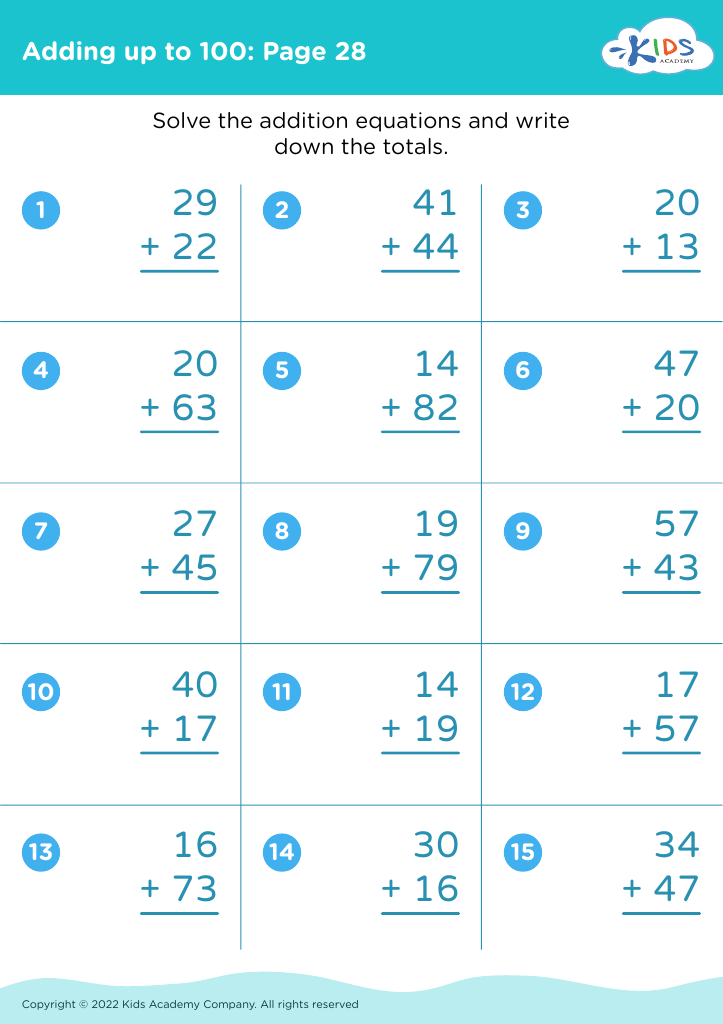
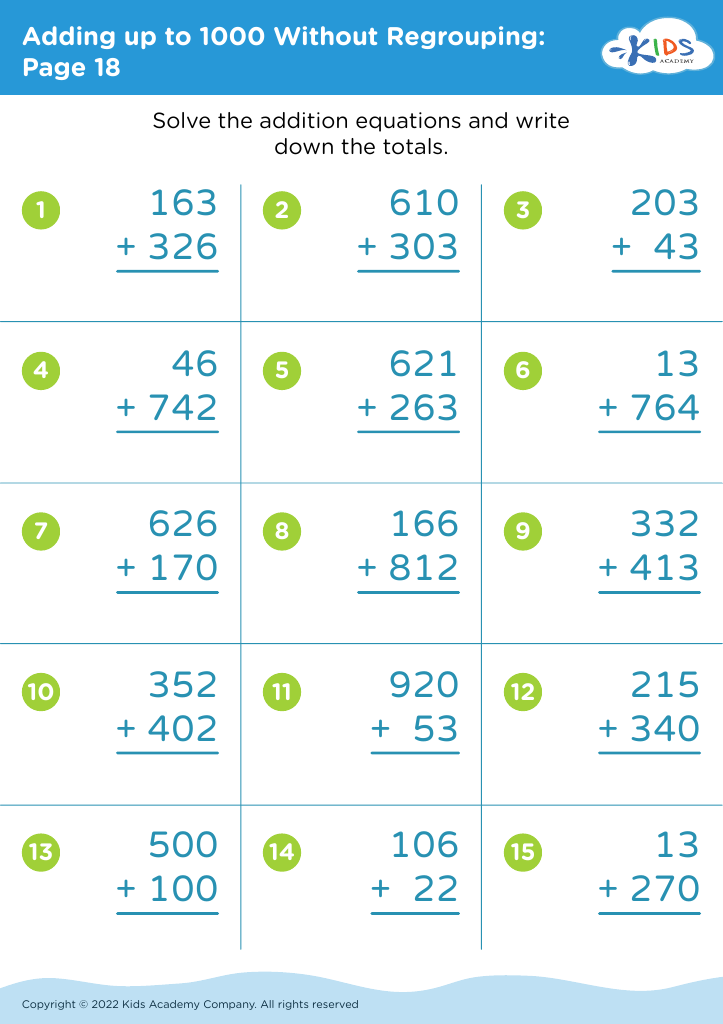
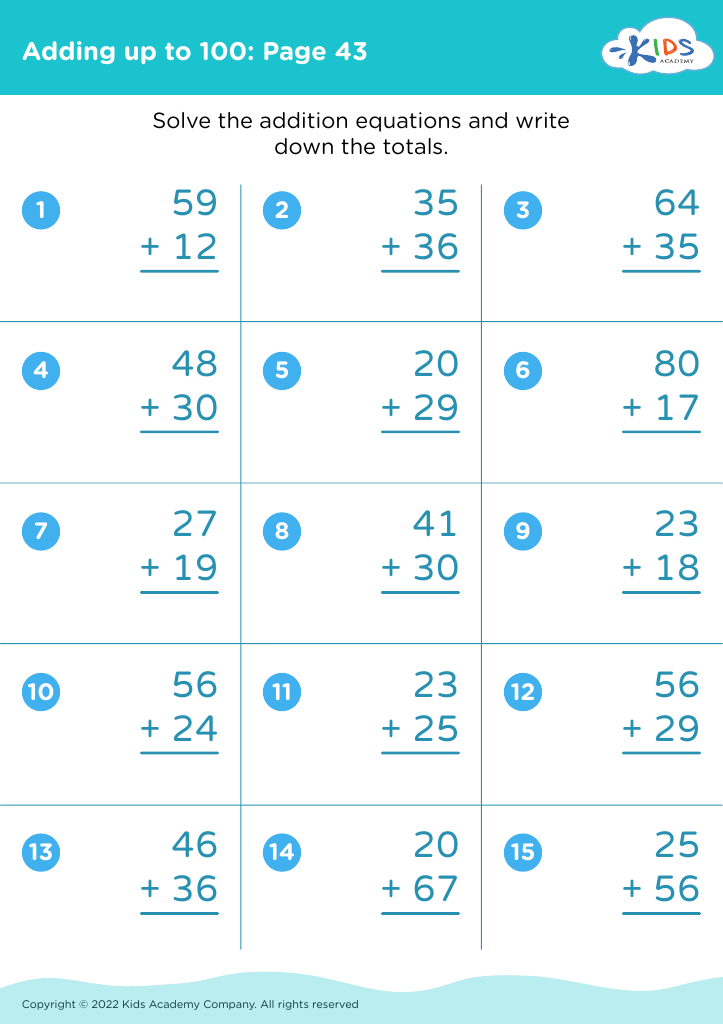
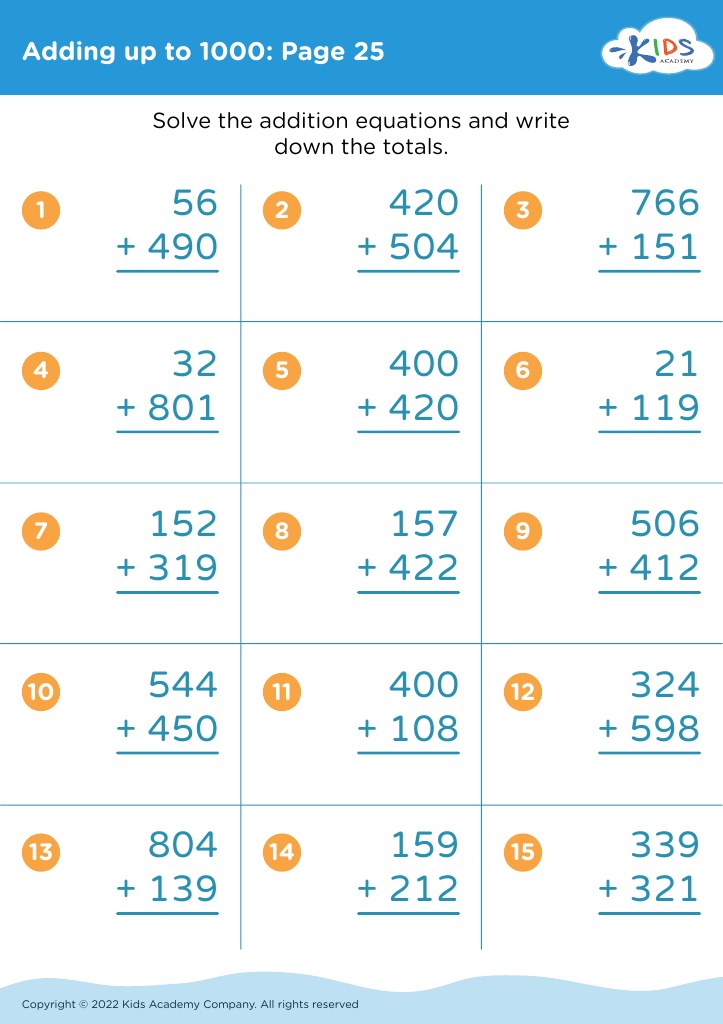
Enhance your child's mathematical abilities with our engaging Addition and Subtraction Worksheets designed specifically for ages 6-9. These interactive resources make learning fun and effective, helping young learners master foundational math skills through practice and repetition. Our worksheets are crafted to cater to different learning styles, featuring colorful illustrations and varied problem sets that keep kids motivated. Each worksheet reinforces essential concepts while building confidence in math. Perfect for parents and educators alike, these printable worksheets provide your child with a solid foundation in addition and subtraction, setting them on the path to mathematical success! Explore our collection today for endless learning opportunities!








Improving mathematical skills, particularly in addition and subtraction for children aged 6-9, is crucial for several reasons. At this developmental stage, students are building the foundational skills that will support their future learning in mathematics and other subjects. Mastery of addition and subtraction not only enhances mathematical fluency but also boosts problem-solving abilities and critical thinking skills.
Early proficiency in these basic operations fosters confidence, encouraging students to tackle more complex concepts as they progress. Furthermore, strong mathematical skills are linked to better academic performance across the curriculum. Children with a solid understanding of basic math are more likely to excel in science, technology, engineering, and even literacy, as many skills overlap in functional real-world applications.
Moreover, these skills cultivate persistence and resilience, as children learn to approach challenges systematically. For parents and teachers, this means fostering a positive attitude towards math from an early age—which can reduce anxiety and aversion to the subject later in life. Ultimately, supporting mathematical development during these formative years lays the groundwork for lifelong skills and a positive engagement with learning, helping children reach their full potential. Investing time in these fundamental skills now pays dividends in the future.








