
Number identification Addition & Subtraction Worksheets for Ages 6-9
4 filtered results
Difficulty Level
Grade
Age
-
From - To
Subject
Activity
Standards
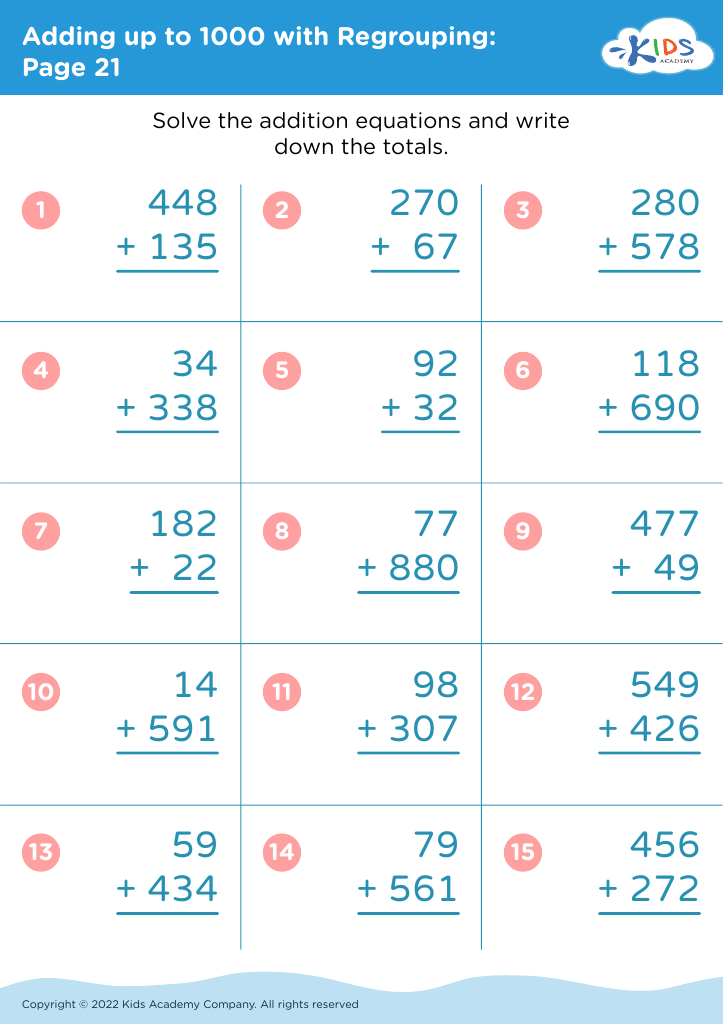
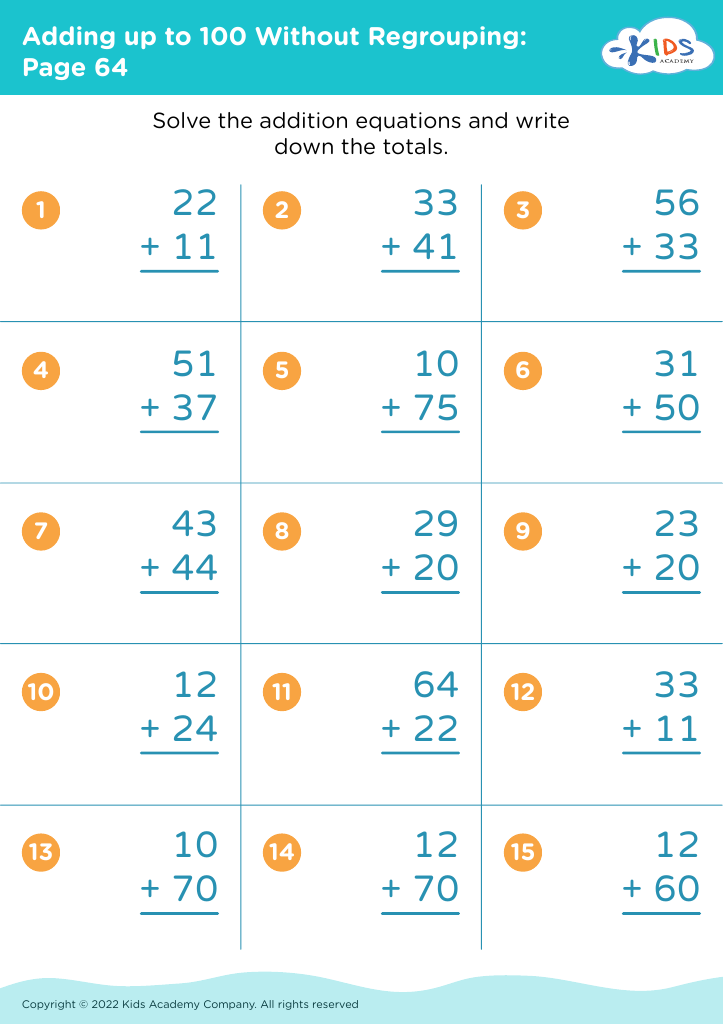
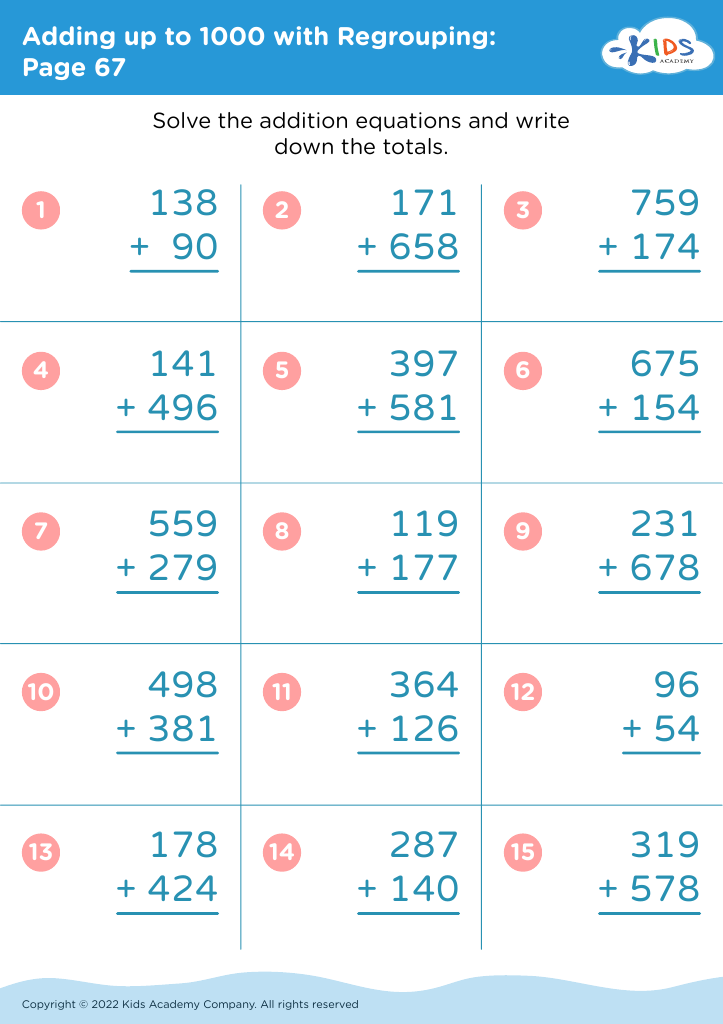
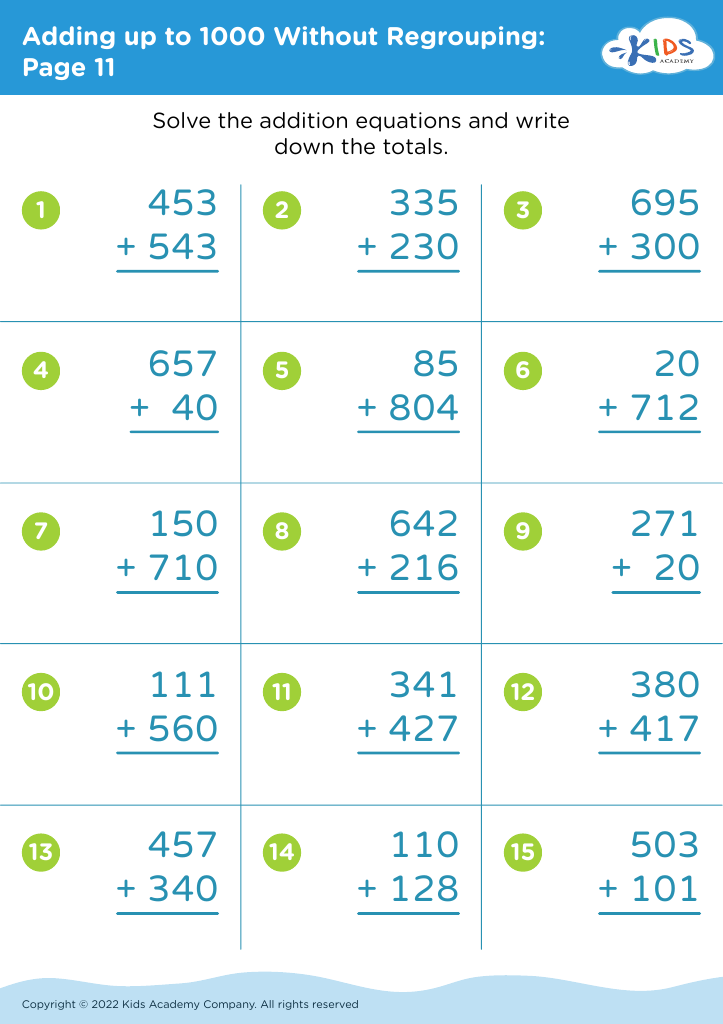
Enhance your child's math skills with our Number Identification Addition & Subtraction Worksheets, specially designed for ages 6-9. These engaging and educational worksheets help young learners develop crucial math abilities, including number identification, basic addition, and subtraction. Perfect for both classroom and home settings, our printable resources are crafted to make learning fun and interactive. Boost your child's confidence and mastery in math with our expertly developed exercises. Click here to explore our collection and give your child the edge in math today!
Favorites
With answer key
Interactive
Join Kids Academy for Free
Who is primarily going to use this learning content?








Number identification and mastering basic addition and subtraction are fundamental skills that create the foundation for a child's future success in mathematics and everyday life. By the age of 6-9, children are at a critical stage for cognitive development, where their grasp of these concepts can greatly influence their confidence and performance in school.
Learning number identification is not just about recognizing numerals but also about understanding quantity and numerical relationships. This skill is essential for various activities, such as telling time, using money, and following sequential instructions. Without a solid understanding of what numbers represent, children may struggle with more complex mathematical concepts later on.
Addition and subtraction, the building blocks of arithmetic, are equally critical. These operations are the prerequisite for more advanced math topics, including multiplication, division, fractions, and problem-solving. They also have practical applications in daily activities, like measuring ingredients in a recipe, figuring out change during shopping, or dividing snacks among friends.
For parents and teachers, emphasizing and practicing these skills not only supports academic achievement but also encourages logical thinking and problem-solving abilities. Moreover, student success in early math correlates with increased self-esteem and a positive attitude toward learning. Establishing a strong numerical foundation prepares children for a wide array of learning opportunities, both in math and beyond.








