Understand number relationships Addition & Subtraction Worksheets for Ages 6-9
3 filtered results
-
From - To
Boost your child's math skills with our "Understand Number Relationships: Addition & Subtraction" worksheets, designed specifically for ages 6-9. These engaging and interactive printables help young learners grasp essential concepts in mathematics through relatable and enjoyable activities. By exploring number relationships, children develop a strong foundation in addition and subtraction, paving the way for future success in math. Our worksheets feature vibrant visuals and easy-to-follow instructions, making learning fun and effective. Ideal for classroom settings or homeschooling, these resources make math accessible and exciting. Download now to fuel your child's confidence and competence in number relationships today!
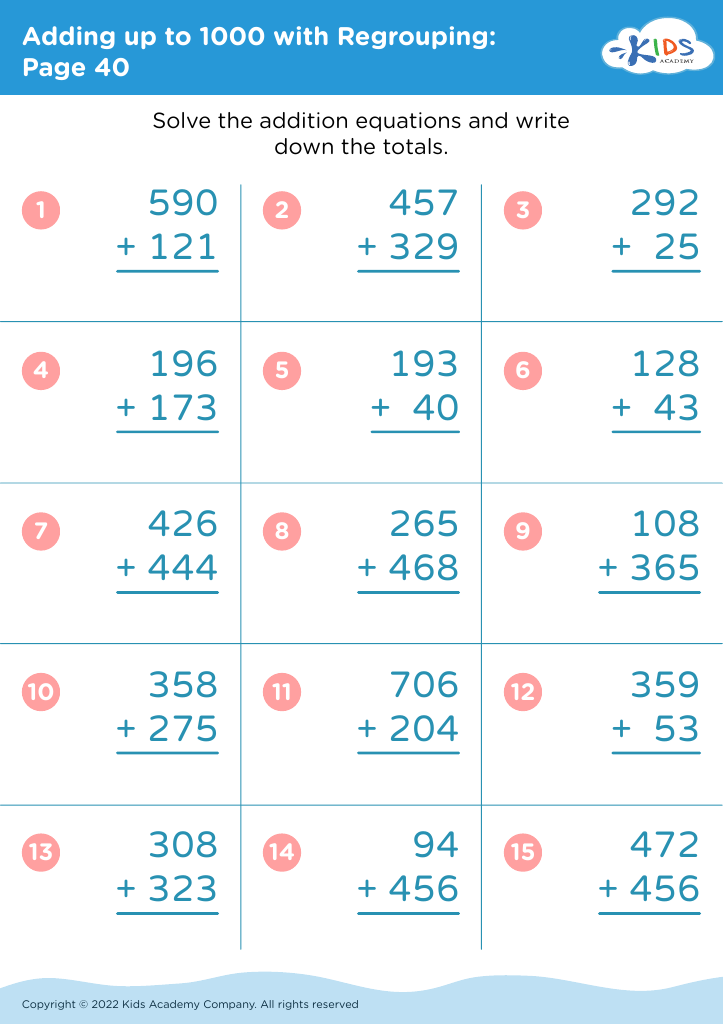
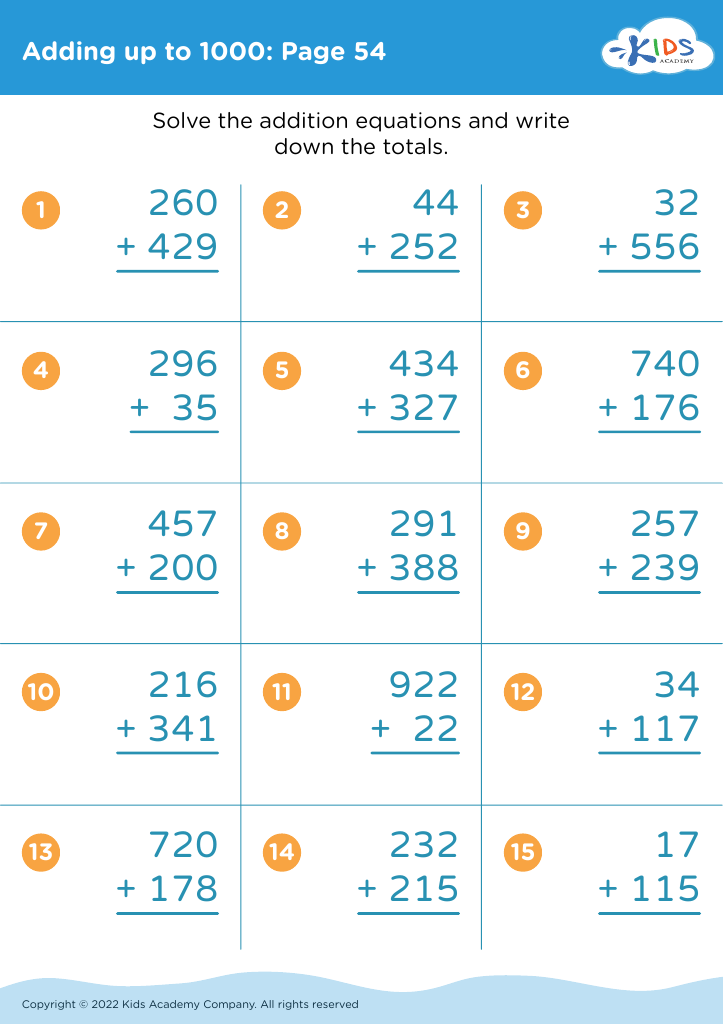
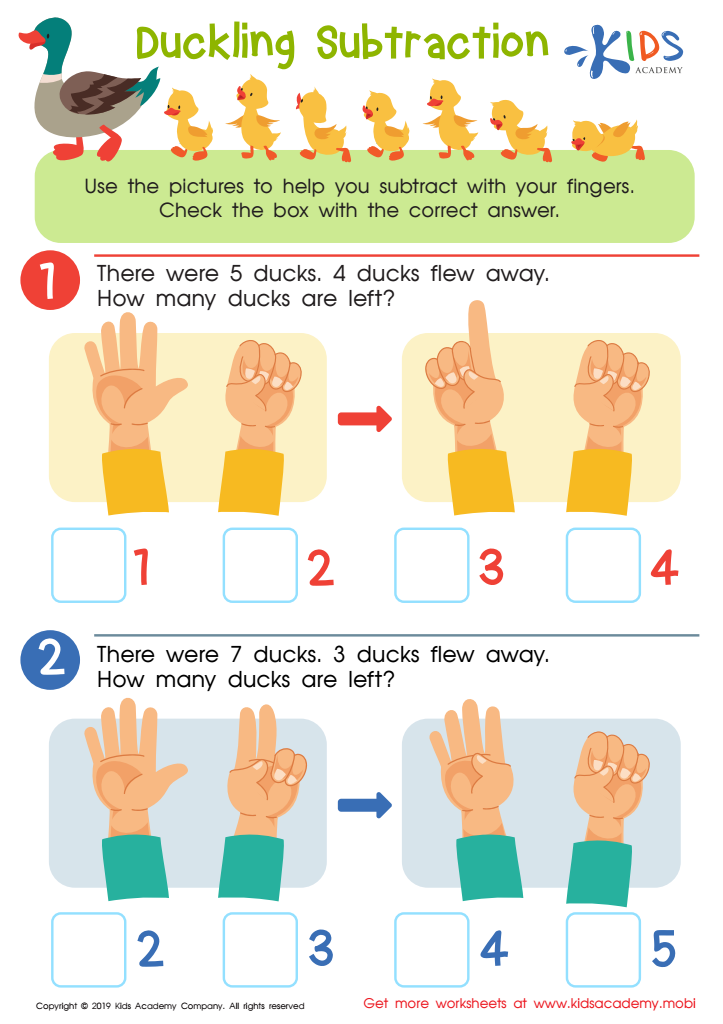
Duckling Subtraction Worksheet
 Assign to My Students








Understanding number relationships, particularly in addition and subtraction, is crucial for children aged 6-9 as it lays the foundation for future math skills. At this age, children are transitioning from simple arithmetic to more complex problem-solving. By grasping how numbers interact, they develop a deeper comprehension of quantity and value, which enhances their ability to manipulate numbers confidently.
Parents and teachers should emphasize this understanding because it directly affects a child's ability to tackle everyday situations that involve math, such as determining change when shopping or splitting items among friends. Additionally, recognizing relationships between numbers fosters critical thinking skills. For instance, understanding that 3 + 2 is the same as 5 – whether through physical objects, drawings, or abstract numbers – cultivates flexibility in thinking and approaches to problem-solving.
Moreover, encouraging a solid grasp of these concepts can alleviate math anxiety, helping children feel more competent and engaged. As they master addition and subtraction, they are better prepared for more advanced topics like multiplication and division, as well as essential skills necessary for higher education and real-world applications. Therefore, investing time in teaching number relationships is an investment in their long-term academic success and confidence.








