Understanding number relationships Addition & Subtraction Worksheets for Ages 6-9
5 filtered results
-
From - To
Explore our “Understanding Number Relationships: Addition & Subtraction Worksheets” designed specifically for children aged 6-9. These engaging, interactive worksheets help young learners grasp foundational math concepts by promoting a deep understanding of how numbers interact. By practicing addition and subtraction through various exercises, kids will enhance their problem-solving skills and boost their confidence in math. Tailored for early grade teachers and parents, our resources provide colorful and imaginative designs that make learning fun and effective. Foster a solid math foundation in your child today! Access our comprehensive collection of worksheets and watch as your child flourishes in their number abilities.
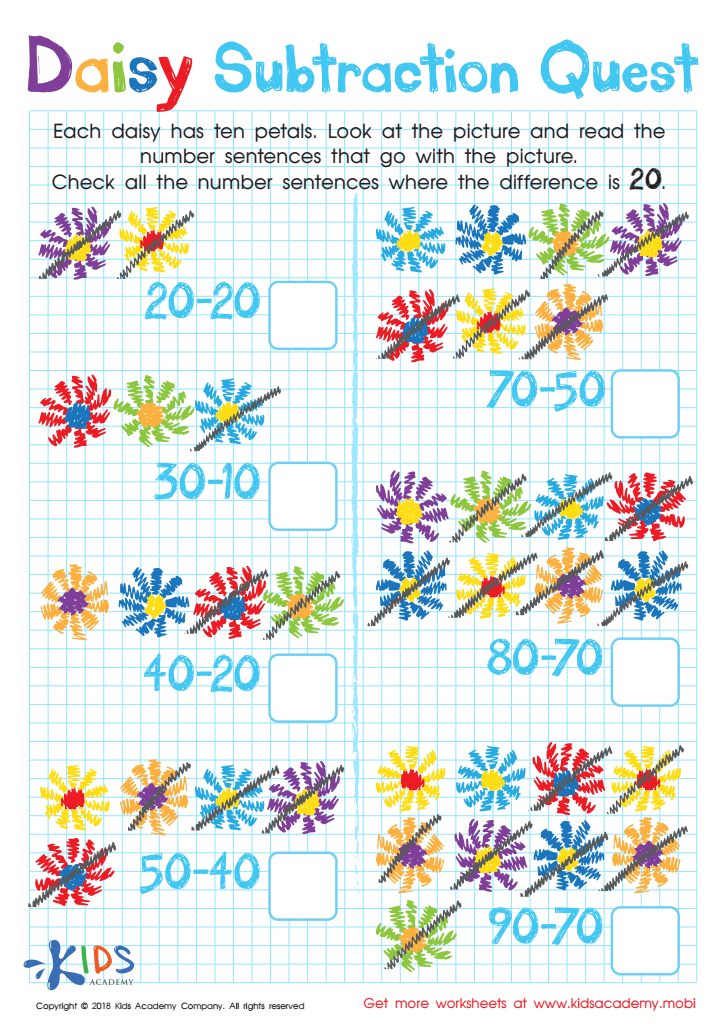
Daisy Subtraction Quest Worksheet
 Assign to My Students
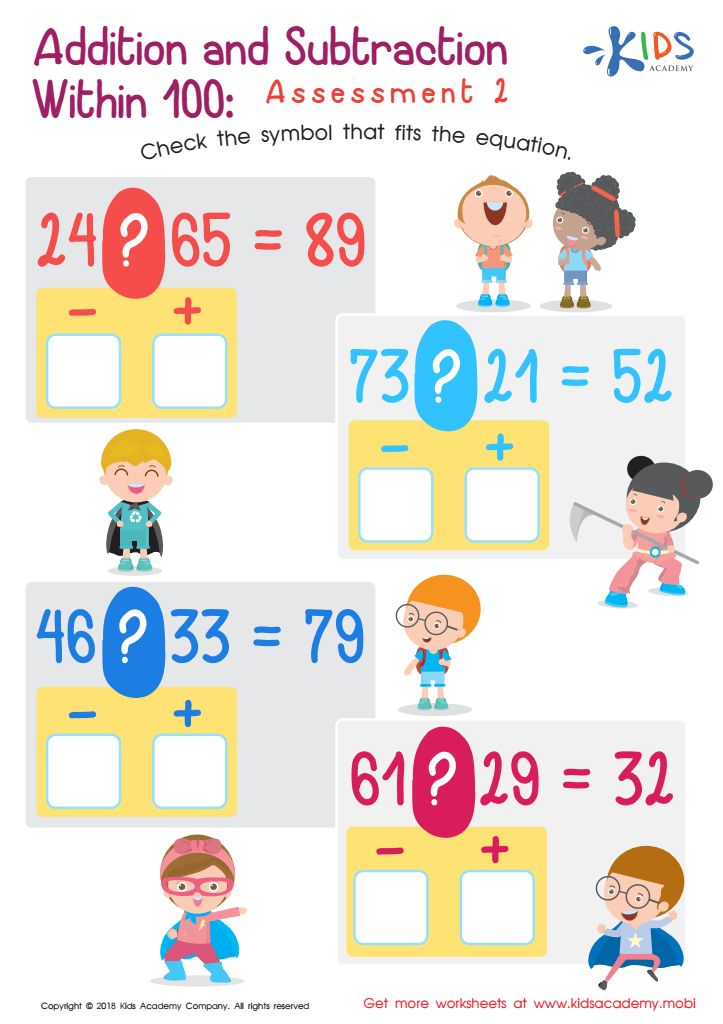
Addition and Subtraction Within 1: Assessment 2 Worksheet
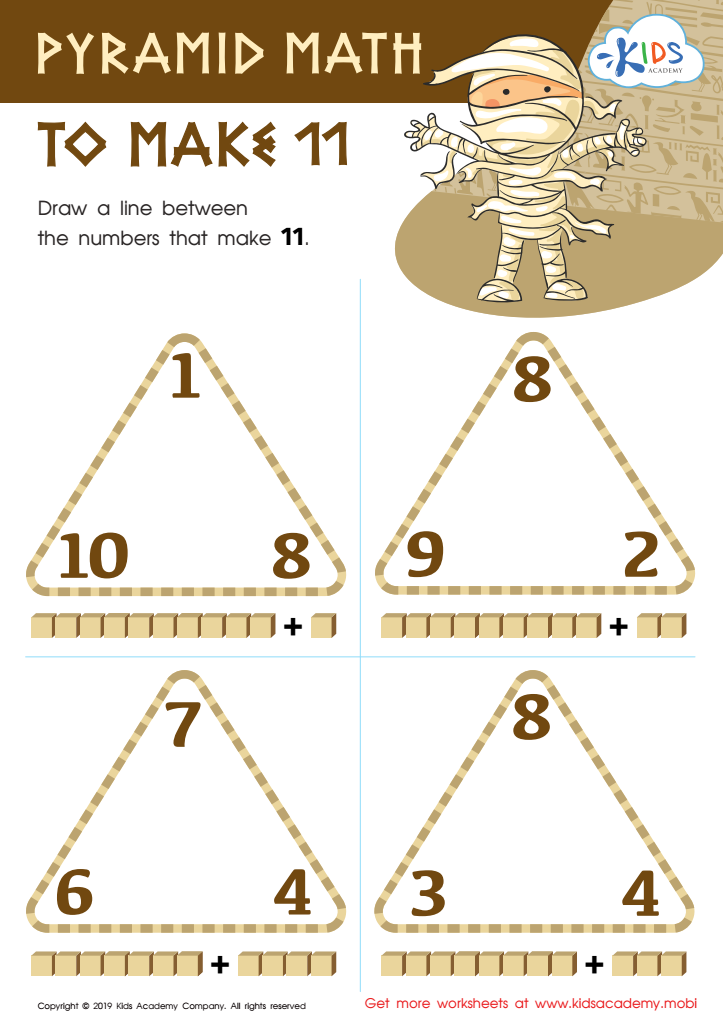
Pyramid Math to Make 11 Worksheet
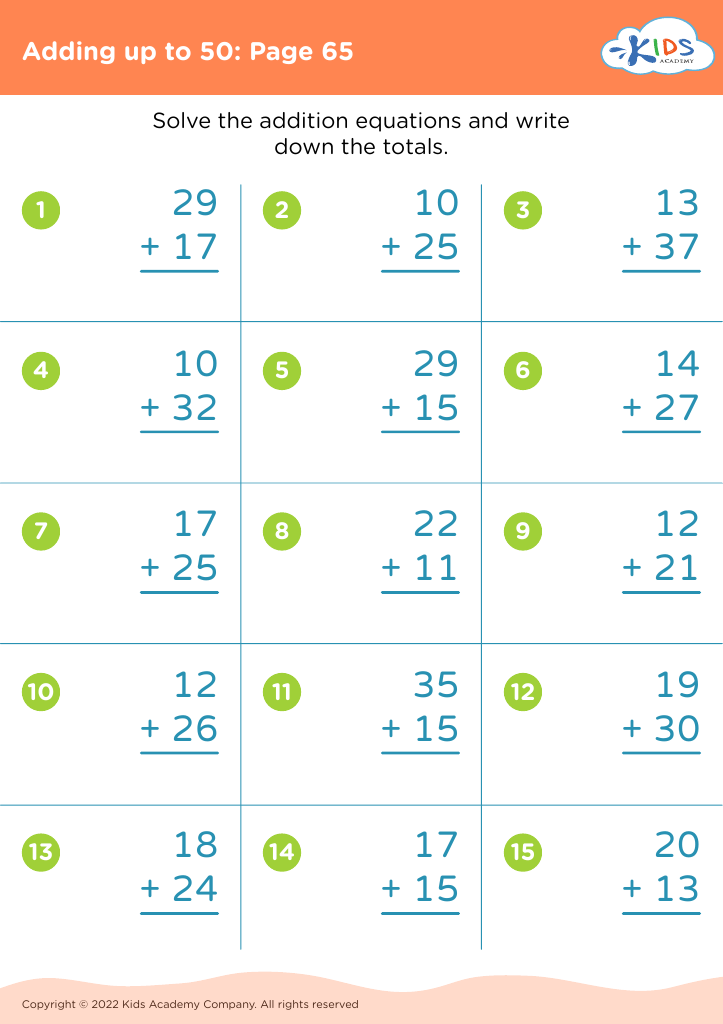








Understanding number relationships, particularly in addition and subtraction, is crucial for children aged 6-9 as it forms the foundation for their future mathematical skills. During these formative years, students transition from concrete counting to abstract mathematical reasoning. Grasping how numbers interact with one another enhances their fluency in basic operations, allowing them to tackle more complex concepts later on.
For parents and teachers, fostering this understanding promotes confidence and resilience in young learners. When children comprehend that addition is the process of combining quantities and subtraction involves separating them, they become more adept at solving problems. This fluency also supports development in critical thinking and logical reasoning, making future subjects such as multiplication, division, and even early algebra easier to grasp.
Moreover, strengthening these foundational skills at a young age has long-term academic implications. Children who master number relationships are typically more proficient in mathematics throughout their schooling. Additionally, understanding these concepts can help reduce anxiety around math, leading to a more positive attitude towards the subject. Engaging kids in meaningful discussions around numbers and their relationships can foster a more enriching learning environment—crucial for both academic performance and real-life applications of math.








