Understanding sequence Addition & Subtraction Worksheets for Ages 6-9
4 filtered results
-
From - To
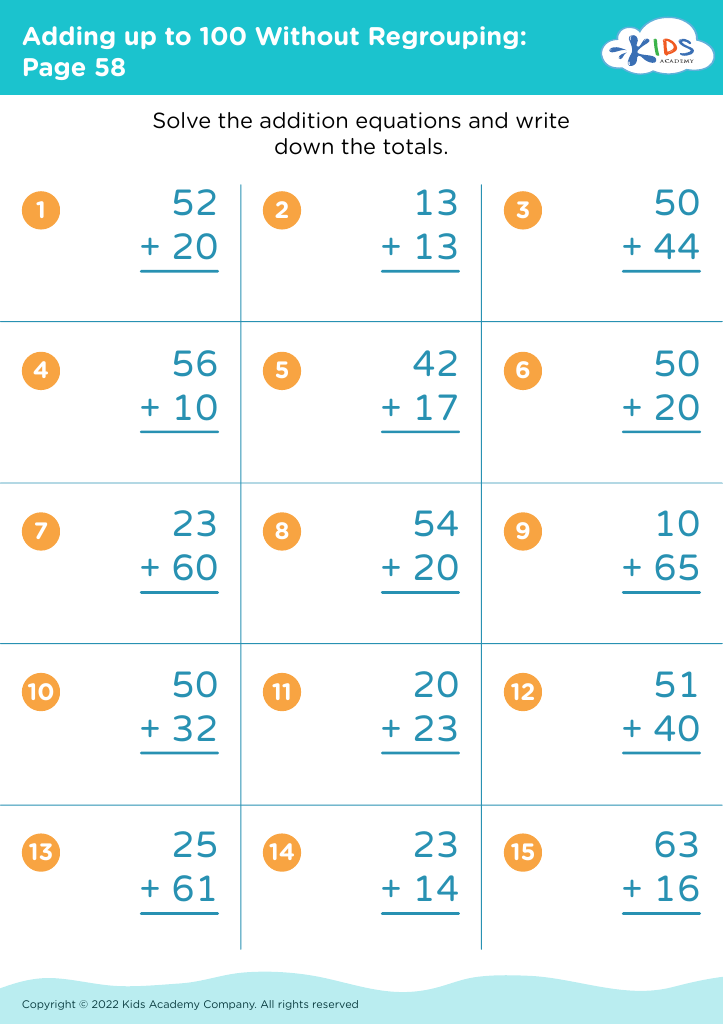
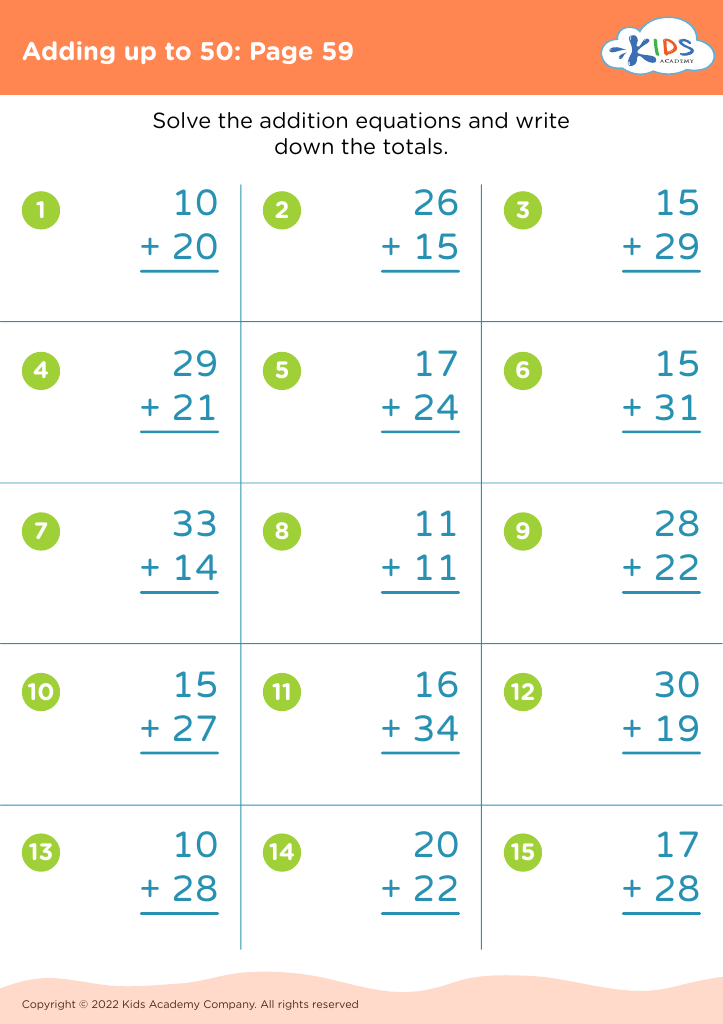
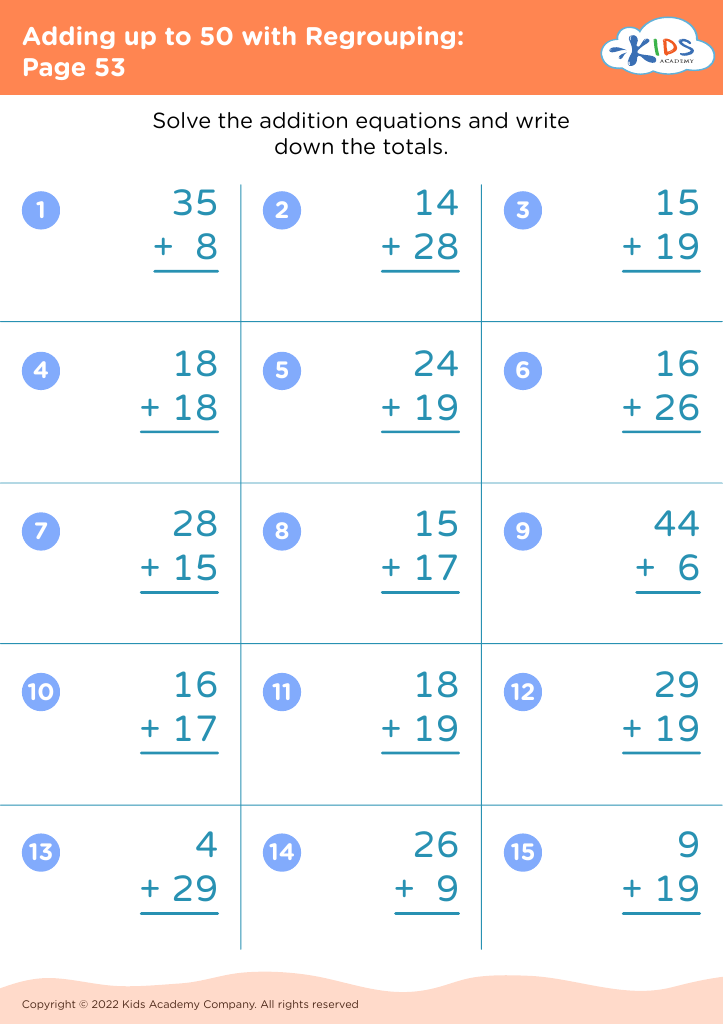
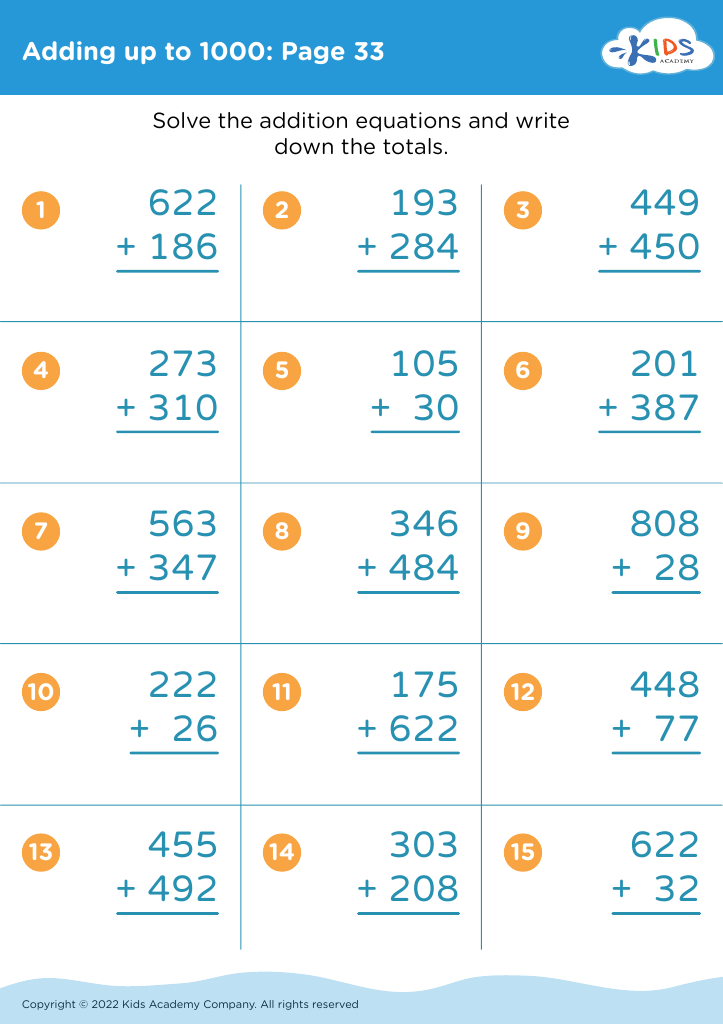
Introduce your child to the joys of math with our "Understanding Sequence Addition & Subtraction Worksheets for Ages 6-9." Designed to nurture fundamental arithmetic skills, these worksheets help young learners master sequence-based addition and subtraction. Engaging activities enhance problem-solving abilities and build confidence, offering a step-by-step approach to simple yet essential math concepts. Crafted by educational experts, our worksheets make learning enjoyable and stimulating, paving the way for academic success. Ideal for both classroom and home practice, they provide the perfect tool to develop a solid mathematical foundation in your child's early years. Transform learning into an exciting journey today!








Understanding sequence addition and subtraction for children aged 6-9 is crucial because these foundational math skills form the building blocks for all future mathematical learning. At this age, children are highly receptive and are developing cognitive skills that make it easier to grasp fundamental concepts. Proficiency in addition and subtraction directly influences a child’s ability to tackle more advanced topics such as multiplication, division, and even algebra later on.
Sequence addition and subtraction concepts help enhance logical thinking, sequencing abilities, and problem-solving skills. When a child masters these skills, they learn to approach complex problems systematically, breaking them down into manageable steps. This not only bolsters their confidence in dealing with math but also improves their overall academic performance.
Parents and teachers play a key role in this learning process. They can use everyday experiences—like counting out change, sorting objects, or dividing snacks—to make learning intuitive and fun. Teaching these skills at an early age also helps children develop a positive attitude towards math, reducing math anxiety and fostering a mindset open to quantitative and analytical challenges.
Moreover, early mastery of these concepts sets a strong academic foundation that benefits children not just in math, but in other subjects that require logical reasoning and critical thinking skills. In essence, caring about these early math skills helps set the stage for lifelong learning and success.








