Explore our "Understanding Sequences Addition & Subtraction Worksheets" designed specifically for children ages 6-9! These engaging and interactive worksheets help young learners master the fundamental concepts of sequences while enhancing their addition and subtraction skills. Featuring colorful illustrations and varied exercises, our resources promote critical thinking and problem-solving through fun sequences that teach children how numbers work together. Perfect for both classroom settings and at-home practice, these worksheets support early math development. With clear instructions and gradual progression, students will build confidence in their abilities as they learn through play. Download and boost your child’s math journey today!
Check out this FREE Trial Lesson on Addition & Subtraction for age 6-9!

Adding with 5's

Favorites
With answer key
Interactive
  • 6-9
  • Understanding Sequences
  • Addition & Subtraction
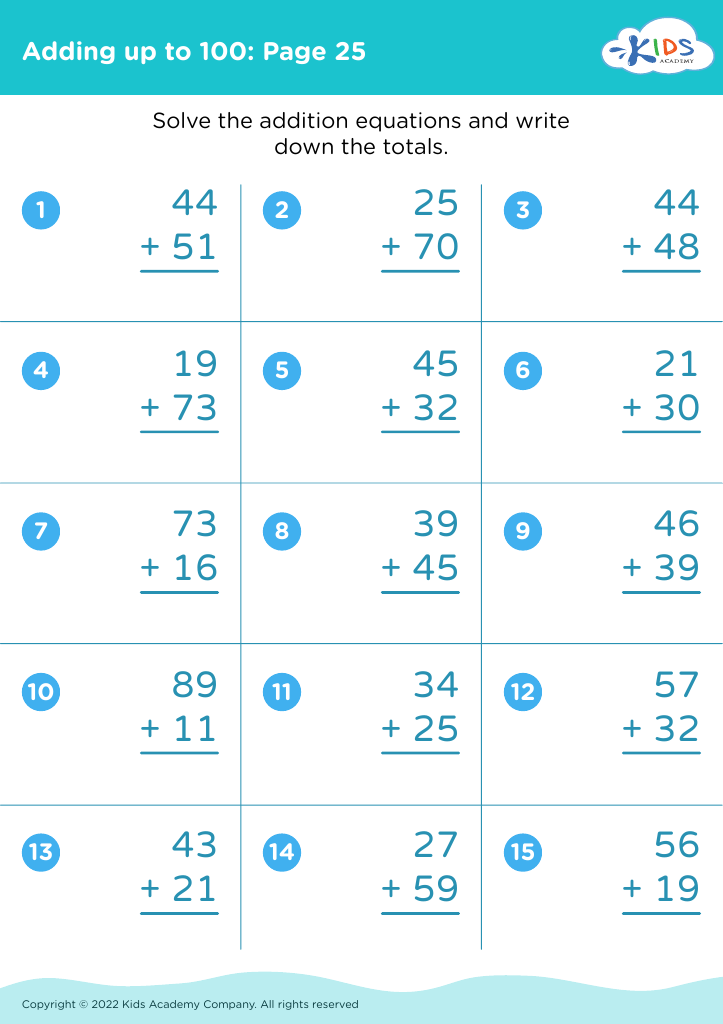
Adding up to 100: Page 25

Adding up to 100: Page 25

Adding up to 100: Page 25
Worksheet
Plant the Seeds Addition Worksheet

Plant the Seeds Addition Worksheet

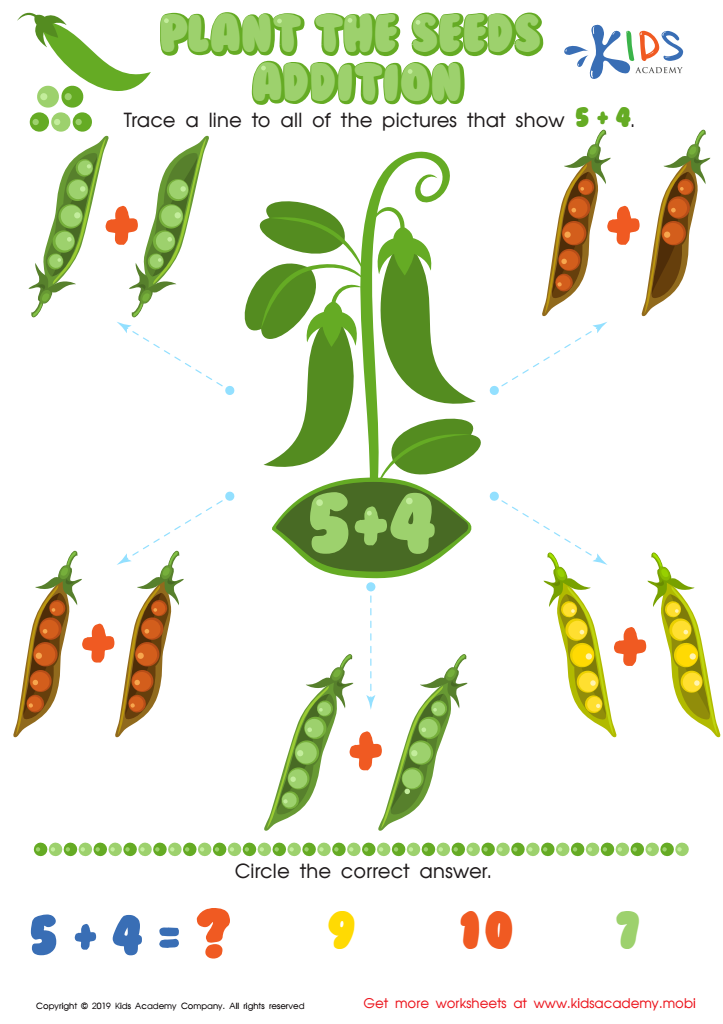
This worksheet combines math and learning about plants. Ask kids to name their favorite plants and which ones they see the most. Have them trace a line to all pictures in the middle which show the equation 5+4. Enjoy the beauty of plants while introducing math skills!
Plant the Seeds Addition Worksheet
Worksheet
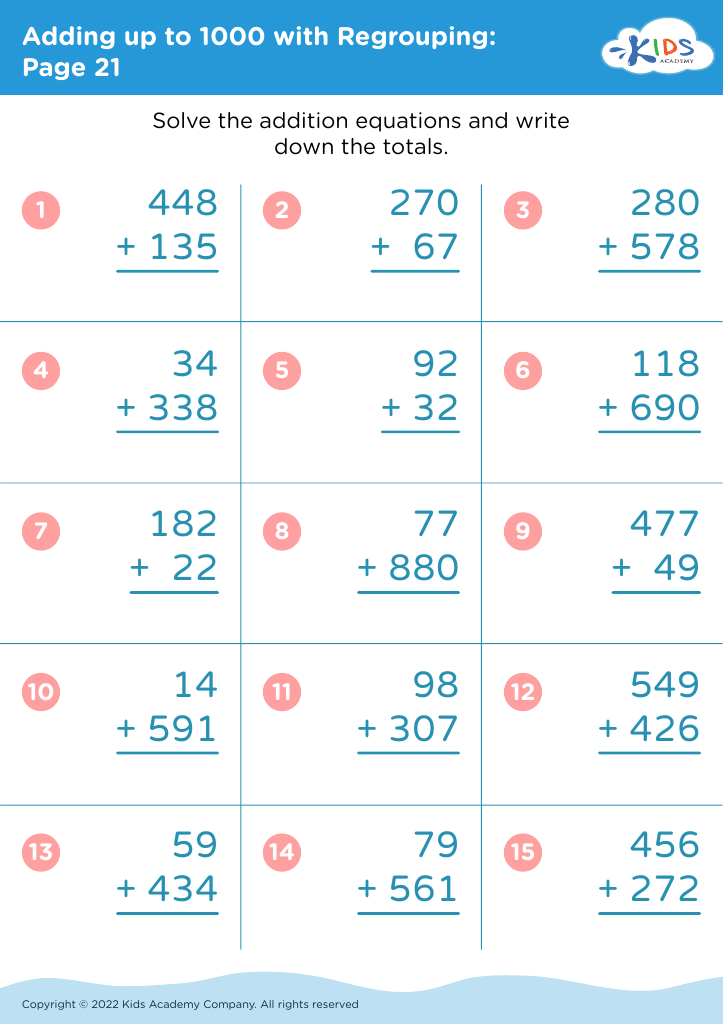
Adding up to 1000 with Regrouping: Page 21
Worksheet
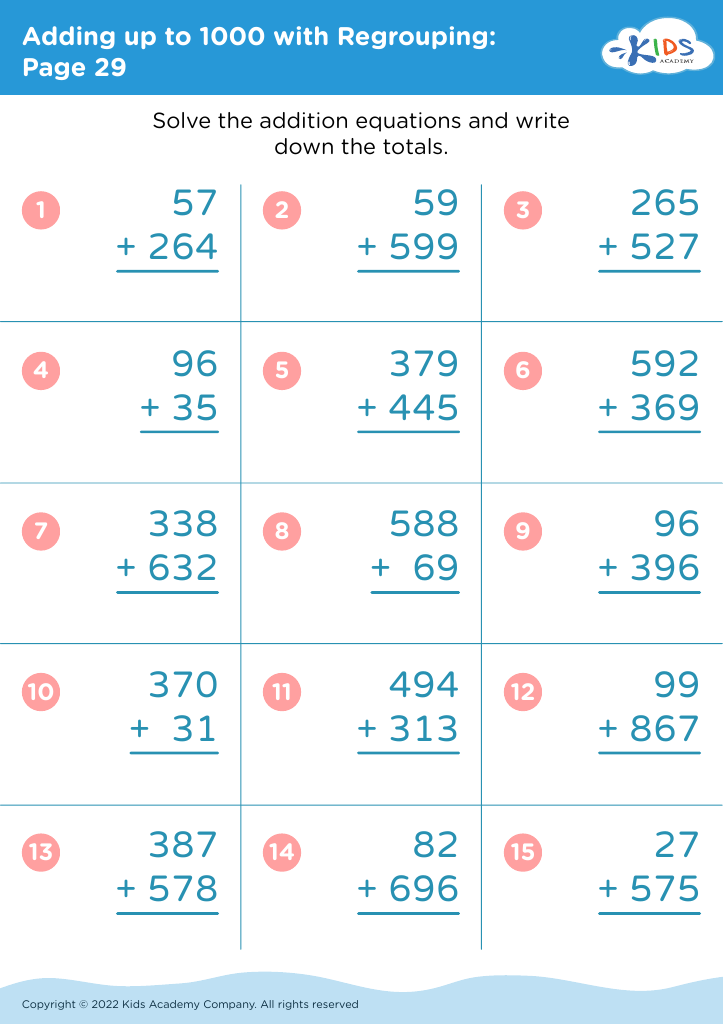
Adding up to 1000 with Regrouping: Page 29
Worksheet
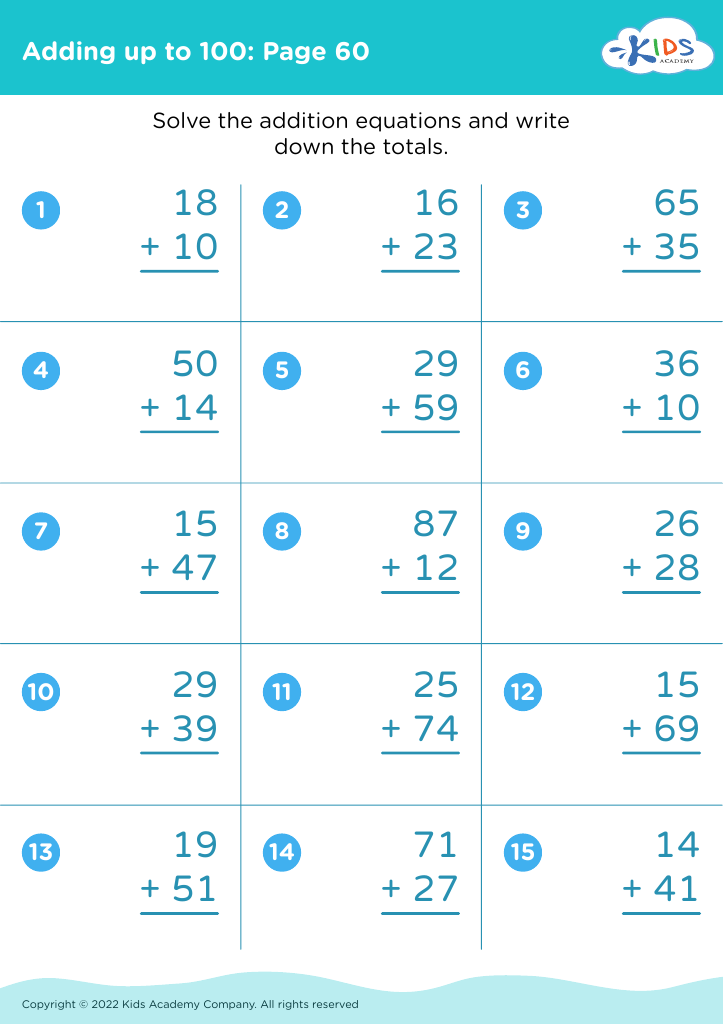
Adding up to 100: Page 60

Adding up to 100: Page 60

Adding up to 100: Page 60
Worksheet
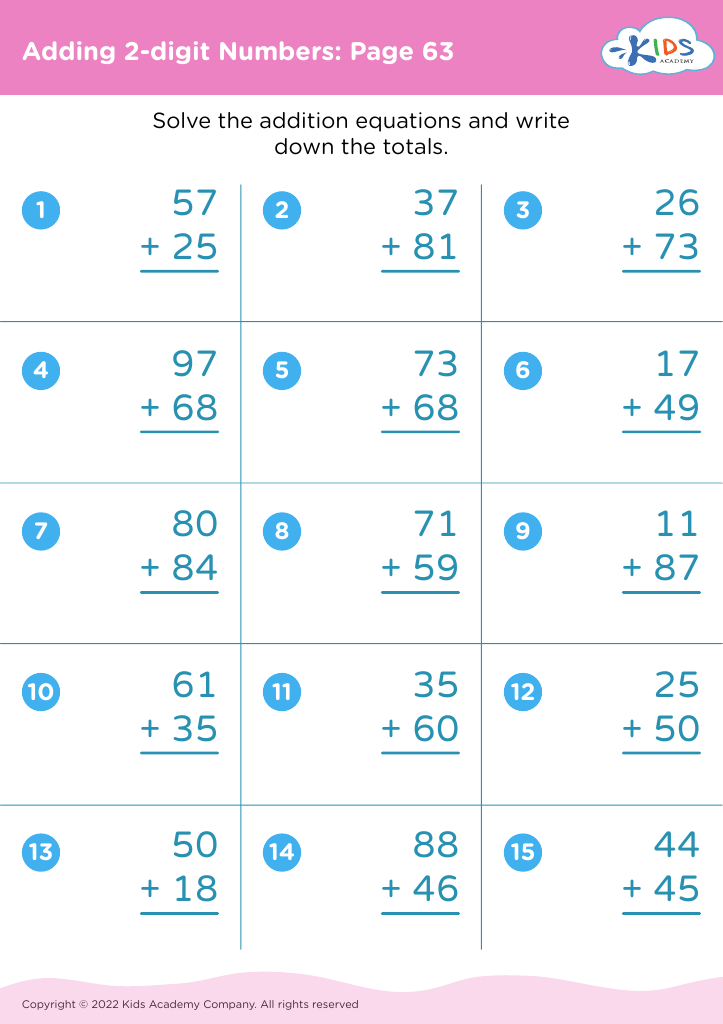
Adding 2-digit Numbers: Page 63

Adding 2-digit Numbers: Page 63

Adding 2-digit Numbers: Page 63
Worksheet
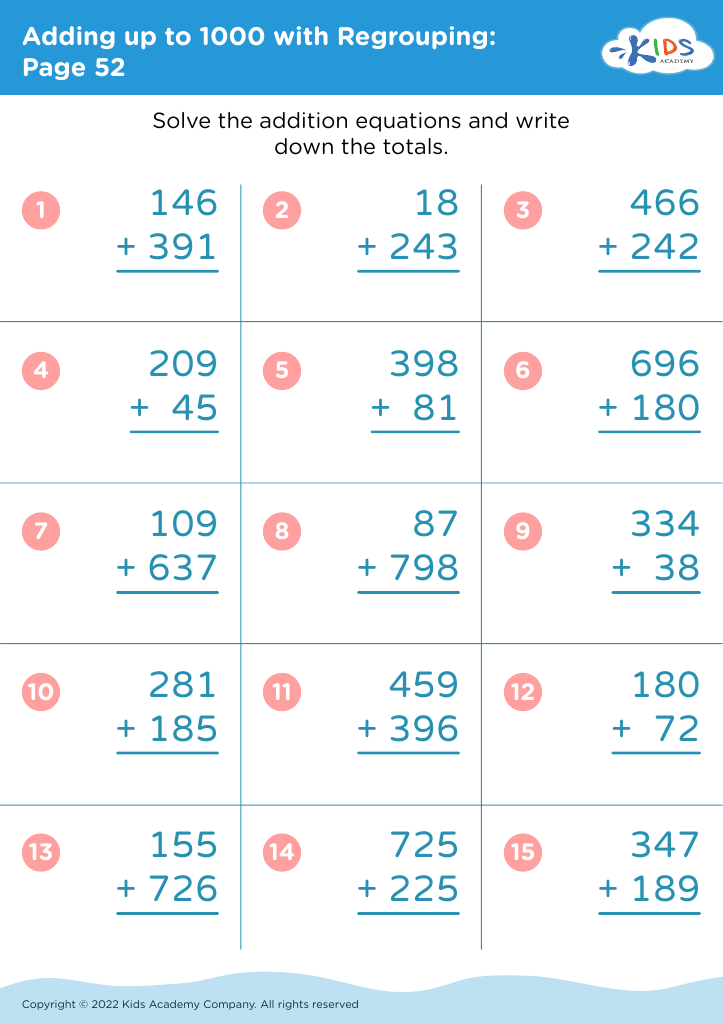
Adding up to 1000 with Regrouping: Page 52
Worksheet
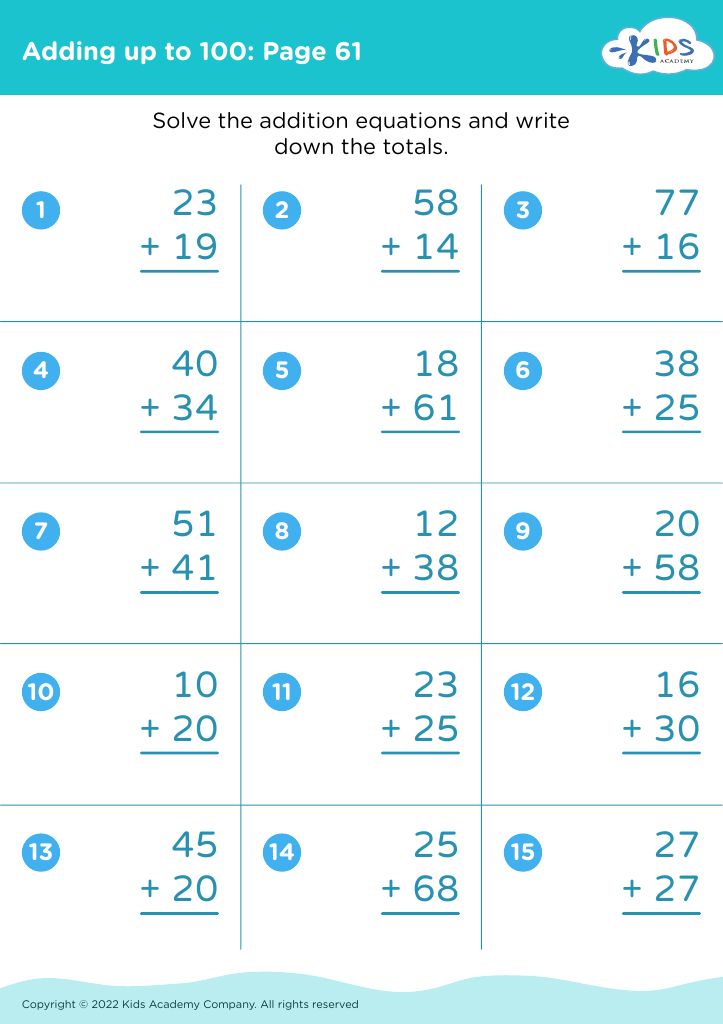
Adding up to 100: Page 61

Adding up to 100: Page 61

Adding up to 100: Page 61
Worksheet
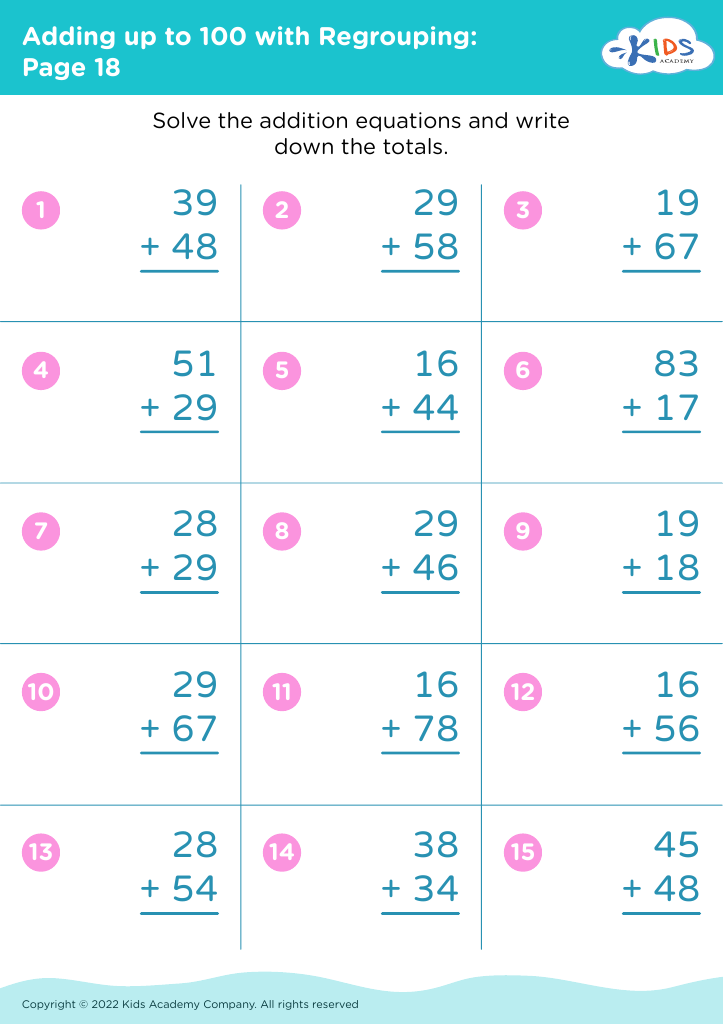
Adding up to 100 with Regrouping: Page 18
Worksheet
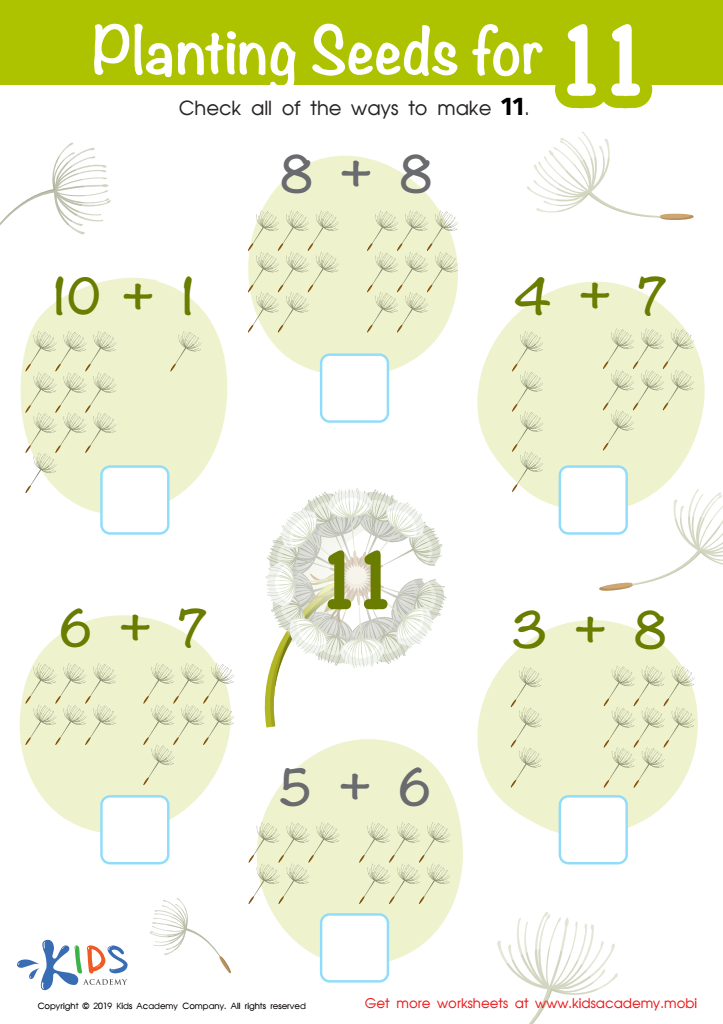
Planting Seeds for 11 Worksheet
Planting Seeds for 11 Worksheet
Before starting, ask your students to count as high as they can. Explain that different numbers can add up to the same total. Give examples like 2+2 =4 and 3+1 =4. Ask if they can think of other examples. Then have them work through the equations in the printout and circle all that add up to 11.
Planting Seeds for 11 Worksheet
Worksheet
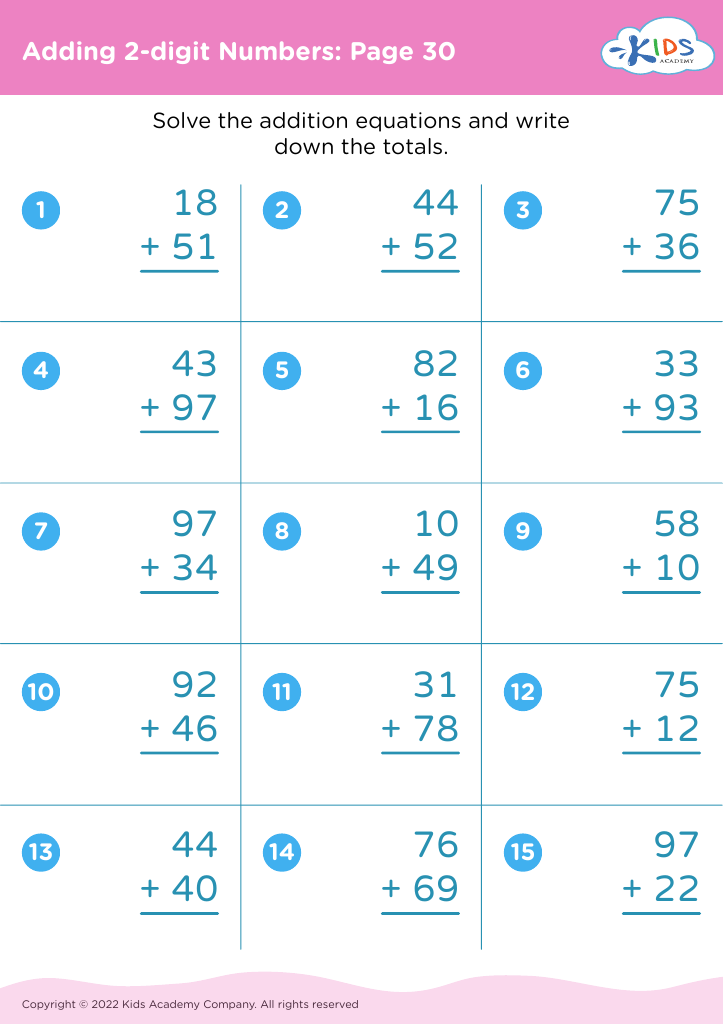
Adding 2-digit Numbers: Page 30

Adding 2-digit Numbers: Page 30

Adding 2-digit Numbers: Page 30
Worksheet
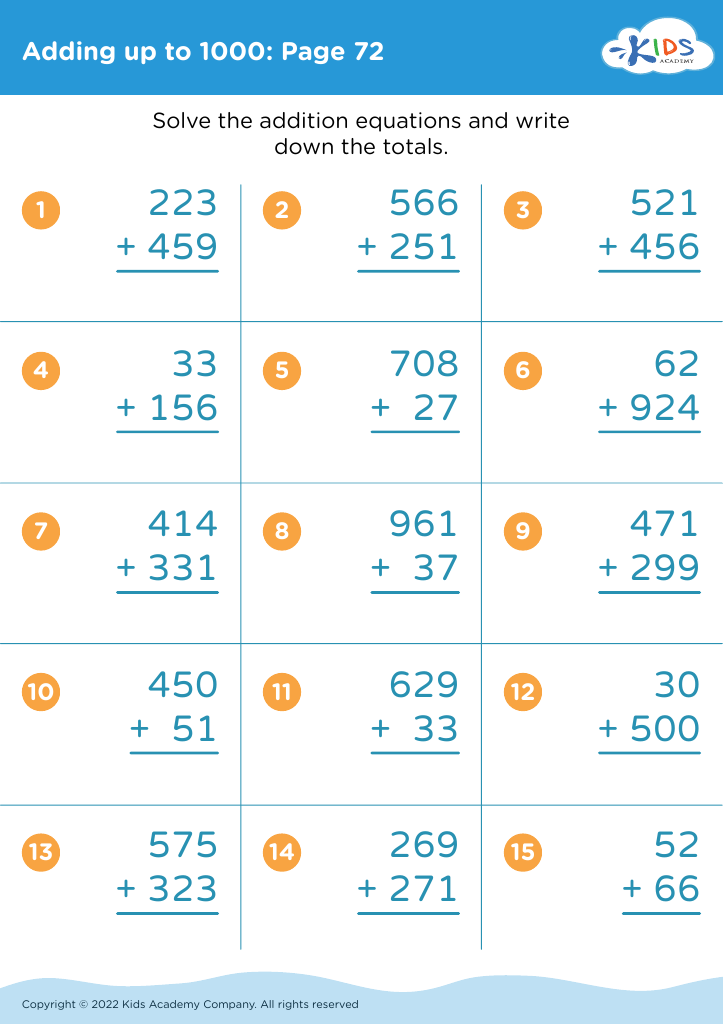
Adding up to 1000: Page 72

Adding up to 1000: Page 72

Adding up to 1000: Page 72
Worksheet
Haystack Steps Worksheet
Haystack Steps Worksheet

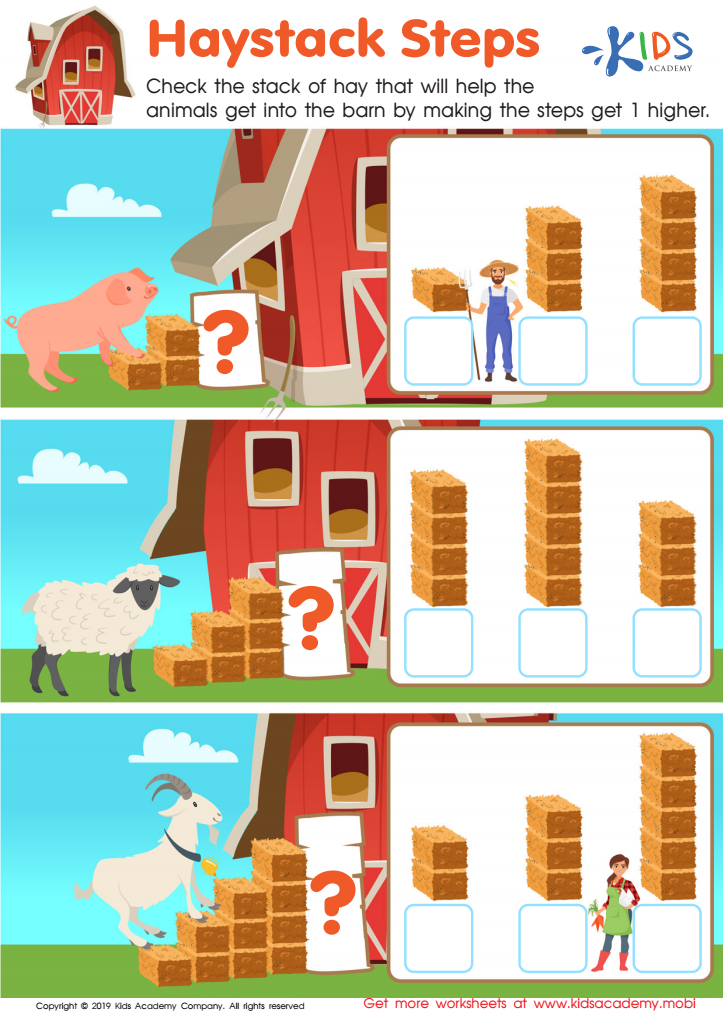
Have your kids ever visited a farm? What activities and sights did they enjoy? Farmers are essential to our lives, growing food and providing us with dairy and eggs. In this worksheet, a farmer has made a haystack for his animals to climb into the barn. Ask your kids to add an extra layer to the stack to make the climb easier.
Haystack Steps Worksheet
Worksheet
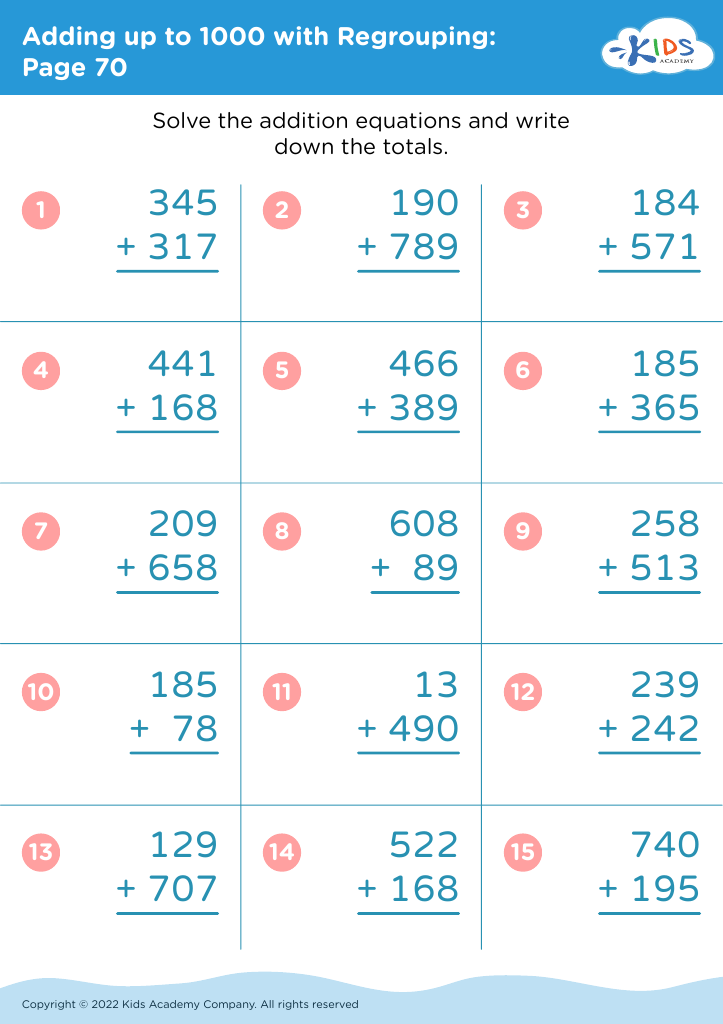
Adding up to 1000 with Regrouping: Page 70
Worksheet
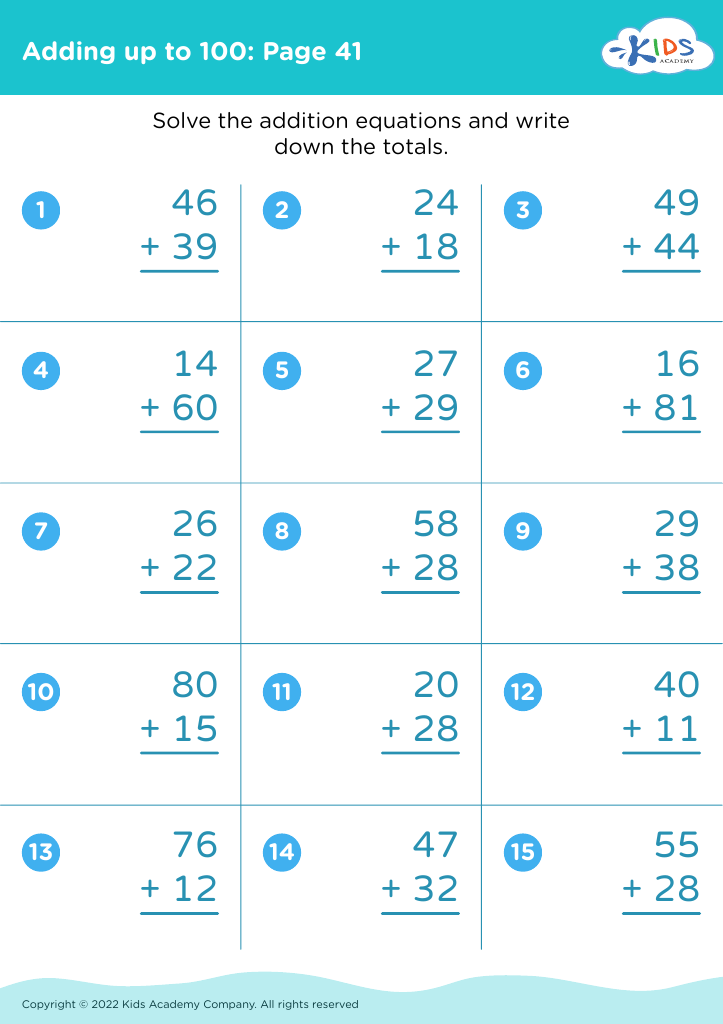
Adding up to 100: Page 41

Adding up to 100: Page 41

Adding up to 100: Page 41
Worksheet
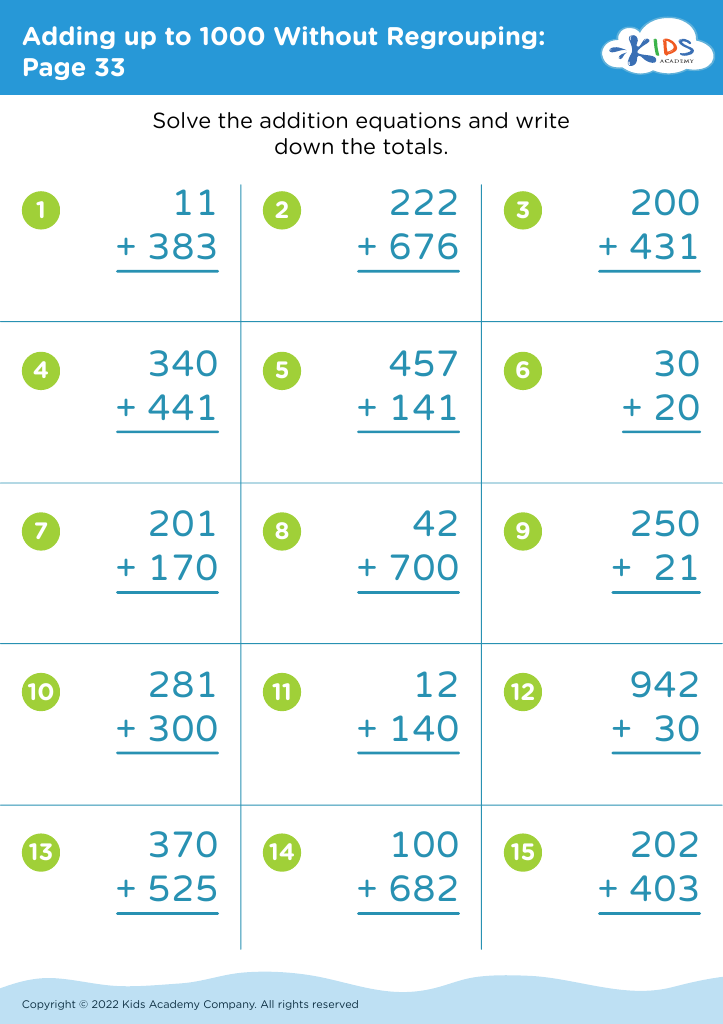
Adding up to 1000 Without Regrouping: Page 33
Worksheet


Understanding sequences in addition and subtraction is crucial for children aged 6-9, as it lays the foundation for their mathematical development. During this developmental stage, children begin to understand number relationships, patterns, and the logic behind arithmetic operations. Recognizing sequences helps them grasp the concept of number order and increases their fluency in basic math skills.

For teachers and parents, fostering this understanding encourages problem-solving and critical thinking. It enables children to see patterns in their calculations, which can lead to more efficient methods for solving problems. Moreover, mastering sequences aids in differentiating between processes in addition and subtraction, ultimately promoting better accuracy in their computations.

Children who grasp these concepts are more likely to develop a positive attitude toward math and feel confident in their abilities as they progress to more complex topics. This early exposure also promotes cognitive development, enhancing their overall academic performance.

Additionally, learning in this framework can be integrated into daily activities, making math engaging. By emphasizing understanding of sequences, educators and parents can inspire a love for learning and build a strong mathematical foundation that will support their children's future educational endeavors.