Visual interpretation Addition & Subtraction Worksheets for Ages 6-9
4 filtered results
-
From - To
Unlock your child's math potential with our engaging Visual Interpretation Addition and Subtraction Worksheets, designed specifically for ages 6-9. These worksheets provide a fun and interactive way for young learners to understand the concepts of addition and subtraction through visual aids. By using pictures and diagrams, children can grasp mathematical relationships and improve their problem-solving skills. Our resources encourage critical thinking and help build a strong foundation in math. Perfect for home or classroom use, these worksheets are suitable for various learning styles. Discover the joy of learning mathematics in a seamless, visual manner that inspires confidence and competence in young learners!
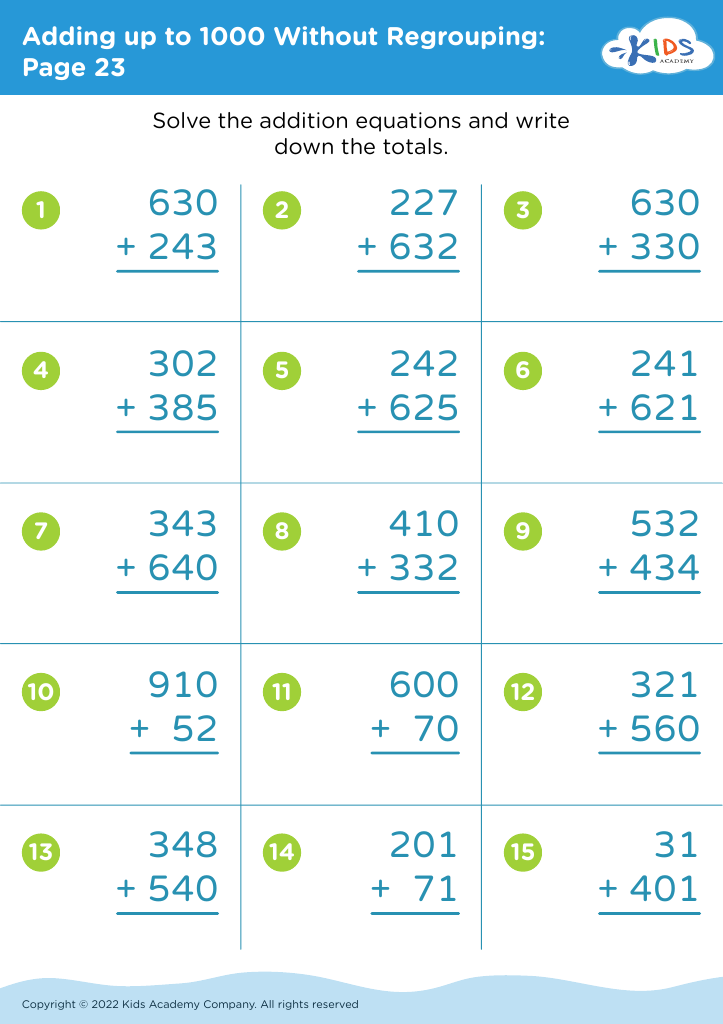
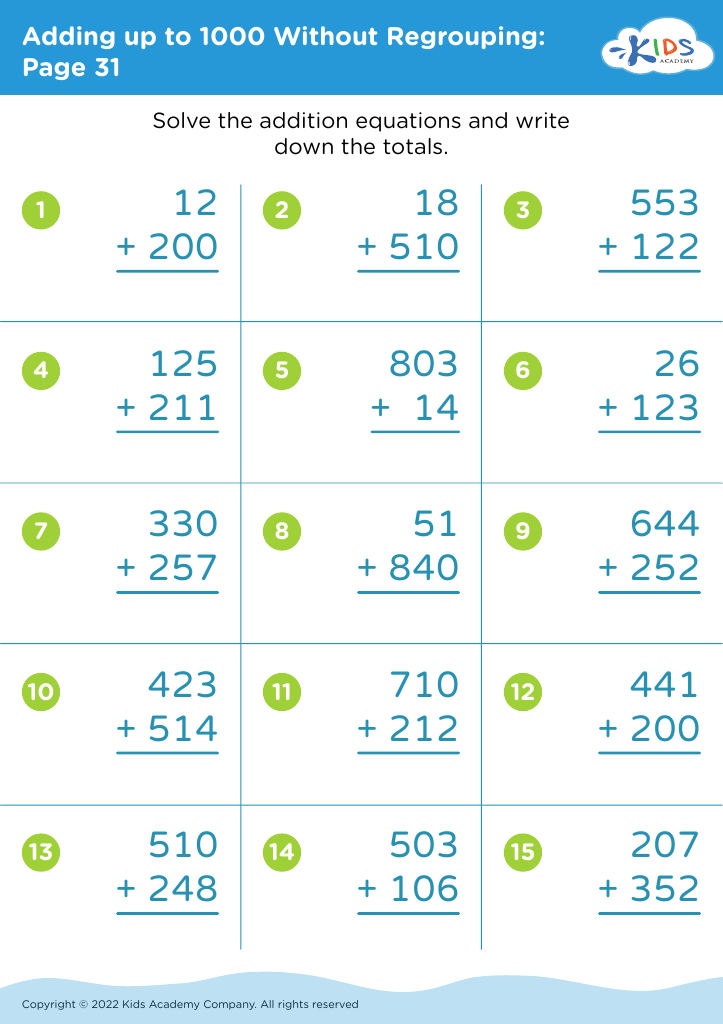
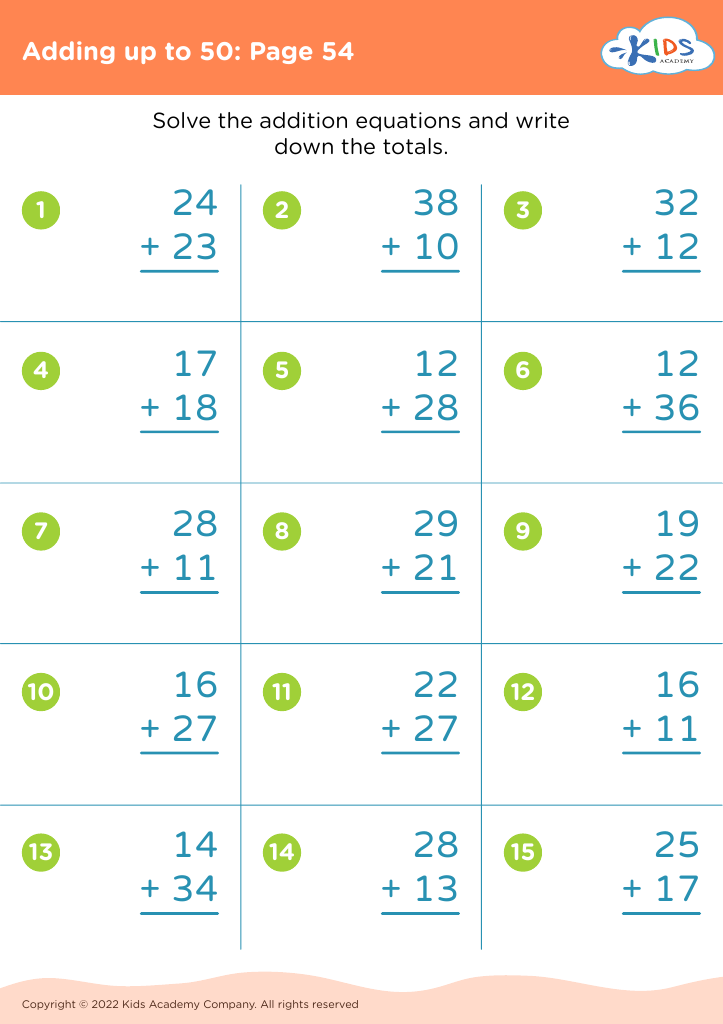
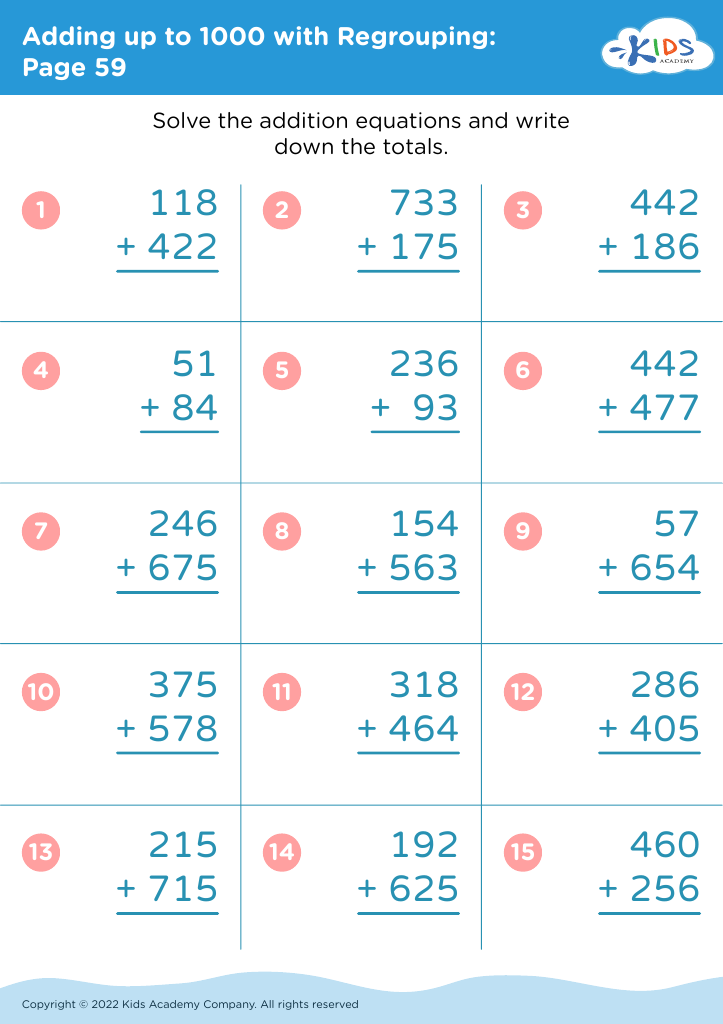








Visual interpretation of addition and subtraction is essential for children aged 6-9 as it lays the groundwork for mathematical understanding and problem-solving skills. At this developmental stage, children are transitioning from counting objects to recognizing numbers and operations abstractly. Using visual aids, such as number lines, counters, and diagrams, enhances their comprehension by making these concepts more tangible and relatable.
Parents and teachers should care about visual interpretation because it fosters a deeper understanding of math beyond rote memorization. By visualizing problems, children can better grasp how numbers interact, which leads to improved numerical flexibility and critical thinking. It also builds their confidence in tackling more difficult math challenges later on.
Furthermore, visual strategies cater to varied learning styles, ensuring that children who may struggle with traditional methods can find success in more holistic, engaging ways. This approach nurtures a love for learning, encourages collaboration in group settings, and helps develop social-emotional skills as children share their thinking.
Ultimately, prioritizing visual interpretation fosters a strong mathematical foundation that is crucial not just for academic success, but for lifelong problem-solving skills in a rapidly evolving world.








