Animal recognition Addition Worksheets for Ages 6-9
4 filtered results
-
From - To
Discover our engaging "Animal Recognition Addition Worksheets" designed for ages 6-9! These fun, educational printable worksheets combine math practice with animal recognition, making learning exciting and effective. Each worksheet features adorable animal illustrations that capture young learners' attention while they practice addition skills. Perfect for classroom use or at-home learning, these worksheets help children develop essential math skills and improve their ability to recognize various animals. Keep your kids entertained and intellectually stimulated with activities that make addition and animal recognition enjoyable. Visit our webpage for a wide selection of worksheets tailored to fit your child's learning needs!
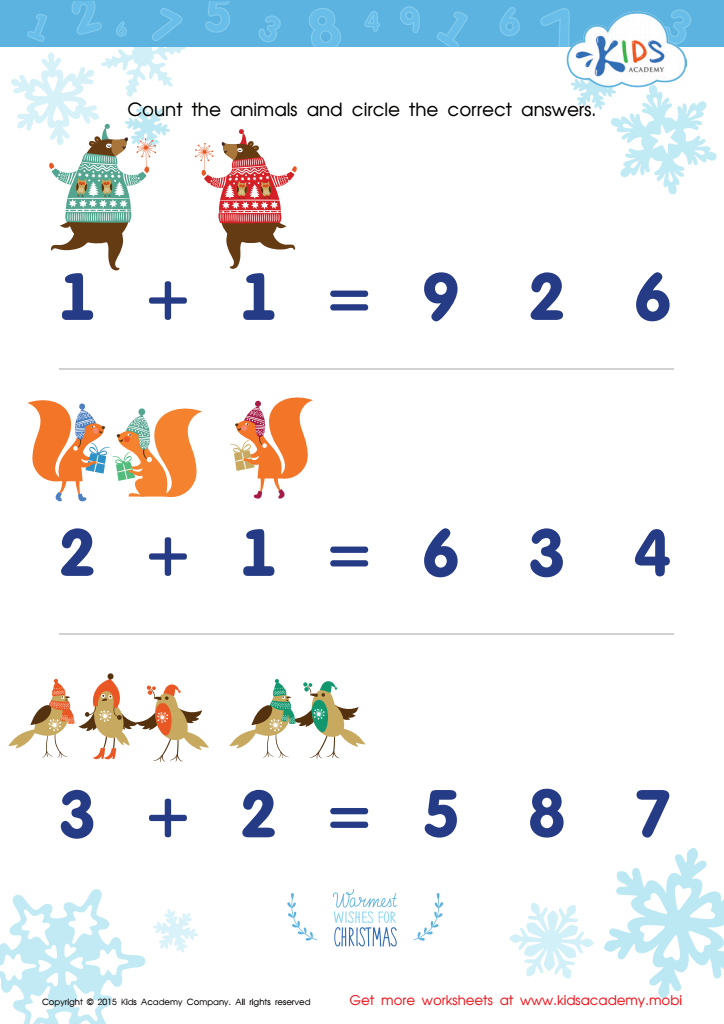
Count Funny Animals Worksheet
 Assign to My Students
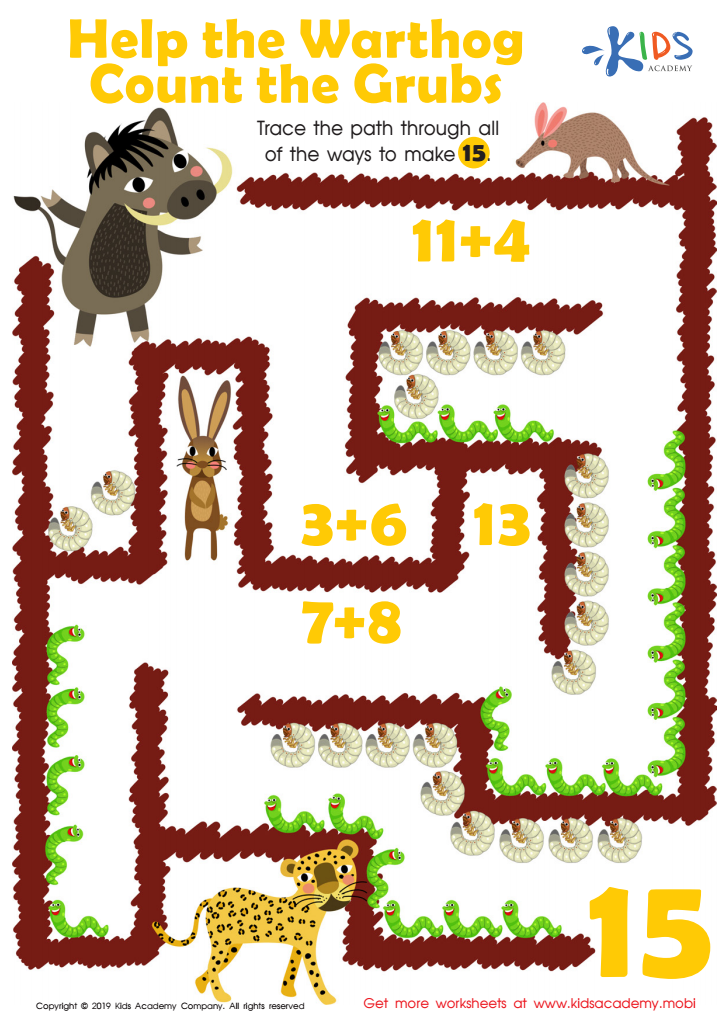
Help the Warthog Count the Grubs Worksheet
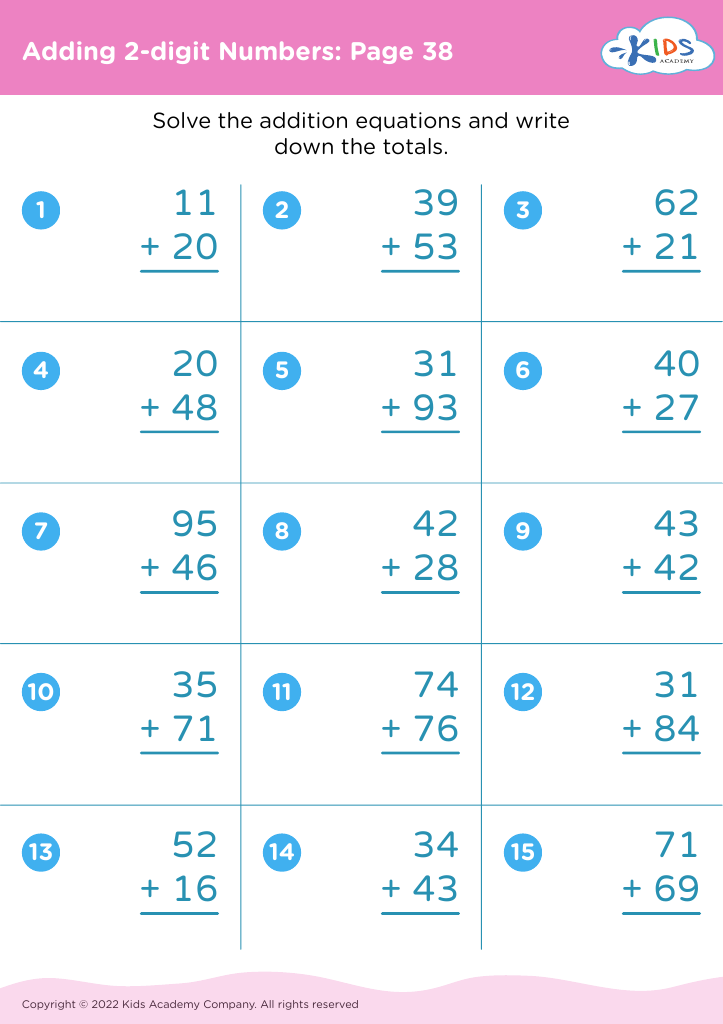
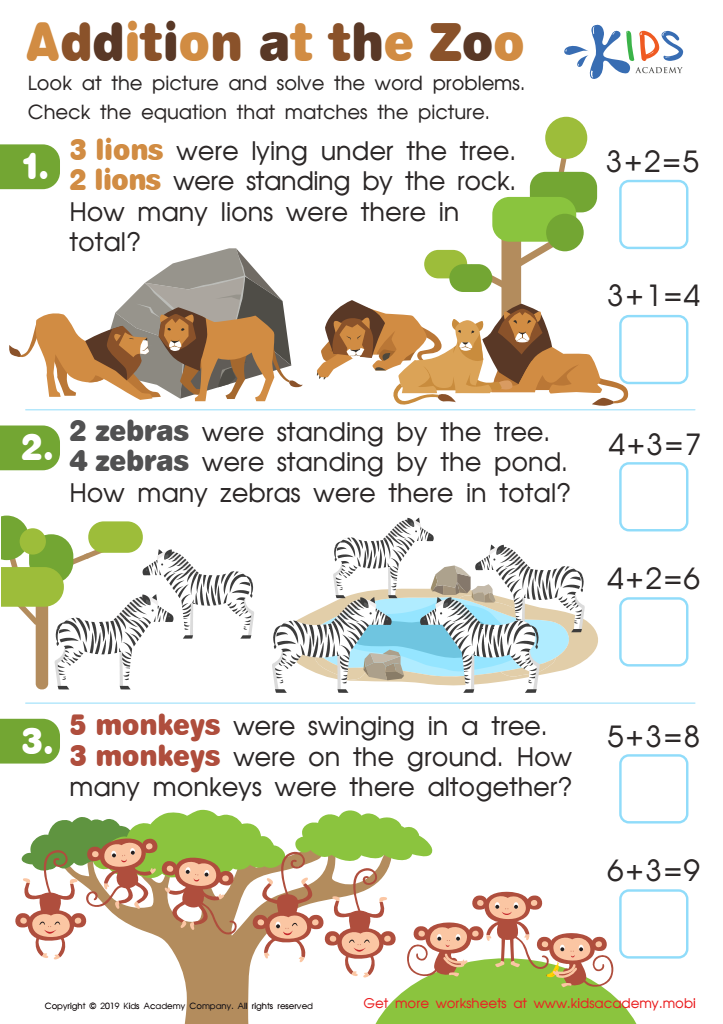
Addition at the Zoo Worksheet







Animal recognition and addition activities for children aged 6-9 offer multiple developmental benefits that merit attention from parents and teachers. Engaging in such exercises helps young minds begin to integrate mathematical skills with real-world contexts, making learning both relevant and enjoyable.
First, combining animal recognition with addition taps into the child's natural curiosity and interest in animals, thereby enhancing their motivation to learn mathematical concepts. This dual focus can also improve memory retention. Recognizing different animals during addition problems aids visual and cognitive associations, which bolsters both math and science knowledge.
Moreover, these activities foster critical thinking and problem-solving skills. The process of recognizing animals while calculating sums encourages children to undertake multi-layered cognitive activities, enhancing their ability to focus and process information effectively. It introduces them to the concept of categorization and teaches them to approach problems in an organized manner.
Additionally, the integration of literacy into math through word problems featuring animals can bolster reading comprehension and language development. Discussing stories involving animals and numerical concepts also enhances verbal skills and social interaction when solved in groups.
For parents and teachers, incorporating animals into math lessons creates a well-rounded educational approach that blends arithmetic skills with broader learning experiences. This comprehensive method encourages lifelong learning and intellectual curiosity in young children.








