Filters

54 filtered results

Clear all filters
Favorites
With answer key
Interactive

54 filtered results

Difficulty Level

Grade


Boost your child's math confidence with our "Basic Math Skills Addition Worksheets for Ages 6-9"! Perfect for young learners, these engaging and easy-to-follow worksheets introduce essential addition concepts in a fun and interactive way. Designed to align with school curriculums, our worksheets feature a variety of problems that strengthen mental math, enhance problem-solving abilities, and build a strong numerical foundation. Whether your child is just starting out or needs extra practice, our printable addition worksheets are ideal for home or classroom use. Make learning math exciting and watch your child's skills flourish with Kids Academy!
Check out this FREE Trial Lesson on Addition for age 6-9!

Z

Favorites
With answer key
Interactive
  • 6-9
  • Basic Math Skills
  • Addition
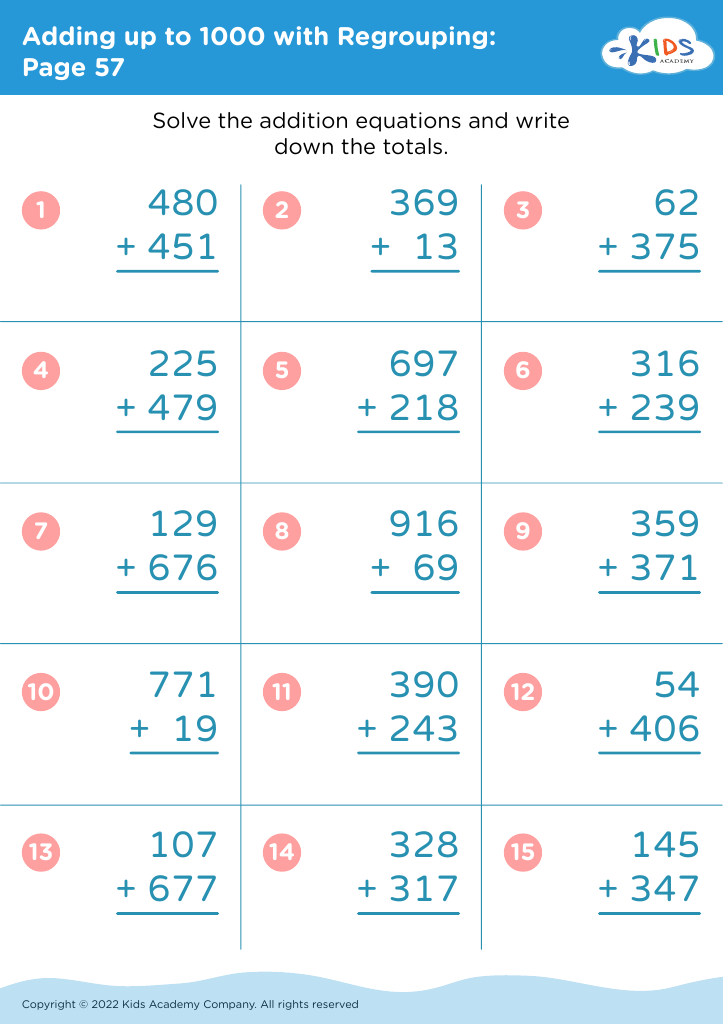
Adding up to 1000 with Regrouping: Page 57
Worksheet
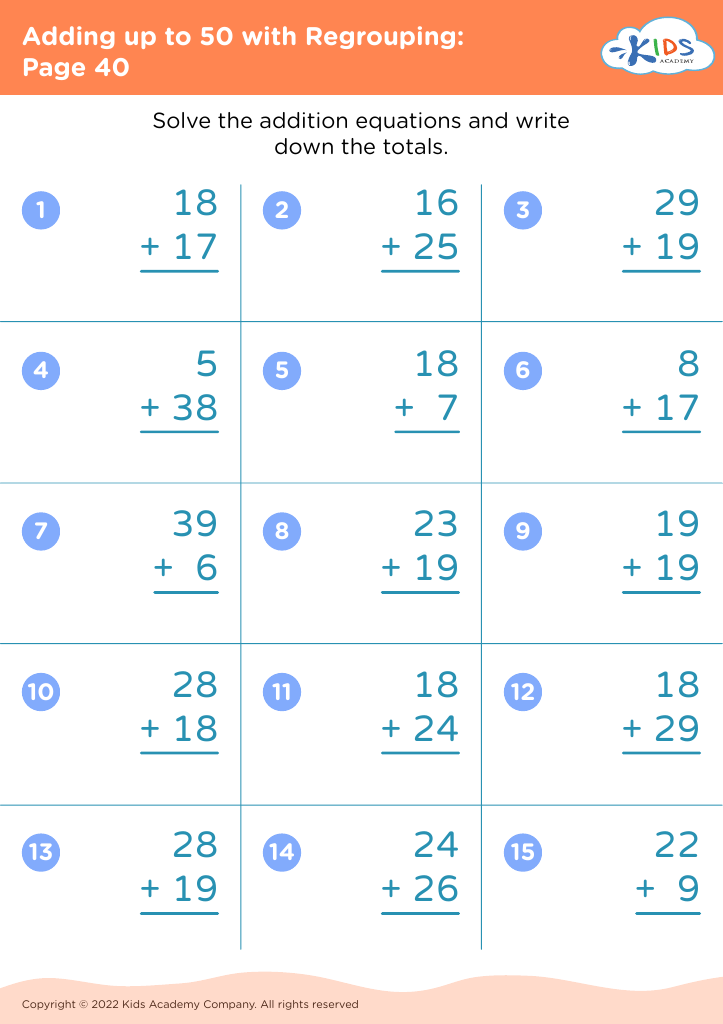
Adding up to 50 with Regrouping: Page 40
Worksheet
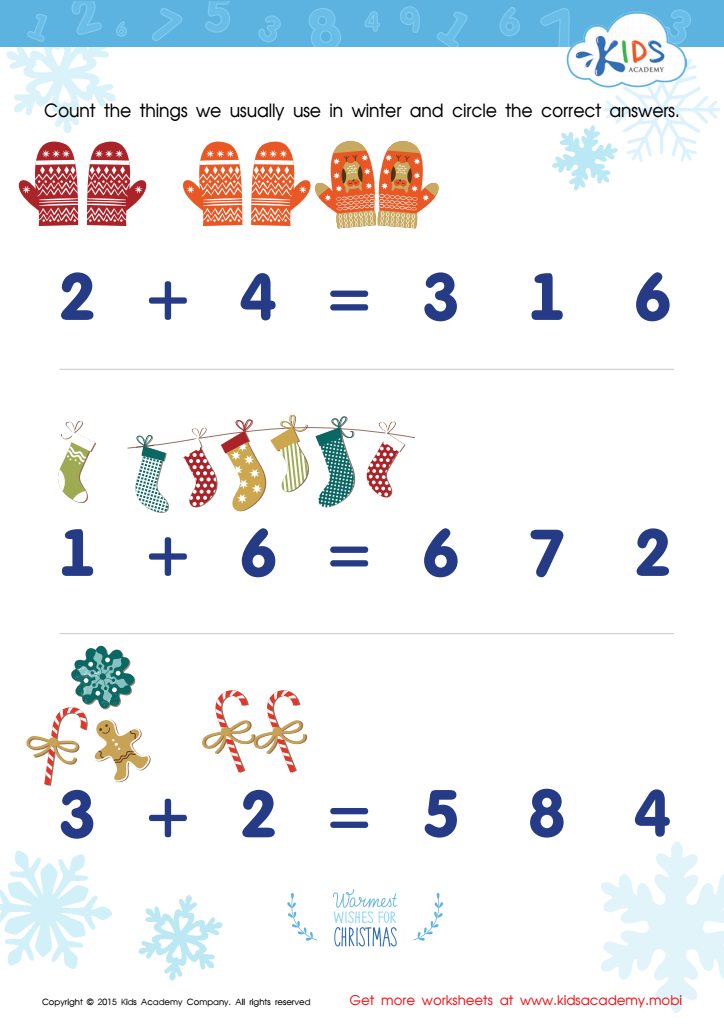
Math PDF Worksheet: Count Winter Things

Count Winter Things Worksheet

This chilly winter afternoon, help your kid warm up with Kids Academy's free math worksheet - full of bright pictures and addition practice. Let them count the things and write in the numbers for a great brain training and math head start. Get more free math worksheets here. (80 words)
Count Winter Things Worksheet
Worksheet
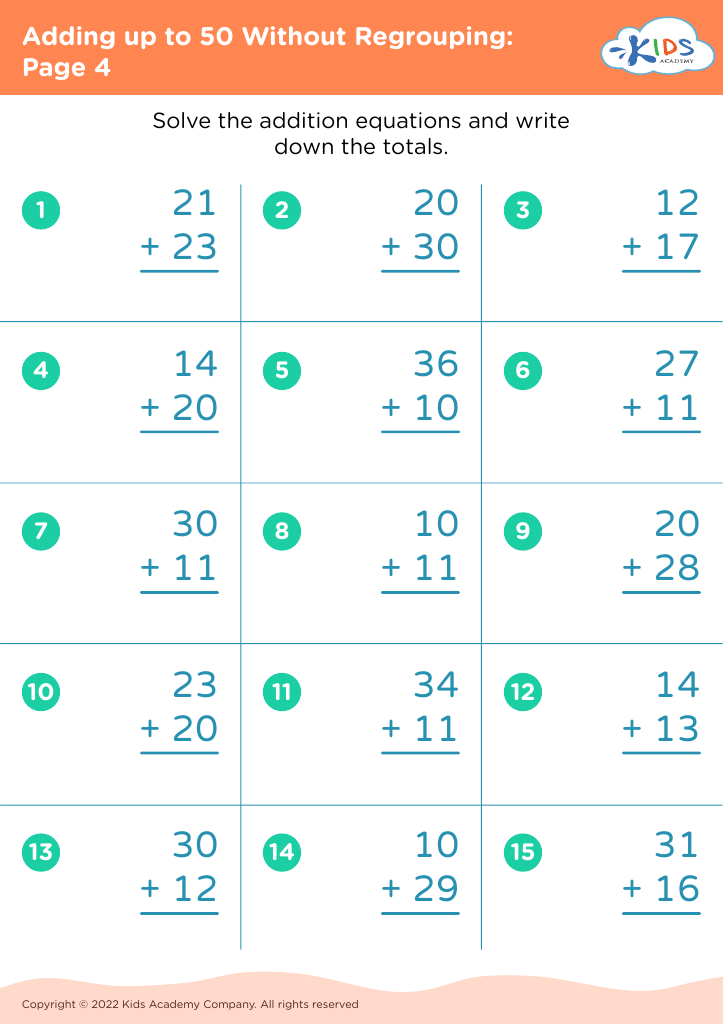
Adding up to 50 Without Regrouping: Page 4
Worksheet
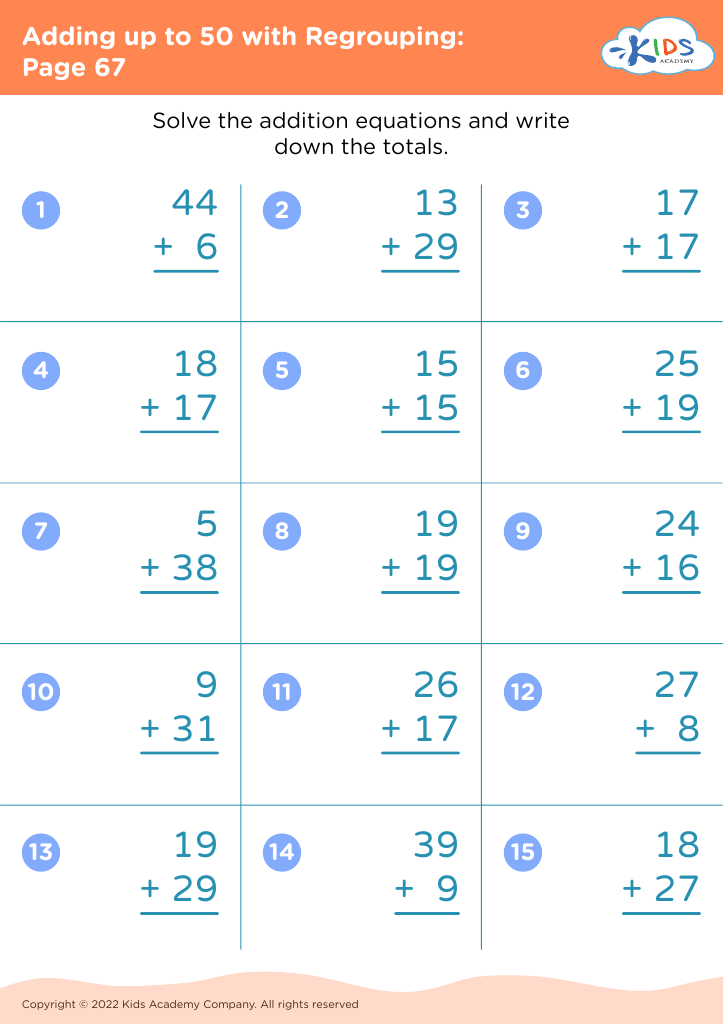
Adding up to 50 with Regrouping: Page 67
Worksheet
Voting Worksheet
Voting Worksheet

Voting Worksheet

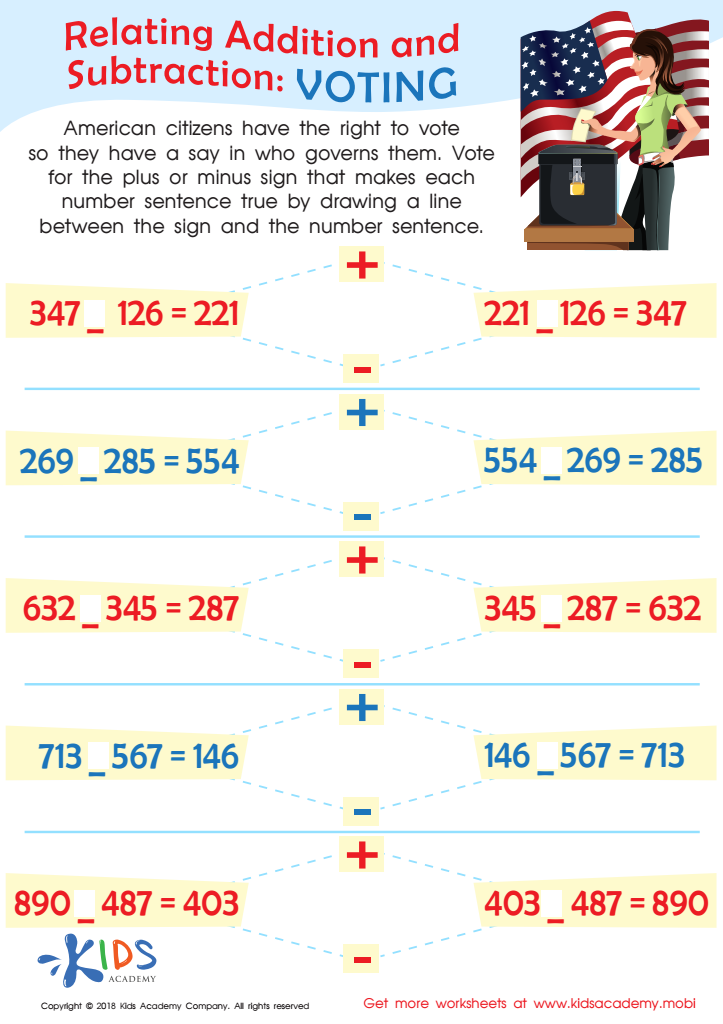
This worksheet combines Social Studies and Math, teaching kids the democratic concept of voting. Guide learners to observe the problem, and decide if it needs a plus or minus. They "vote" for the correct answer by drawing a line from the problem to the correct operation symbol. Tally up the votes to check the answers!
Voting Worksheet
Worksheet
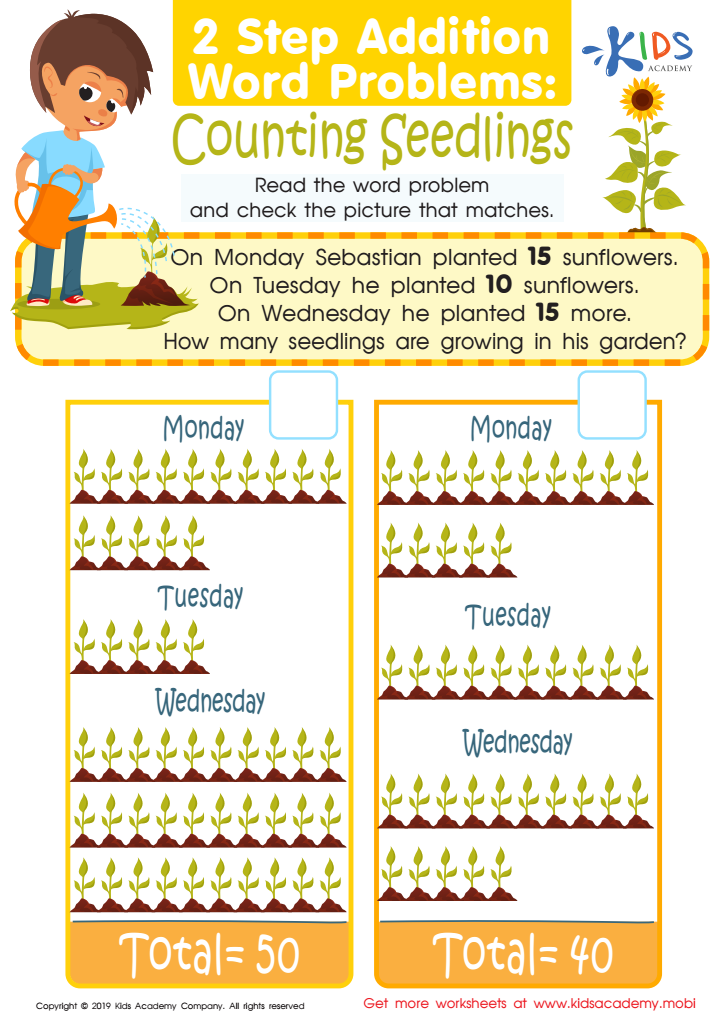
Counting Seedlings Worksheet
Counting Seedlings Worksheet
Understanding math word problems is key. Multiple steps can prove challenging - this free worksheet provides one-to-one picture representation to help kids solve multi-step addition word problems. Strengthen addition skills by choosing the matching picture to the answer.
Counting Seedlings Worksheet
Worksheet
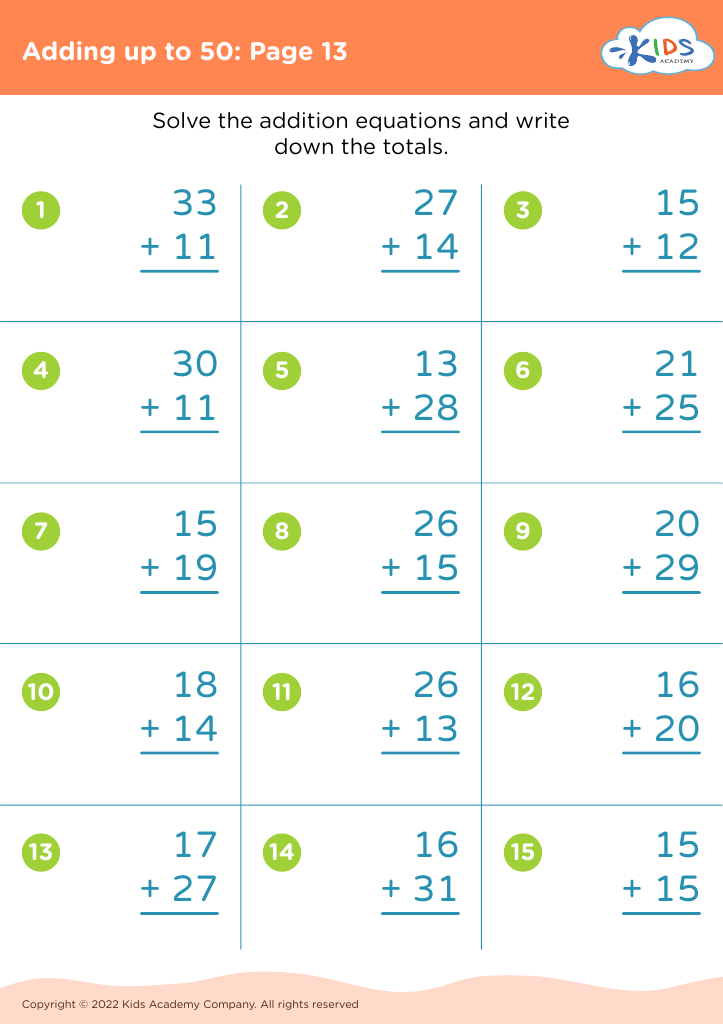
Adding up to 50: Page 13

Adding up to 50: Page 13

Adding up to 50: Page 13
Worksheet
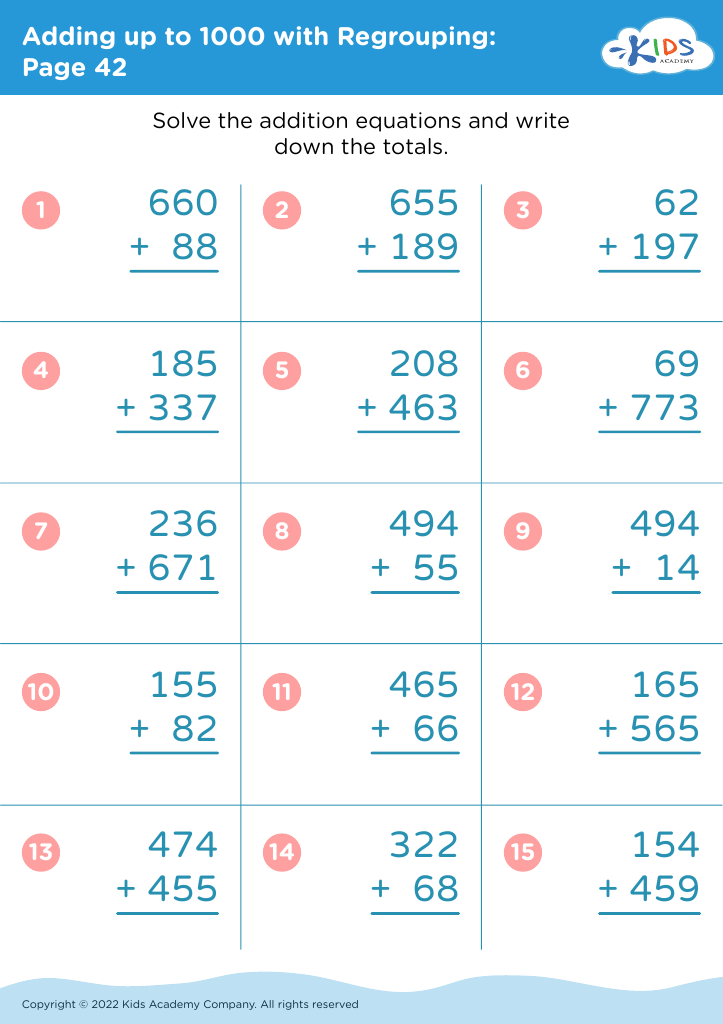
Adding up to 1000 with Regrouping: Page 42
Worksheet
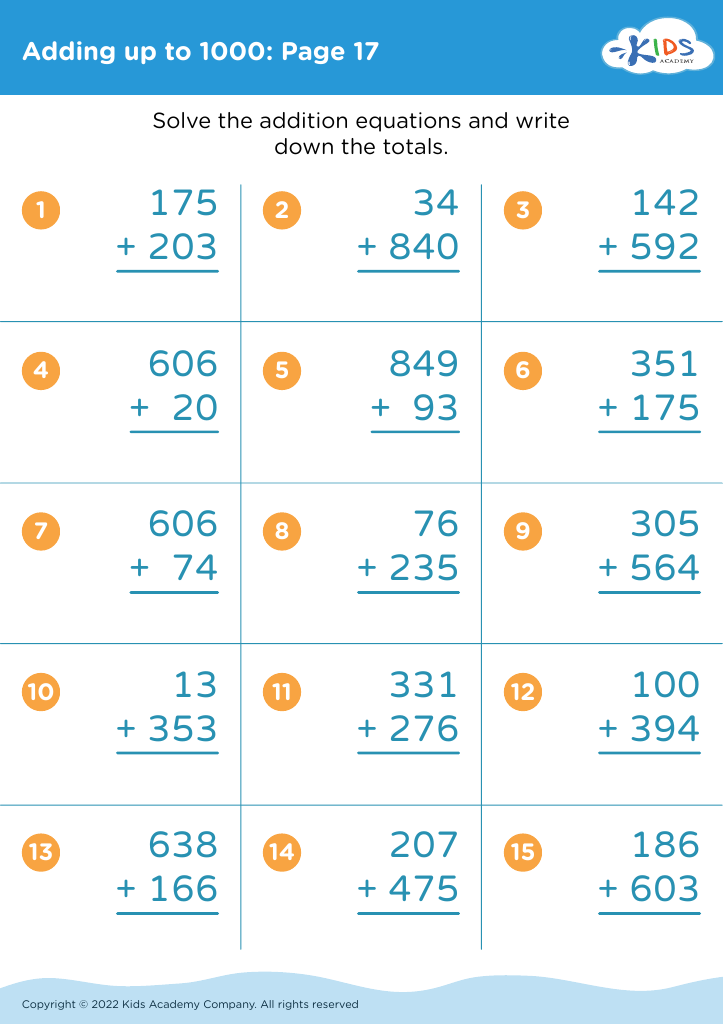
Adding up to 1000: Page 17

Adding up to 1000: Page 17

Adding up to 1000: Page 17
Worksheet
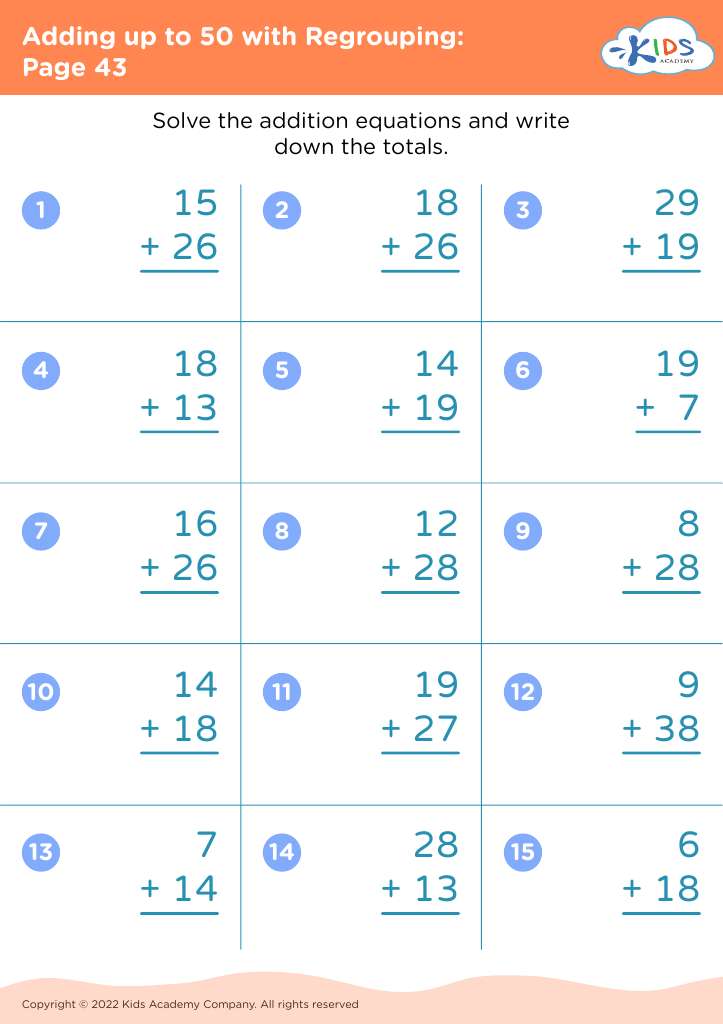
Adding up to 50 with Regrouping: Page 43
Worksheet
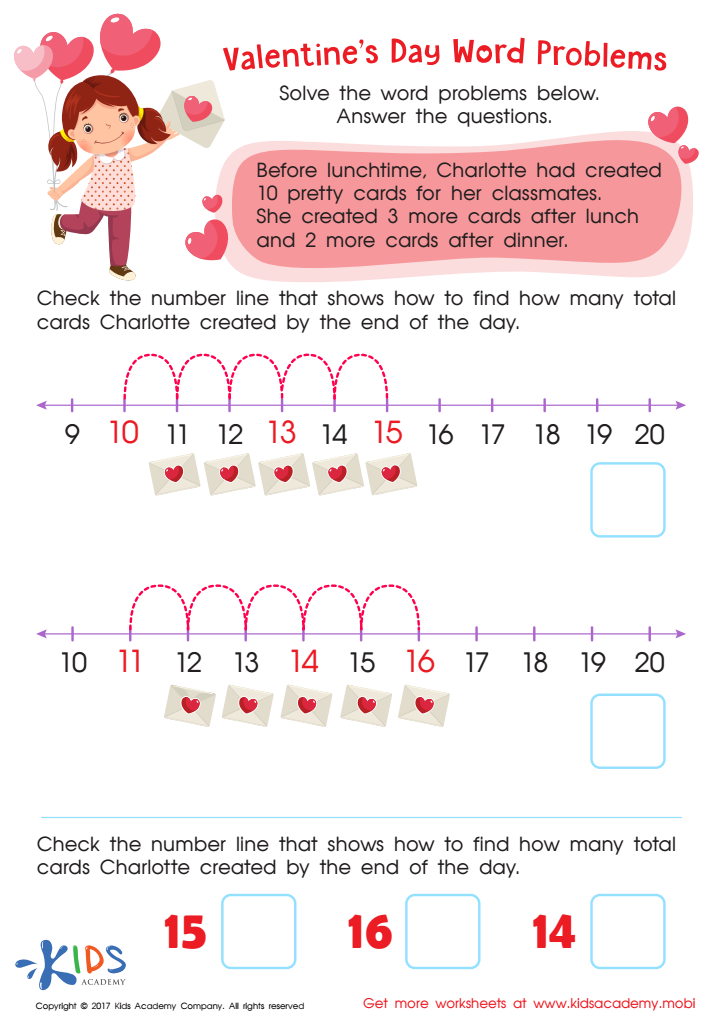
Valentine’s Day word problems worksheet

Valentines Day Word Problem Worksheet
This Valentine's Day worksheet will help your child practice using a number line to solve an addition problem. It's a great way to boost confidence and make solving word problems a breeze.
Valentines Day Word Problem Worksheet
Worksheet
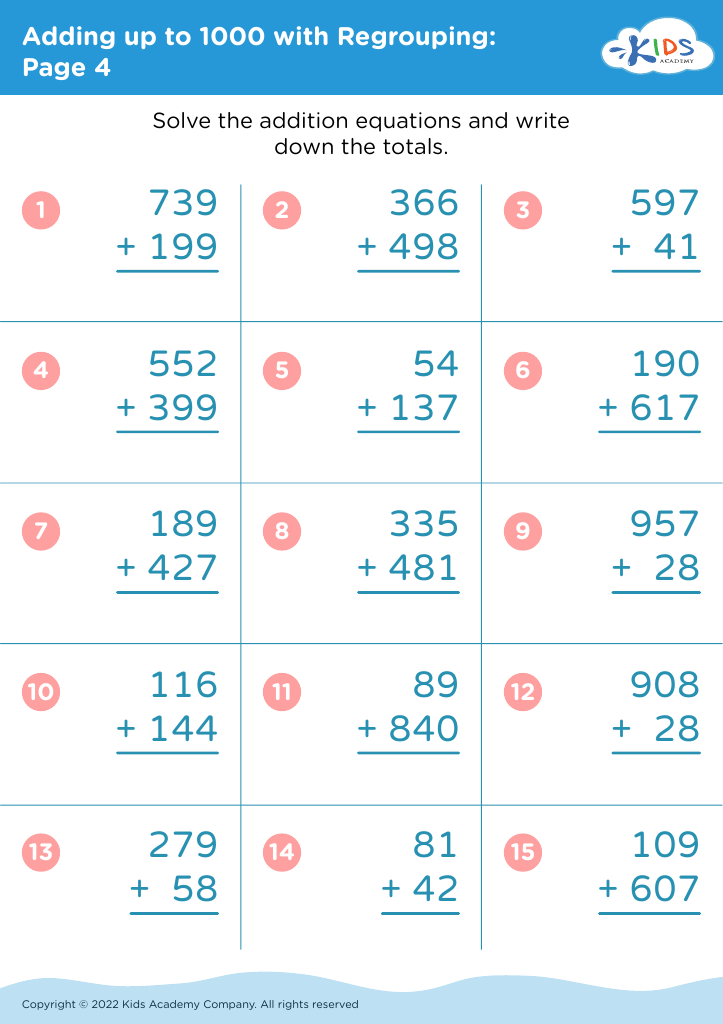
Adding up to 1000 with Regrouping: Page 4
Worksheet
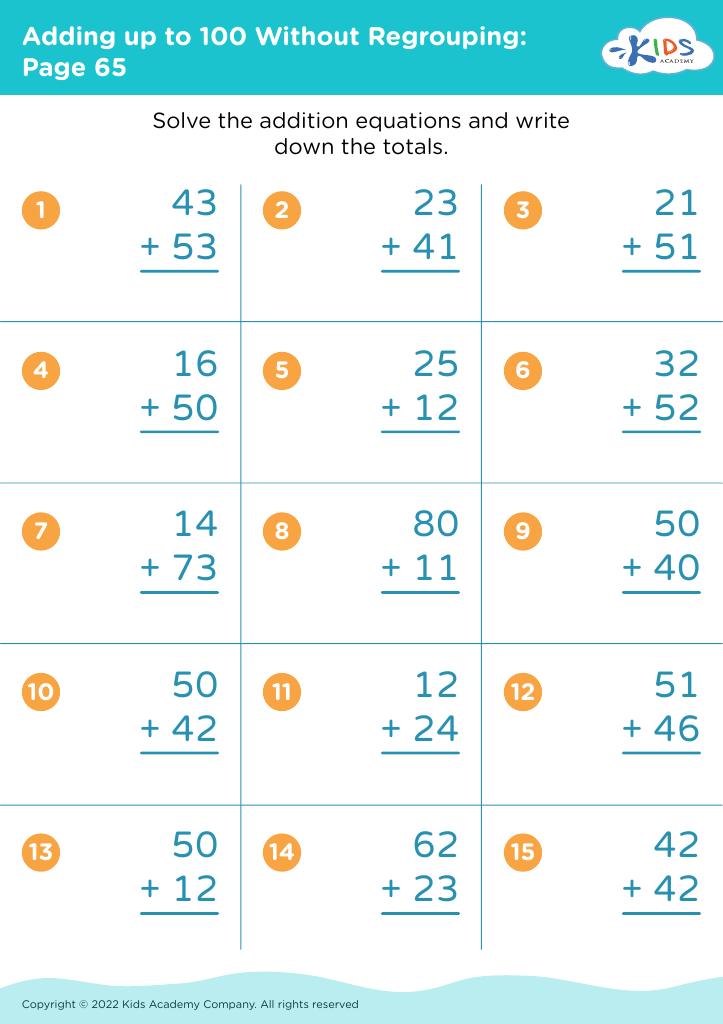
Adding up to 100 Without Regrouping: Page 65
Worksheet
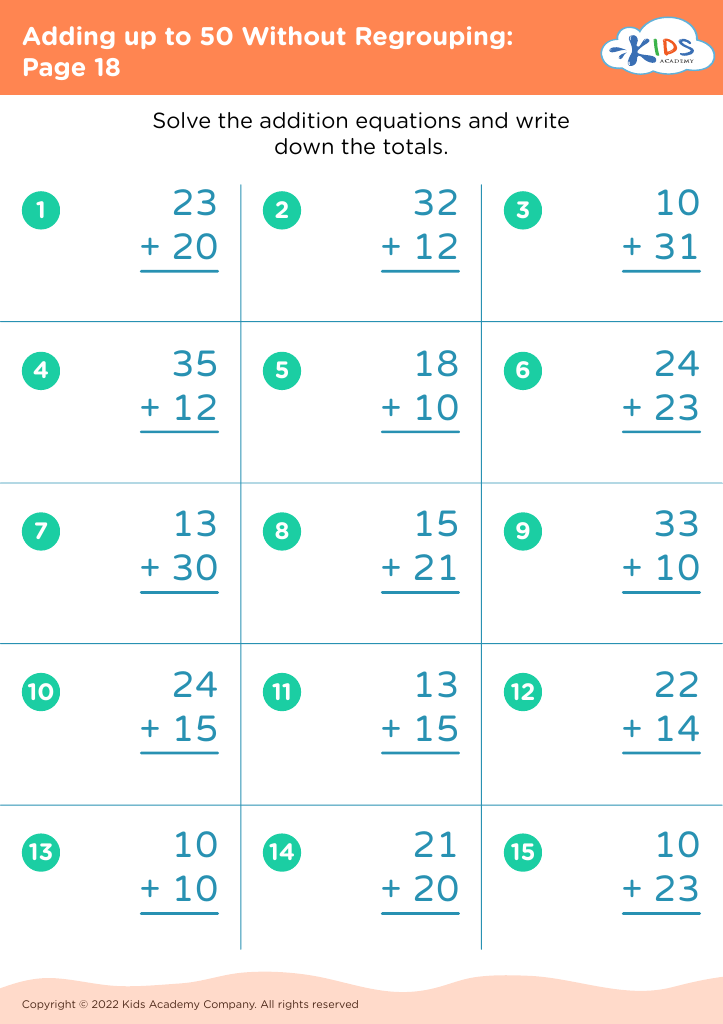
Adding up to 50 Without Regrouping: Page 18
Worksheet
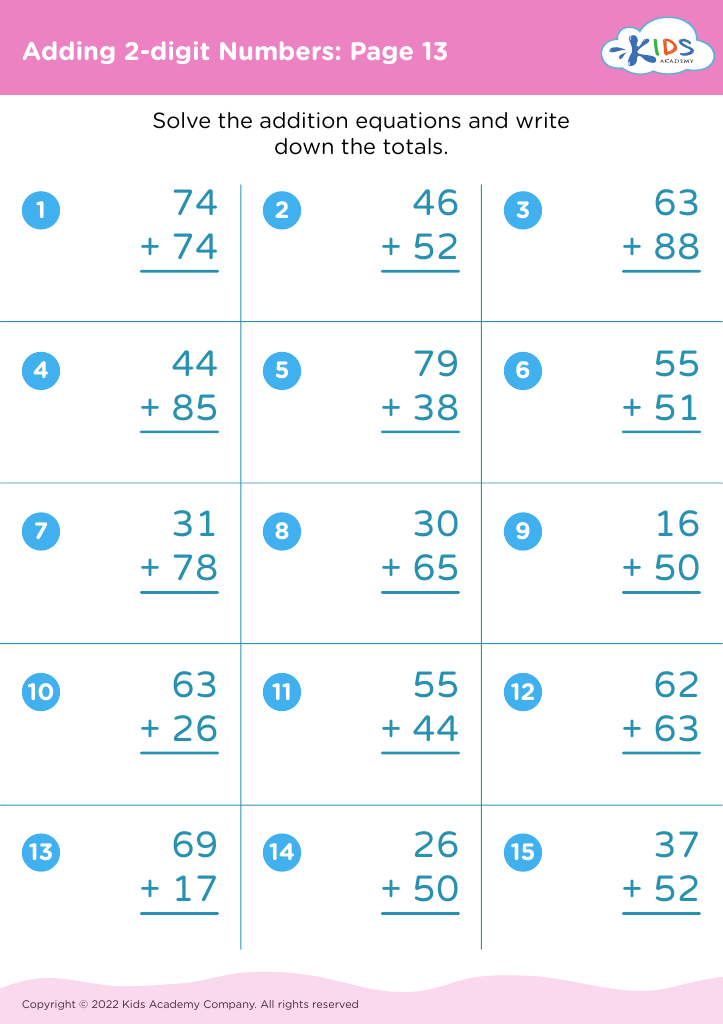
Adding 2-digit Numbers: Page 13

Adding 2-digit Numbers: Page 13

Adding 2-digit Numbers: Page 13
Worksheet
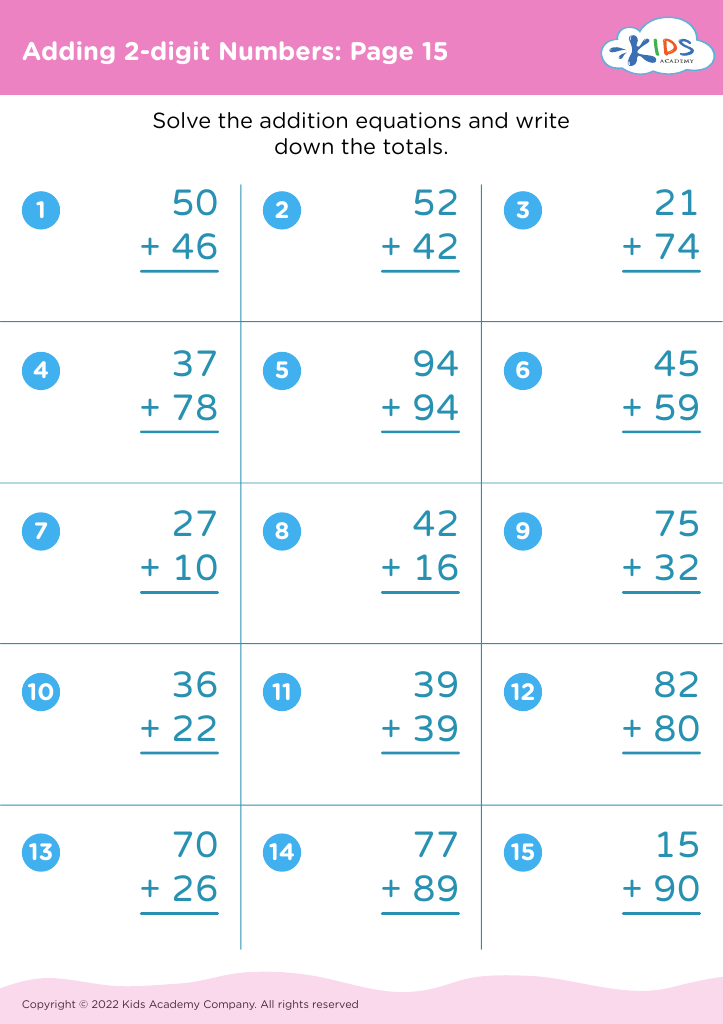
Adding 2-digit Numbers: Page 15

Adding 2-digit Numbers: Page 15

Adding 2-digit Numbers: Page 15
Worksheet
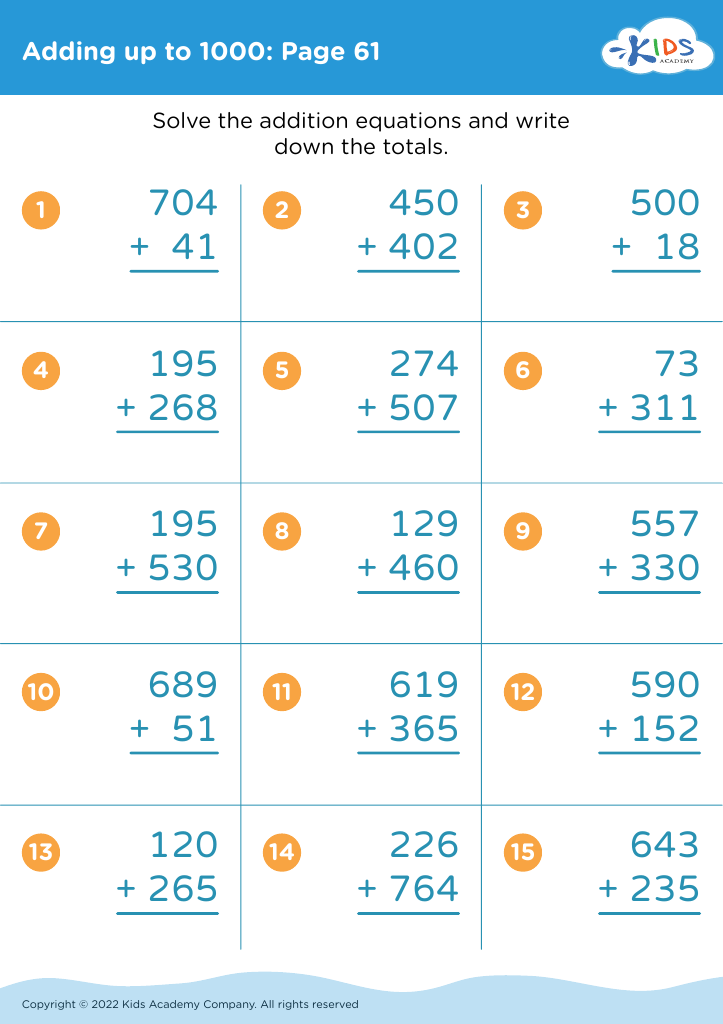
Adding up to 1000: Page 61

Adding up to 1000: Page 61

Adding up to 1000: Page 61
Worksheet
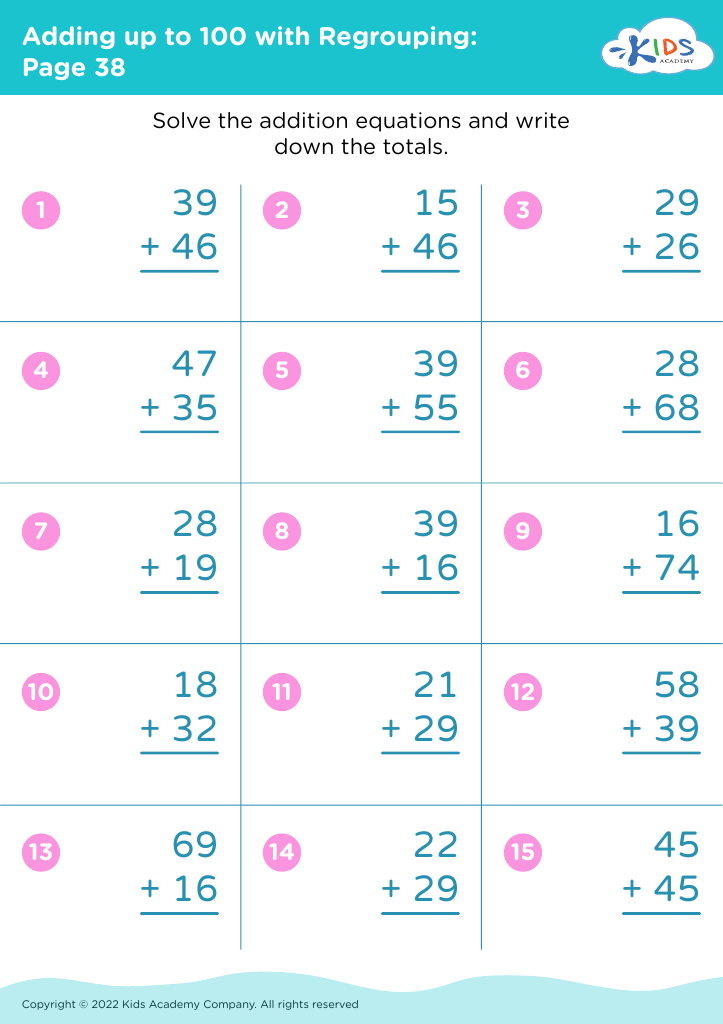
Adding up to 100 with Regrouping: Page 38
Worksheet
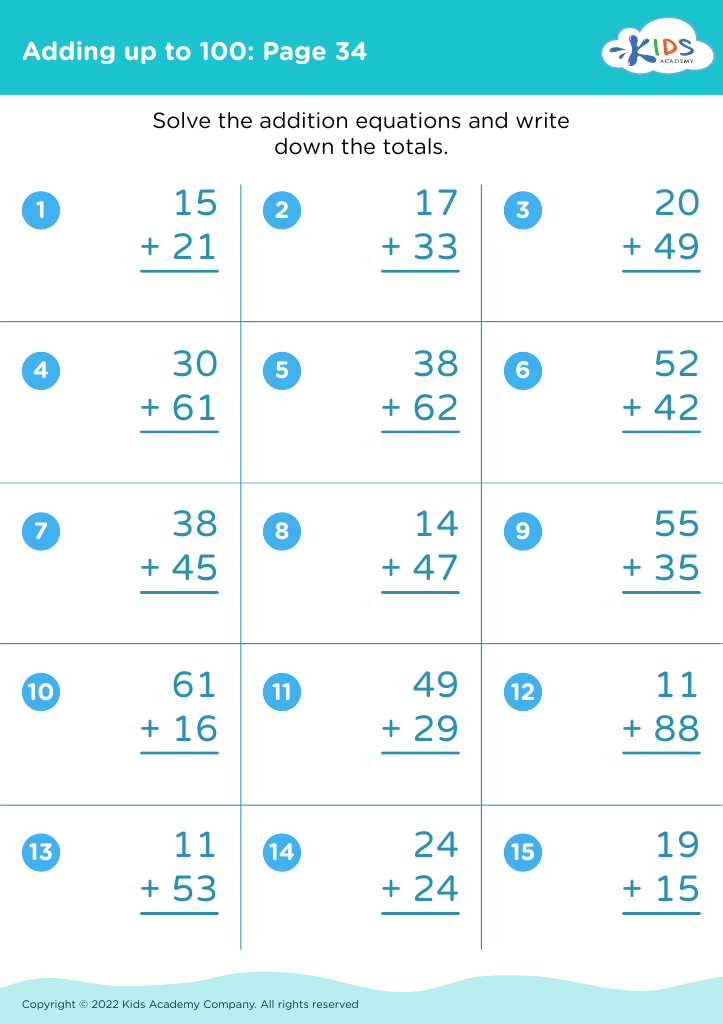
Adding up to 100: Page 34

Adding up to 100: Page 34

Adding up to 100: Page 34
Worksheet
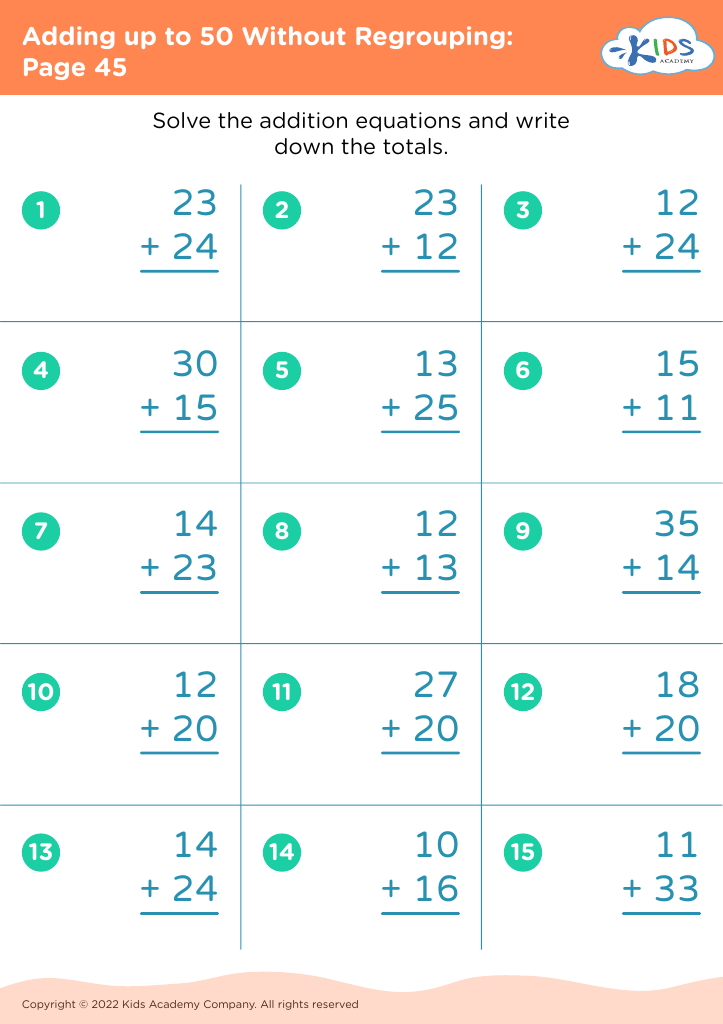
Adding up to 50 Without Regrouping: Page 45
Worksheet
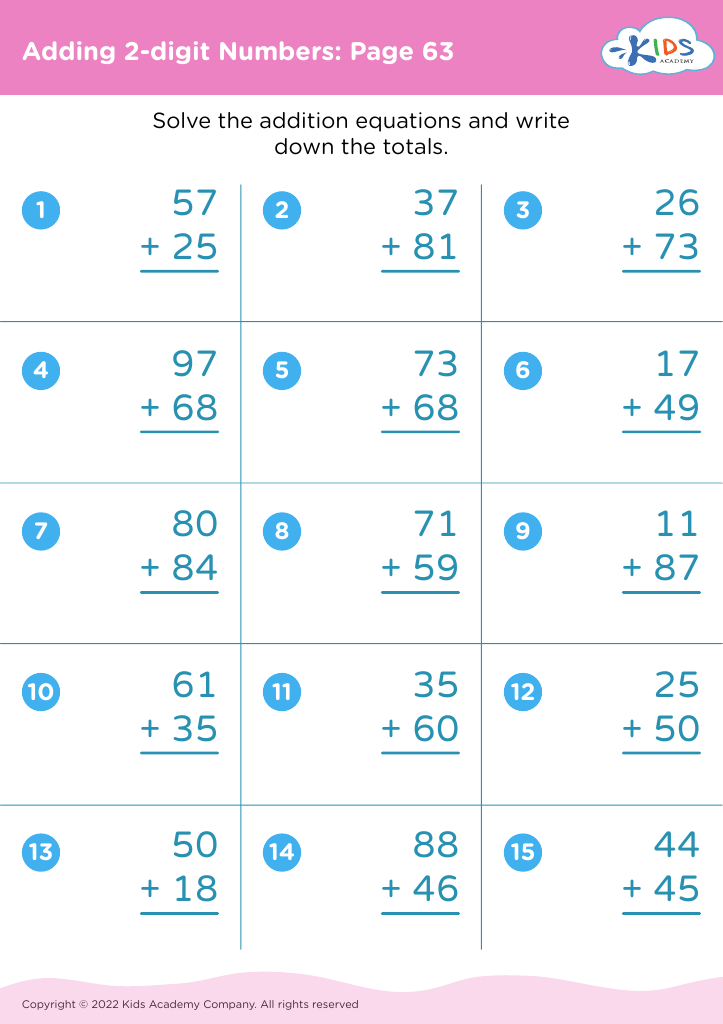
Adding 2-digit Numbers: Page 63

Adding 2-digit Numbers: Page 63

Adding 2-digit Numbers: Page 63
Worksheet
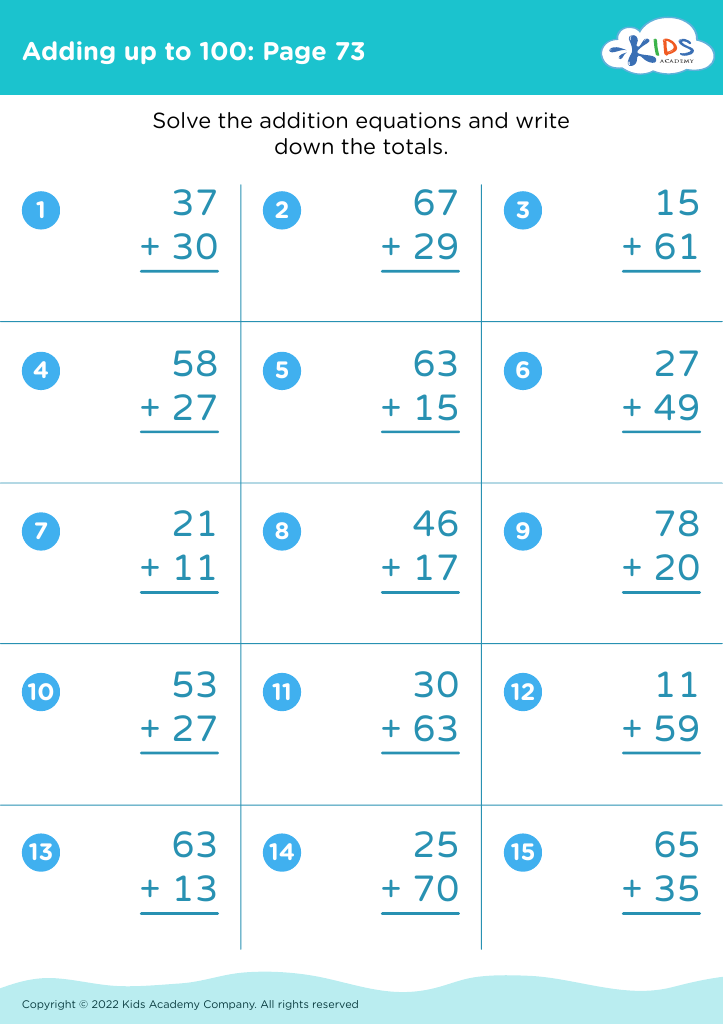
Adding up to 100: Page 73

Adding up to 100: Page 73

Adding up to 100: Page 73
Worksheet
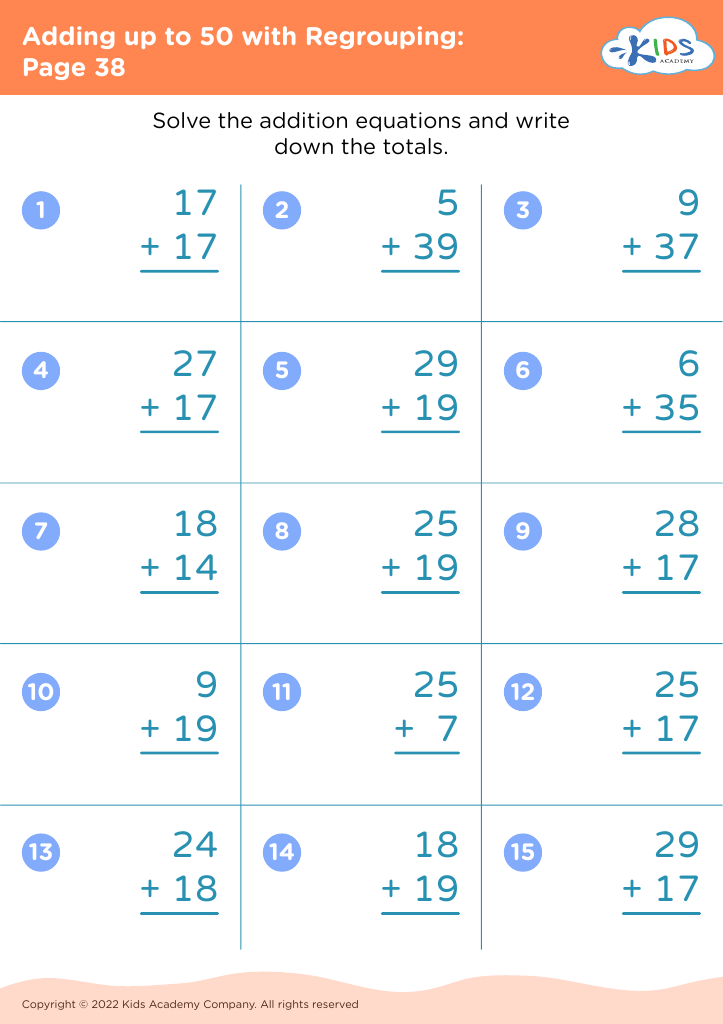
Adding up to 50 with Regrouping: Page 38
Worksheet


Basic math skills, particularly addition, are fundamental for children ages 6-9 as they form the cornerstone of more advanced mathematical concepts and everyday problem-solving. Mastering addition at an early age helps build a solid arithmetic foundation, enabling children to understand more complex operations such as subtraction, multiplication, and division more easily.

For parents and teachers, fostering proficiency in addition improves children's confidence in their math abilities, making future learning experiences more positive and engaging. Strong addition skills are crucial in developing logical thinking and numerical reasoning, essential skills not only in academics but in real-world situations like budgeting, cooking, and time management.

Additionally, early success in math can enhance a child's cognitive development, including memory, attention, and the ability to recognize patterns. This period is critical for brain development, and engaging them in math activities can stimulate intellectual growth.

For parents and teachers, focusing on addition also helps identify and address any learning difficulties early, ensuring timely intervention and support. This early attention can prevent future frustrations and academic challenges. Cultivating a positive attitude toward math during these formative years sets the stage for lifelong learning and success, making it essential for parents and educators to prioritize basic math skills like addition.