Basic Math Skills Addition Worksheets for Ages 6-9 - Page 3
54 filtered results
-
From - To
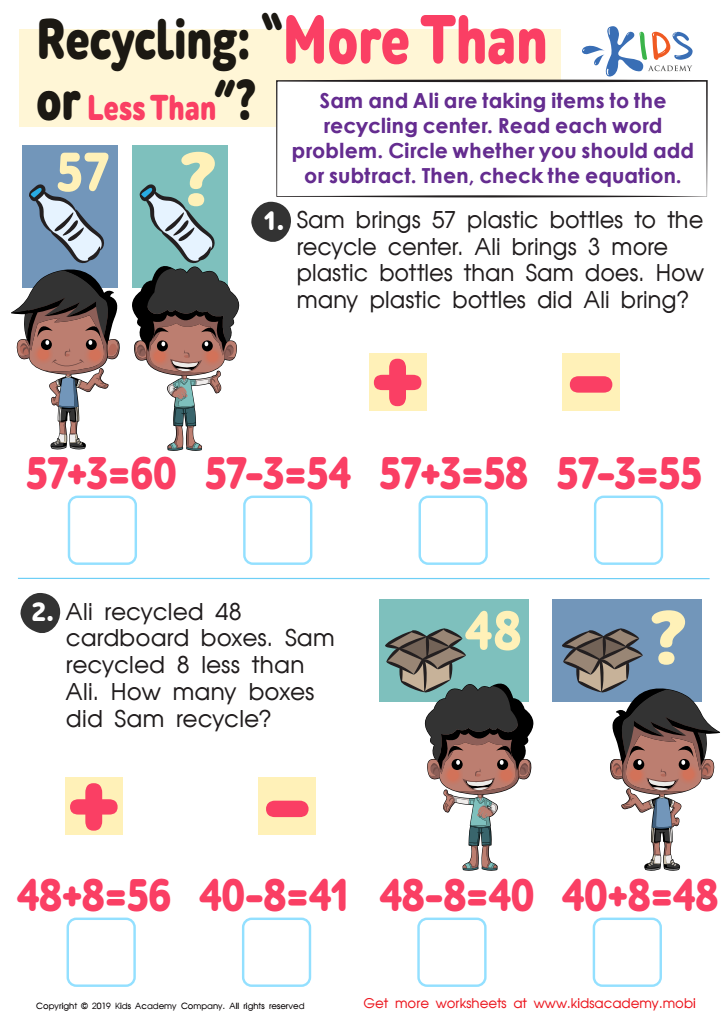
Recycling - More or Less Worksheet
 Assign to My Students
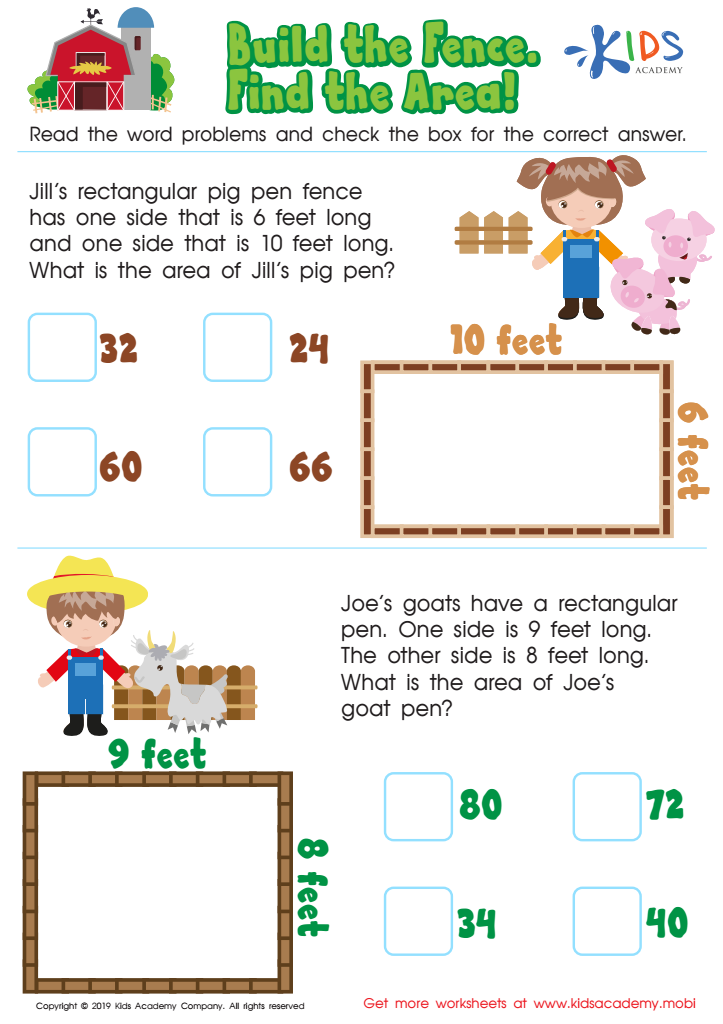
Build the Fence, Find the Area Worksheet








Basic math skills, particularly addition, are fundamental for children ages 6-9 as they form the cornerstone of more advanced mathematical concepts and everyday problem-solving. Mastering addition at an early age helps build a solid arithmetic foundation, enabling children to understand more complex operations such as subtraction, multiplication, and division more easily.
For parents and teachers, fostering proficiency in addition improves children's confidence in their math abilities, making future learning experiences more positive and engaging. Strong addition skills are crucial in developing logical thinking and numerical reasoning, essential skills not only in academics but in real-world situations like budgeting, cooking, and time management.
Additionally, early success in math can enhance a child's cognitive development, including memory, attention, and the ability to recognize patterns. This period is critical for brain development, and engaging them in math activities can stimulate intellectual growth.
For parents and teachers, focusing on addition also helps identify and address any learning difficulties early, ensuring timely intervention and support. This early attention can prevent future frustrations and academic challenges. Cultivating a positive attitude toward math during these formative years sets the stage for lifelong learning and success, making it essential for parents and educators to prioritize basic math skills like addition.








