Counting objects Addition Worksheets for Ages 6-9
8 filtered results
-
From - To
Enhance your child's math skills with our engaging Counting Objects Addition Worksheets designed specifically for ages 6-9! These interactive activities help young learners understand addition through visual representation, allowing them to count and combine objects. Each worksheet features vibrant illustrations and easy-to-follow instructions that make learning fun and enjoyable. Perfect for both classroom and at-home practice, these worksheets aim to build confidence in math while enhancing counting and addition skills. Foster your child's love for learning and boost their academic success with our thoughtfully crafted resources. Explore our collection today and watch them excel in their math journey!
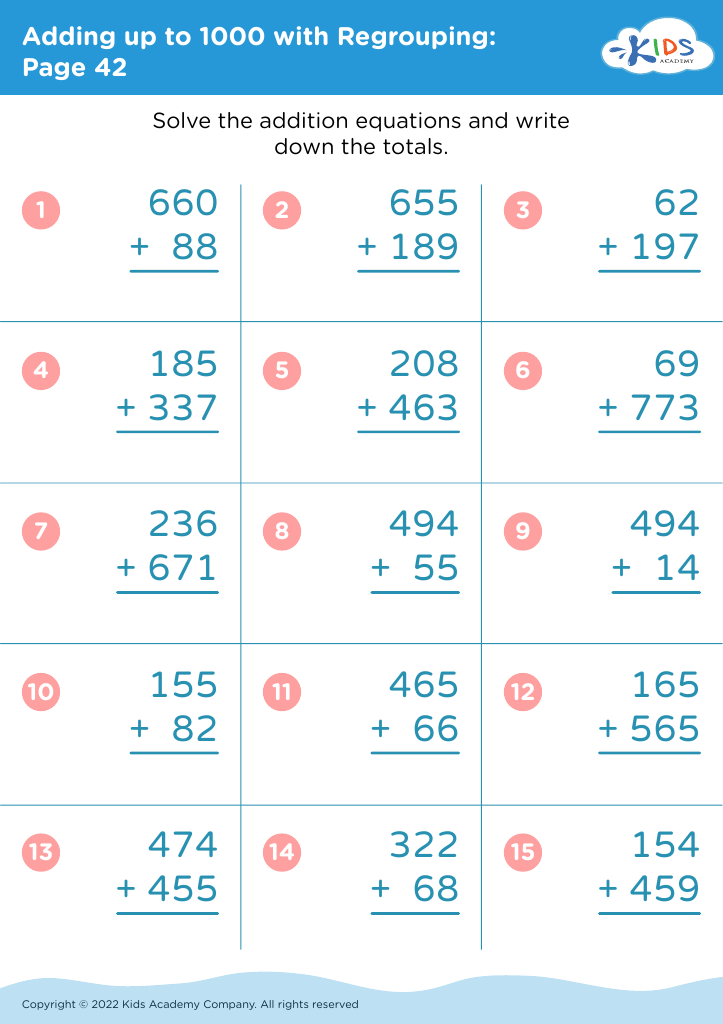
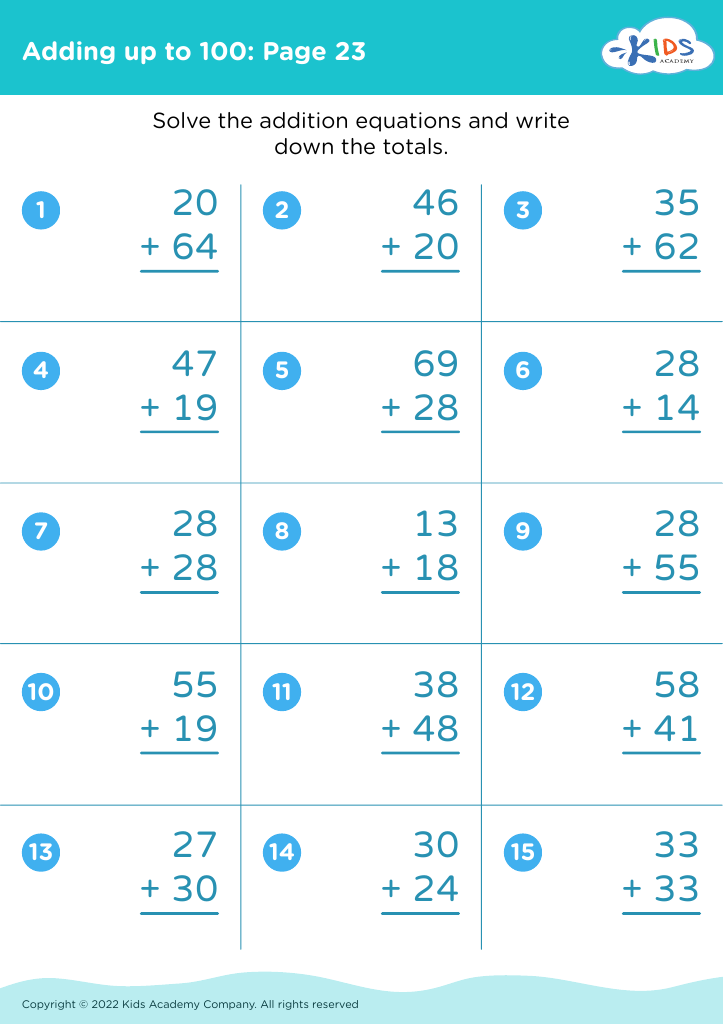
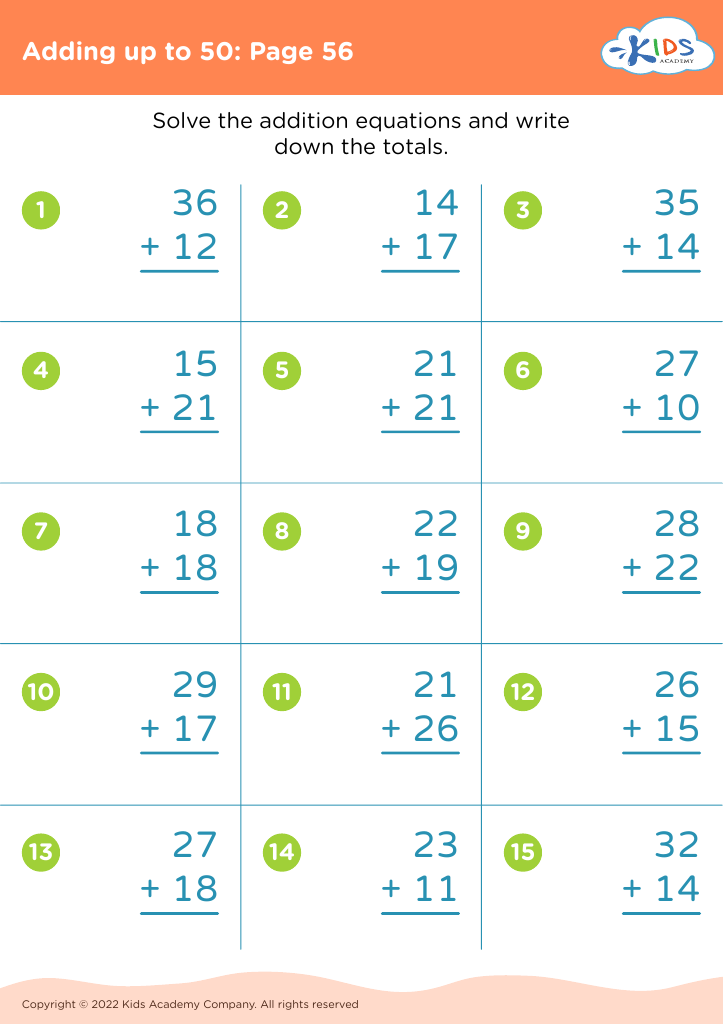
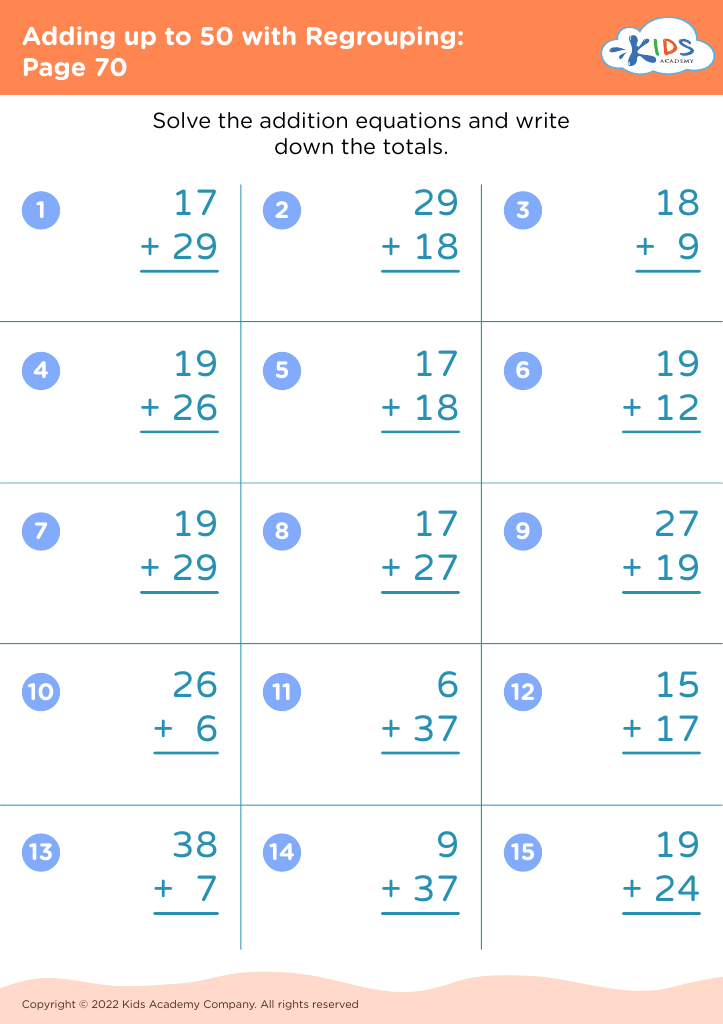
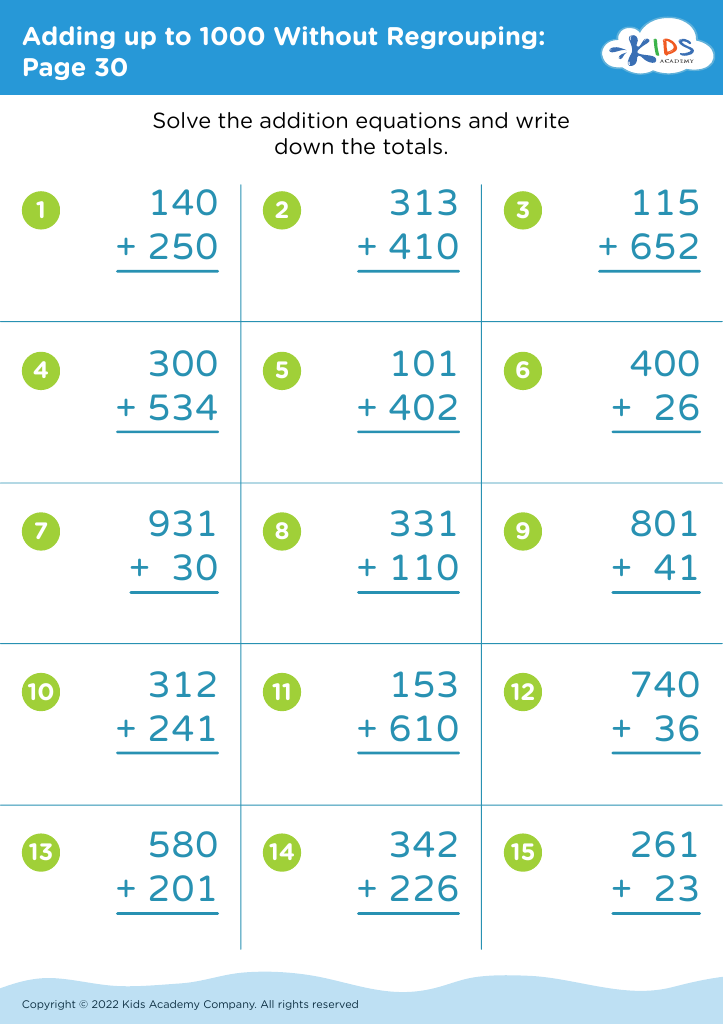
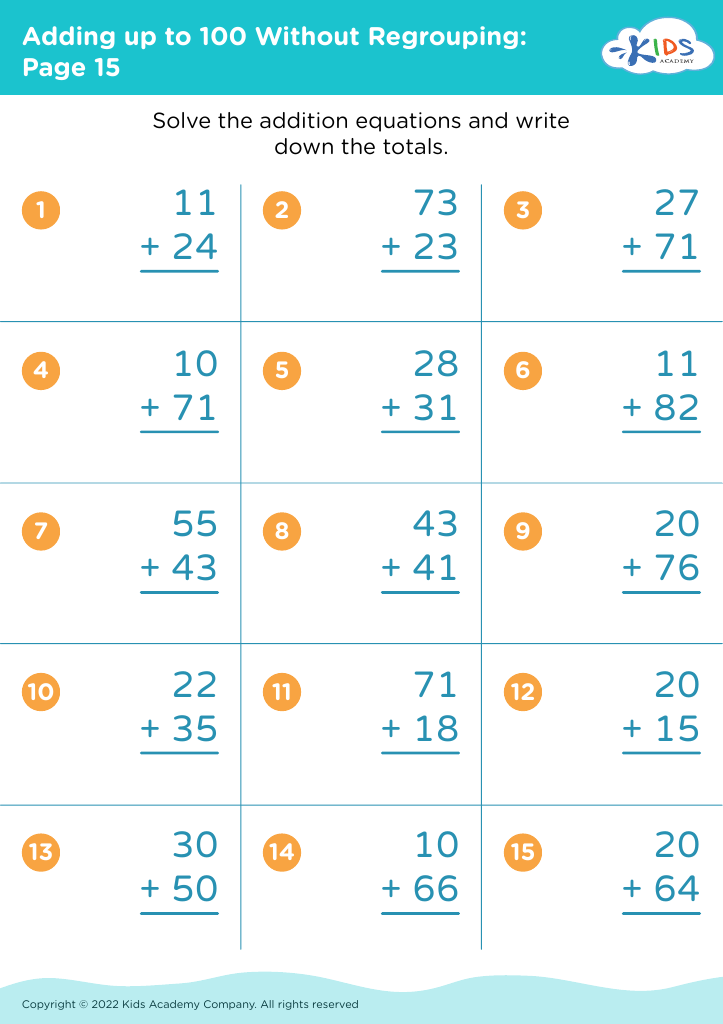
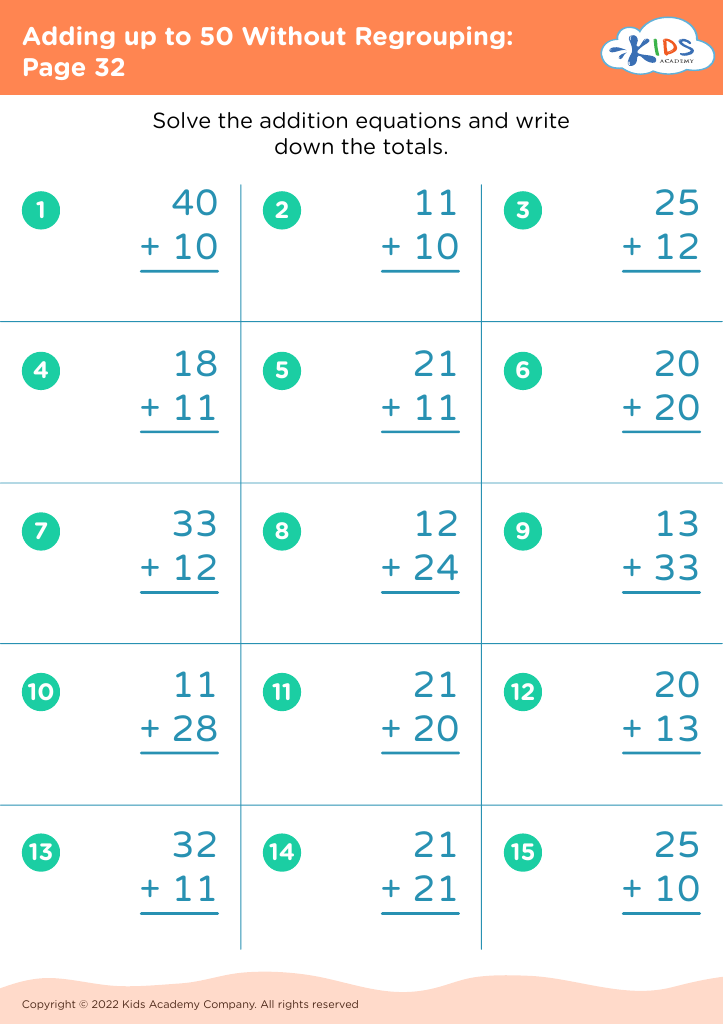
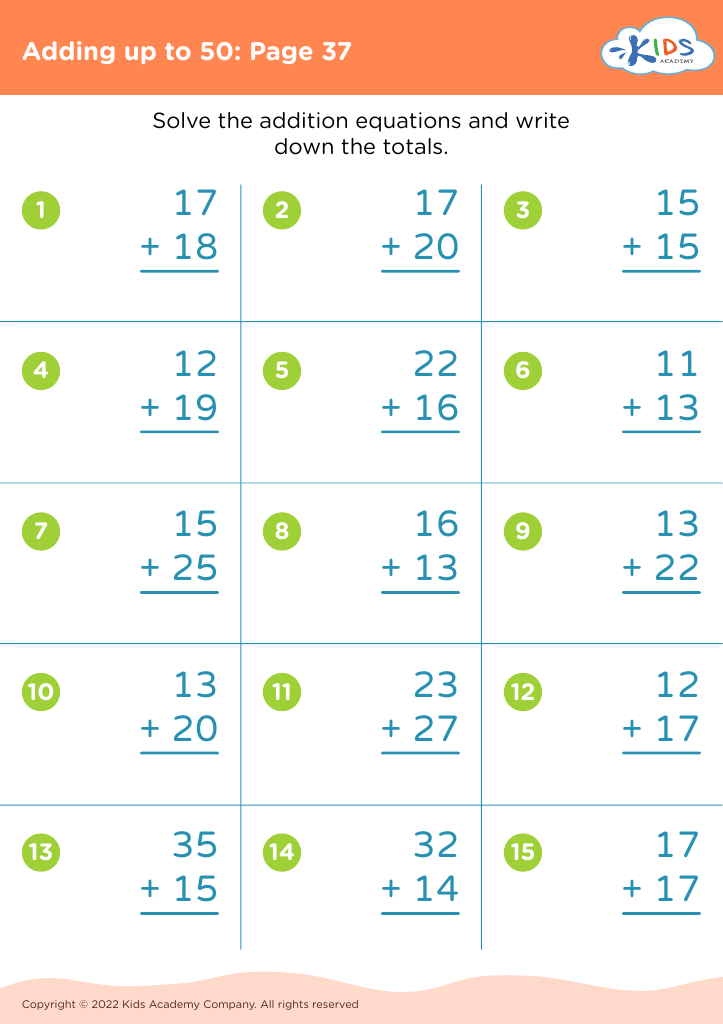








Early numeracy skills, particularly counting objects and understanding addition, are crucial for children aged 6-9 as they lay the foundation for future mathematical learning. For parents and teachers, embracing these concepts helps cultivate a child's confidence in dealing with numbers, enhancing their engagement in math activities. Counting objects enables children to visualize quantity and fosters their ability to understand one-to-one correspondence, which is essential for grasping the concept of addition.
Moreover, mastering addition through counting reinforces critical thinking and problem-solving skills. It encourages children to explore different strategies for solving math problems, promoting a growth mindset where mistakes are viewed as opportunities to learn. Early exposure to these concepts can prevent math anxiety in later years.
Additionally, activities involving counting and addition can be easily integrated into everyday life—such as counting fruits in a grocery store or adding steps while walking—which makes learning fun and relatable. This real-world application helps solidify mathematical concepts, making them memorable for young learners. Ultimately, the way children grasp these foundational skills greatly influences their confidence and competency in mathematics as they progress through their education. Thus, both parents and teachers play a vital role in nurturing these essential skills for lifelong success.








