Develop number recognition Addition Worksheets for Ages 6-9
5 filtered results
-
From - To
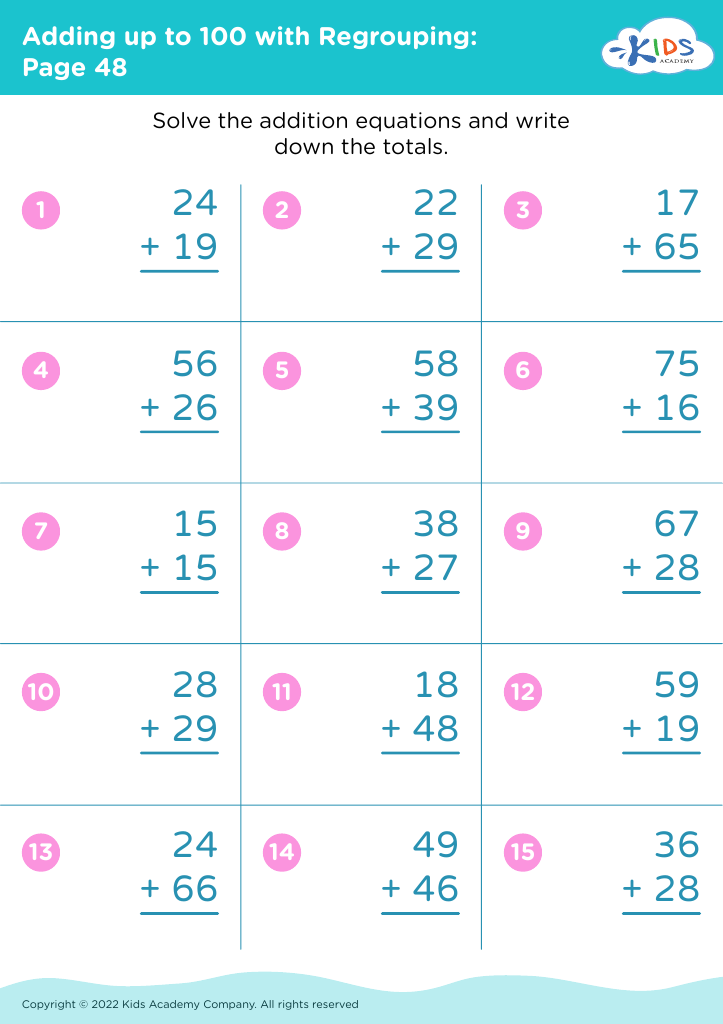
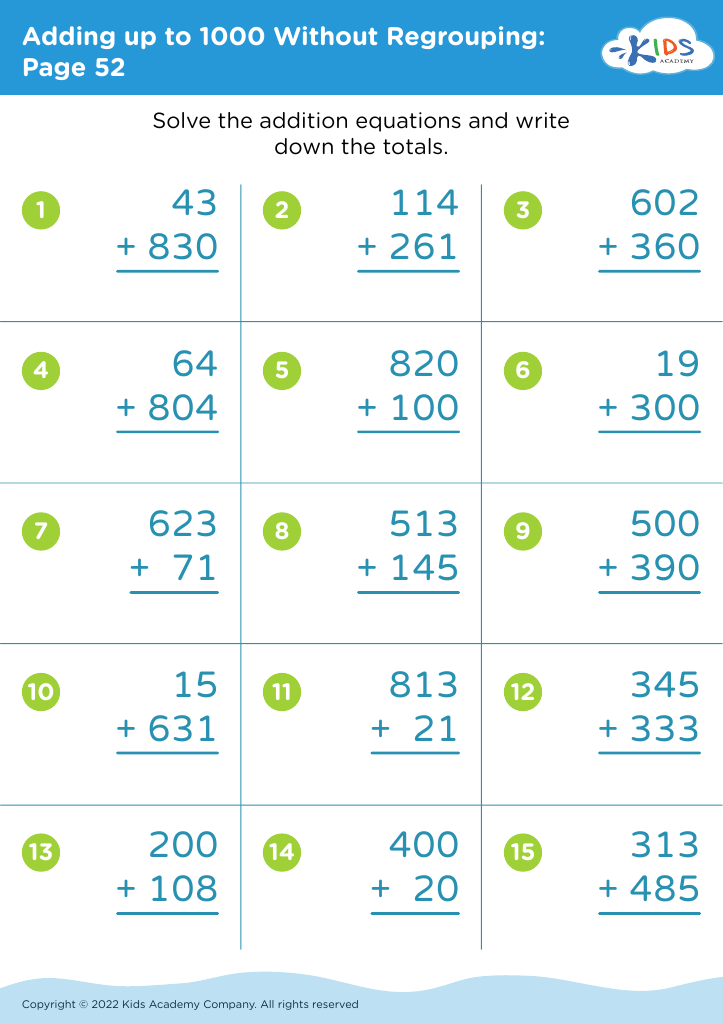
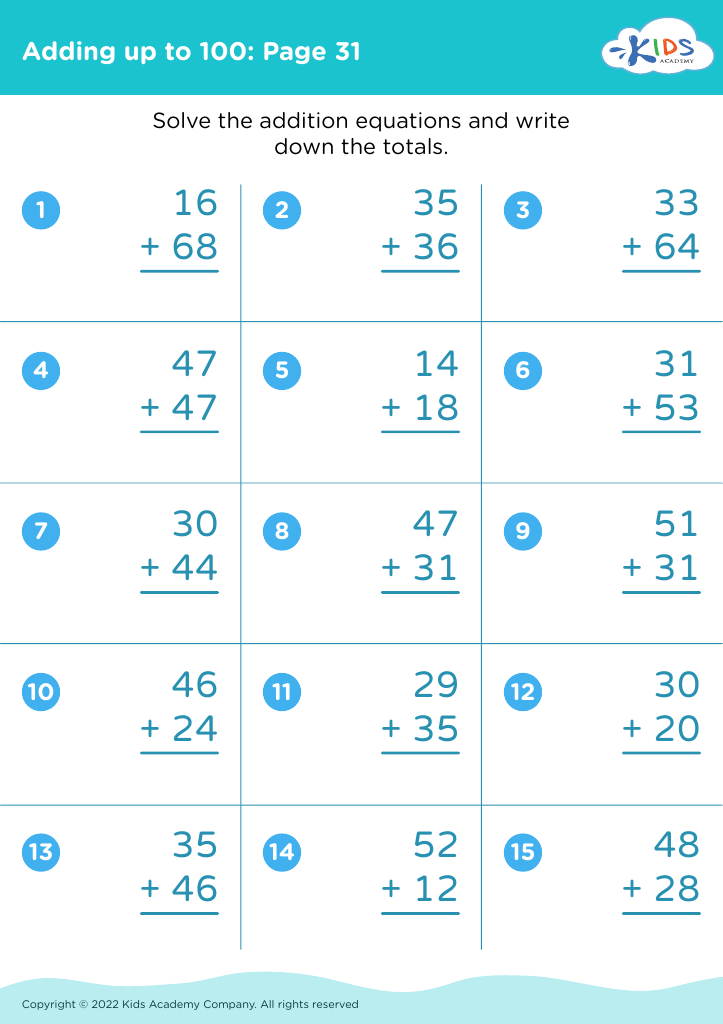
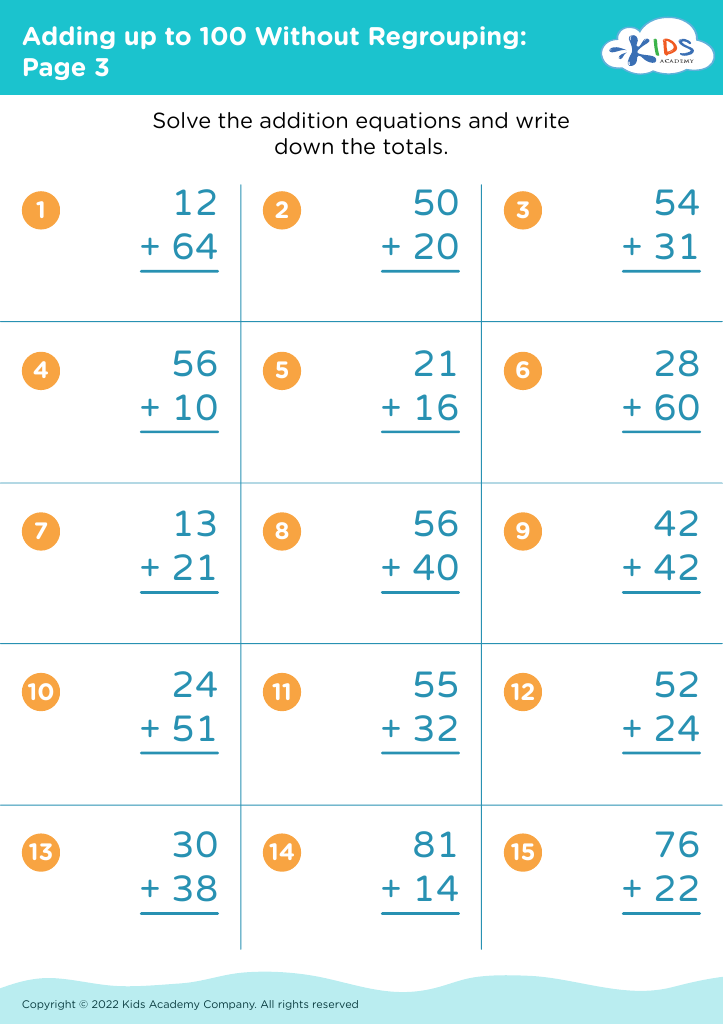
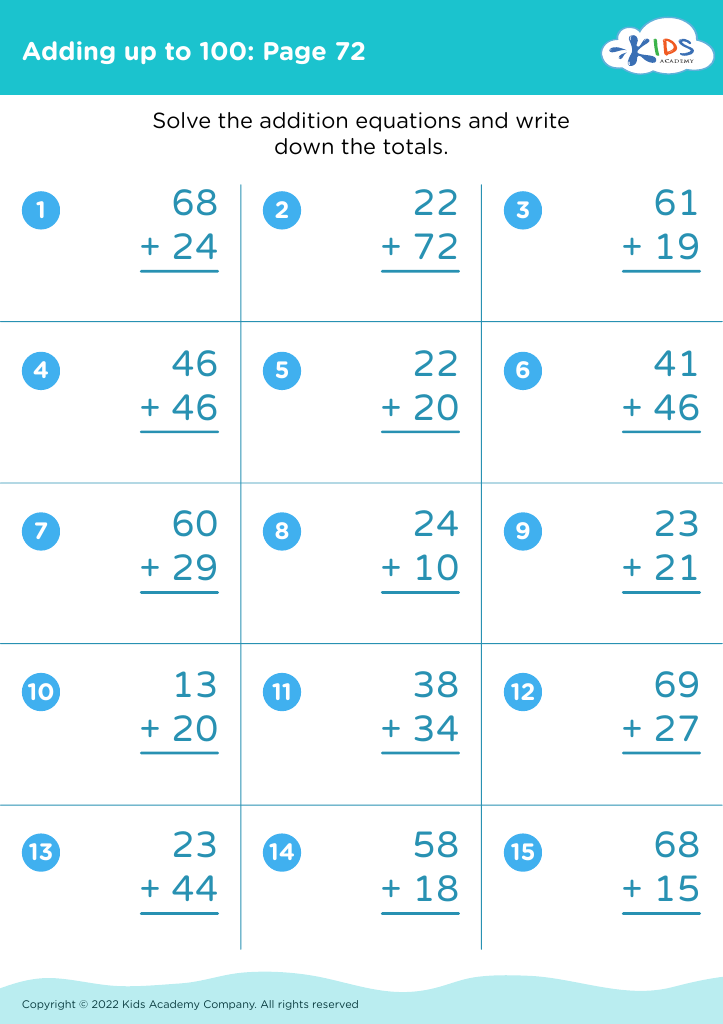
Unlock the magic of numbers with our "Develop Number Recognition Addition Worksheets" for ages 6-9! Designed to build foundational math skills, these engaging worksheets help children recognize numbers while mastering basic addition. Each activity boasts colorful visuals and fun exercises that motivate young learners. Kids will practice identifying numbers and performing simple calculations, boosting their confidence and building a solid math foundation. Perfect for classroom use or at-home practice, our worksheets make learning math an enjoyable adventure. Enhance your child's number recognition skills today with resources from Kids Academy—where education meets excitement!








Developing number recognition and addition skills for ages 6-9 is crucial because it forms the foundation of mathematical understanding, which is essential for future learning and everyday life. At this age, children rapidly absorb new concepts, making it the perfect time to introduce these fundamental skills.
Number recognition helps children identify and understand the value of numbers, paving the way for more complex mathematical operations. When children recognize numbers, they can start to grasp counting, comparing quantities, and performing basic arithmetic operations, which are all building blocks for successive mathematical learning.
Addition is one of the simplest forms of arithmetic and is instrumental in teaching children problem-solving and logical thinking. Early mastery of addition can boost confidence and foster a positive attitude toward mathematics, which is vital as they progress to more challenging concepts. Addition skills are not only essential for academic success but also for practical life situations like shopping, telling time, and playing games, all of which require basic mathematical comprehension.
Teachers and parents play a critical role in nurturing these skills by providing engaging and age-appropriate learning experiences. Using games, visual aids, and hands-on activities can make learning math enjoyable and effective. Therefore, fostering number recognition and addition early sets up children for both academic success and practical day-to-day skills.








