Developing problem-solving abilities Addition Worksheets for Ages 6-9
4 filtered results
-
From - To
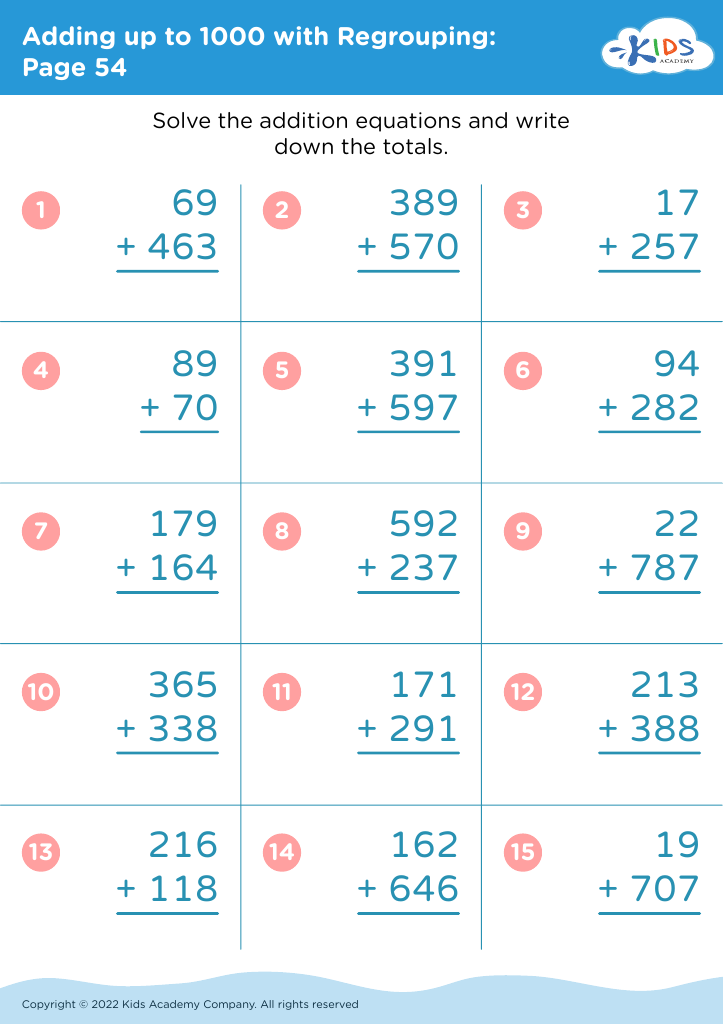
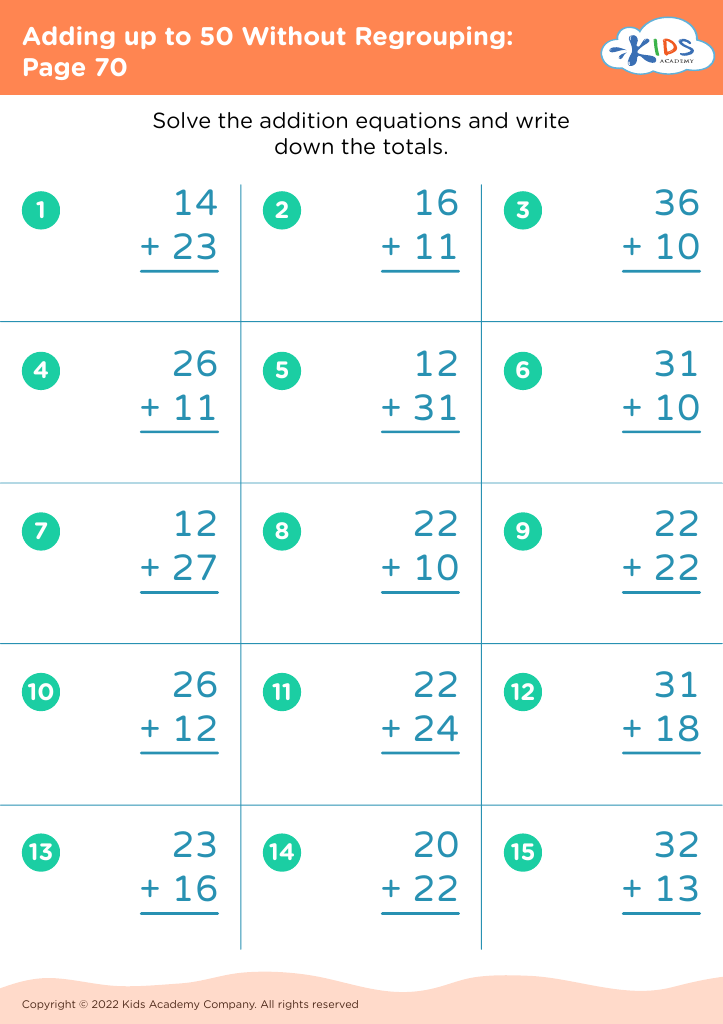
Boost your child's problem-solving skills with our comprehensive Addition Worksheets designed for ages 6-9. These engaging activities foster critical thinking, improve math comprehension, and strengthen foundational addition concepts. With a variety of fun and challenging exercises, children will enjoy applying their skills to solve diverse problems, enhancing their arithmetic abilities. Suitable for classroom and homeschool environments, our printable worksheets provide ample practice opportunities, ensuring young learners develop the confidence needed for more advanced math. Lay a solid foundation for your child's math journey with our expertly crafted addition resources from Kids Academy!
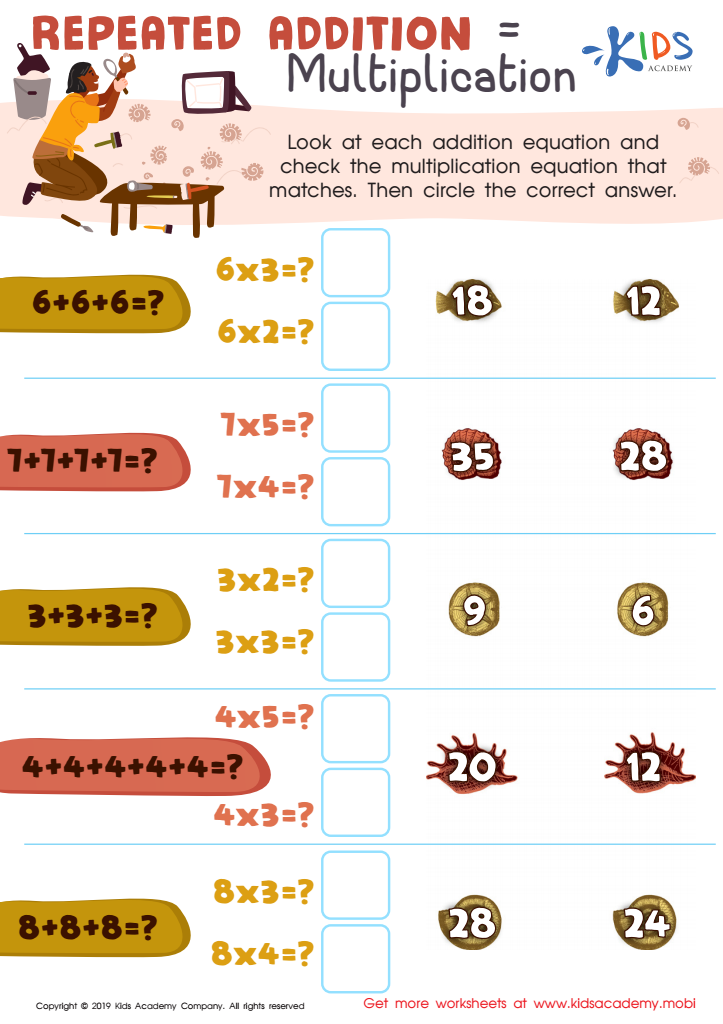
Repeated Addition = Multiplication Worksheet
 Assign to My Students
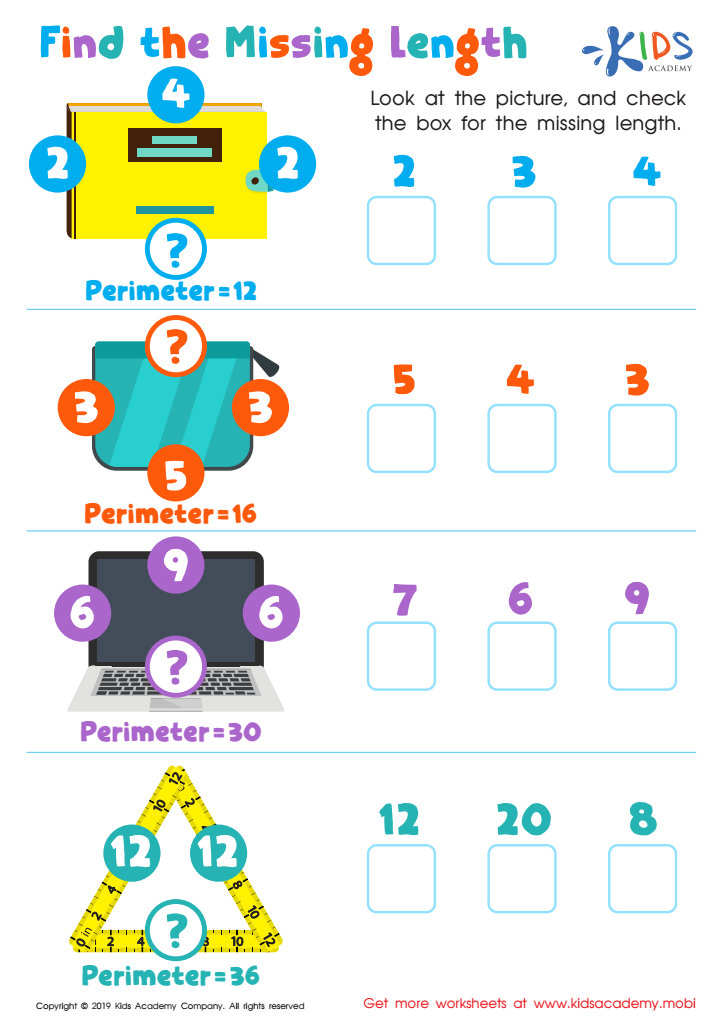
Find the Missing Length Worksheet


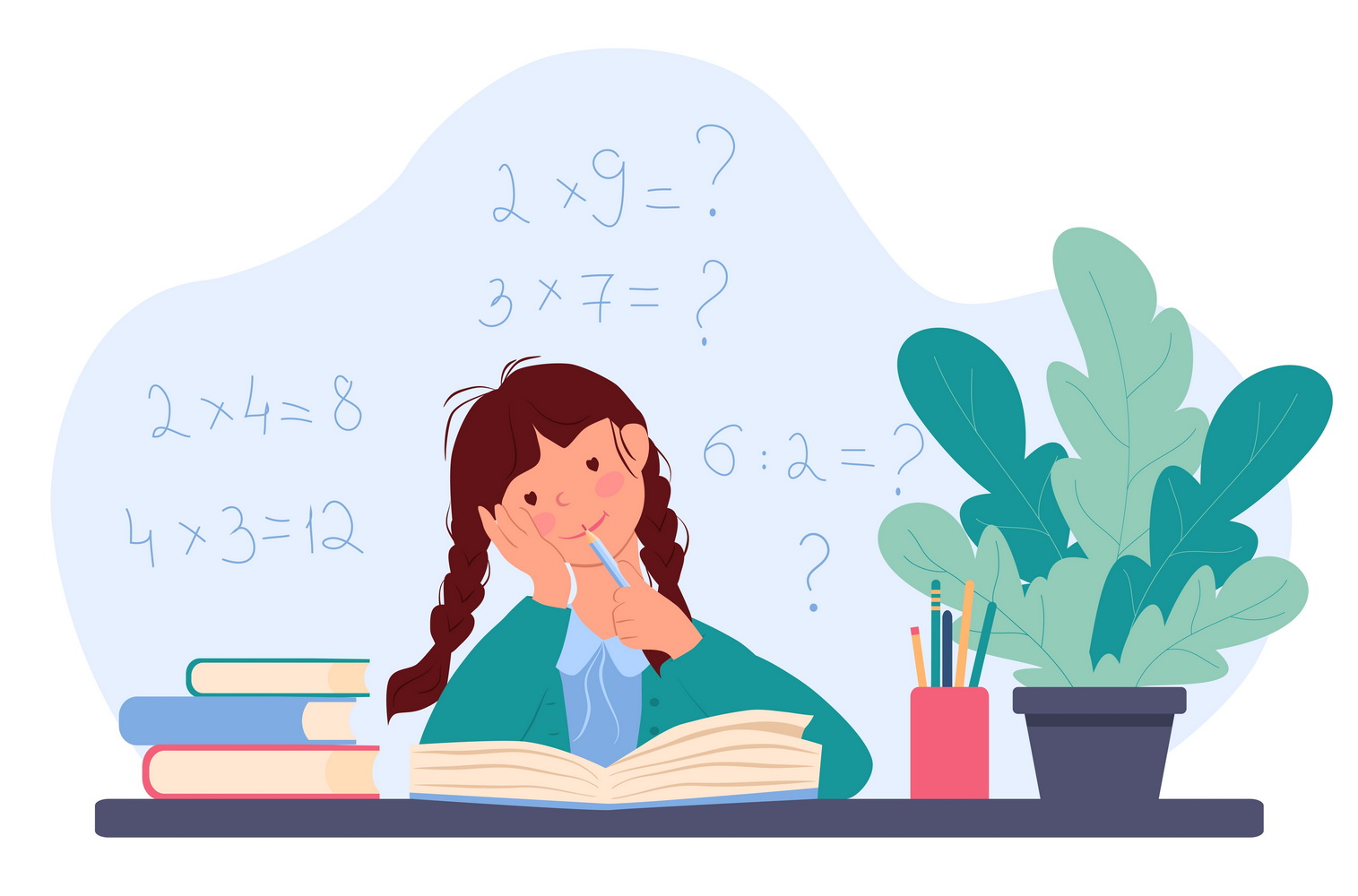





Developing problem-solving abilities in addition for children aged 6-9 is fundamental to their academic and personal growth. During these formative years, mastering addition isn't just about getting the right answers but also about enhancing critical thinking and fostering a mathematical mindset early on. Understanding addition lays a crucial foundation for more advanced math concepts they will encounter in later grades. It encourages logical thinking, improves memory, and helps children learn to break down problems into manageable steps.
Moreover, effective problem-solving boosts children's confidence and perseverance, qualities that extend beyond mathematics. When children learn to tackle addition problems methodically, they gain the skills to approach other challenges in life with a clear, analytical mind. This competency is instrumental in fostering a resilient, can-do attitude.
Parents and teachers play a pivotal role in cultivating these skills by providing appropriate challenges and encouragement. Through engaging activities and real-life applications, they can make addition meaningful and enjoyable. Attention to developing problem-solving abilities in math at this age direct contributes to a child's ability to navigate more complex problems in academic settings, leading to better performance and a keener interest in learning. Ultimately, these skills support a holistic education and prepare children for diverse future endeavors.








