Fine motor skills (writing) Addition Worksheets for Ages 6-9
6 filtered results
-
From - To
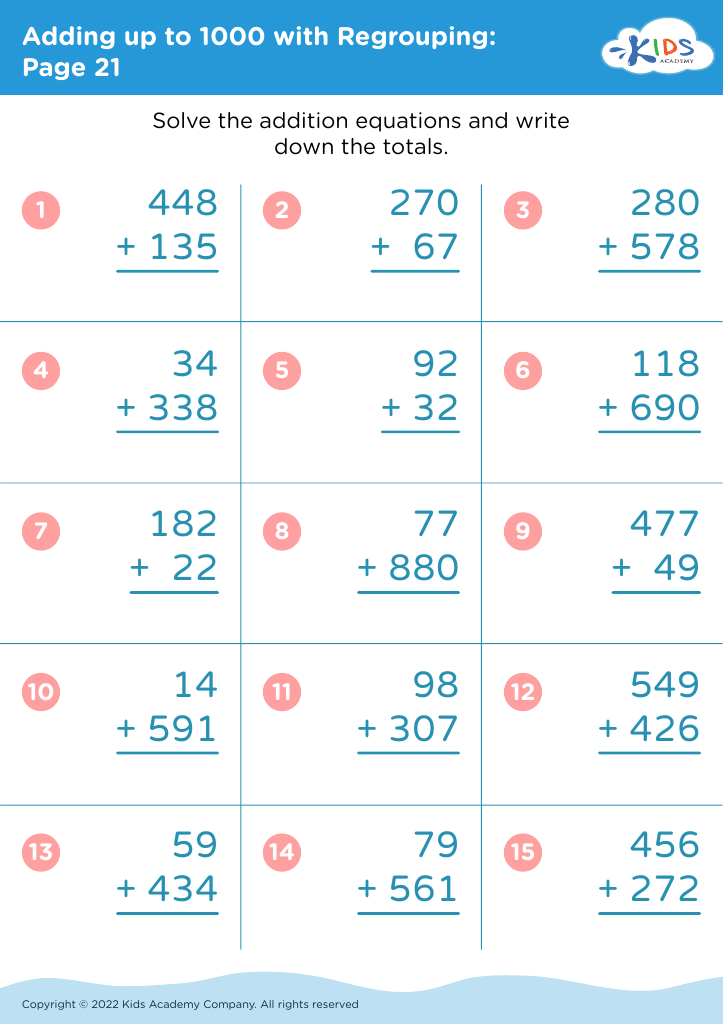
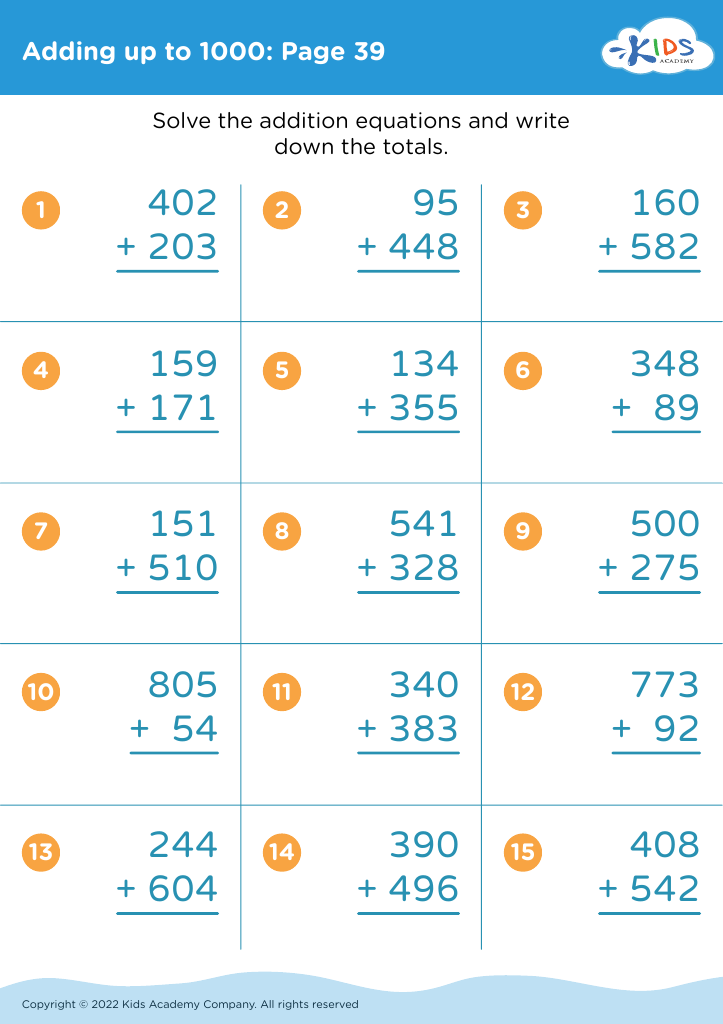
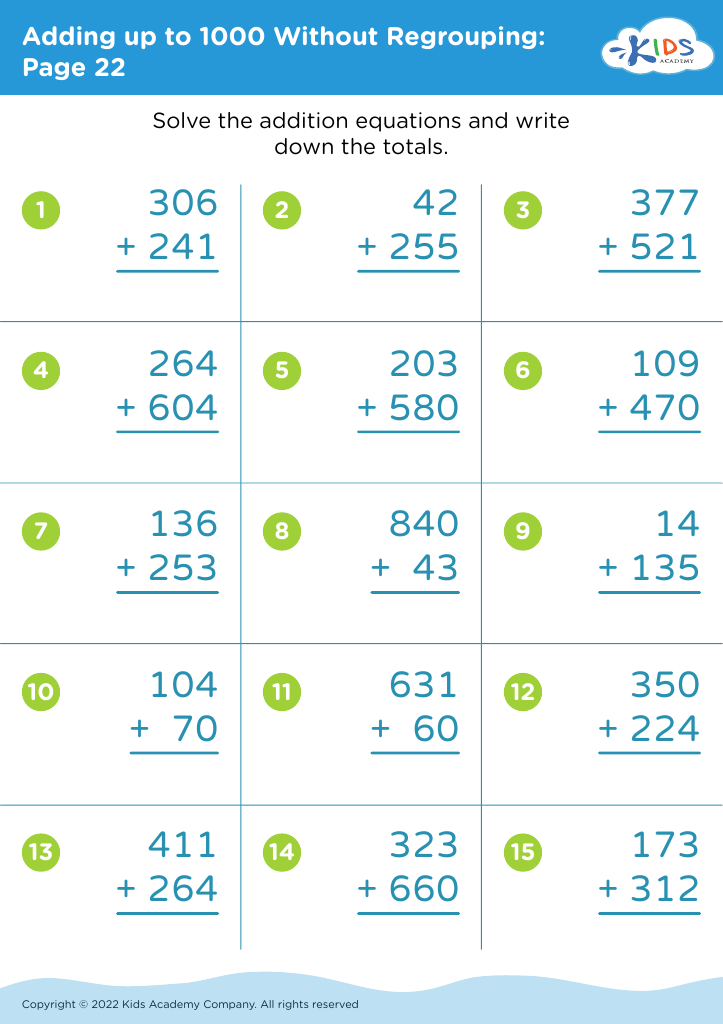
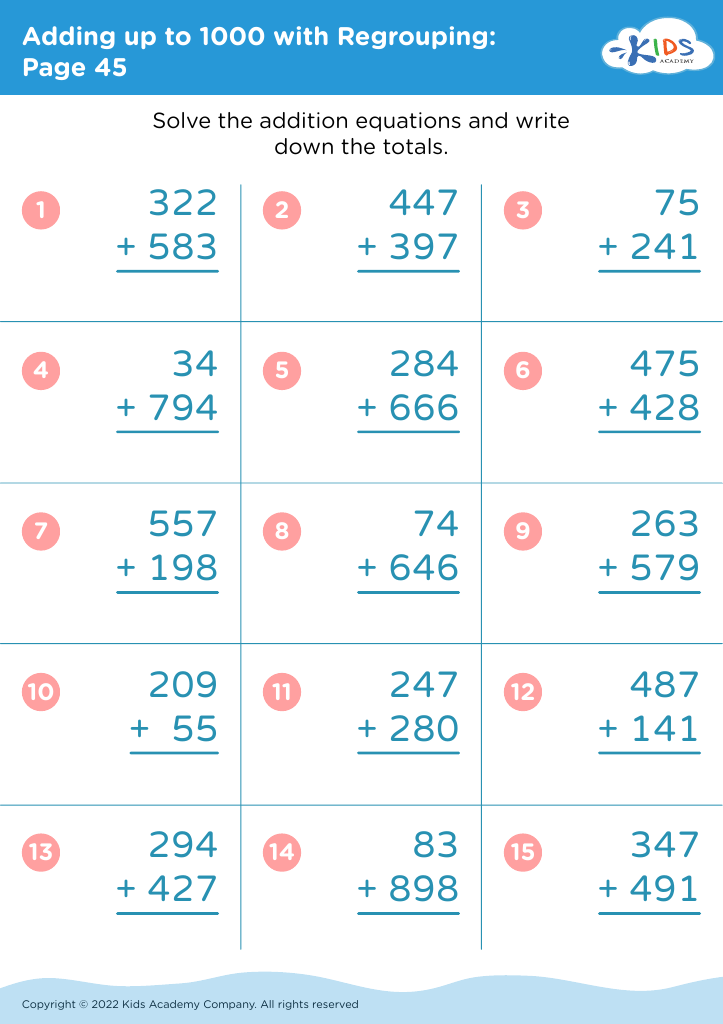
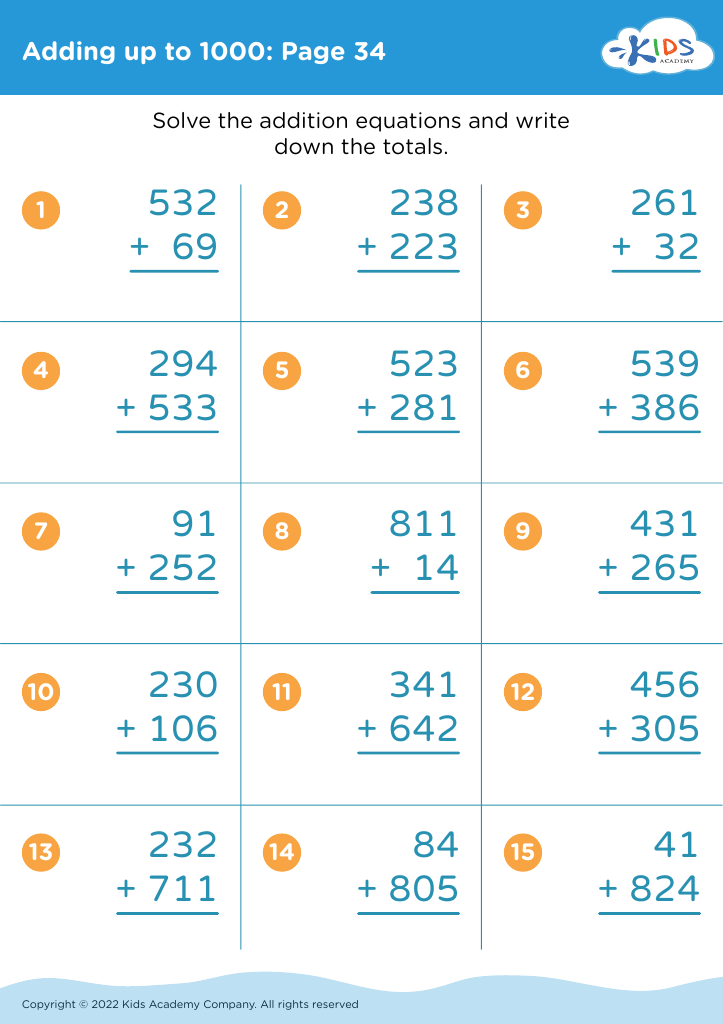
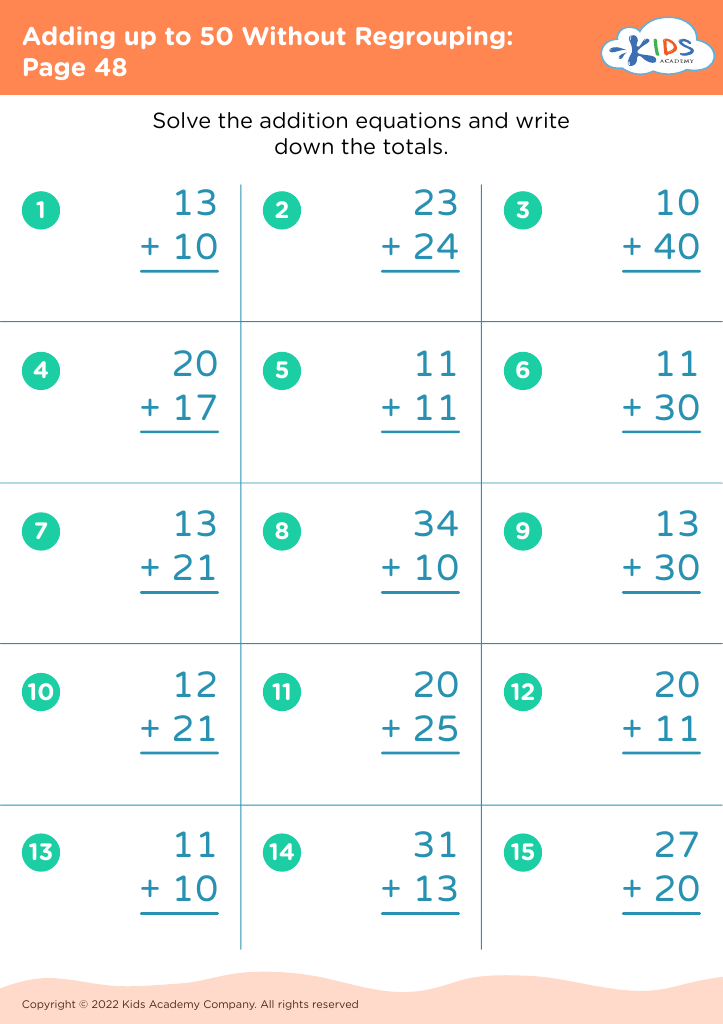
Boost your child's fine motor skills and writing abilities with our engaging Addition Worksheets, designed specifically for ages 6-9. These worksheets not only help young learners practice addition but also enhance their penmanship and writing proficiency. Each page is carefully crafted to support the development of hand-eye coordination and finger strength, crucial for effective handwriting. Fun and educational, our worksheets assist children in mastering addition skills while simultaneously improving their motor skills. Perfect for both classroom use and home practice, these printable worksheets make learning math and writing enjoyable and effective!






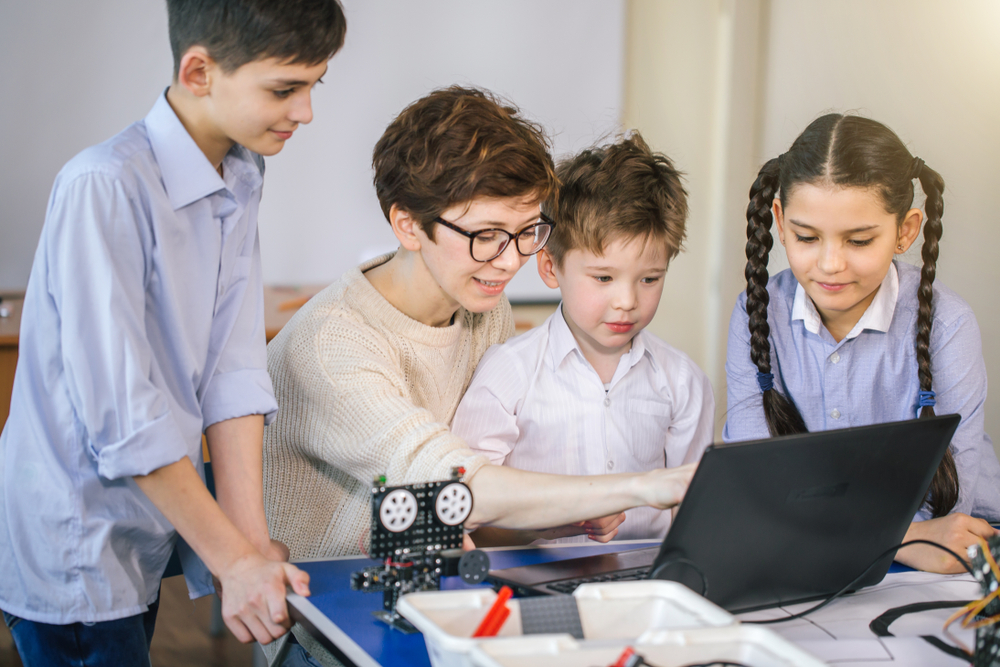

Fine motor skills, particularly writing, play a crucial role in the overall development of children aged 6-9. Mastering these skills enhances academic performance, as writing is fundamental in almost all subjects. When children can write clearly and efficiently, they can better express their ideas, making it easier for teachers to understand their thought processes and provide appropriate feedback. This also boosts the child's confidence and engagement in learning.
Moreover, writing reinforces cognitive development. The act of forming letters and sentences requires children to integrate visual, motor, and cognitive skills. It helps improve hand-eye coordination, concentration, and memory, all of which are essential for future academic success. Writing also stimulates brain development, encouraging neural connections that facilitate complex problem-solving and critical thinking.
In addition, fine motor skills are vital for tasks beyond academics. They enable children to perform everyday activities such as buttoning clothes, tying shoelaces, and using utensils, fostering independence and self-esteem. Good motor skills prevent frustration associated with task difficulty, promoting a positive attitude towards learning and exploration.
Thus, parents and teachers should prioritize the development of fine motor skills to equip children with the necessary tools for academic success and everyday life. Investing time in this area paves the way for a well-rounded, confident, and capable individual.








