Handwriting improvement Addition Worksheets for Ages 6-9
4 filtered results
-
From - To
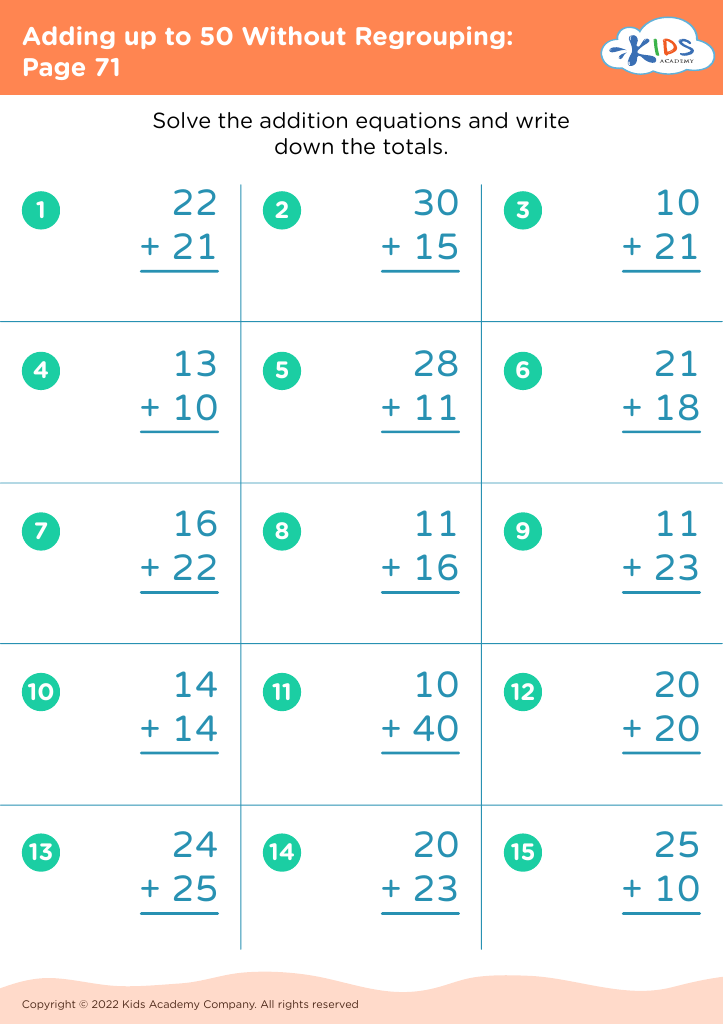
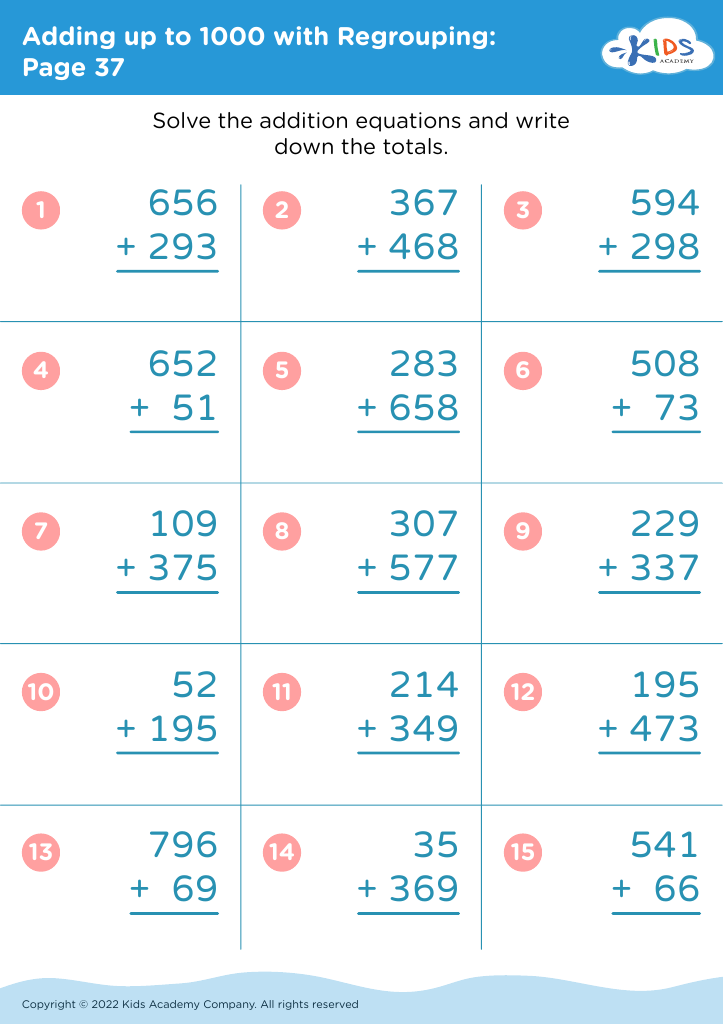
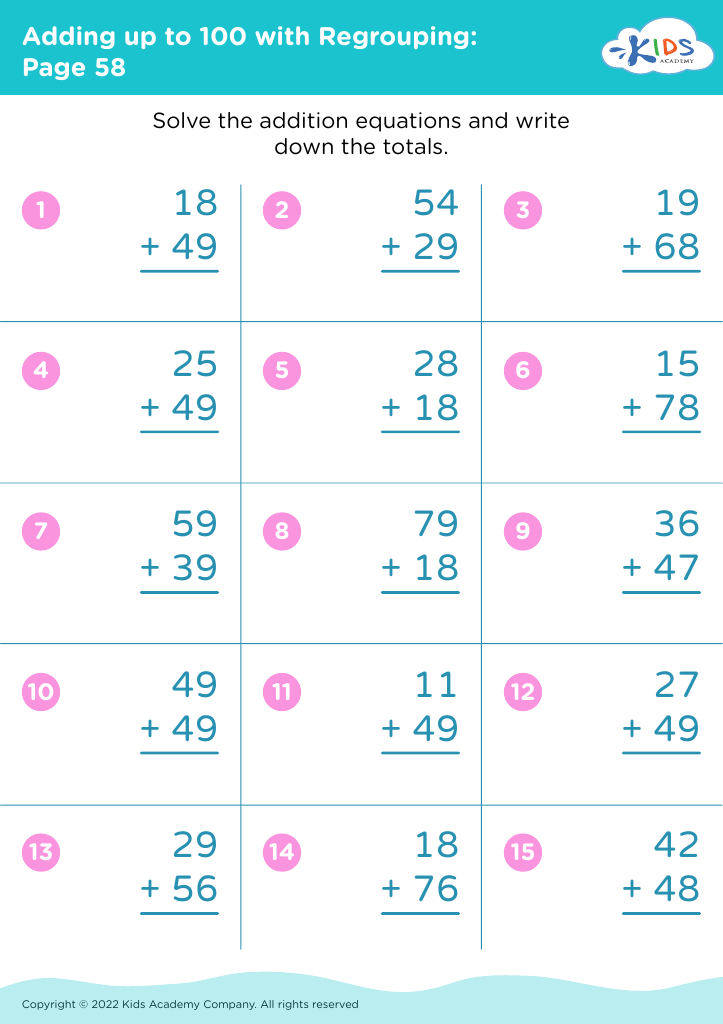
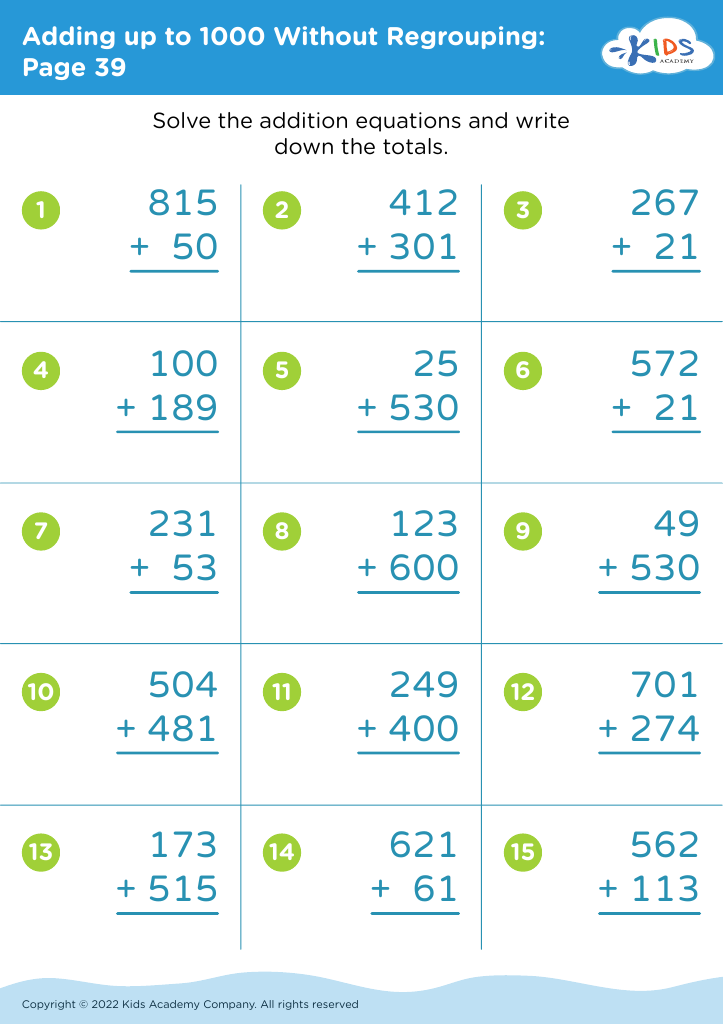
Enhance your child's handwriting skills while mastering addition with our engaging Handwriting Improvement Addition Worksheets, designed specifically for ages 6 to 9. These fun and educational resources provide children with the opportunity to practice their writing and arithmetic simultaneously. Each worksheet reinforces number formation and addition concepts, ensuring kids develop confidence in both areas. Filled with vibrant designs and age-appropriate exercises, these worksheets promote fine motor skills while encouraging a positive learning experience. Perfect for at-home practice or as supplementary classroom materials, our Handwriting Improvement Addition Worksheets pave the way for academic success and foster a love for learning.








Handwriting improvement for children aged 6-9 is crucial for several reasons. At this stage, children develop literacy skills that form the foundation of their academic journey. Quality handwriting is not just about neat letters; it helps reinforce spelling, grammar, and overall communication skills. When children learn to express themselves clearly, they gain confidence in their writing abilities, which positively impacts their participation in class.
Moreover, good handwriting techniques contribute to fine motor skills development, aiding in hand-eye coordination and muscle control. As children practice consistent letter formation, they deepen their understanding of letter sounds and language structures, enhancing their reading skills as well.
For parents and teachers alike, fostering strong handwriting skills can lead to more meaningful assignments and assessments, where thought is conveyed with clarity instead of struggling with legibility. Additionally, when students master handwriting, it may reduce frustration during written tasks, allowing them to focus on creativity and content rather than the mechanics of writing.
Working collaboratively, parents and teachers can implement engaging activities and positive reinforcement, making handwriting practice enjoyable. This shared approach ensures children cultivate essential skills that are not only beneficial in elementary education but support lifelong learning. It lays the groundwork for effective communication, setting the stage for future academic success.








