Improve number recognition Addition Worksheets for Ages 6-9
15 filtered results
-
From - To
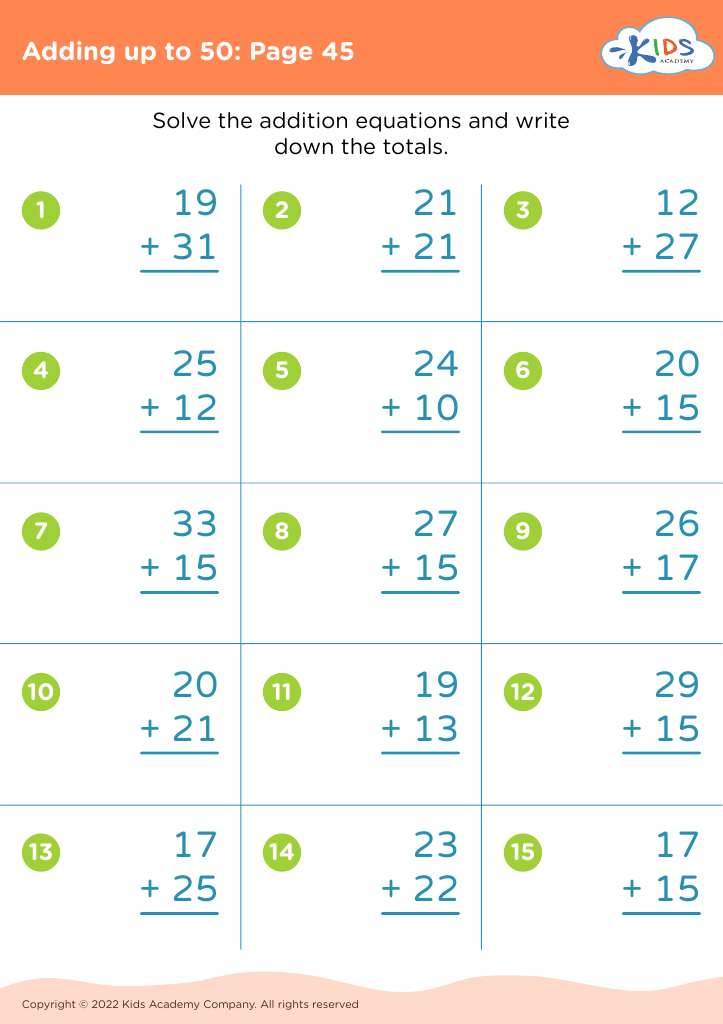
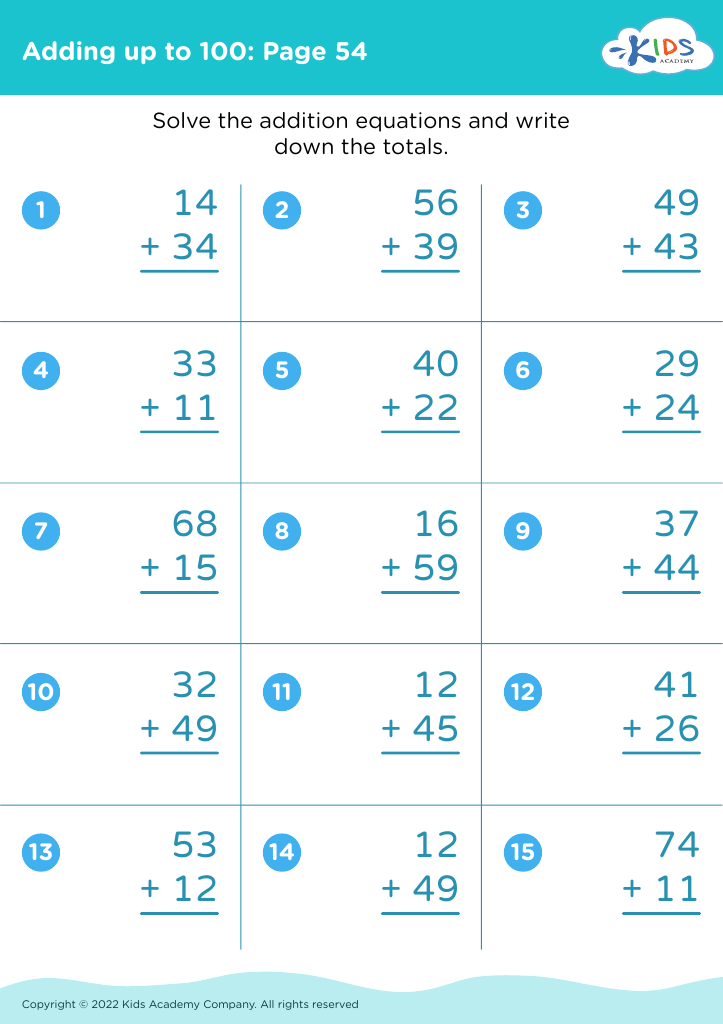
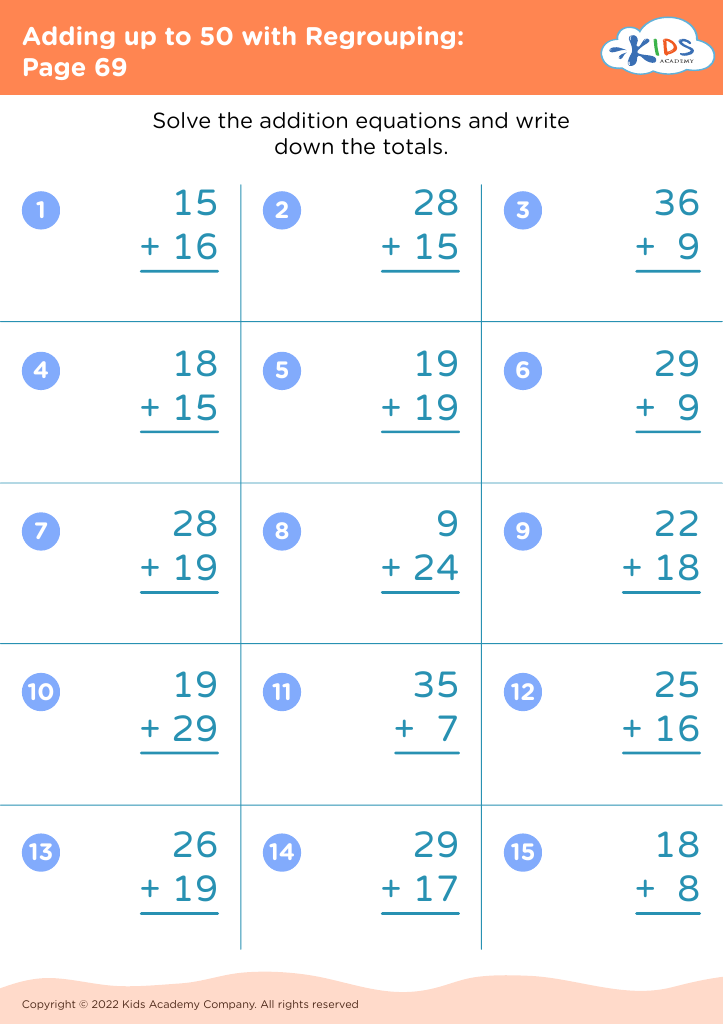
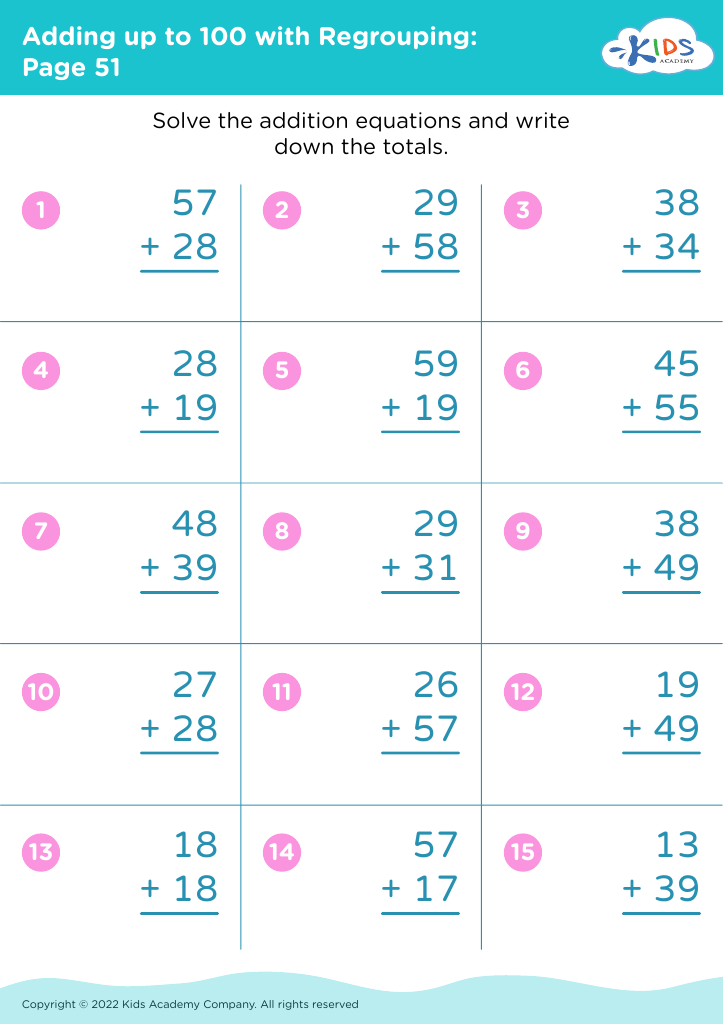
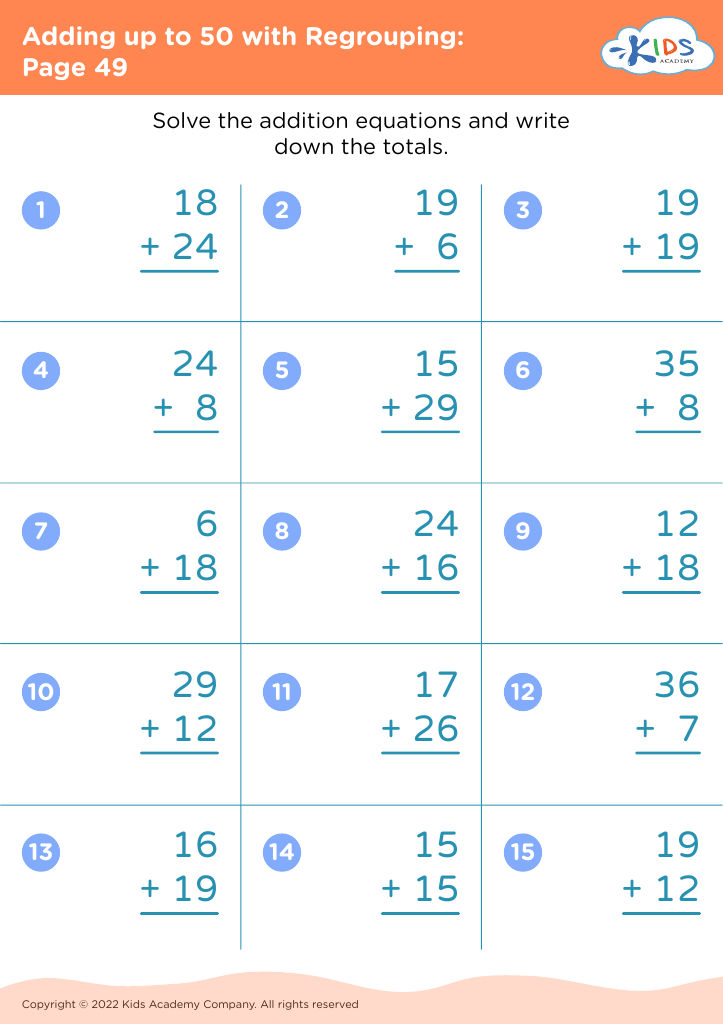
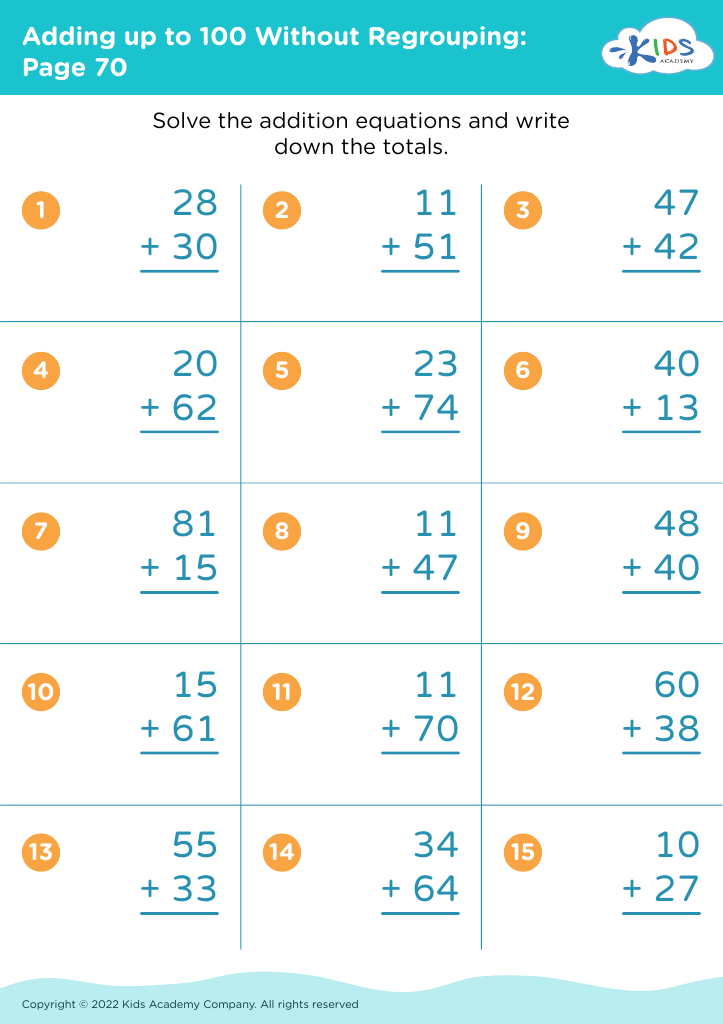
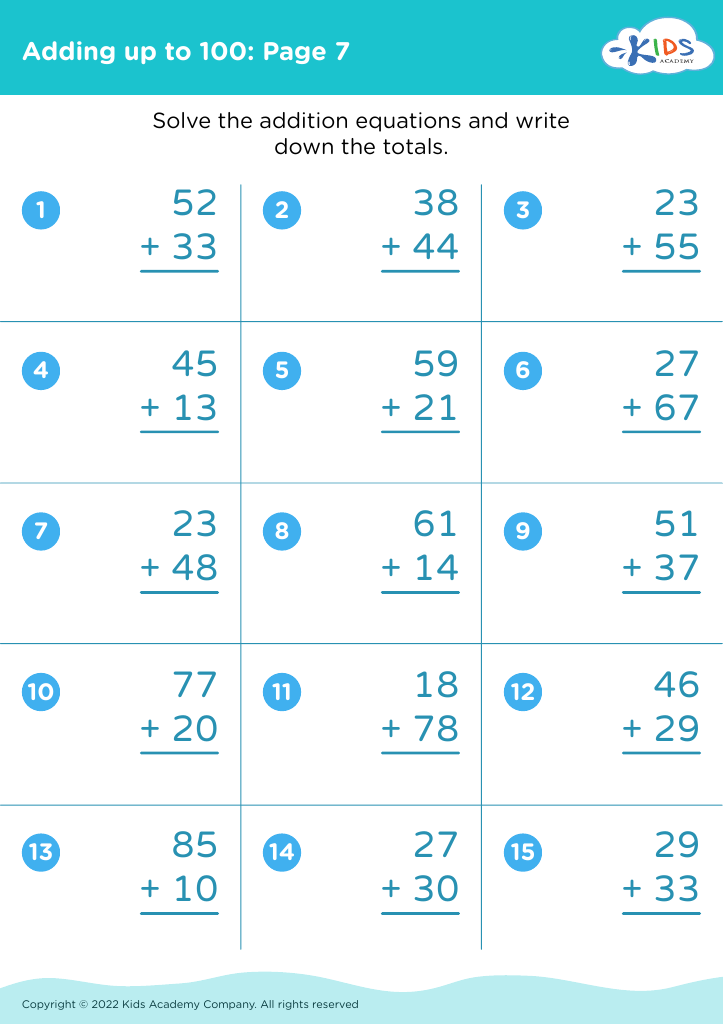
Enhance your child's math skills with our "Improve Number Recognition Addition Worksheets for Ages 6-9"! Designed to make learning fun and effective, these worksheets help young learners recognize numbers and understand basic addition concepts. Each worksheet is thoughtfully crafted to build a strong mathematical foundation, boost confidence, and improve problem-solving abilities. With engaging exercises and colorful illustrations, children quickly grasp key concepts while enjoying the learning process. Ideal for both classroom and home use, our worksheets support continuous progress and a love for math. Start your child's journey to math success today!
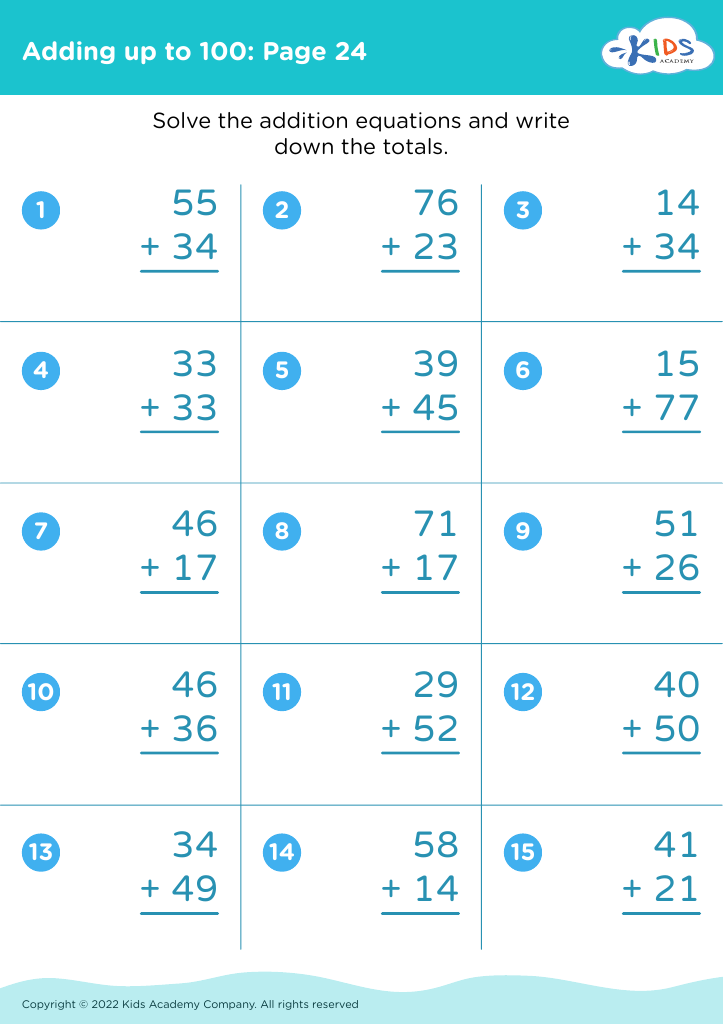
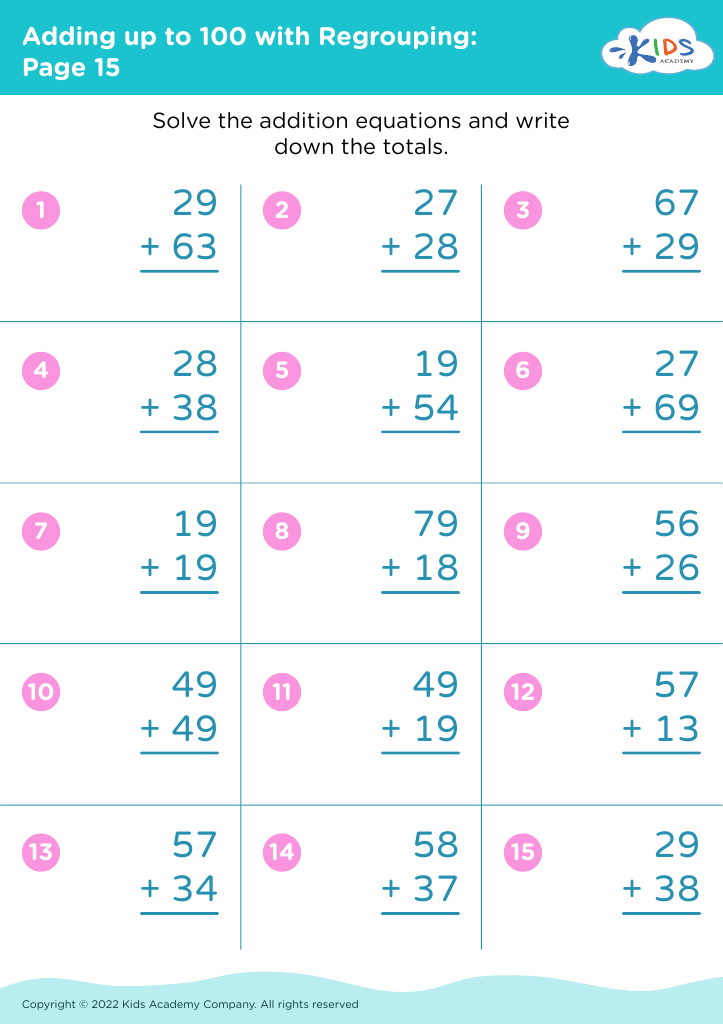
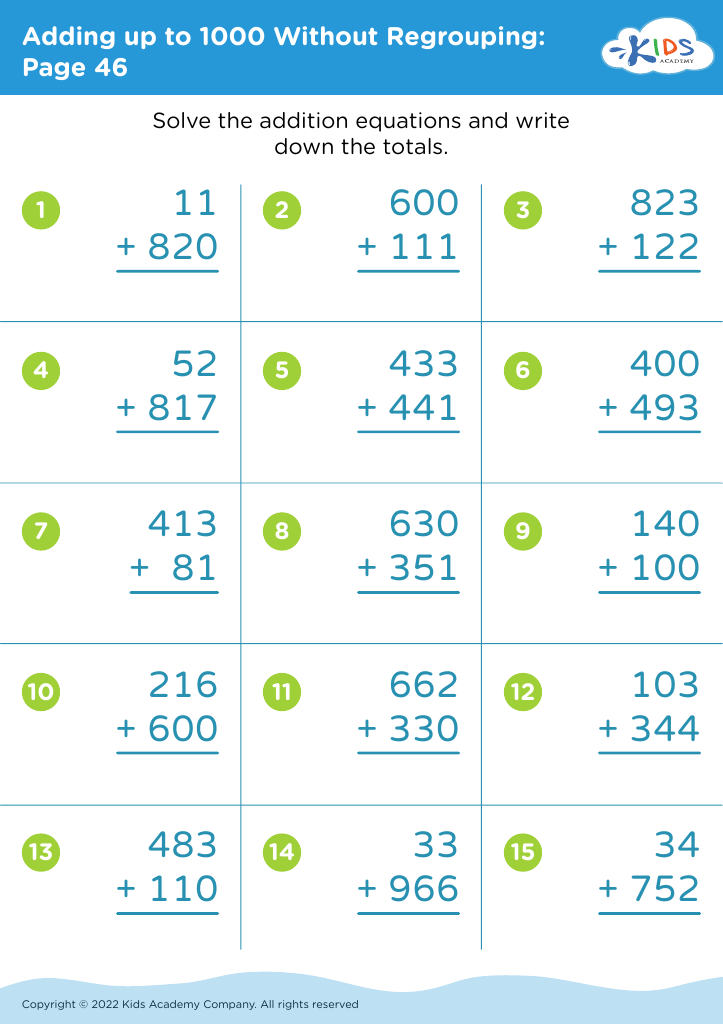
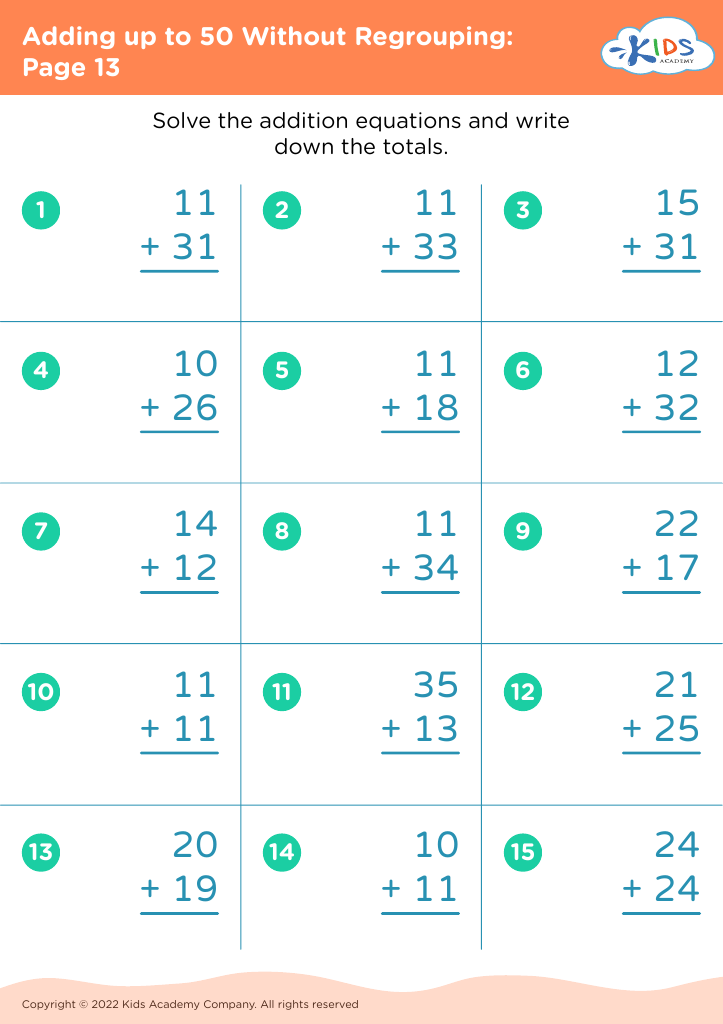
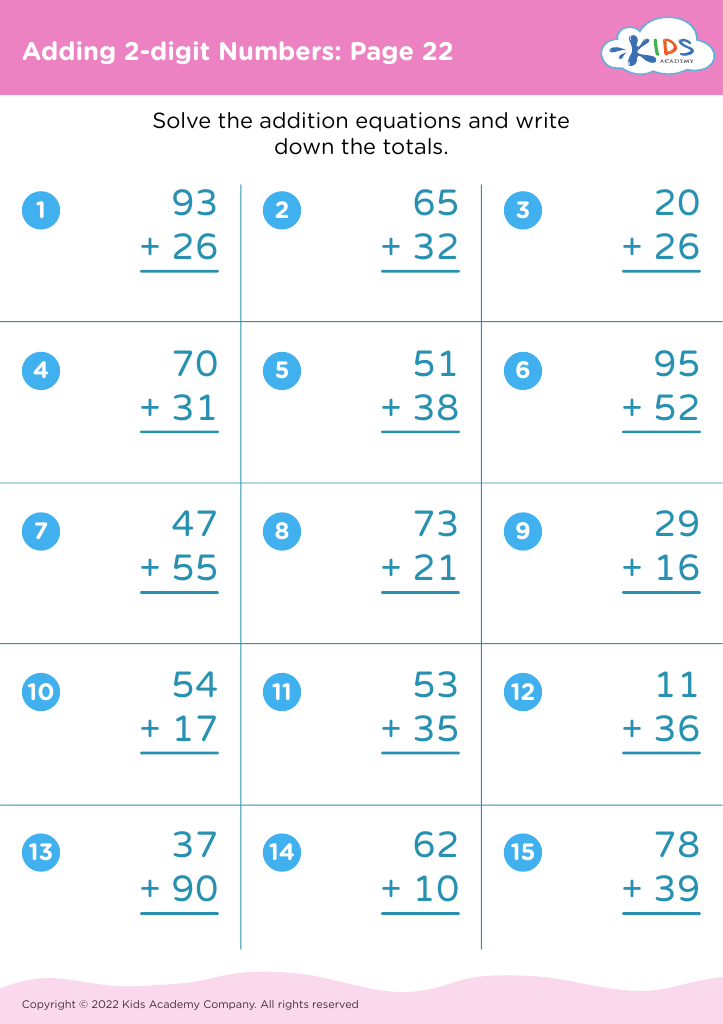
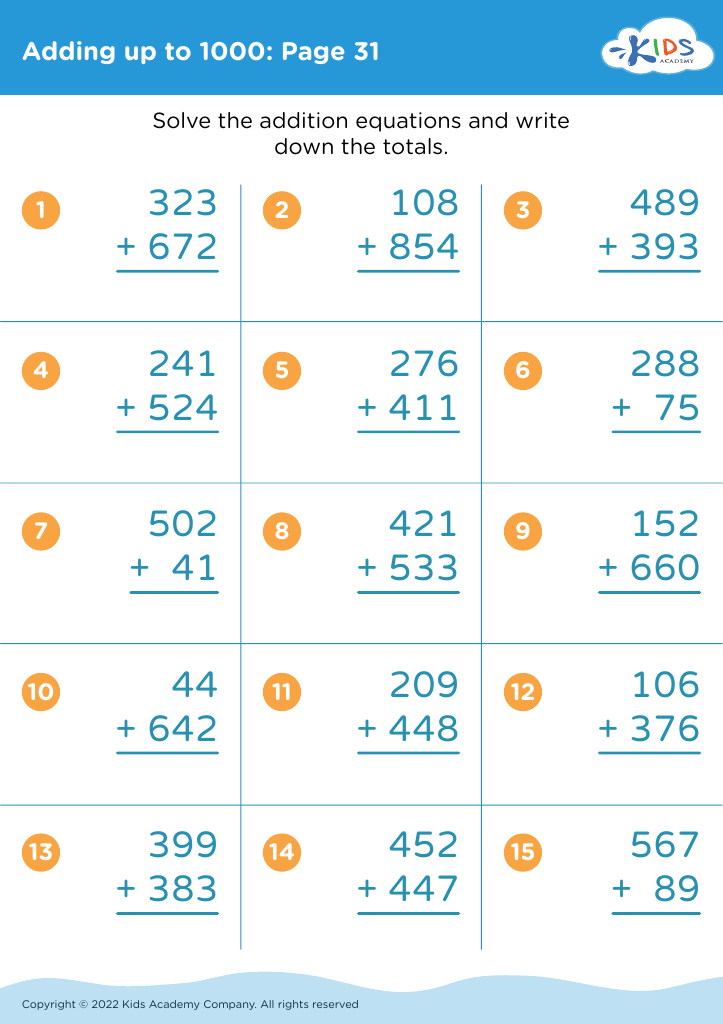
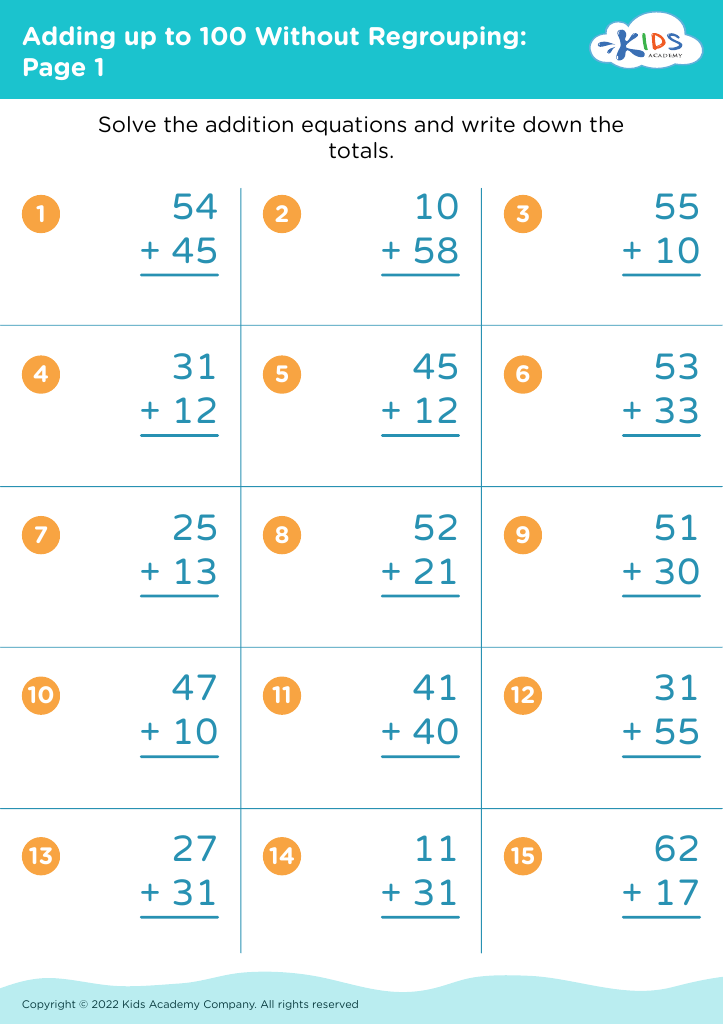
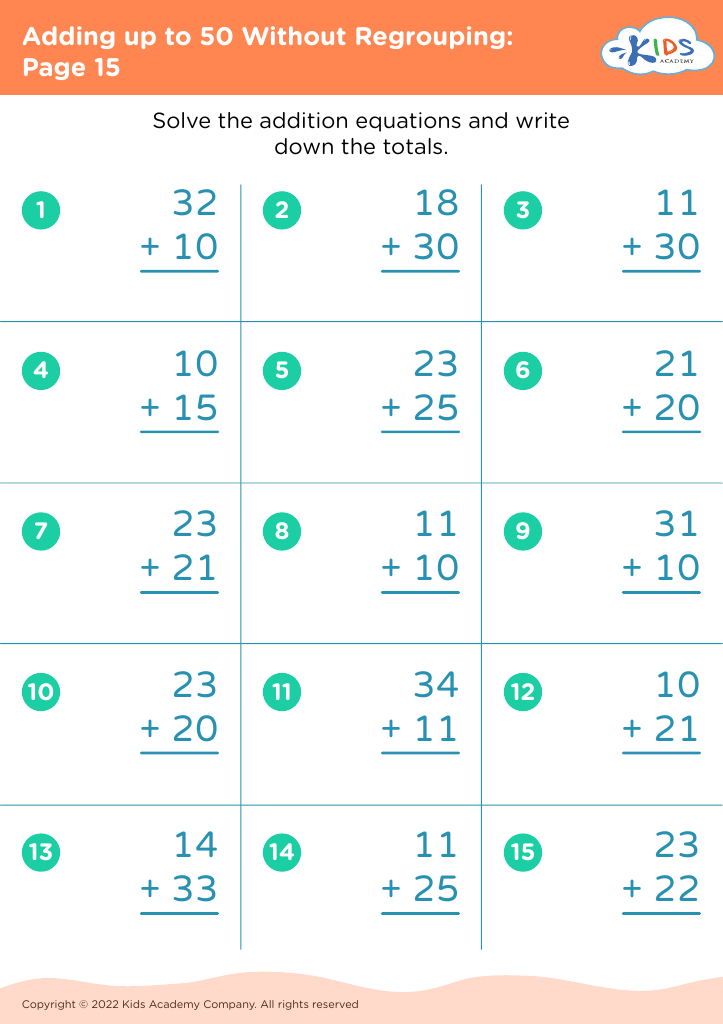








Improving number recognition and addition skills for children aged 6-9 is crucial for several key reasons. Firstly, this age range is critical in a child’s cognitive development, where foundational math skills are established. Strong number recognition abilities enable children to identify and understand the relationship between numbers, which is essential for simple and complex problem-solving.
Secondly, addition, as a fundamental mathematical operation, serves as a building block for more advanced math concepts like subtraction, multiplication, and division. Mastery of addition enhances a child's ability to perform mental math, promoting numerical fluency and boosting their confidence in handling math tasks. These skills are not only important academically but also in everyday situations, such as counting money, telling time, or measuring ingredients.
Furthermore, early math proficiency is linked with overall academic success. Research indicates that children who develop strong early math skills are more likely to excel in other subjects as math skills foster critical thinking, logical reasoning, and the ability to follow multi-step instructions.
Lastly, fostering a positive attitude toward math during early education helps reduce math anxiety and cultivates a lifelong interest in STEM fields. Consequently, parents and teachers play a vital role in providing engaging and supportive environments to nurture these essential skills, ensuring children have a solid foundation for future learning and real-life applications.








