
Numeracy skills Addition Worksheets for Ages 6-9
10 filtered results
Difficulty Level
Grade
Age
-
From - To
Subject
Activity
Standards
Elevate your child's numeracy abilities with our expertly crafted Addition Worksheets tailored for ages 6-9. Kids Academy's engaging exercises are designed to build confidence and mastery in both simple and advanced addition. These printable worksheets enhance fundamental math skills, ensuring enjoyable and effective learning. With fun, interactive problems, children can practice sums, improve their problem-solving techniques, and develop a strong mathematical foundation. Our carefully structured resources cater to varied learning styles, turning math practice into an exciting adventure. Perfectly suited for classroom or at-home use, these worksheets deliver essential skills for lifelong numeracy success.
Favorites
With answer key
Interactive
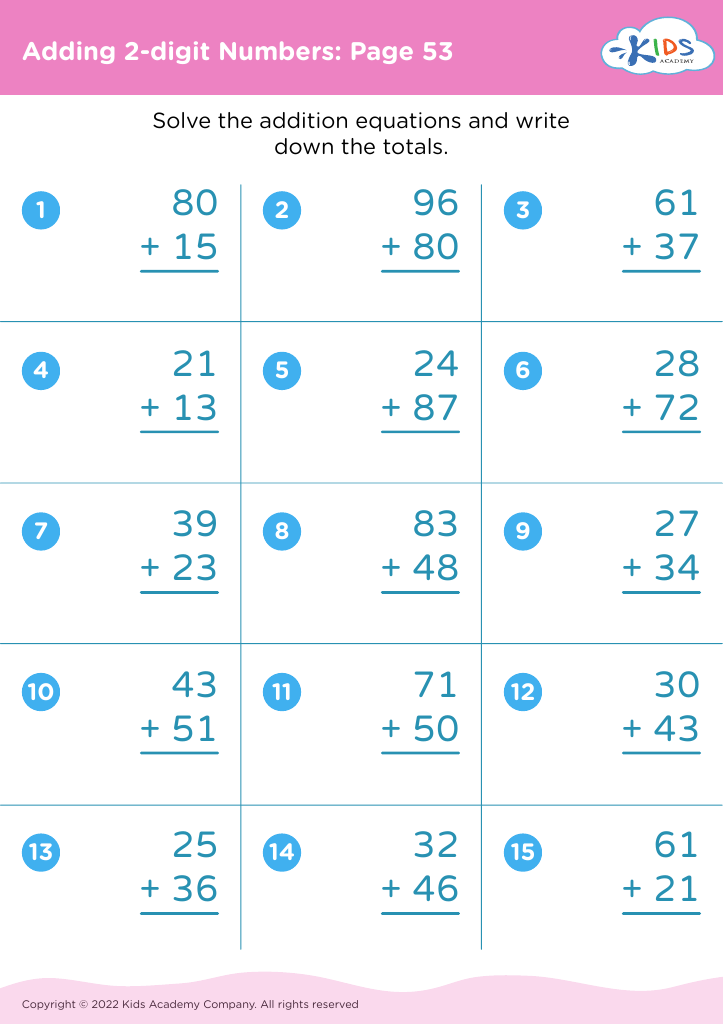
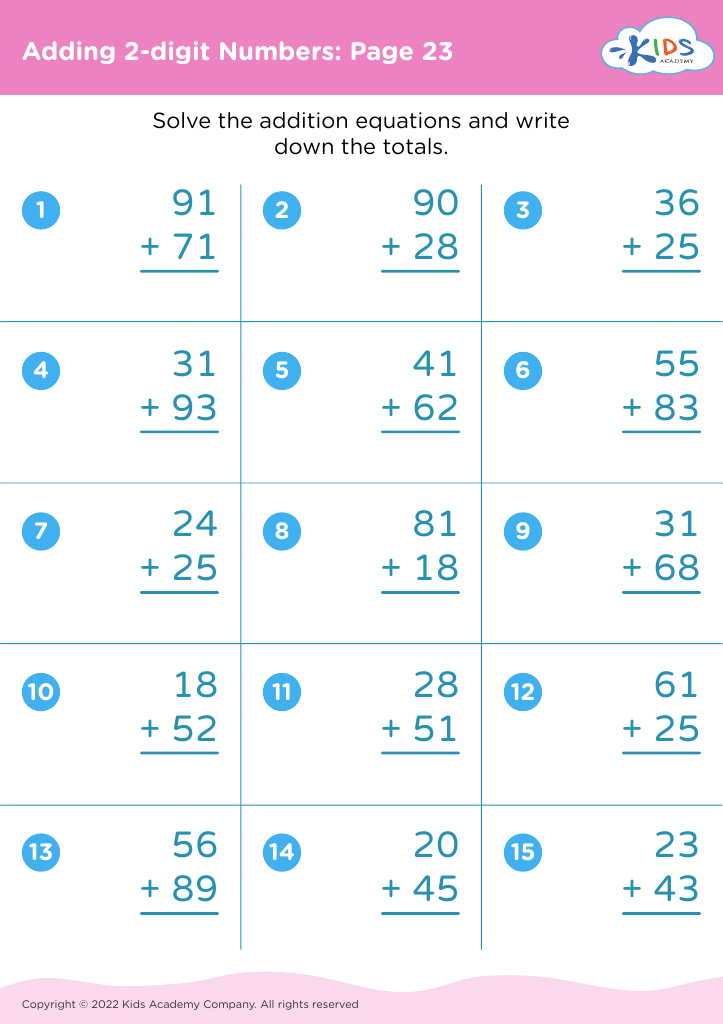
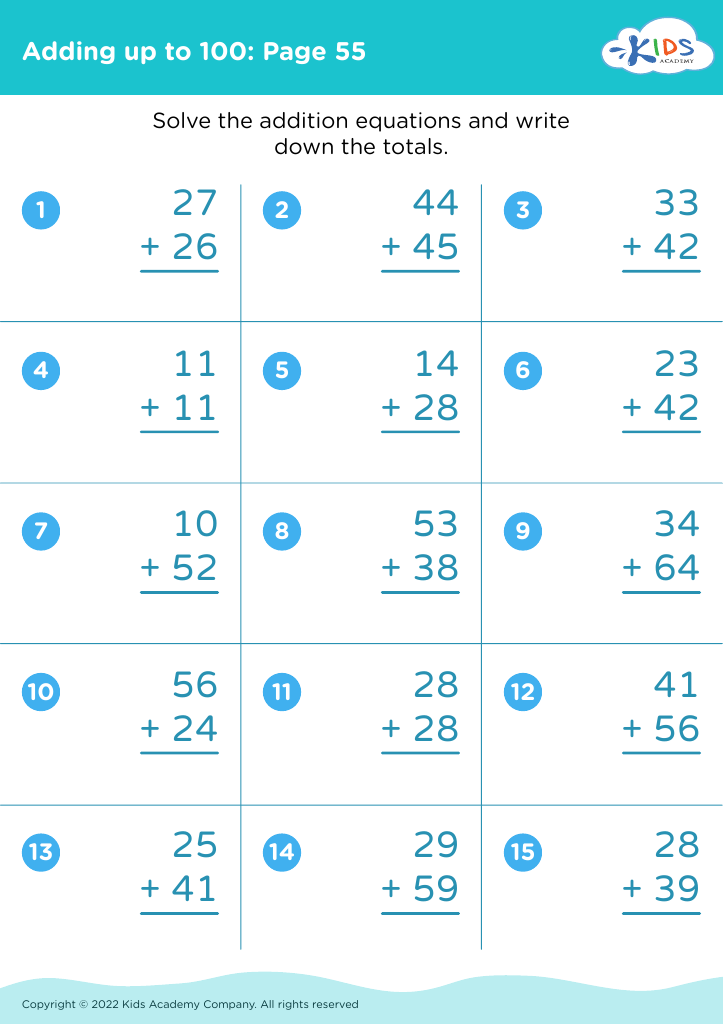
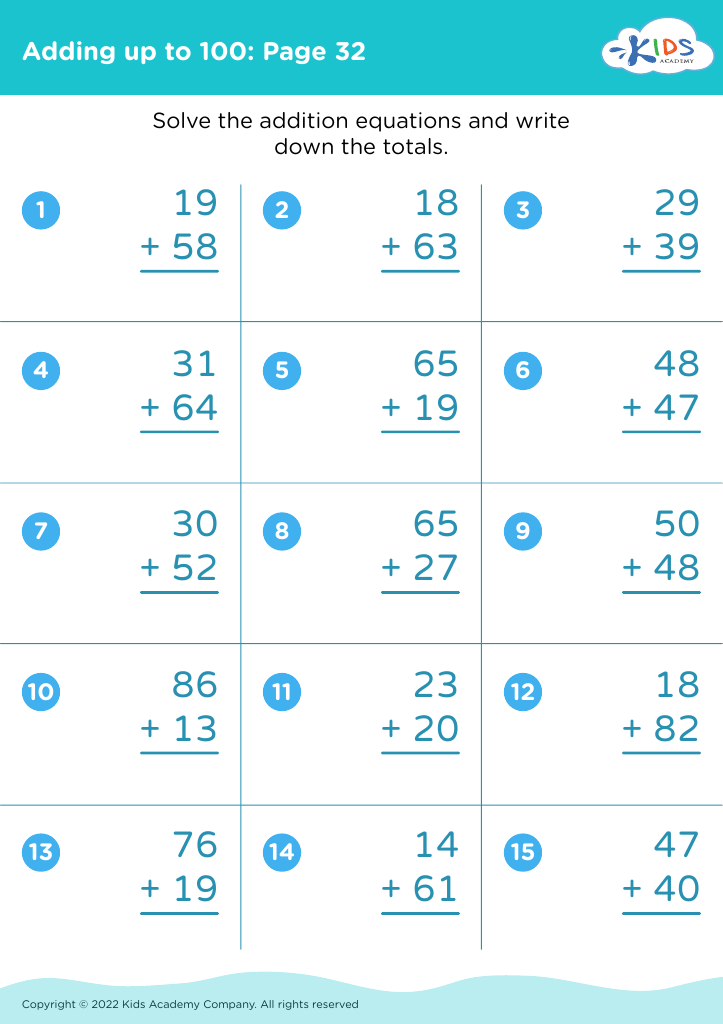
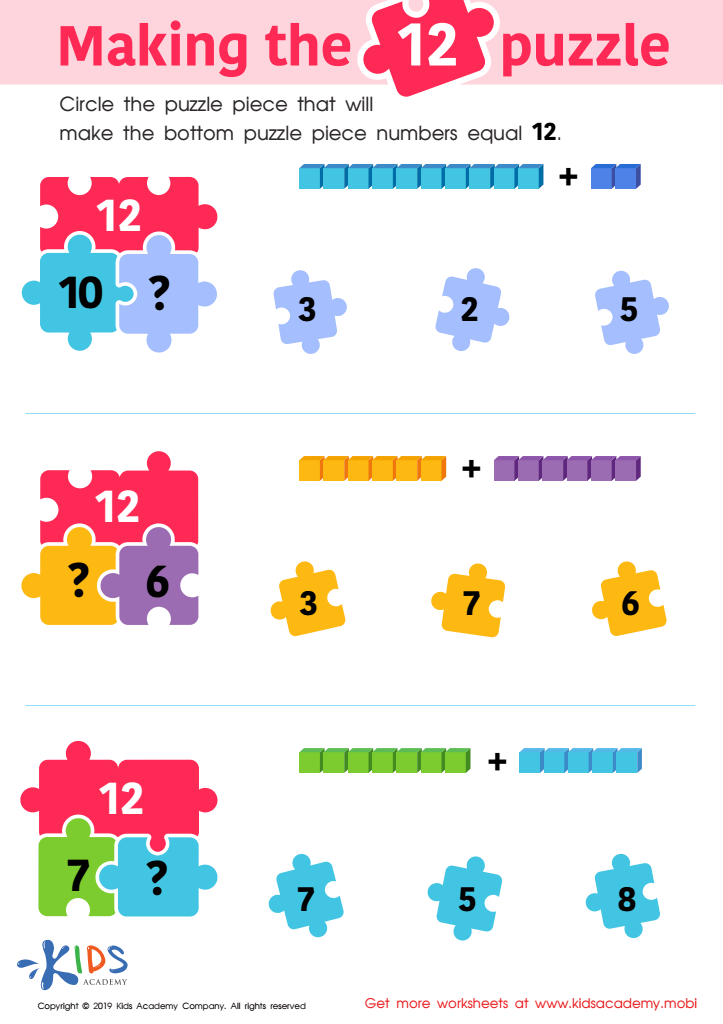
Making the 12 Puzzle Worksheet
Engage preschoolers in learning with this fun and colorful worksheet. Ask them to look at the picture and identify the missing equation on each puzzle piece; then help them solve the problems. When all the puzzle pieces make the bottom numbers equal 12, have them circle it. This is a great way to combine learning and fun!
 Assign to My Students
Making the 12 Puzzle Worksheet
Worksheet
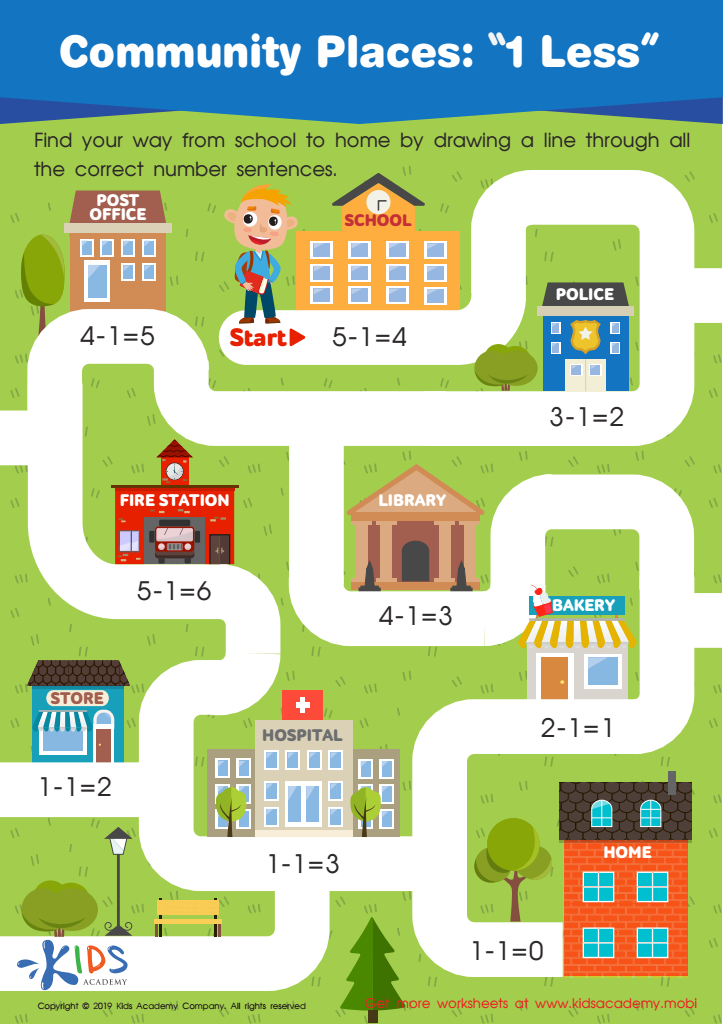
Community Places: 1 Less Worksheet
Have your kindergarteners draw a line through the correct number sentences as they find their way home from school. Ask them to identify the people, places, and buildings in their community and the jobs they do.
Community Places: 1 Less Worksheet
Worksheet
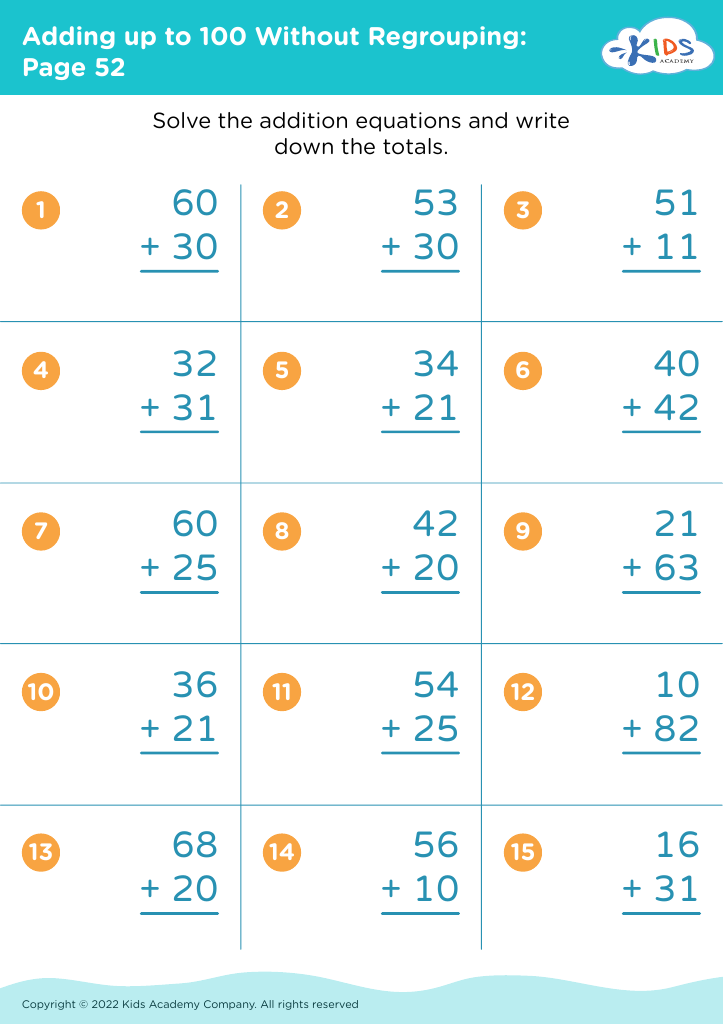
Join Kids Academy for Free
Who is primarily going to use this learning content?




.jpg)



Numeracy skills, especially addition, form the cornerstone of mathematical understanding for children aged 6-9 and are crucial for several reasons. First, mastering addition facilitates everyday practical tasks, such as counting money, telling time, and measuring ingredients while cooking. These real-life applications highlight the importance of basic arithmetic in daily activities.
Second, a strong foundation in addition sets the stage for more complex mathematical concepts, including subtraction, multiplication, division, and even problem-solving skills involving algebra and geometry. Confidence in addition builds a child's overall math confidence, reducing math anxiety and fostering a positive attitude toward learning.
Third, numeracy skills are closely linked to cognitive development. Engaging in addition exercises enhances a child’s ability to focus, improves memory, and boosts logical thinking and reasoning abilities. Early exposure to these skills helps develop critical thinking that benefits academic and life pursuits.
Lastly, today’s increasingly data-driven world often demands strong analytical and quantitative skills. Ensuring children have a solid grounding in numeracy from a young age prepares them for academic success and opens doors to career opportunities in fields such as science, technology, engineering, and mathematics (STEM).
In summary, robust addition skills provide practical benefits, facilitate higher learning, promote cognitive development, and prepare children for future success, clearly underscoring why parents and teachers should prioritize numeracy skills for ages 6-9.








