Understanding addition Addition Worksheets for Ages 6-9
8 filtered results
-
From - To
Understanding addition is a fundamental skill for young learners, and our worksheets for ages 6-9 make mastering it fun and engaging. These printable resources help children develop a solid understanding of basic arithmetic by breaking down concepts into easily digestible exercises. With colorful visuals and age-appropriate problems, students will enjoy practicing addition while enhancing their mathematical skills. Ideal for guided lessons or independent learning, these worksheets build confidence and proficiency in addition. Visit our webpage to explore a variety of addition worksheets designed to foster a love for math in children ages 6-9.
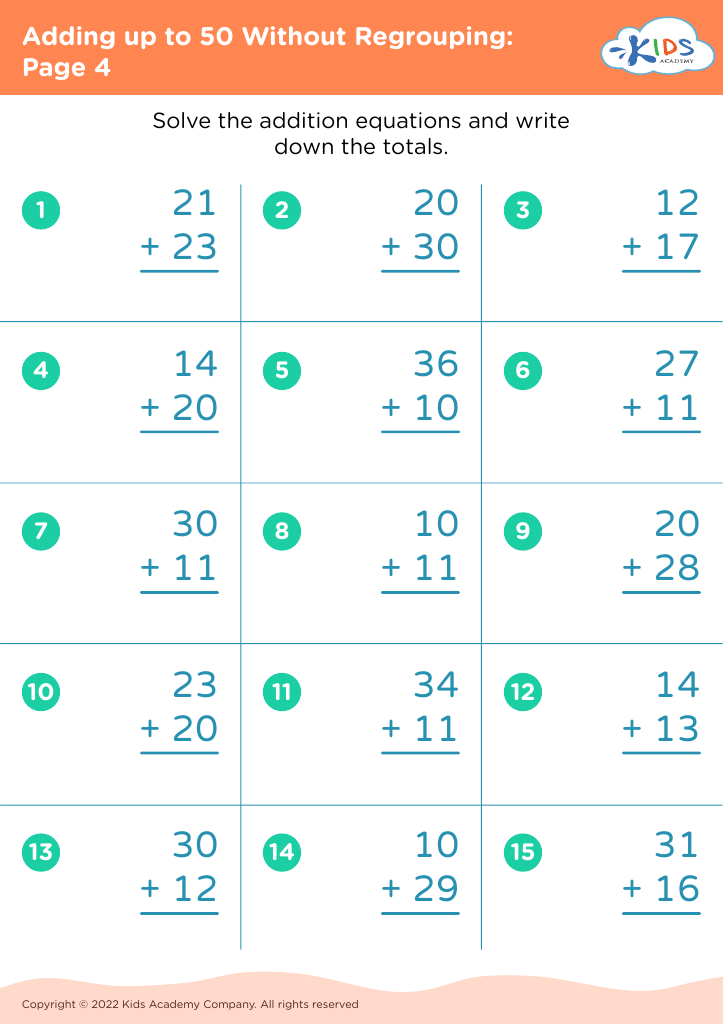
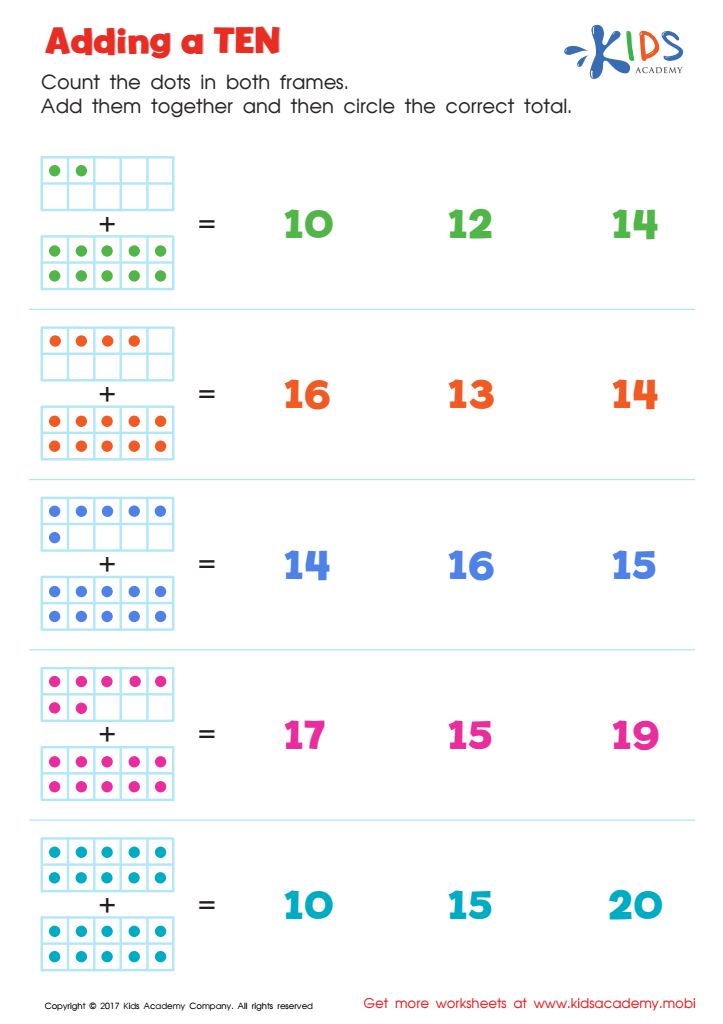
Adding a Ten Worksheet
 Assign to My Students
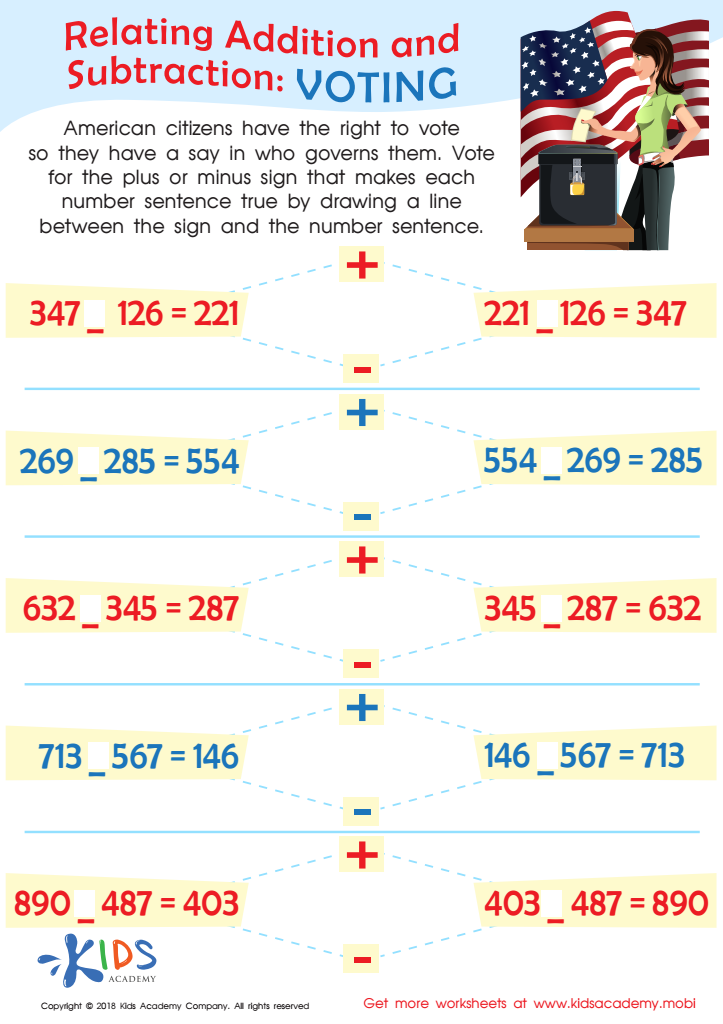
Voting Worksheet
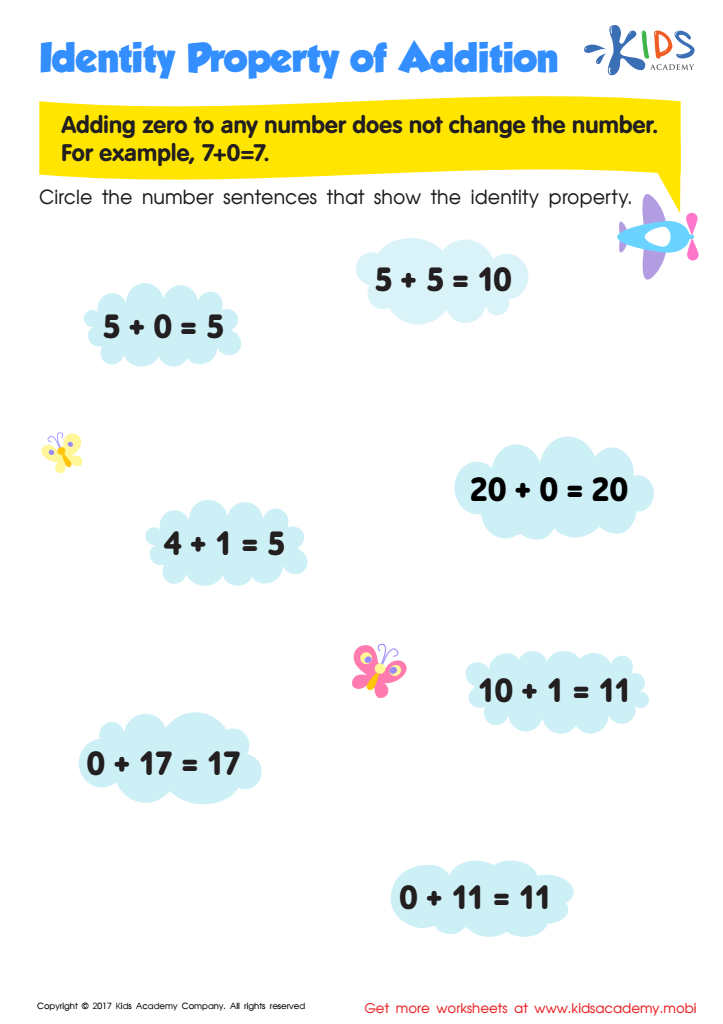
Identity Property of Addition Worksheet
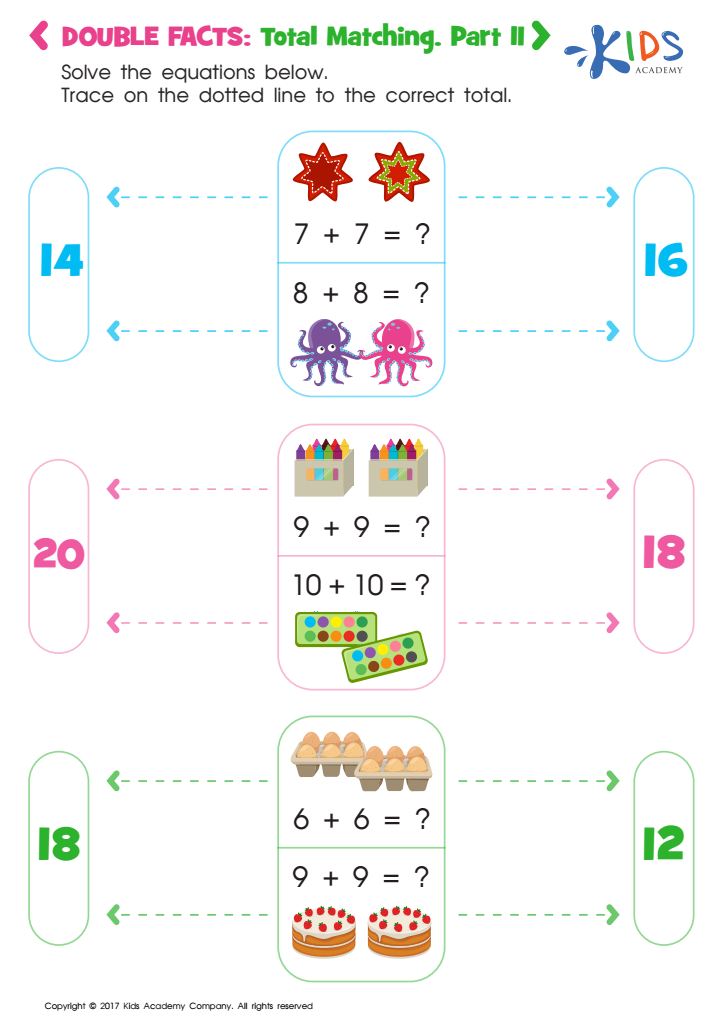
Double Facts: Total Matching 2 Worksheet






.jpg)
.jpg)
Understanding addition is crucial for children between the ages of 6 and 9 as it lays the foundational groundwork for their future mathematical learning. At this stage, kids are beginning to develop their number sense and arithmetic skills, both of which are critical for their academic progress. Addition not only helps in simple tasks like counting and combining items, but it also serves as a stepping stone to more complex mathematical concepts such as multiplication, subtraction, and eventually algebra.
For parents and teachers, fostering a solid understanding of addition can greatly boost a child's confidence in their mathematical abilities. Early success in mathematics can lead to a positive attitude towards the subject, which is important because it encourages a growth mindset. Children who see themselves as capable learners are more likely to tackle more challenging math problems with perseverance and resilience.
Activities that make learning addition enjoyable, such as using physical objects, interactive games, and visualization techniques, can significantly enhance a child's comprehension and retention. This approach also aids in developing critical problem-solving skills and logical thinking, competencies that are valuable not only in academic settings but in everyday life. Thus, investing time and resources in helping children understand addition during these formative years is essential for their long-term educational development and overall cognitive growth.








