Visual representation comprehension Addition Worksheets for Ages 6-9
5 filtered results
-
From - To
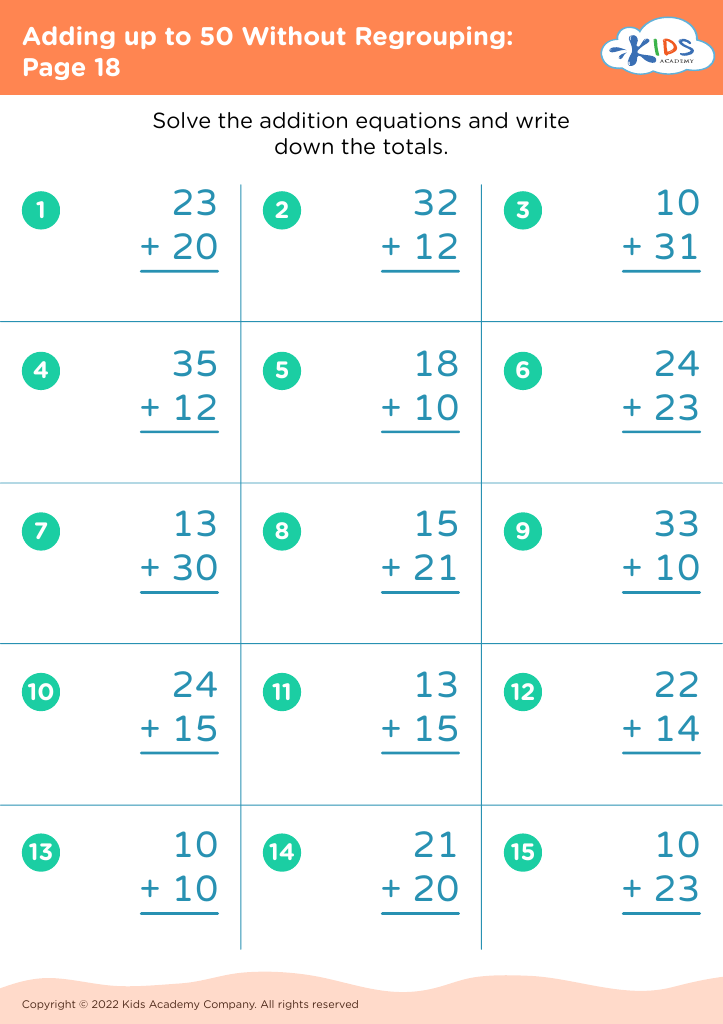
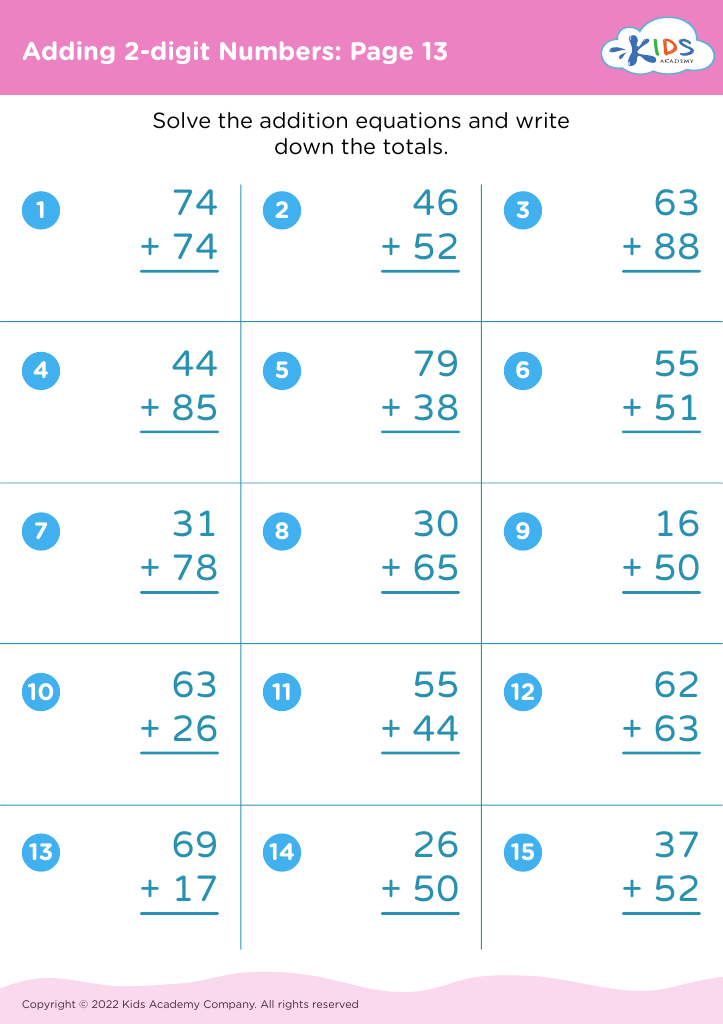
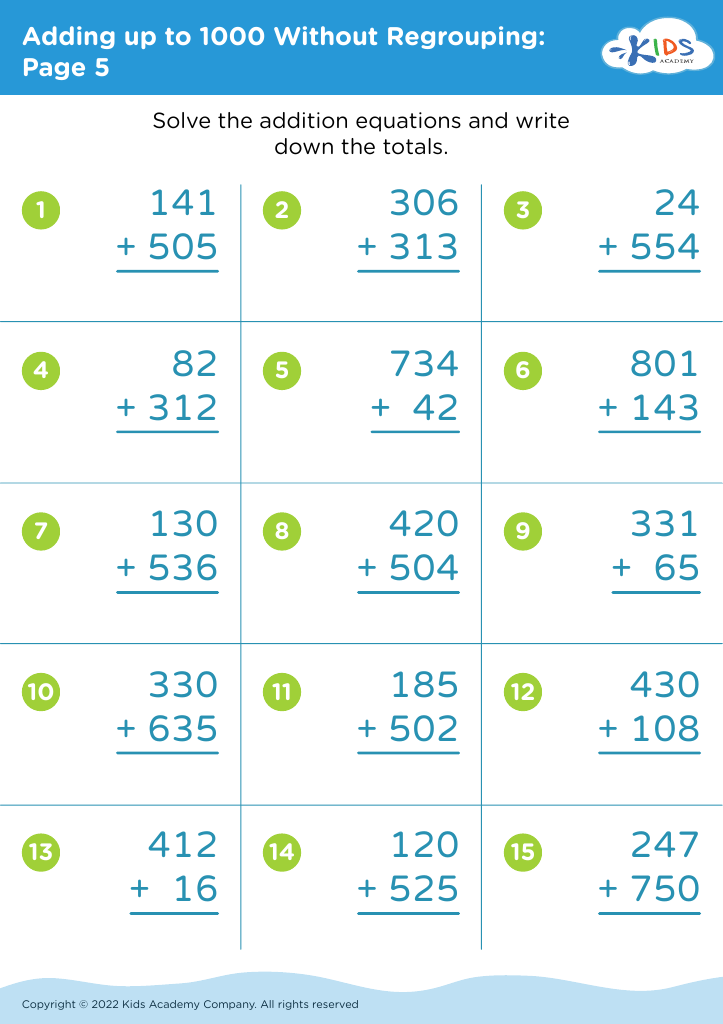
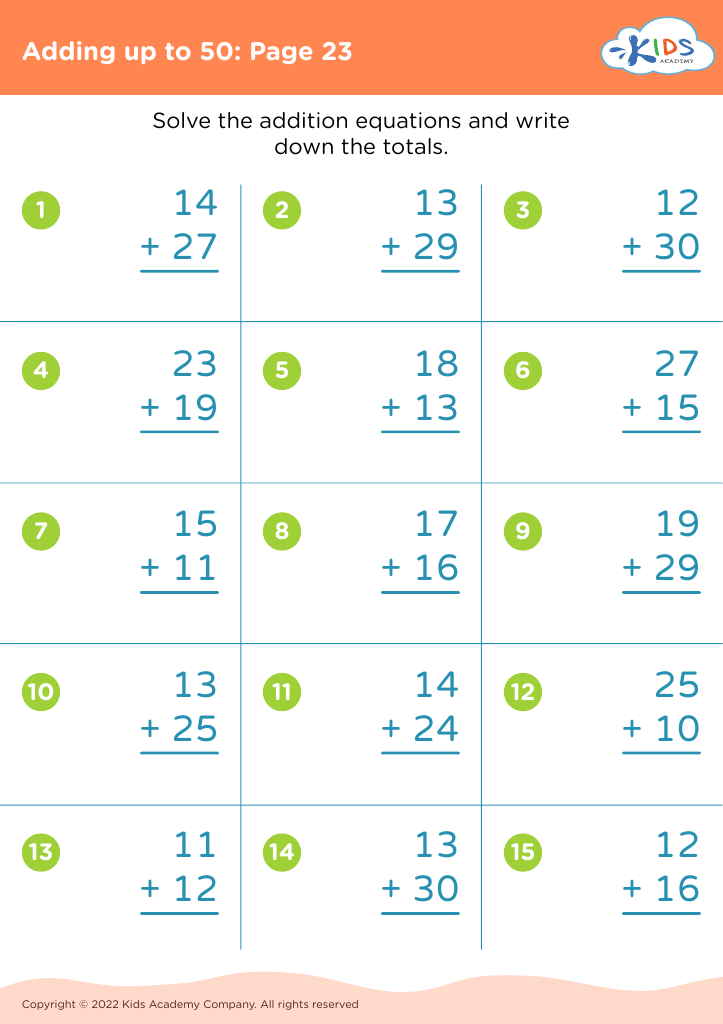
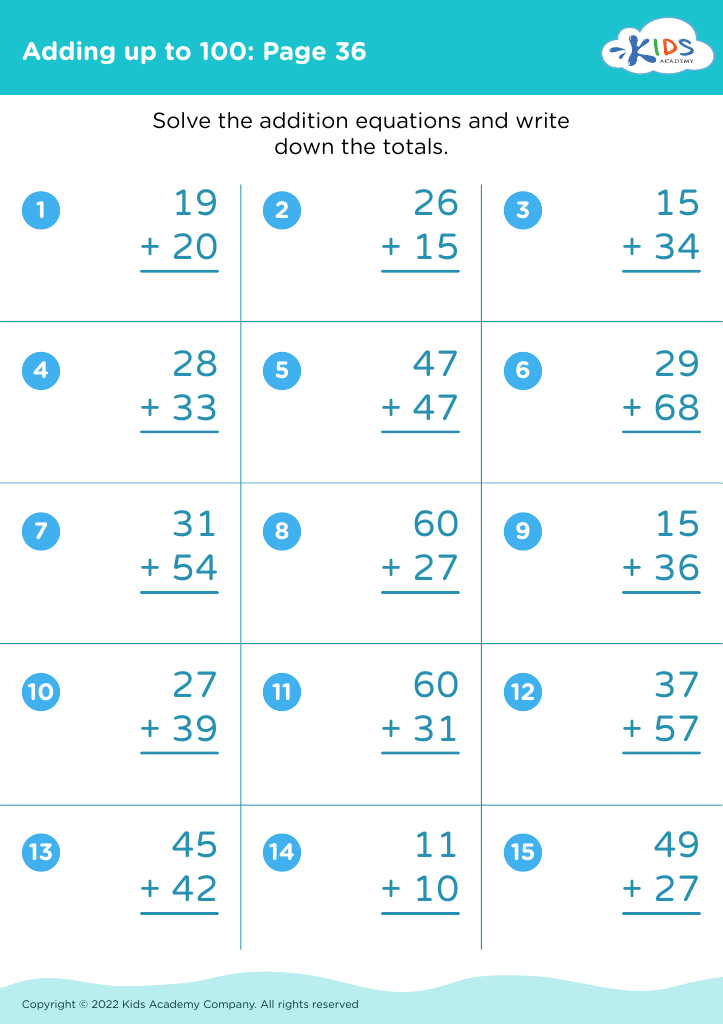
Enhance your child's math skills with our Visual Representation Comprehension Addition Worksheets, curated for ages 6-9. These engaging, colorful worksheets are designed to simplify the concept of addition through visuals, aiding children in understanding and solving problems effectively. Each worksheet incorporates fun images and interactive exercises that make learning enjoyable and intuitive. Whether it’s counting objects, identifying patterns, or solving puzzles, our resources support the development of critical thinking and problem-solving skills. Perfect for both classroom and at-home practice, these worksheets nurture a strong mathematical foundation in young learners.






.jpg)

Visual representation comprehension in addition is crucial for children aged 6-9 as it lays the foundation for a solid understanding of mathematics. At this age, kids are in their formative years of learning and cognitive development. Visual aids, such as number lines, ten frames, and manipulatives like counters or base ten blocks, provide concrete examples that can help children grasp abstract concepts.
Understanding addition through visuals helps learners make connections between numbers and real-world scenarios, making math less intimidating and more relatable. For instance, seeing a group of 3 apples added to 2 more apples visually demonstrates the concept of addition better than numbers alone. This approach caters to different learning styles, particularly for visual learners who might struggle with text-based or auditory instructions.
Moreover, early proficiency in addition builds mathematical confidence and encourages a positive attitude towards learning. When children can visualize math problems, they are better equipped to solve them, leading to increased problem-solving skills and higher academic achievement in the long run.
Teachers and parents who emphasize visual representation facilitate a deeper understanding, ensuring that students not only memorize arithmetic facts but also comprehend underlying principles, thus establishing a robust foundation for future math education.








