Counting skills Money Worksheets for Ages 6-9
5 filtered results
-
From - To
Enhance your child's money counting skills with our engaging Money Worksheets for Ages 6-9, spanning basic to advanced competencies. These expertly designed worksheets help young learners identify and count coins and bills, ensuring they understand the value of different denominations. Aligned with educational standards, these resources support the development of critical thinking and everyday math skills. Interactive exercises and colorful graphics make learning fun, while gradual progression fosters confidence in handling money. Perfect for classroom use or at-home practice, our worksheets empower children with essential life skills in a playful and effective manner. Start your child’s financial literacy journey today!
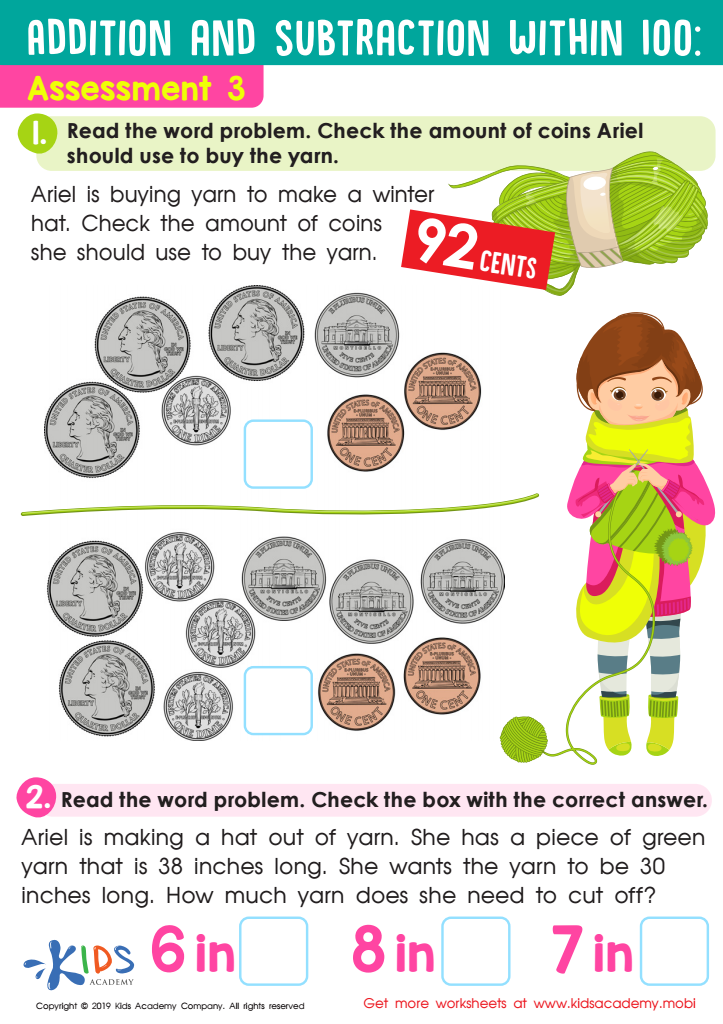
Assessment 3 Math Worksheet
 Assign to My Students
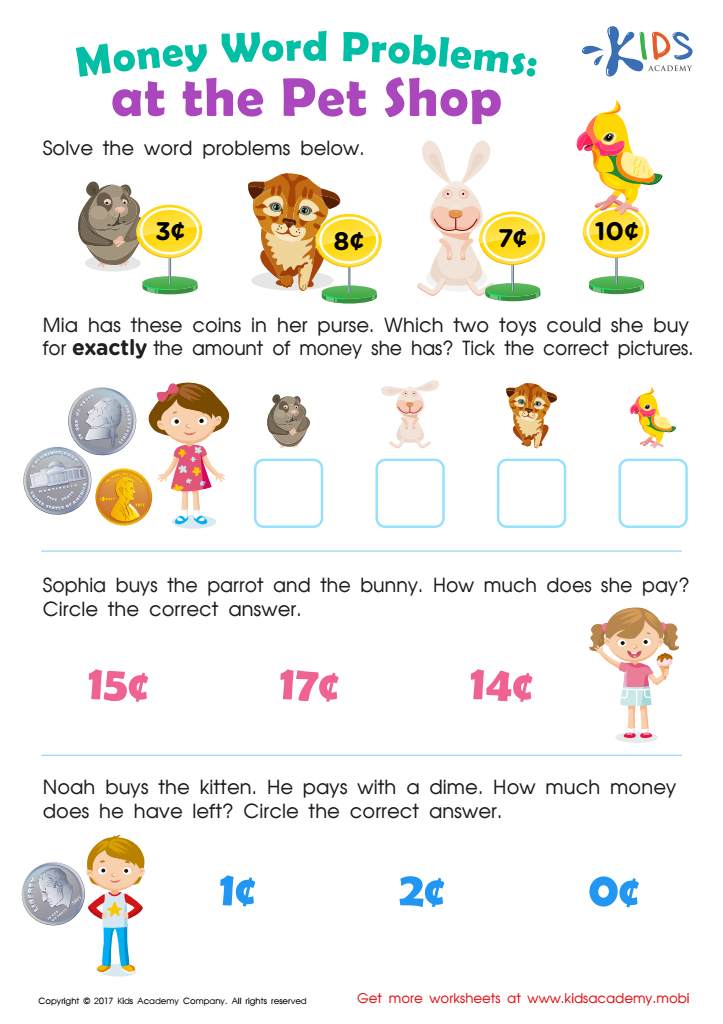
Pet Shop Worksheet
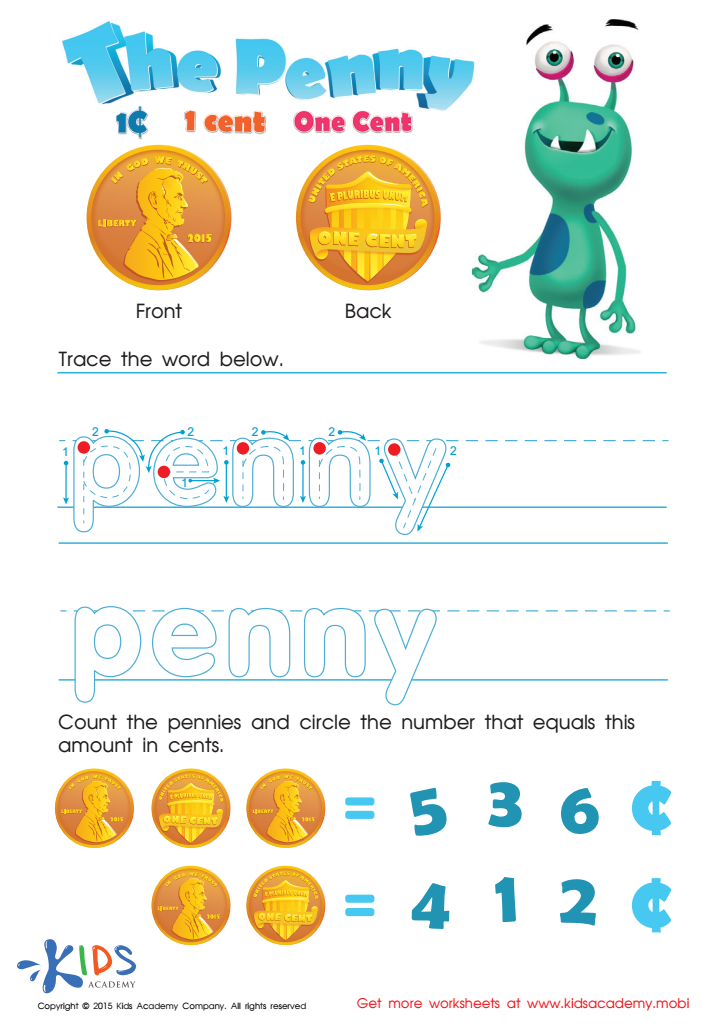
One Cent or the Penny Money Worksheet
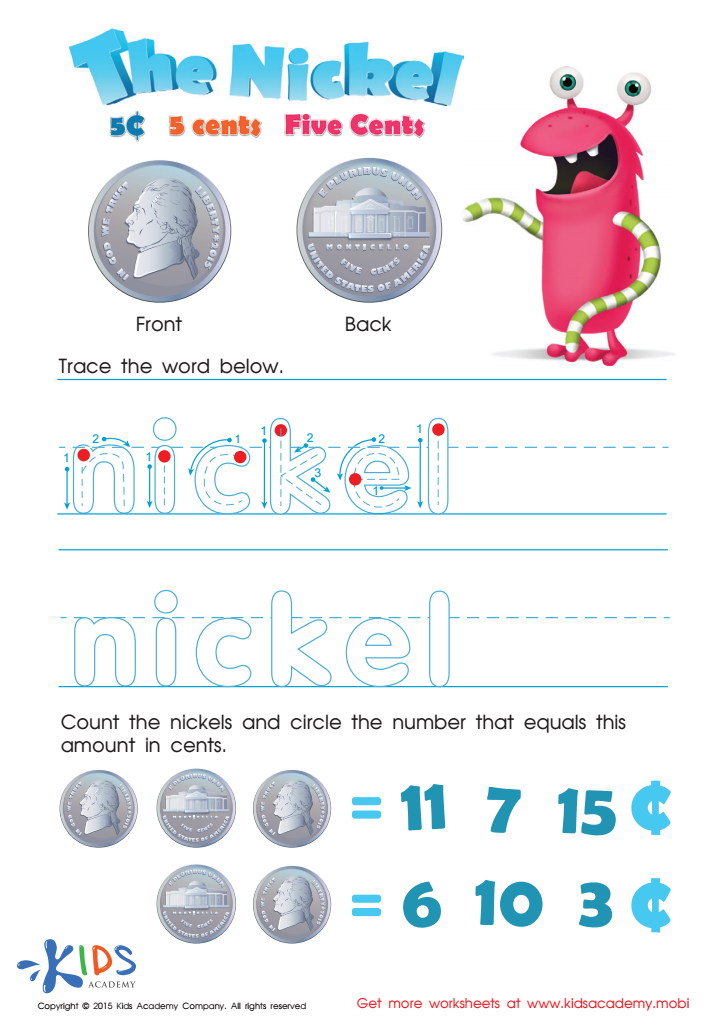
Five Cents or the Nickel Money Worksheet
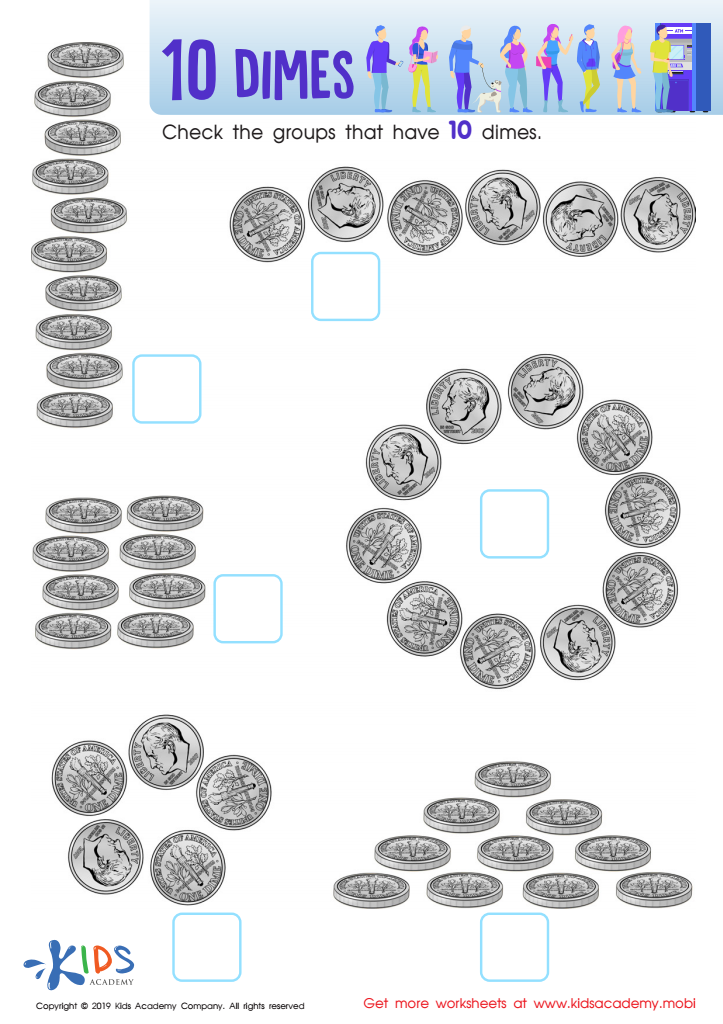
10 Dimes Worksheet








Counting skills and understanding money are crucial for children aged 6-9 as these foundational competencies underpin both everyday life and advanced learning. At this age, children begin grasping basic mathematical concepts, and linking these skills to something tangible, like money, makes learning engaging and practical.
First, learning to count money helps solidify basic arithmetic operations such as addition, subtraction, multiplication, and division. Kids practice counting by ones, fives, tens, etc., through handling coins and notes, which enriches their understanding of number values, equivalence, and sums.
Second, understanding money fosters financial literacy at an early age, an essential life skill. By learning the different denominations and their worth, children begin to appreciate the value of saving and spending, setting the groundwork for smart financial habits and responsibility in adulthood.
Additionally, counting skills and money help develop critical thinking and problem-solving abilities. For example, children learn to find multiple ways to make a certain amount, encouraging flexibility in thinking.
Lastly, involving children in activities that require them to count and handle money enhances cognitive skills such as memory and concentration. Investing time in teaching these skills opens doors to real-world math applications, boosting confidence and a more profound love for learning.
Thus, parents and teachers should prioritize counting skills and money use, as they provide essential building blocks for future academic and life success.








