Fraction visualization Fractions of Shapes Worksheets for Ages 6-9
5 filtered results
Difficulty Level
Grade
Age
-
From - To
Subject
Activity
Standards
Our Fraction Visualization Fractions of Shapes worksheets for ages 6-9 turn learning into a fun, interactive experience. Designed to teach young learners the concept of fractions, these engaging worksheets use vibrant shapes and visuals to help children grasp how fractions divide a whole into equal parts. By coloring and dividing geometric shapes, kids build essential math skills and develop a strong understanding of fractions. Ideal for both classroom and home use, these worksheets are perfect for enhancing your child’s confidence and proficiency in math through practical, hands-on activities. Transform math learning into an adventure with our expertly crafted worksheets!
Favorites
With answer key
Interactive
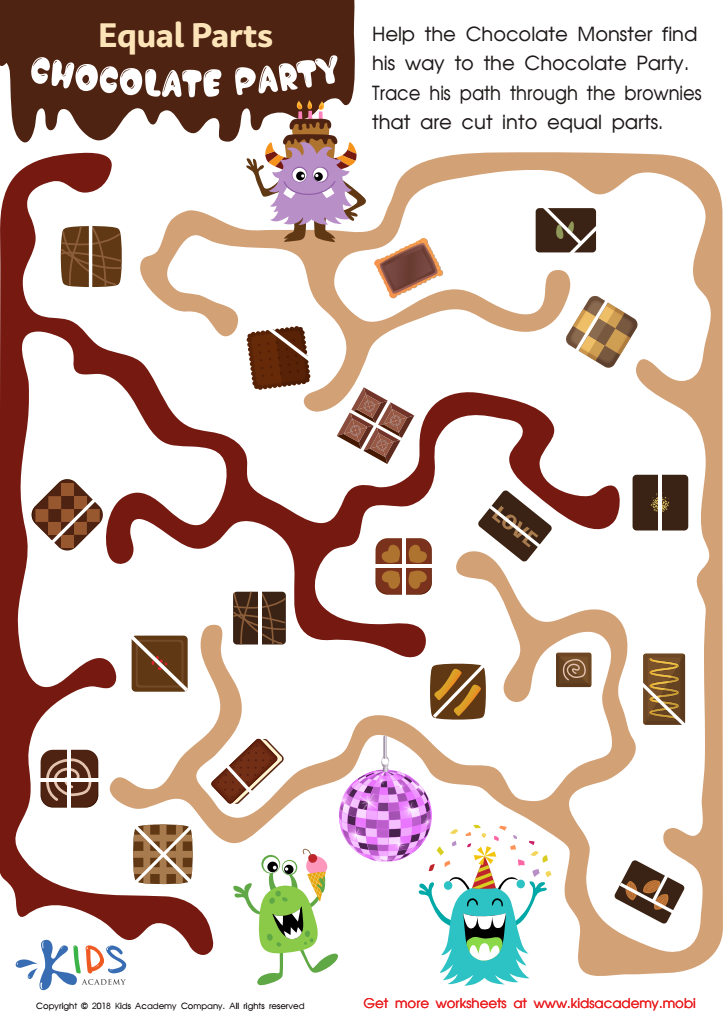
Equal Parts: Chocolate Party Worksheet
Mention "chocolate" and watch your kids' excitement soar! Learning can go hand-in-hand with that sugary treat. This worksheet helps kids guide the Chocolate Monster to the Chocolate Party, following a trail of brownie halves. It's an easy, tasty way to have fun!
 Assign to My Students
Equal Parts: Chocolate Party Worksheet
Worksheet
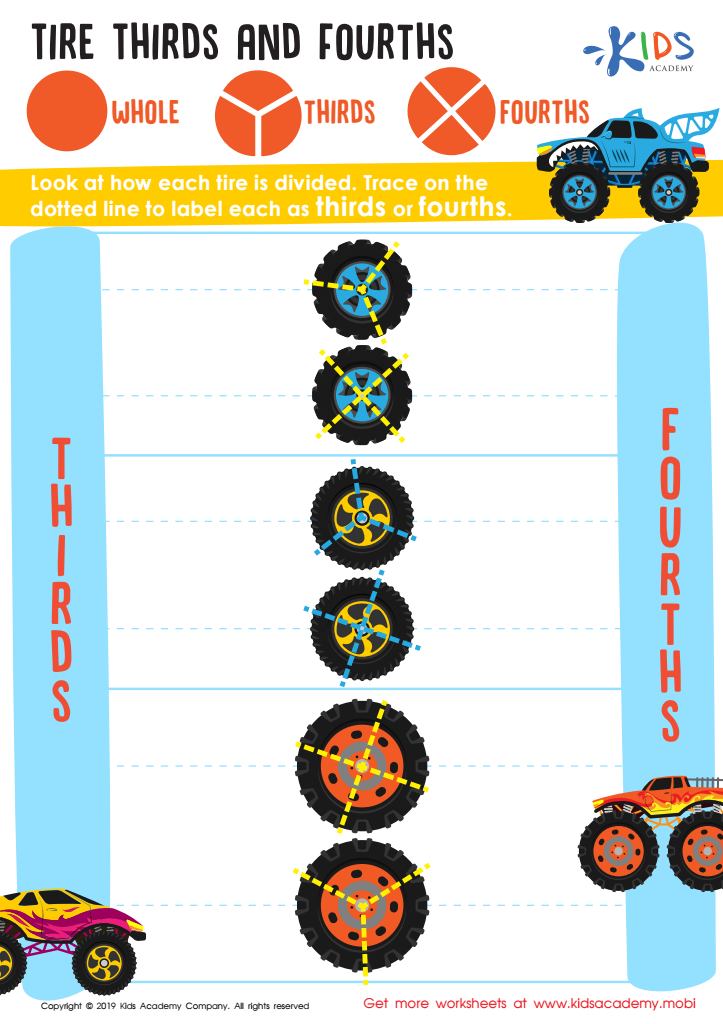
Tire Thirds and Fourths Worksheet
Learning geometry is key in your child's education. Have them identify and name shapes cut into 2, 3 and 4 parts. Test their knowledge with this worksheet - trace the dotted line to label each as third or fourth. Encourage them to keep learning!
Tire Thirds and Fourths Worksheet
Worksheet
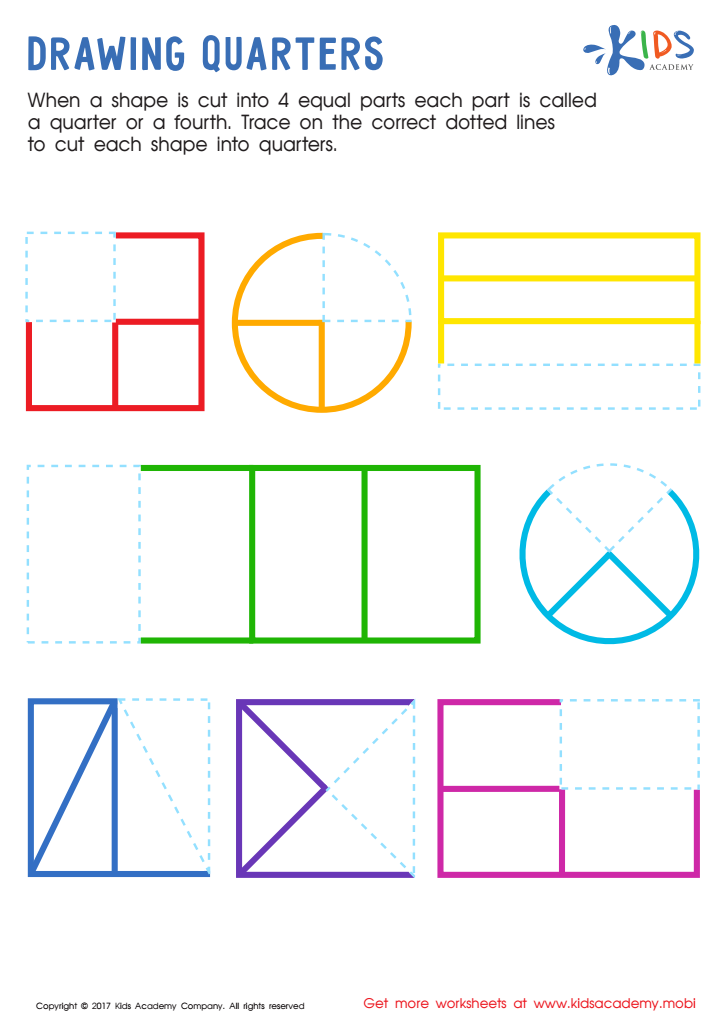
Drawing Quarters Worksheet
Help your kids divide shapes into quarters! Have them trace dotted lines to cut each shape into 4 equal parts. Each of the 4 parts is called a quarter or a fourth. This worksheet will help kids learn more about dividing shapes into four equal parts.
Drawing Quarters Worksheet
Worksheet
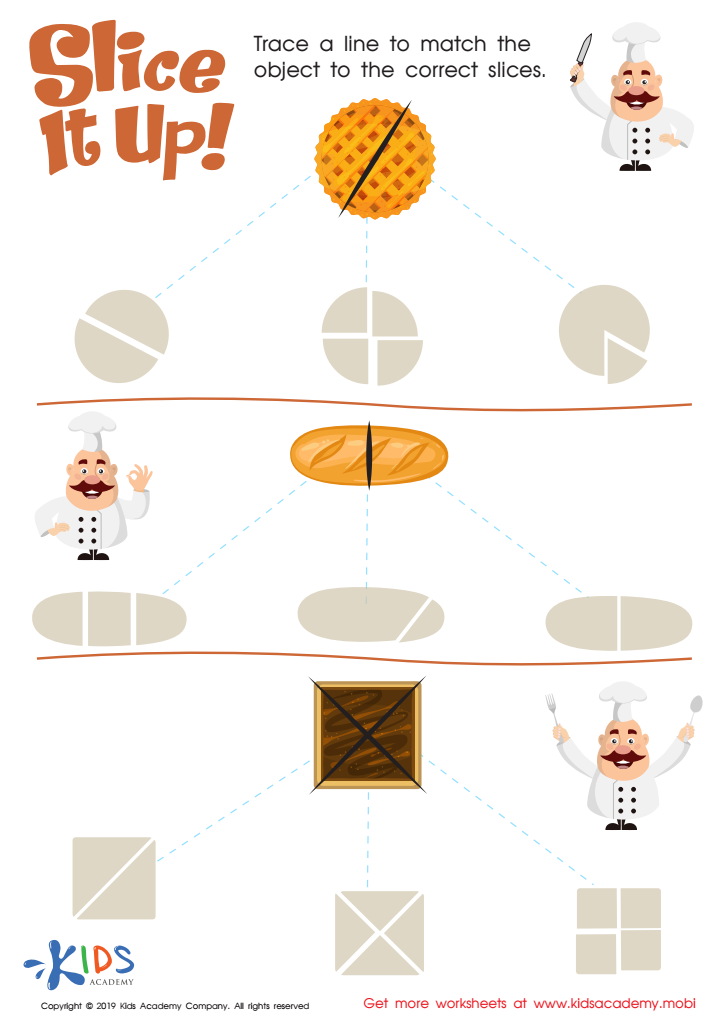
Slice It Up Worksheet
Try this fun math, reading and writing worksheet with your kids! They will love the colorful activities that perfect coordination and tracing. Engaging learning exercises help keep young minds sharp and boost skills. With these worksheets, your kids will be academically ahead of the curve!
Slice It Up Worksheet
Worksheet
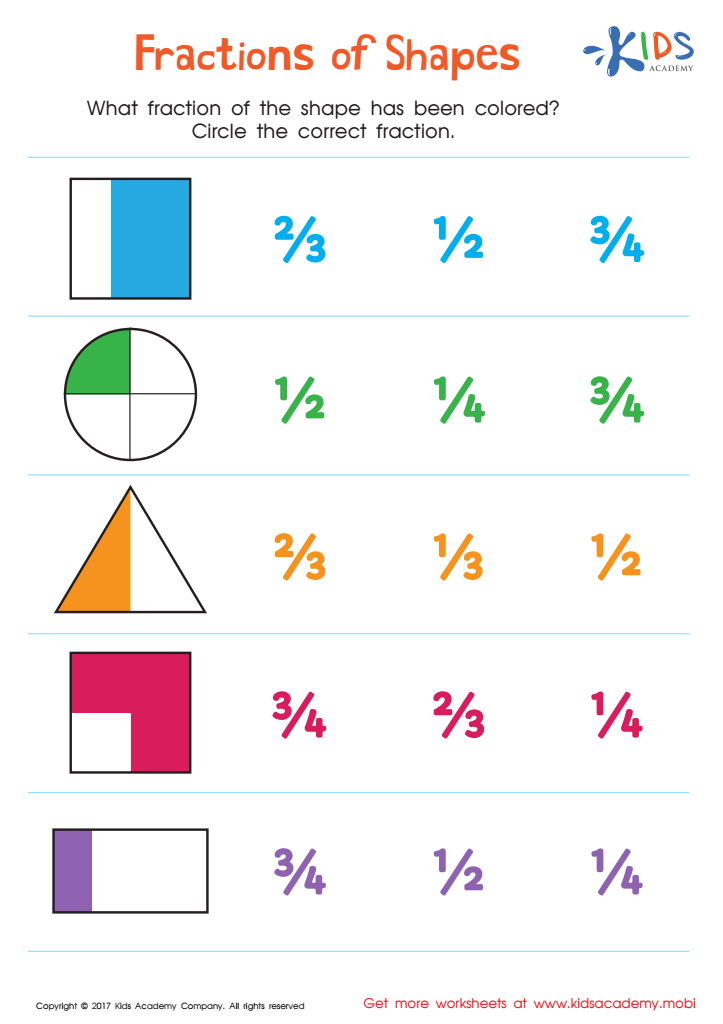
Fractions of Shapes: Math Concept Worksheet
Fractions can be tricky, but with pictures to illustrate them, they become much easier to understand. Our fractions of shapes worksheet is a great way to help children visualize fractions and gain a better understanding of them.
Fractions of Shapes: Math Concept Worksheet
Worksheet
Join Kids Academy for Free
Who is primarily going to use this learning content?








Fractions can be a challenging concept for young children, but fraction visualization using shapes is a highly effective way to make this subject more accessible. For learners aged 6-9, visual representations such as dividing a circle into halves or a rectangle into quarters make abstract ideas concrete. These visual aids help children better understand the concept of fractions as parts of a whole.
Parents and teachers should prioritize fraction visualization because it fosters deeper conceptual understanding. Instead of simply memorizing terms like "one-half" or "three-quarters," children see how these fractions appear in everyday objects, which reinforces learning through contextual clues.
Additionally, visual fraction exercises enhance critical thinking and problem-solving skills. Working with shapes to visualize fractions engages multiple senses, thereby catering to various learning styles, including kinesthetic and visual learners. This multi-faceted approach ensures that children grasp fundamental mathematical concepts early on, forming a solid foundation for more complex math topics in the future.
Finally, visual fraction activities foster a positive attitude toward math by making learning interactive and fun. When children can manipulate shapes and clearly see the parts of a whole, their confidence grows, encouraging a lifelong interest in mathematics. Educators and parents have a vested interest in nurturing these skills, as they are essential for academic success.