Visual representation comprehension Geometry Worksheets for Ages 6-9
3 filtered results
-
From - To
Our Visual Representation Comprehension Geometry Worksheets for ages 6-9 are designed to make learning geometry engaging and effective. These worksheets help young learners grasp essential geometric concepts through vibrant visual aids and interactive activities. By focusing on shapes, patterns, spatial reasoning, and symmetry, children will enhance their critical thinking skills while having fun. Ideal for classroom use or home practice, our worksheets cater to various learning styles and academic levels, ensuring every child can achieve success. Trust Kids Academy to support your child's geometric understanding and build a robust foundation for future math challenges. Download our worksheets today!
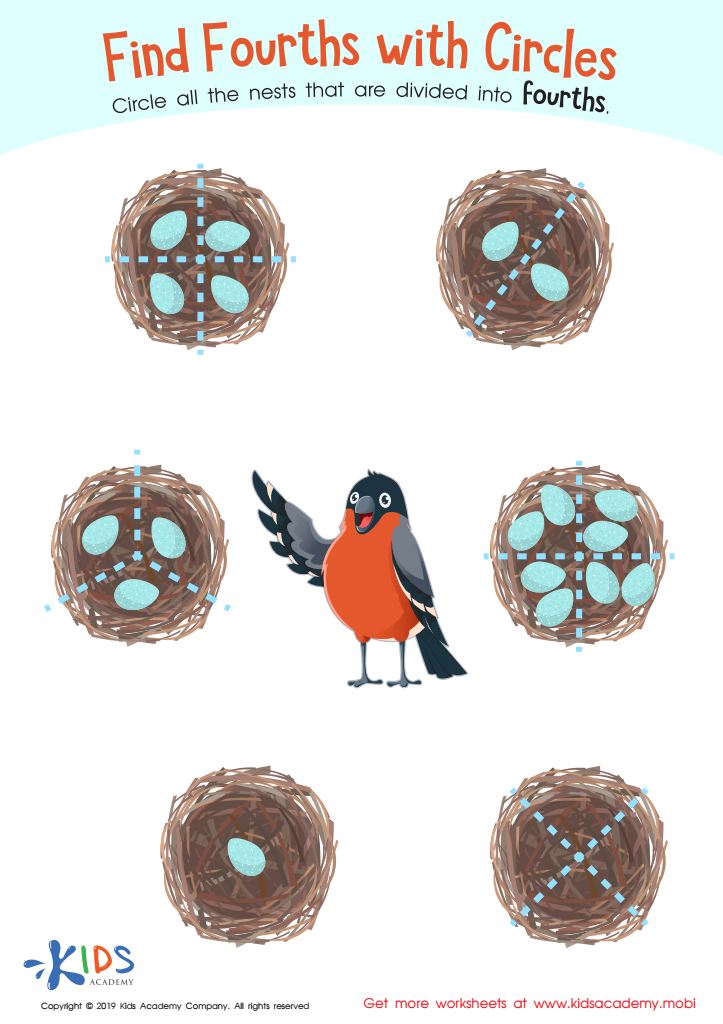
Find Fourths Circles Worksheet
 Assign to My Students











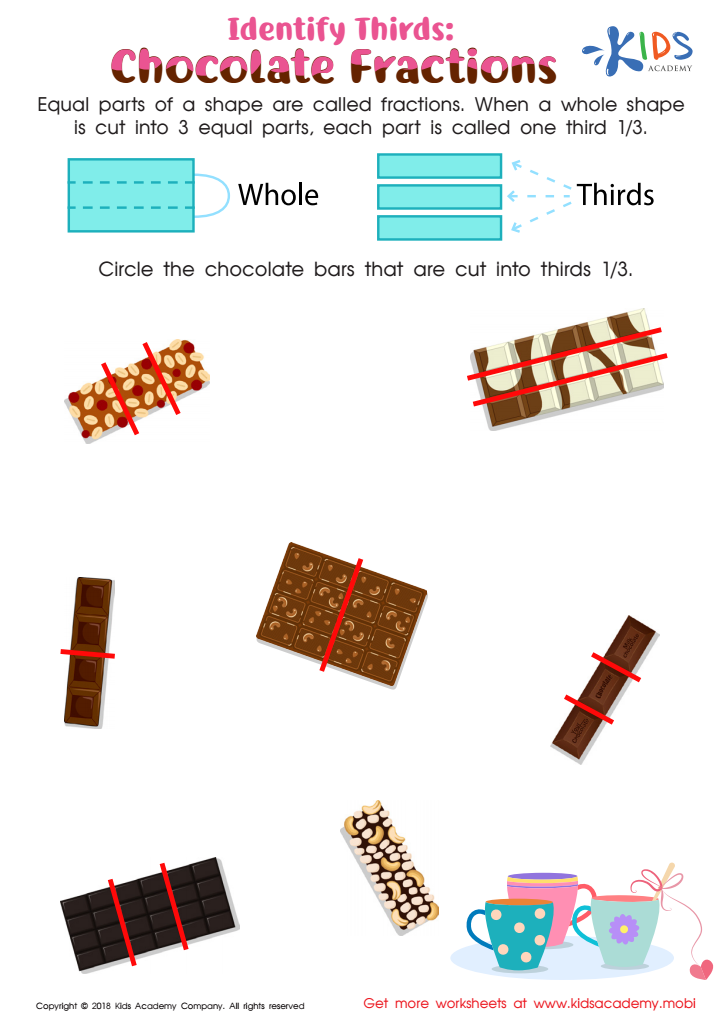
Identify Thirds: Chocolate Fractions Worksheet
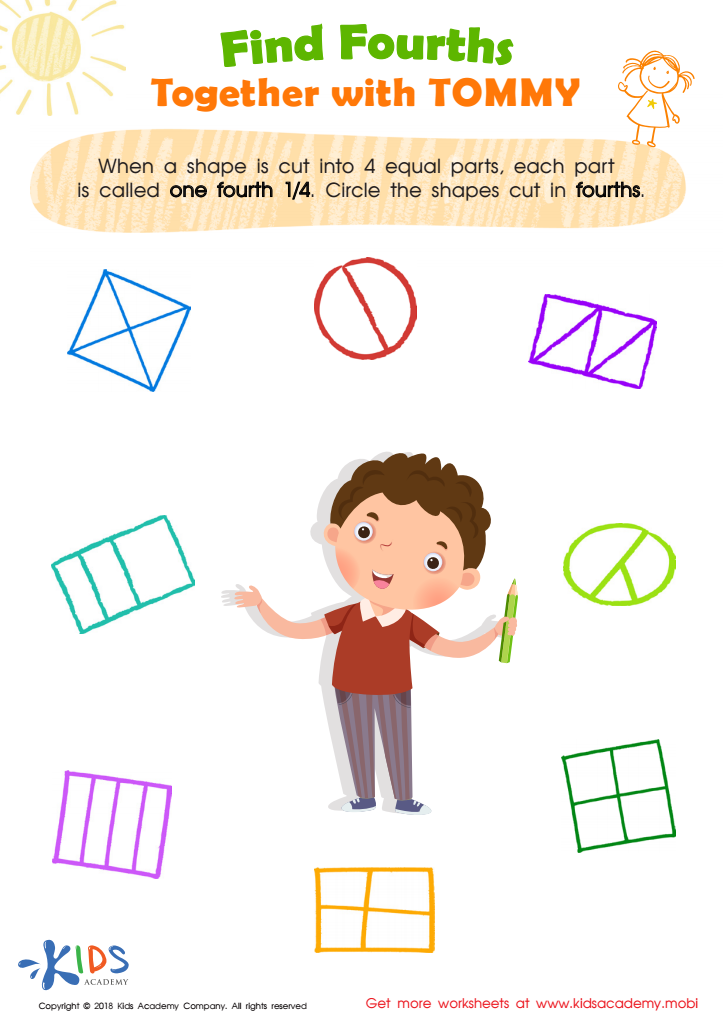
Find Fourths Together with Tommy Worksheet








Parents and teachers should prioritize visual representation comprehension in geometry for children ages 6-9 because it builds a critical foundation for future learning and cognitive development. At this stage, children are typically passing through the concrete operational phase, as described by Piaget, wherein they start developing logical thinking skills. Geometry, with its emphasis on shapes, sizes, patterns, and spatial relationships, enhances their ability to understand and organize visual information.
Visual representation in geometry entails interpreting shapes, spatial concepts, and patterns, which translates well into everyday problem-solving skills. This builds on children's inherent curiosity and helps improve their spatial awareness, which is indispensable in fields like science, technology, engineering, arts, and mathematics (STEAM).
Moreover, a strong grasp of geometric concepts nurtures fine motor skills when they draw, build, or manipulate objects, fostering coordination and precision. Mathematics, as a discipline, often becomes challenging for students due to its abstract nature, but geometry provides a tangible, relatable gateway that makes it easier to grasp complex abstract concepts later on.
Adequate exposure to geometry through visually engaging means—like puzzles, building blocks, and drawing—empowers kids with lifelong skills such as critical thinking, problem-solving, and logical reasoning, setting a solid academic foundation and enhancing their overall intellectual and emotional growth.








