Analyzing data Graphs Worksheets for Ages 6-9
5 filtered results
-
From - To
Unlock the power of data analysis with our engaging "Analyzing Data Graphs Worksheets" designed specifically for ages 6-9! These worksheets make learning fun as young learners explore various types of graphs, including pictographs and bar graphs. With vibrant illustrations and easy-to-follow questions, children will develop critical thinking and mathematical skills while interpreting data. These activities promote problem-solving, enhance logical reasoning, and foster a love for math at an early age. Perfect for classroom use or homeschooling, our worksheets are a fantastic resource to help children confidently navigate the world of data. Start your journey into data analysis today!
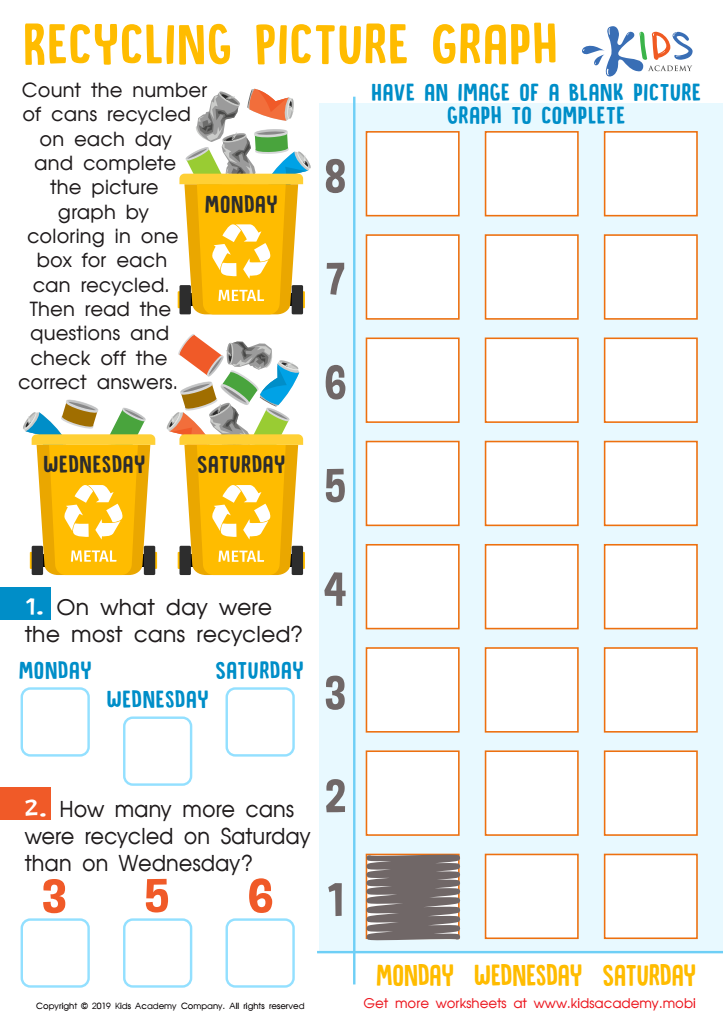
Recycling Picture Graph Worksheet
 Assign to My Students
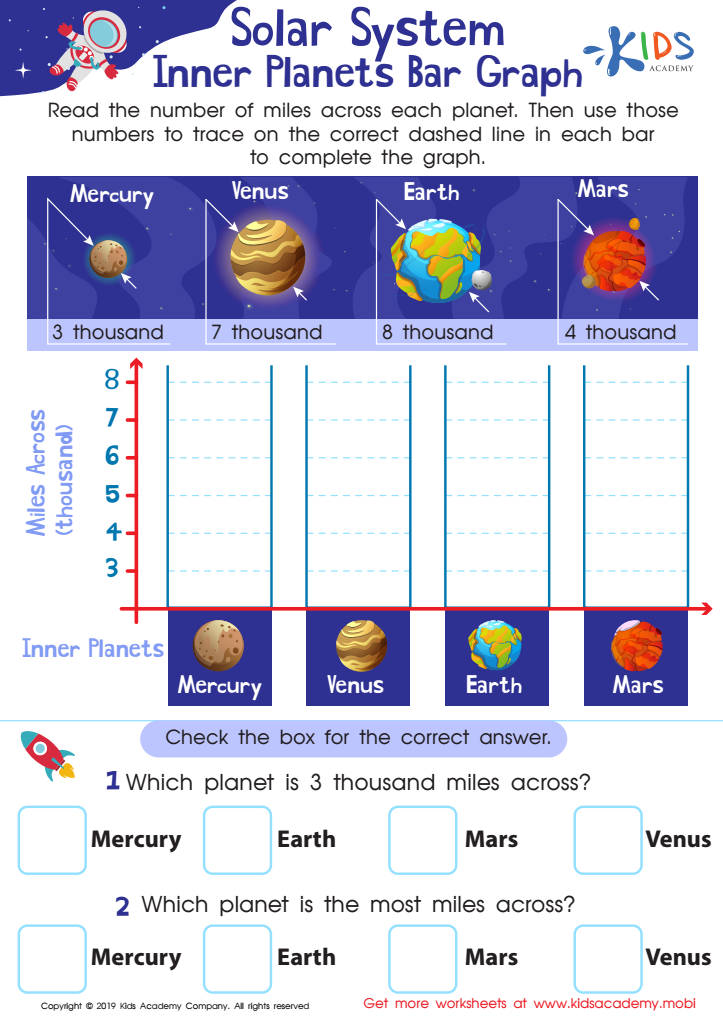
Planets Bar Graph Worksheet
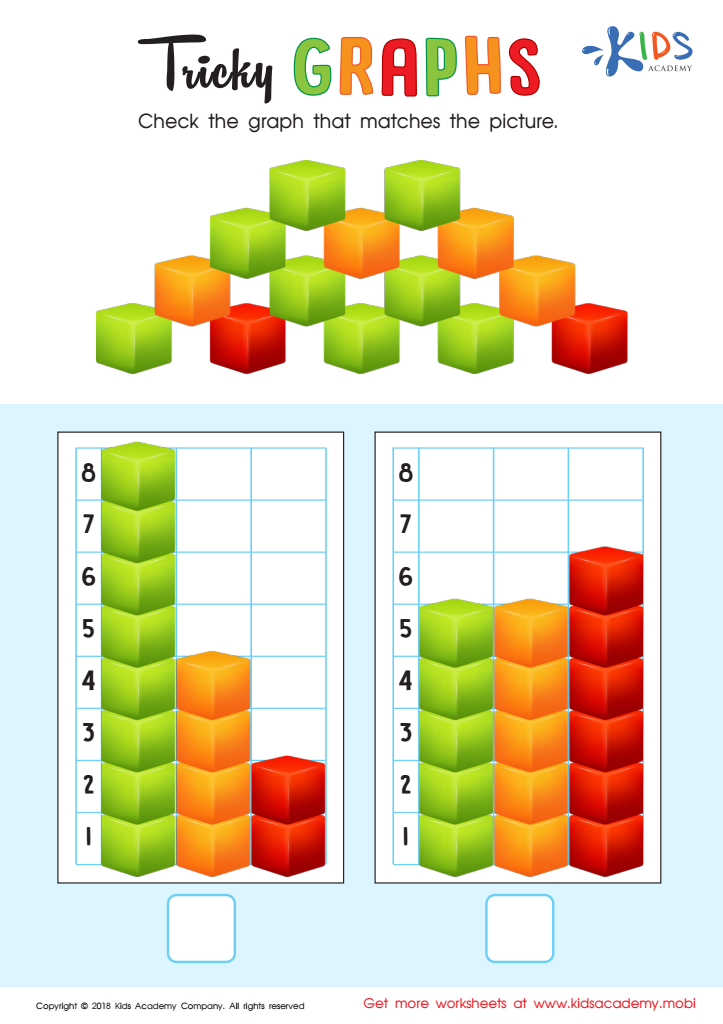
Tricky Graphs Worksheet
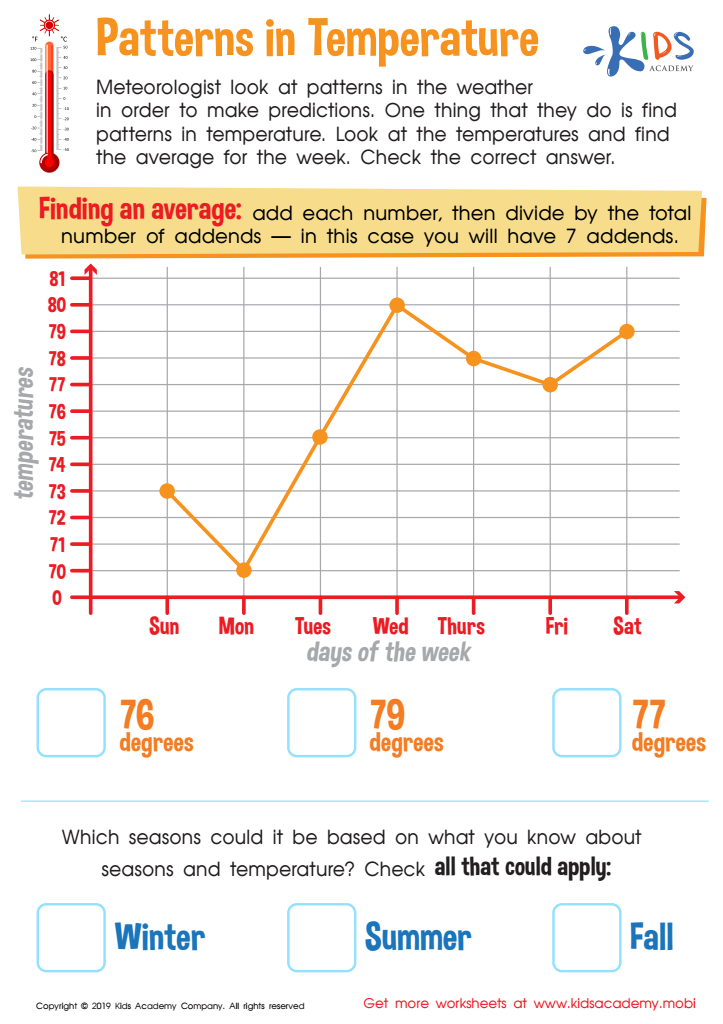
Patterns in Temperature Worksheet
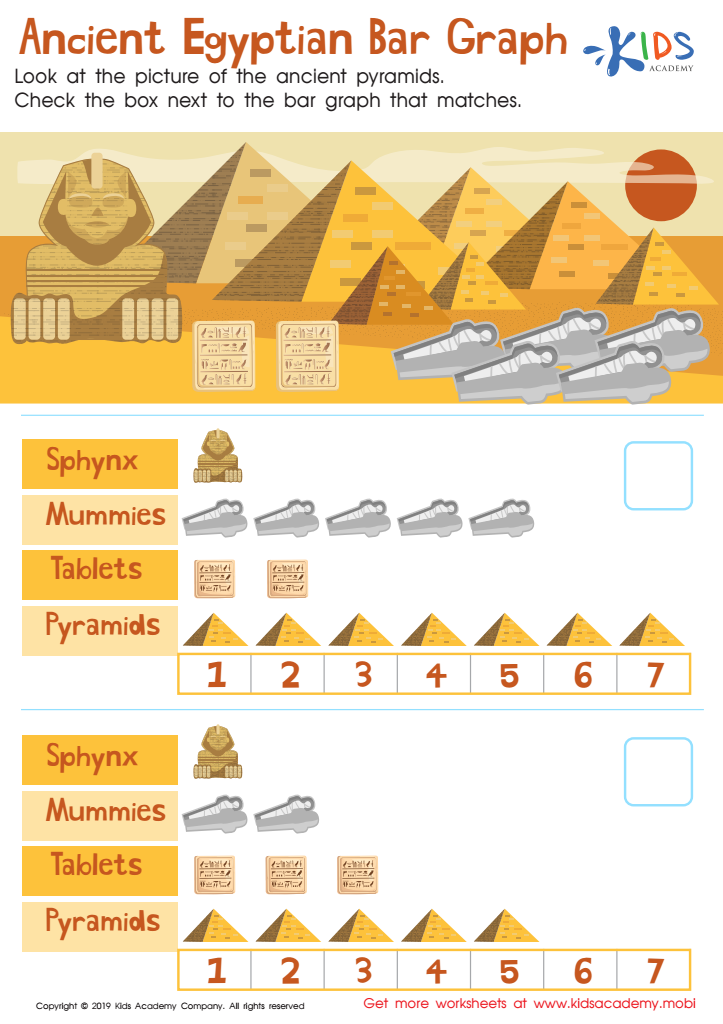
Egyptian Bar Graph Worksheet








Analyzing data graphs is a crucial skill for children aged 6-9, and it's important for parents and teachers to recognize its significance. At this developmental stage, children are naturally curious and eager to explore information. Graphs provide a visual representation of data, making it easier for young learners to understand concepts like comparisons, trends, and relationships. By engaging with graphs, children develop critical thinking and analytical skills that form the foundation for mathematical reasoning.
Understanding data graphs promotes numeracy and literacy, enabling students to interpret information and make informed decisions based on evidence presented visually. This skill enhances their ability to engage with everyday situations—such as understanding weather forecasts or interpreting sports statistics. Additionally, working with graphs fosters collaboration and communication as students often discuss their findings with peers.
For parents and teachers, emphasizing the importance of data analysis cultivates a growth mindset in children. It encourages curiosity and inquiry, allowing them to ask questions and seek answers through exploration. Ultimately, by caring about and supporting these skills, educators and families empower children to become confident problem-solvers, equipping them for future academic success and informed citizenship.








