
Fine motor development Numbers Worksheets for Ages 6-9
3 filtered results
Difficulty Level
Grade
Age
-
From - To
Subject
Activity
Standards
Enhance your child's fine motor skills with our engaging Numbers Worksheets designed for ages 6-9. These interactive worksheets combine number recognition and writing exercises, making learning both fun and effective. As children trace and count, they develop essential hand-eye coordination and dexterity. Each worksheet encourages practice in forming numbers correctly, fostering the confidence they need in their math abilities. Perfect for early graders, our resources align with educational standards and support a hands-on approach to learning. Explore our collection today and watch your child thrive as they master numbers while improving fine motor skills!
Favorites
With answer key
Interactive
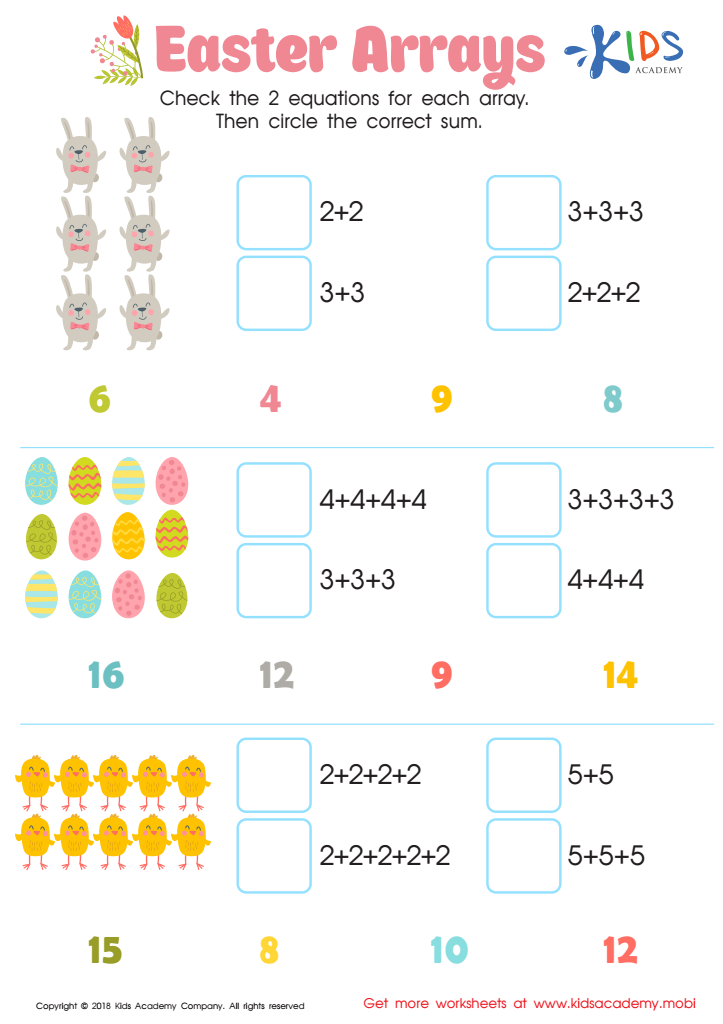
Easter Arrays Worksheet
Does your child love Easter? Do they adore the Easter bunny and egg hunts? Help them have fun with this worksheet! Go through it with them and check the equations for each array. Then, have them circle the correct sum. It's a great way to make the holiday extra exciting!
 Assign to My Students
Easter Arrays Worksheet
Worksheet
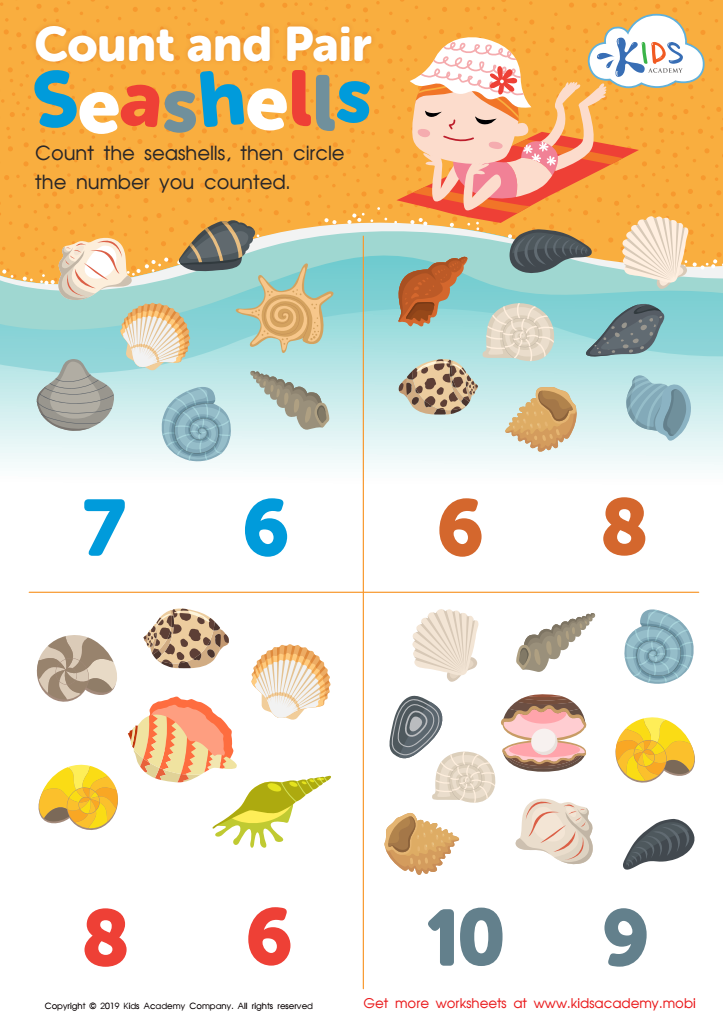
Count and Pair Seashells Worksheet
Kids love trips to the beach. Ask them to count the shells in the four sets of seashells in this printout - then circle the correct number beneath each set. Let them recall the happy memories of the beach and make this worksheet fun.
Count and Pair Seashells Worksheet
Worksheet
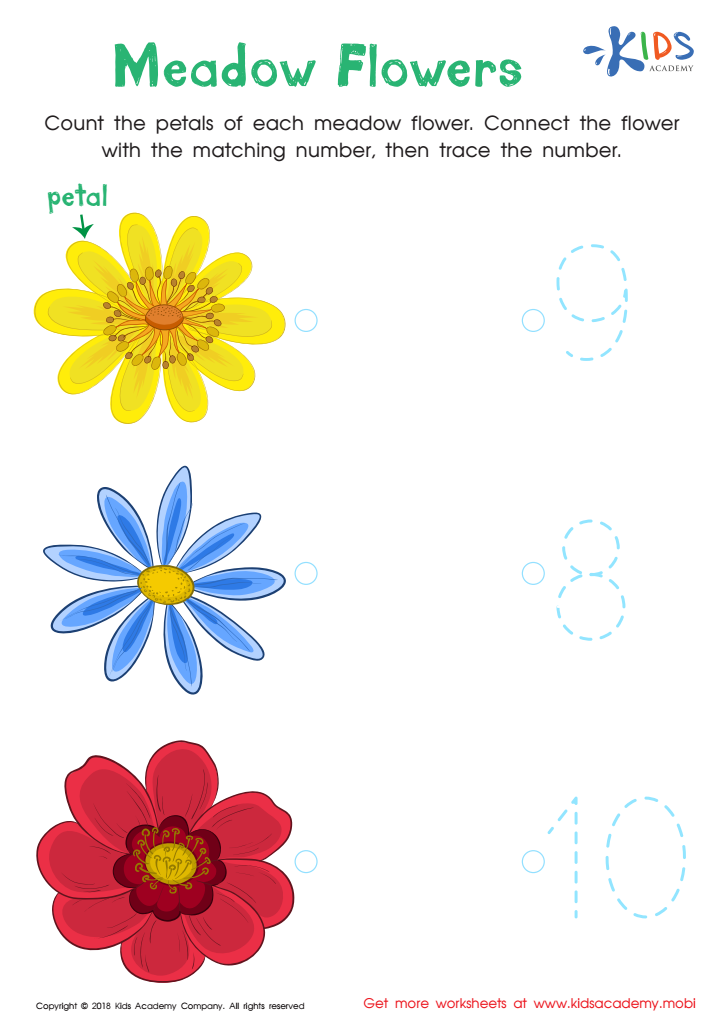
Kindergarten Number Tracing: Medow Flowers Worksheet
Take your child to the garden to count flower petals and trace numbers with this fun kindergarten PDF worksheet. They'll learn to count and write, all while enjoying the sweet scent of the flowers.
Kindergarten Number Tracing: Medow Flowers Worksheet
Worksheet
Join Kids Academy for Free
Who is primarily going to use this learning content?



.jpg)




Fine motor development plays a crucial role in the academic and daily functioning of children aged 6-9. This developmental stage encompasses the refinement of small muscle movements, particularly those involving the hands and fingers, which are essential for tasks such as writing, drawing, and manipulating small objects. For parents and teachers, fostering fine motor skills is vital as these abilities directly impact a child’s ability to engage effectively in classroom activities and express their learning.
As students progress through early grade levels, the curriculum increasingly demands precise motor control for activities like handwriting, cutting with scissors, and completing intricate puzzles. Insufficient fine motor skills can hinder a child's confidence and motivation to participate in these tasks, potentially leading to frustration and a negative attitude towards learning.
Moreover, strong fine motor skills are linked to academic success, especially in subjects like math and writing, where manipulation of numbers and letters is involved. Beyond academics, these skills are foundational for everyday tasks, from buttoning shirts to using utensils, promoting independence. Therefore, recognizing the importance of fine motor development encourage parents and teachers to engage children in fun, hands-on activities, ultimately supporting their overall growth and confidence in both school and life skills.








