Recognizing number patterns Numbers Worksheets for Ages 6-9
4 filtered results
-
From - To
Welcome to our "Recognizing Number Patterns" worksheet page for ages 6-9! Here, children can explore exciting and engaging activities designed to enhance their understanding of number patterns. Our curated worksheets encourage early learners to identify, extend, and create number sequences, helping to build critical foundational math skills. With colorful illustrations and varied exercises, children will enjoy discovering repeated patterns and applying their knowledge creatively. These resources not only promote mathematical thinking but also nurture problem-solving abilities. Perfect for classroom or home use, our worksheets make learning fun and effective, ensuring your child gains confidence in their math skills as they progress.
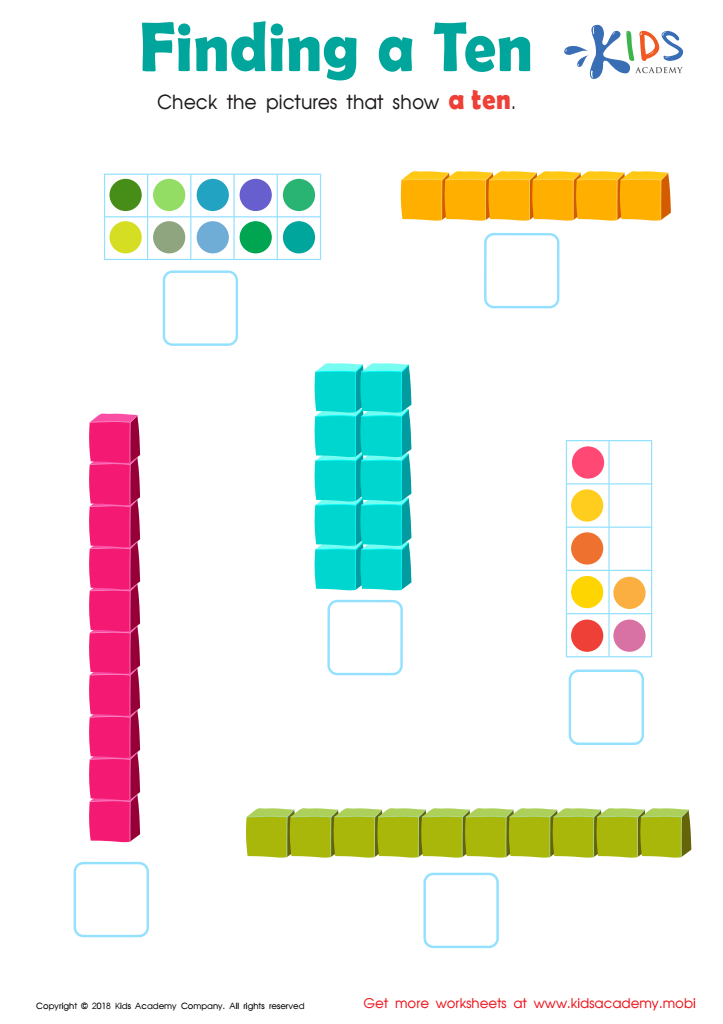
Finding a Ten Worksheet
 Assign to My Students
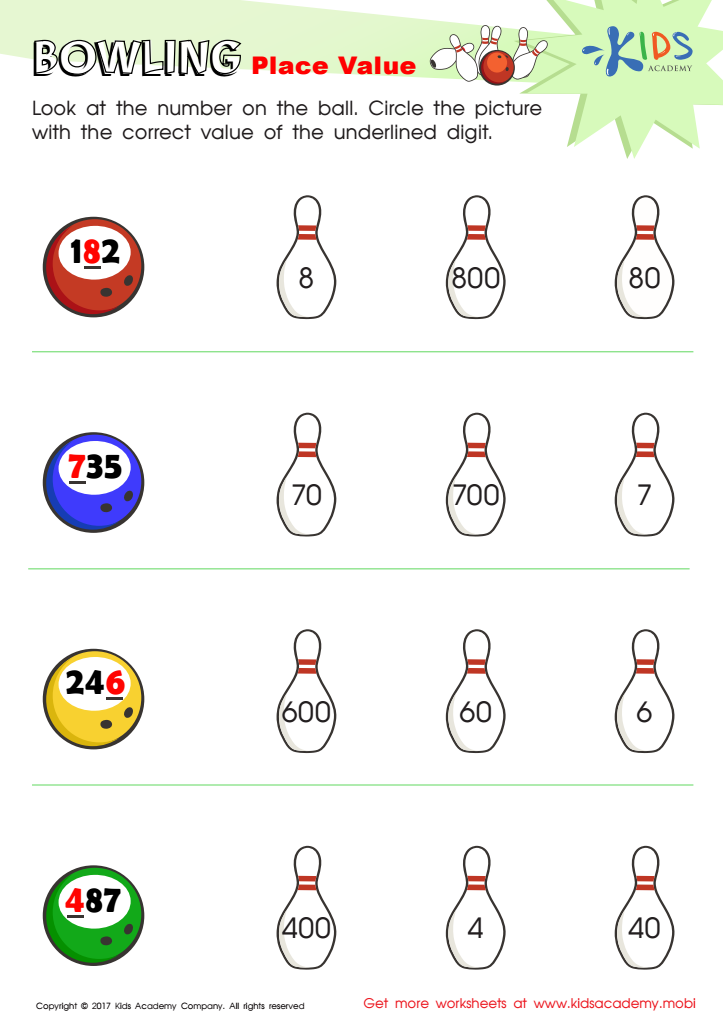
Place Value Worksheet
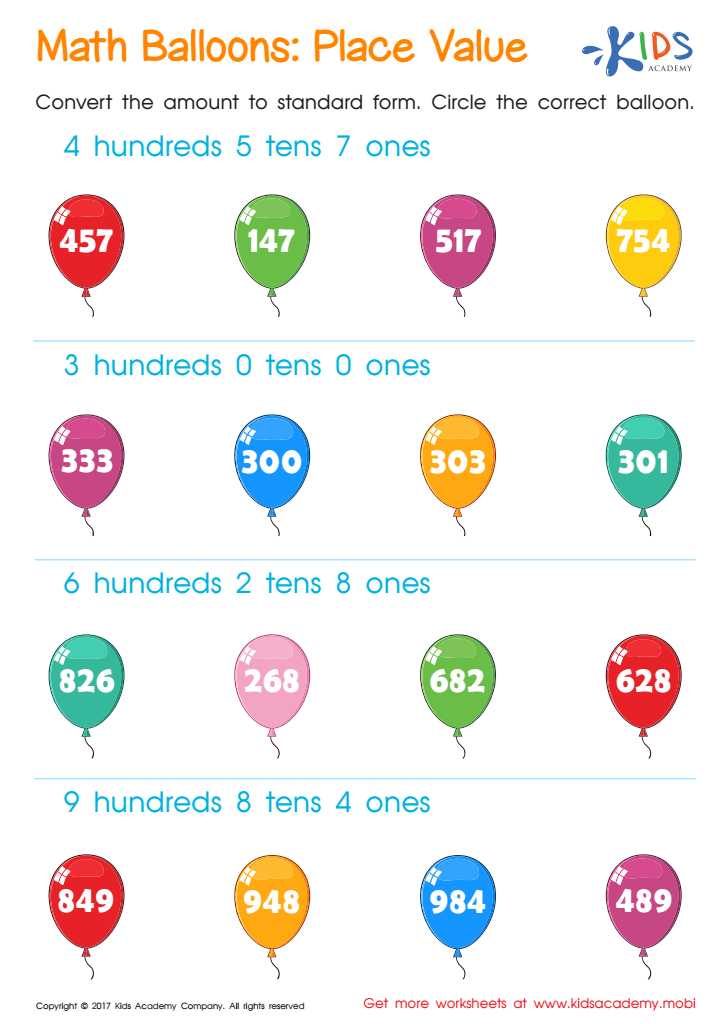
Place Value Printable Worksheet
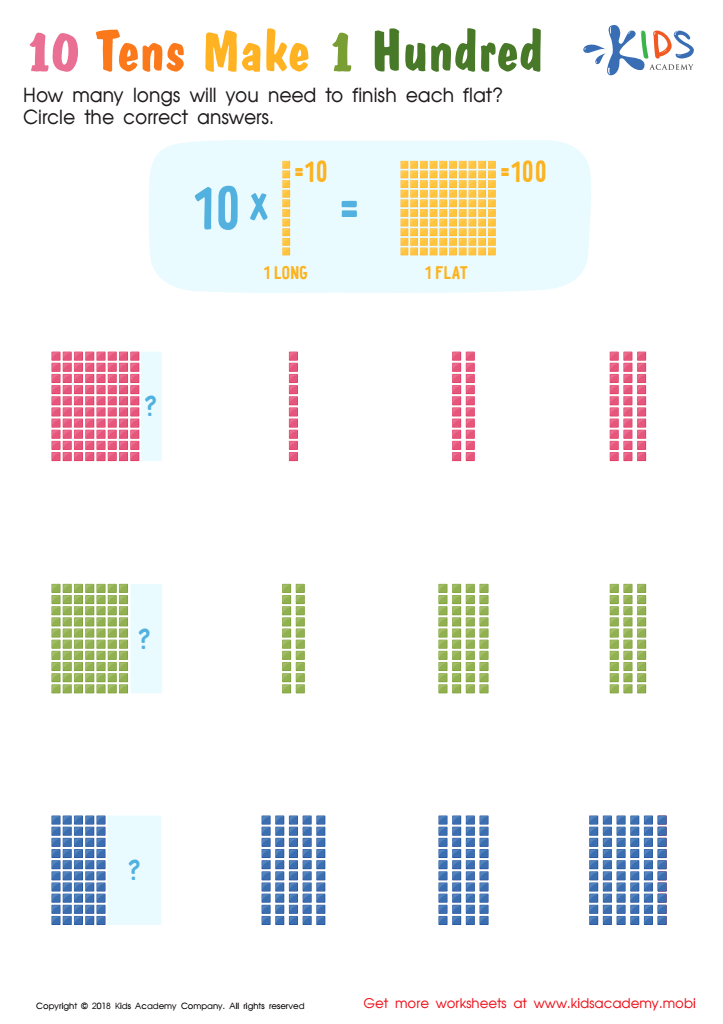
10 Tens Make 1 Hundred Worksheet






Recognizing number patterns is a fundamental skill for children aged 6-9, which lays the groundwork for their mathematical understanding. Parents and teachers should prioritize this developmental milestone for several reasons. First, identifying patterns enhances critical thinking and problem-solving skills. When children learn to recognize and predict patterns, they become more adept at reasoning and logical thinking—approaches essential for future mathematics.
Secondly, number patterns facilitate understanding of more complex mathematical concepts, such as addition, subtraction, multiplication, and division. Children who grasp the relationship between numbers through patterns can tackle these operations with confidence, which paves the way for success in higher mathematics.
Additionally, recognizing number patterns can boost children's engagement and interest in mathematics. Utilizing fun activities that highlight patterns can make learning enjoyable and interactive, fostering a positive attitude toward math.
Moreover, patterns can be found in everyday life, helping children to apply school learning to real-world situations. By encouraging pattern recognition, parents and teachers are not just teaching a mathematical concept; they are equipping children with the tools needed to analyze their world, enhancing both academic performance and encouraging curiosity about the world around them.








