Filters

7 filtered results

Clear all filters
Favorites
With answer key
Interactive

7 filtered results

Difficulty Level

Grade


Unlock your child's math potential with our "Understanding Patterns Numbers Worksheets for Ages 6-9." These engaging worksheets are designed to help young learners recognize and build numerical patterns through fun and interactive activities. Suitable for children in early grades, the resources reinforce essential math skills such as sequencing, skip counting, and recognizing increasing and decreasing patterns. Our thoughtfully crafted materials cater to various learning styles, encouraging creativity, critical thinking, and problem-solving. Perfect for classroom use or supplemental learning at home, our worksheets will ensure your child masters number patterns effortlessly and with confidence. Start exploring today!

Check out this FREE Trial Lesson on Numbers for age 6-9!

What’s the Rule - Part 2

Favorites
With answer key
Interactive
  • 6-9
  • Understanding patterns
  • Numbers
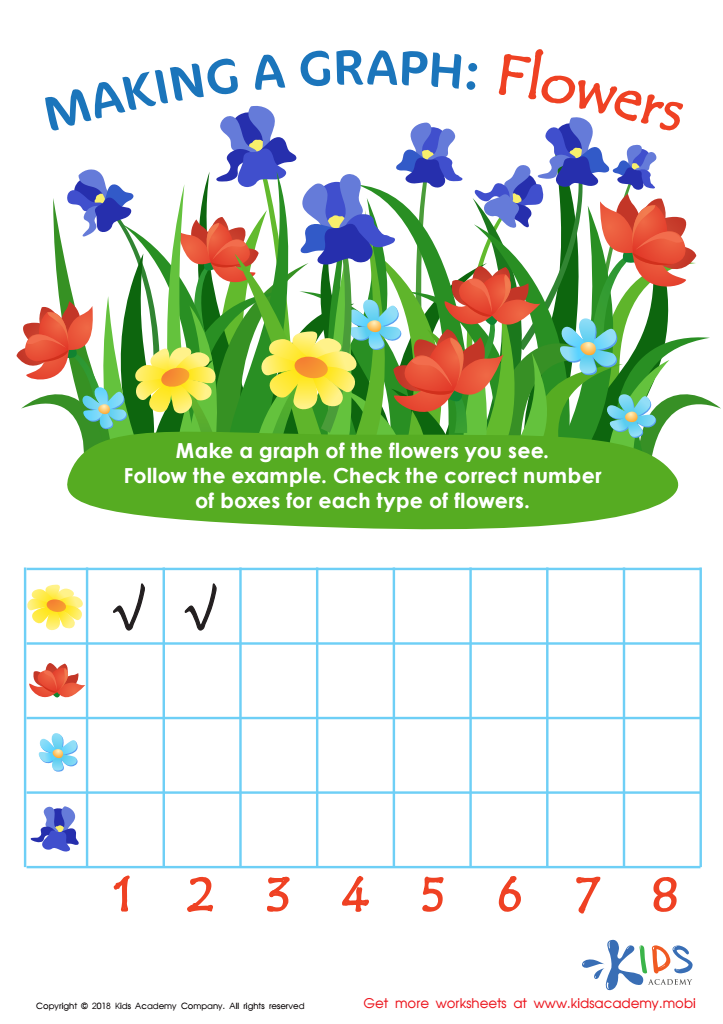
Making a Graph: Flowers Worksheet

Making a Graph: Flowers Worksheet

Kids will love this engaging PDF graph. They'll count flowers and use checkmarks to represent the number on the graph, tangibly seeing the differences in an organized way they contributed to. All while developing their number representation and concrete number sense skills without even realizing it!
Making a Graph: Flowers Worksheet
Worksheet
What's the Rule Worksheet

What's the Rule Worksheet

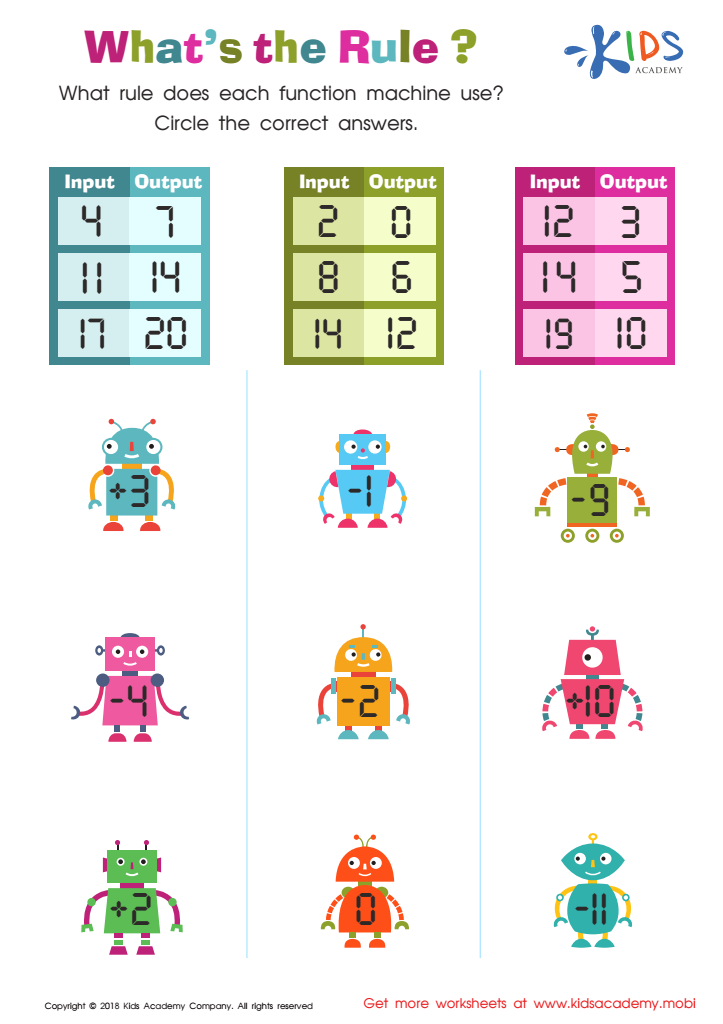
Robots are here to help your child find the relationship between each set of numbers! Adorably illustrated worksheets use vivid pictures that each contain a rule. Look at each function machine and find the pattern or relationship between the input and output. Then, complete the sheet by circling the correct answer!
What's the Rule Worksheet
Worksheet
Find the Last! Worksheet

Find the Last! Worksheet

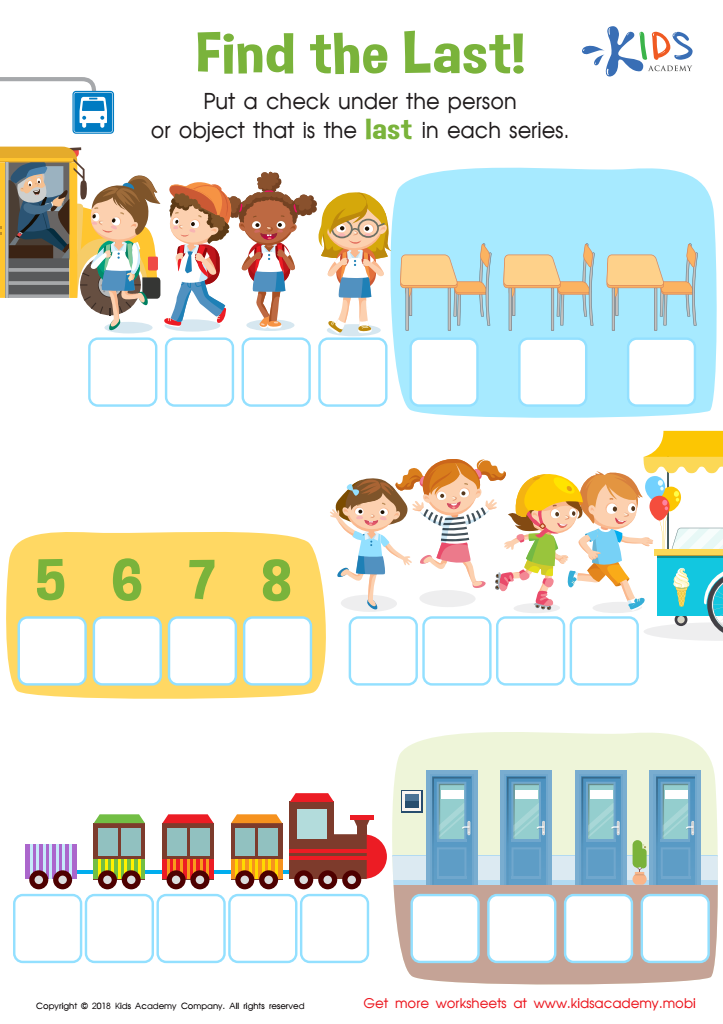
Teach young students about sequence words with this free worksheet. Have them look at sets of people or objects and choose the one that is last. Engage them further by having them describe or act out their day, and what happens last? Enjoy this printout and have fun!
Find the Last! Worksheet
Worksheet
Slinky Steps Worksheet

Slinky Steps Worksheet

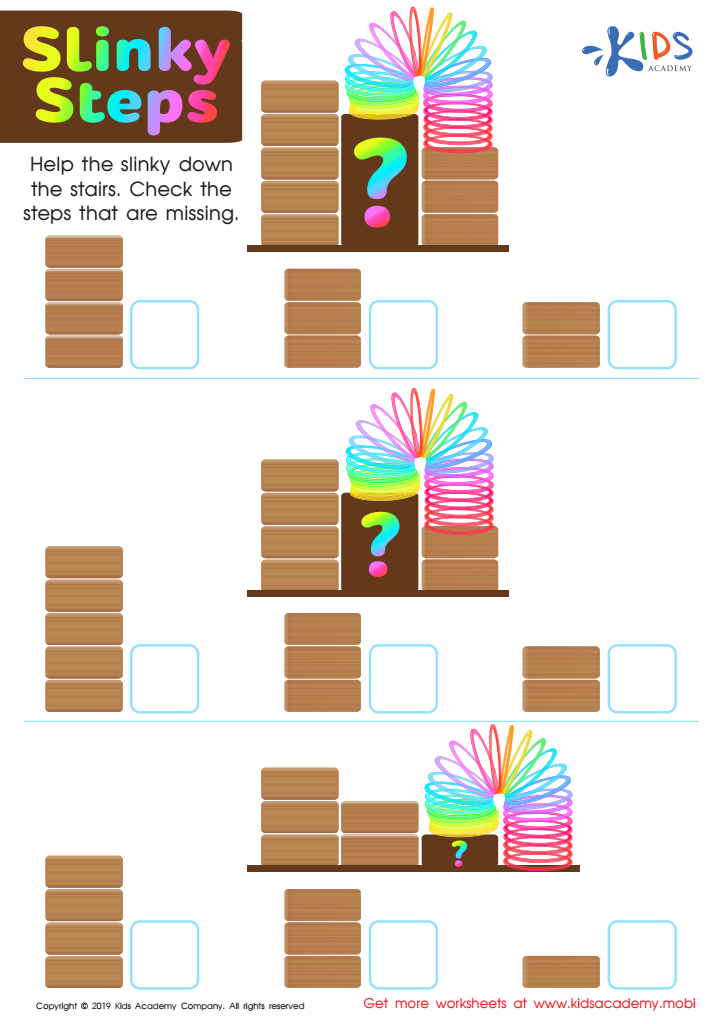
Help your kids improve their counting and math skills with this fun worksheet! Challenge them to help the slinky make its way down the stairs by selecting and checking the missing steps. Your assistance is key - get the printout and let them practice. It's the best way to becoming better in maths!
Slinky Steps Worksheet
Worksheet
Boomerang Addition Worksheet

Boomerang Addition Worksheet

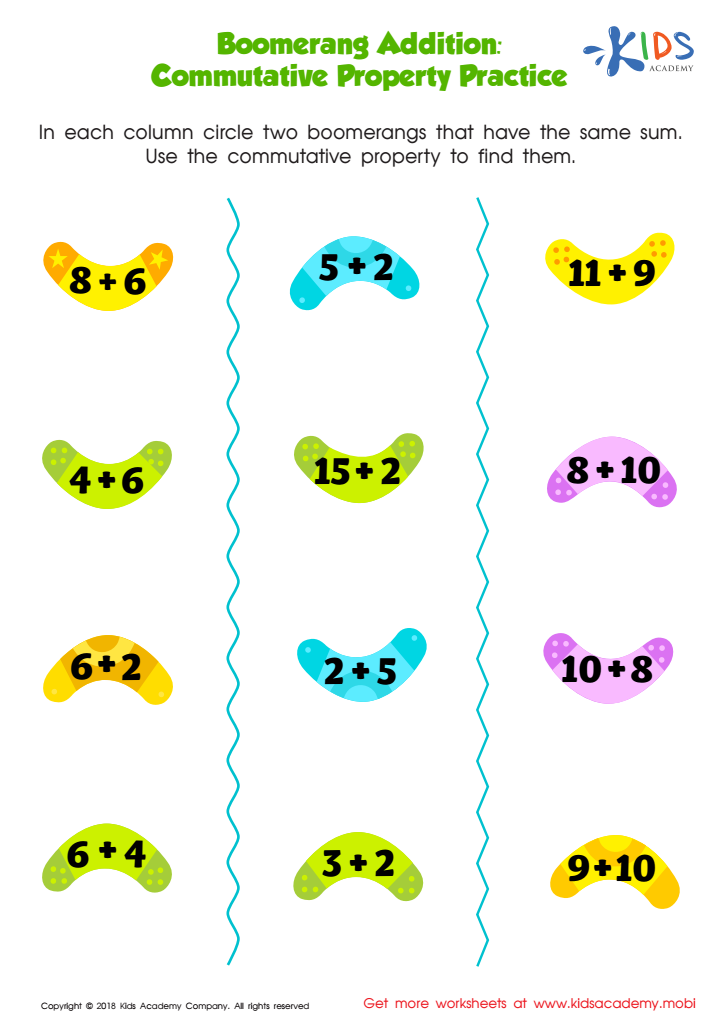
Kids know that when a boomerang is thrown, it reverses its path back. The same goes for addition: numbers can be rearranged and the sum will remain the same. Use this worksheet to find matching pairs of colorful boomerangs and equations. Look through each column and use the commutative property to find the pairs with the same sum.
Boomerang Addition Worksheet
Worksheet
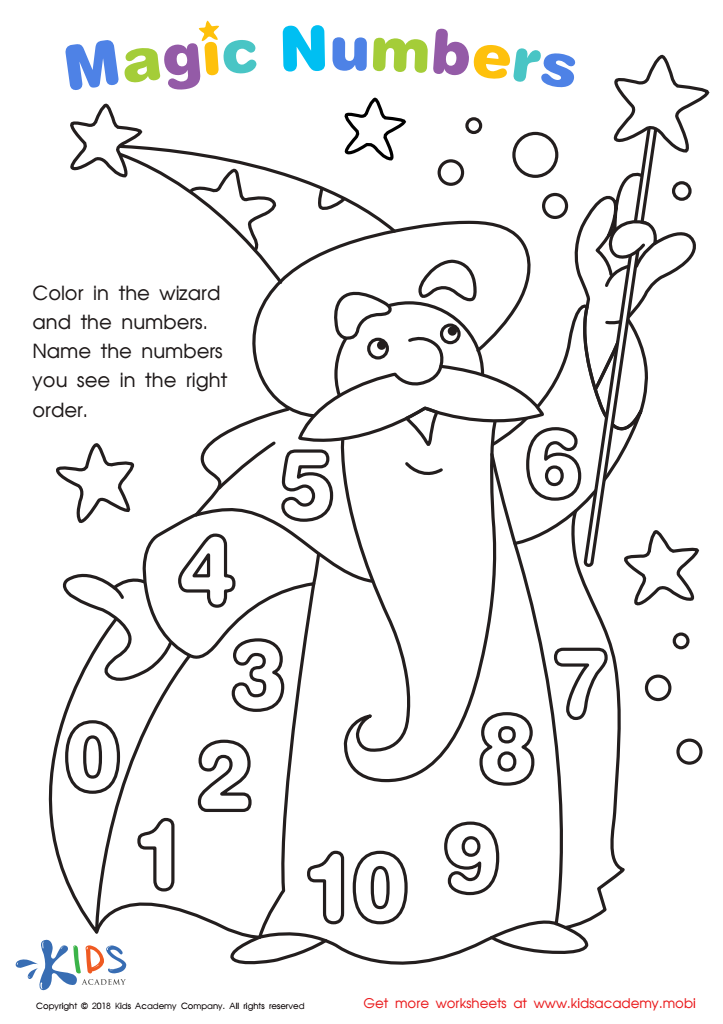
Magic Numbers Worksheet

Magic Numbers Worksheet

Does your child have an interest in magic? Here's something they'll love - a coloring sheet featuring a wizard! Ask them to name the numbers from smallest to highest, then let them pick colors to color in the wizard and the numbers. It's sure to excite them!
Download (PDF)
Assign to My Students
Magic Numbers Worksheet
Worksheet
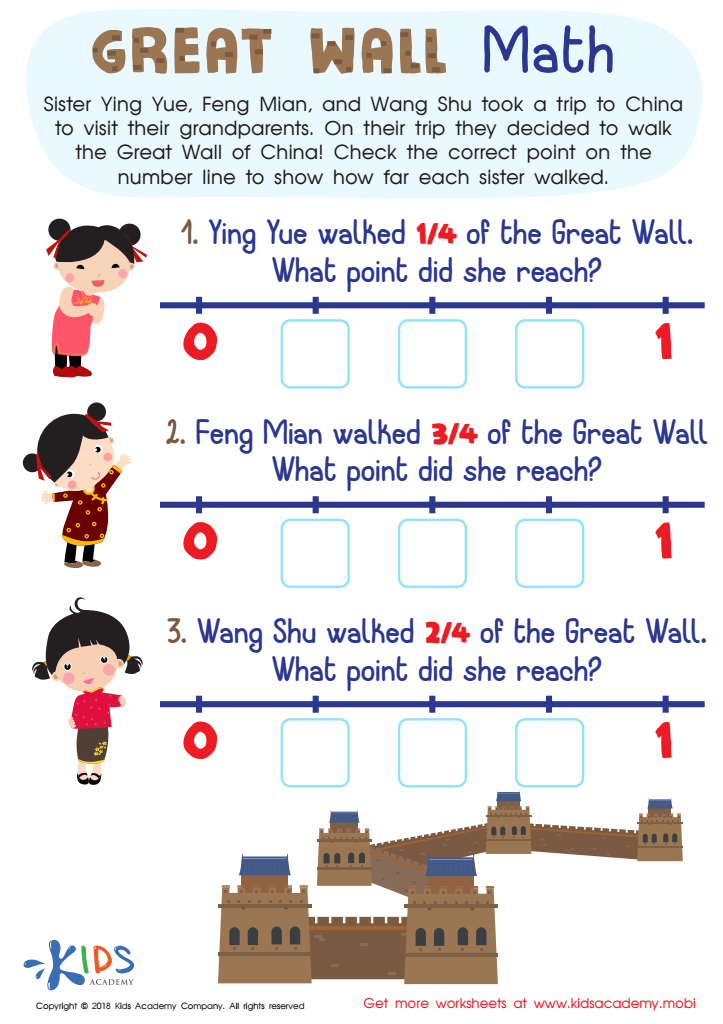
Great Wall Math Worksheet

Great Wall Math Worksheet

Let your kids learn about fraction and history with this printout about the Great Wall of China. Three sisters take a trip to China to visit their grandparents and decide to walk the Great Wall. Ask them to study the pictures and pick the correct point on the number line to show how far each sister went. How about you: has your child ever been to China?
Great Wall Math Worksheet
Worksheet


Understanding patterns, particularly in numbers, is foundational for young children aged 6-9 and has far-reaching benefits in their cognitive and academic development. Patterns simplify complex concepts and foster early mathematical thinking. Recognizing and predicting patterns helps children develop problem-solving skills and logical thinking. For example, understanding the sequence in numbers (2, 4, 6, 8) paves the way for comprehending more advanced arithmetic like multiplication and division.

Moreover, pattern recognition nurtures children's ability to make connections between different academic areas. It bridges math and literacy when children see patterns in rhymes or syllable structures, enhancing their reading skills. Teachers and parents should emphasize patterns to build a child's confidence and comfort with math. A student familiar with patterns can better grasp subjects like algebra and geometry, which often intimidate older students who lack a solid foundational understanding.

Additionally, recognizing patterns is crucial outside of academic contexts. It encourages children to observe their environment carefully, trying to make sense of the regularities and variations they encounter in nature, art, and daily activities. Supporting children in these explorations can spark curiosity and a lifelong love of learning. Thus, understanding numerical patterns is not just a mathematical skill, but a critical tool for broader intellectual growth and practical life skills.