Applying math skills Math Worksheets for Ages 6-9
3 filtered results
-
From - To
Discover our fun and engaging Applying Math Skills Worksheets designed for kids ages 6-9! With a focus on practical math applications, these printable worksheets help children understand core concepts through real-world scenarios. From basic addition and subtraction to problem-solving and logical thinking, our activities make learning math enjoyable and effective. Each sheet is crafted to boost confidence and promote mastery in essential math skills, empowering young learners to navigate everyday challenges with ease. Ideal for both classroom use and at-home practice, these worksheets are perfect for complementing any math curriculum. Make math fun and accessible today!
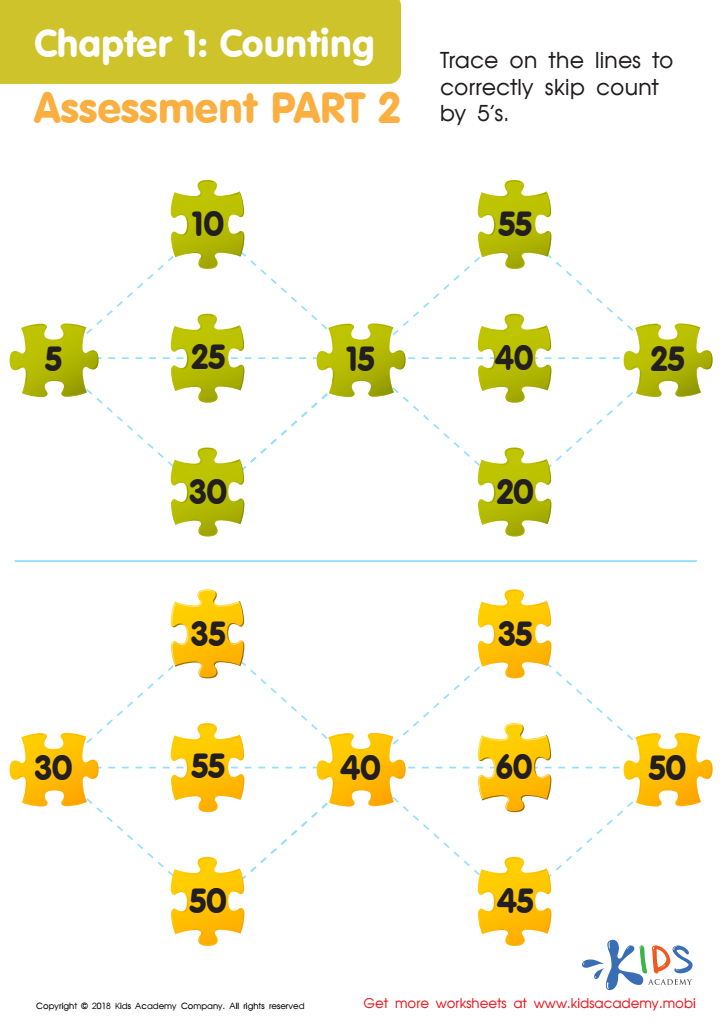
Counting: Assessment 2 Worksheet
 Assign to My Students
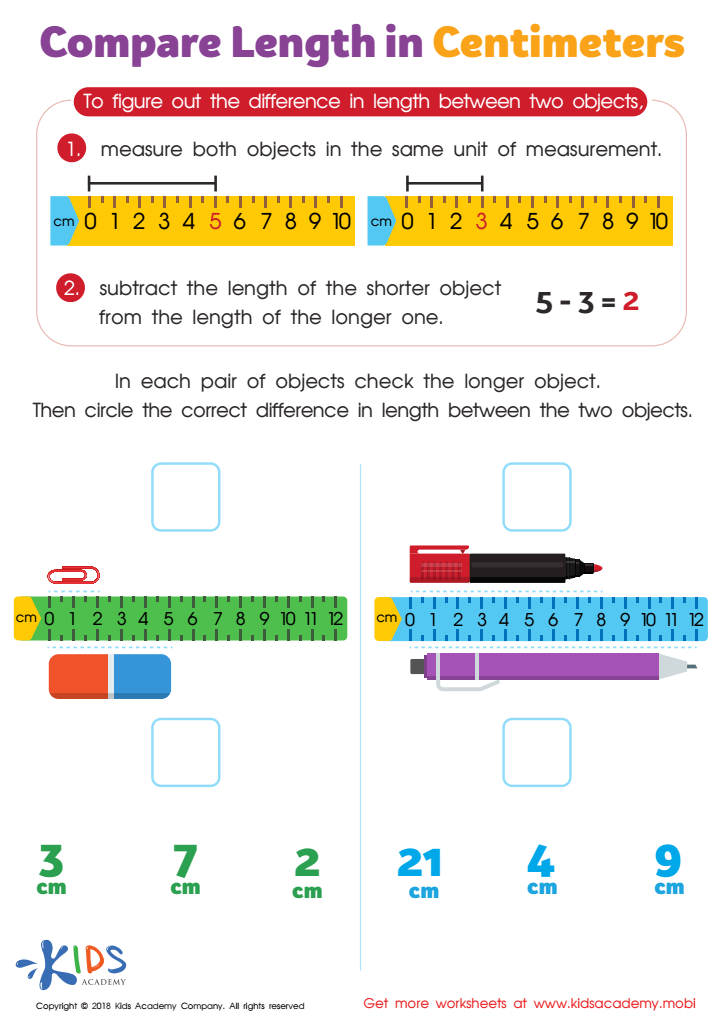
Compare Length in Centimeters Worksheet








Parents and teachers should care deeply about applying math skills for children aged 6-9 because this foundational period sets the stage for future academic success and cognitive development. At this age, children are naturally curious and begin to understand more complex concepts such as addition, subtraction, and basic geometry. Introducing math skills early helps build critical thinking and problem-solving abilities which are crucial for all areas of learning.
Early math education is linked to better outcomes in later years, not just in mathematics but across the academic spectrum. Engaging with math activities strengthens cognitive processes such as logical reasoning, memory, and the ability to analyze patterns. These processes are important for subjects like science, reading, and social studies.
Practical application of math also fosters a child's sense of accomplishment and confidence. When children solve problems, measure ingredients for a recipe, or count changes while shopping, they see the real-world impact of math. This relevance enhances their motivation and enthusiasm toward learning.
Furthermore, early math skills are predictive of future academic success. Research indicates that early proficiency in math leads to higher achievement not only in later math courses but also in literacy. Therefore, it is essential for parents and teachers to integrate math in everyday activities to cultivate a lifelong love for learning and provide a strong academic foundation.








