Building vocabulary Math Worksheets for Ages 6-9
3 filtered results
-
From - To
Discover our engaging Building Vocabulary Math Worksheets, designed specifically for kids aged 6-9! These interactive resources fuse language development with essential math skills, helping young learners expand their vocabulary in a fun and effective way. Our worksheets focus on key mathematical terms, encouraging students to understand and use language relevant to their mathematical learning. With colorful illustrations and engaging exercises, children will build confidence while enhancing their comprehension of both vocabulary and math concepts. Perfect for classroom instruction or at-home practice, these worksheets provide invaluable support as students embark on their educational journey. Unlock the joy of learning today!
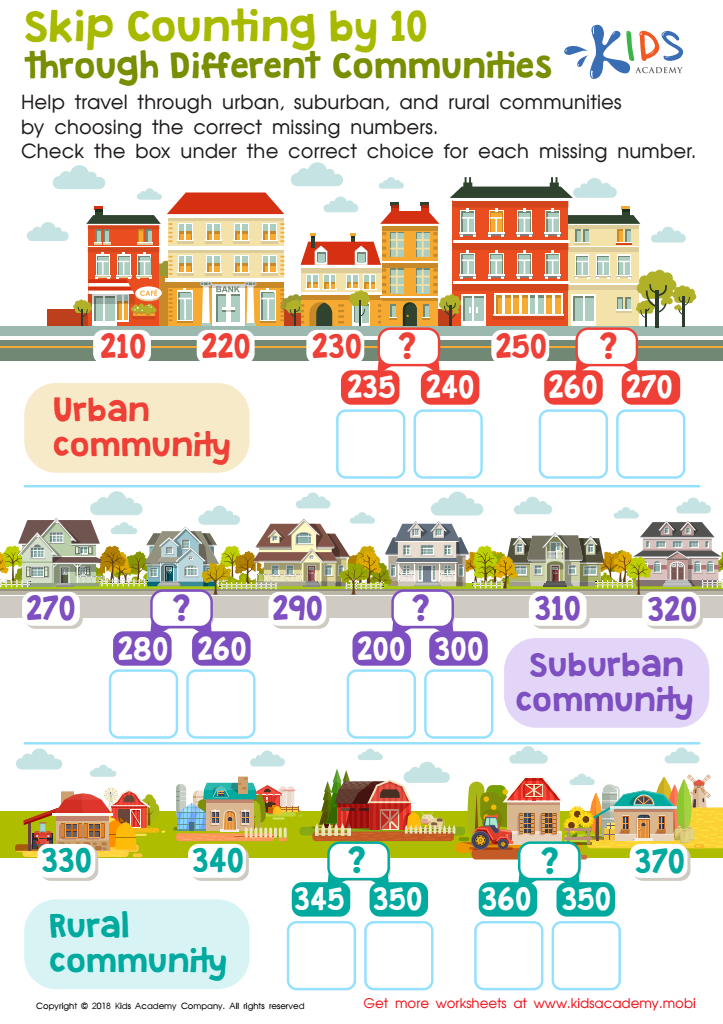
Skip Counting by 10 through Different Communities Worksheet
 Assign to My Students







Building vocabulary in math for children aged 6-9 is crucial for their overall academic success and comprehension of mathematical concepts. At this developmental stage, children can grasp foundational principles such as addition, subtraction, shapes, and measurement; however, effective communication about these concepts is equally important. A strong mathematical vocabulary enables children to articulate their thoughts, ask questions, and explain their reasoning, which enhances their problem-solving skills.
When parents or teachers prioritize math vocabulary, they are not merely focusing on memorizing terms, but fostering a deeper understanding of math as a language. Terms such as “sum,” “difference,” “greater than,” and “equivalent” become essential for children to effectively engage in discussions about numbers and problem-solving strategies. This vocabulary-building approach aids in reducing math anxiety and builds confidence, as children learn to express their ideas and understand others’.
Moreover, a robust math vocabulary supports broader language skills, as math is often integrated with reading and writing in various subjects. Encouraging a dialogue about math terms empowers children, helping them develop critical thinking skills that will benefit them throughout their educational journey and in real-life situations, ensuring they are better prepared for future academic challenges.








