
Comparing weights Math Worksheets for Ages 6-9
4 filtered results
Difficulty Level
Grade
Age
-
From - To
Subject
Activity
Standards
Discover engaging "Comparing Weights Math Worksheets" perfect for kids ages 6-9! Our expertly designed worksheets help young learners develop essential math skills while having fun. Through vibrant visuals and interactive exercises, children will master comparing the weights of different objects, enhancing their understanding of measurement concepts. Ideal for both classroom and at-home learning, our worksheets provide a solid foundation in math apREvious learning. Encourage your child’s problem-solving abilities and boost their confidence with Kids Academy's thoughtfully curated activities. Explore our collection today and make learning weights an exciting adventure!
Favorites
With answer key
Interactive
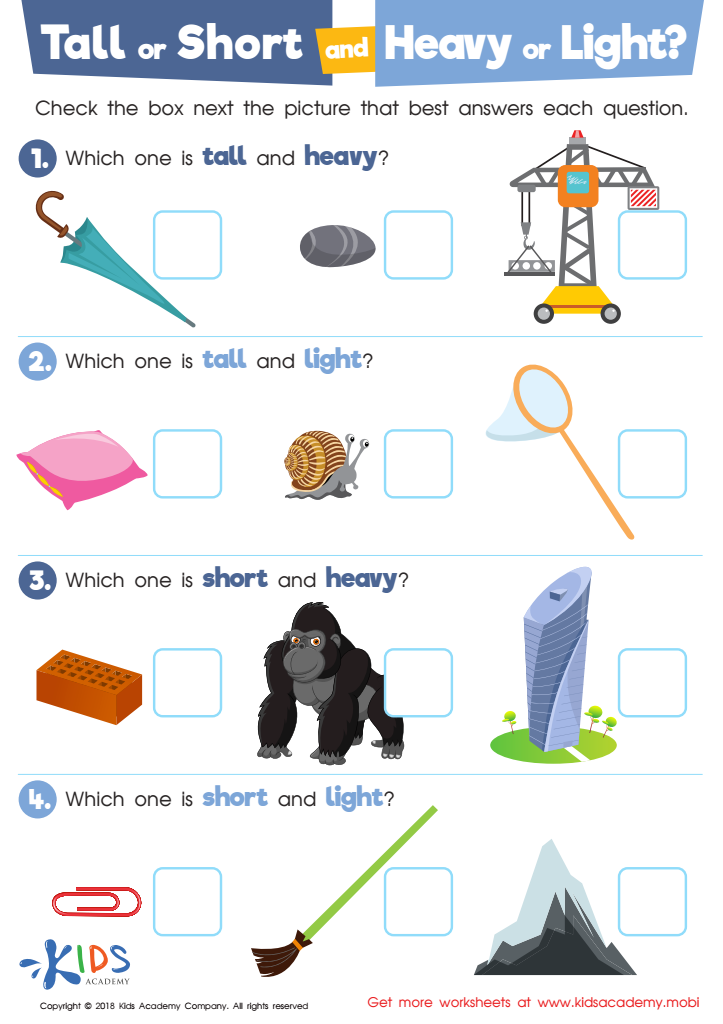
Tall or Short and Heavy or Light? Worksheet
Young children can find basic measurement concepts tricky. This PDF introduces them to the appropriate vocabulary for describing heavy, light, tall and short items, by using familiar pictures. It helps them accurately select which items fit each category.
 Assign to My Students
Tall or Short and Heavy or Light? Worksheet
Worksheet
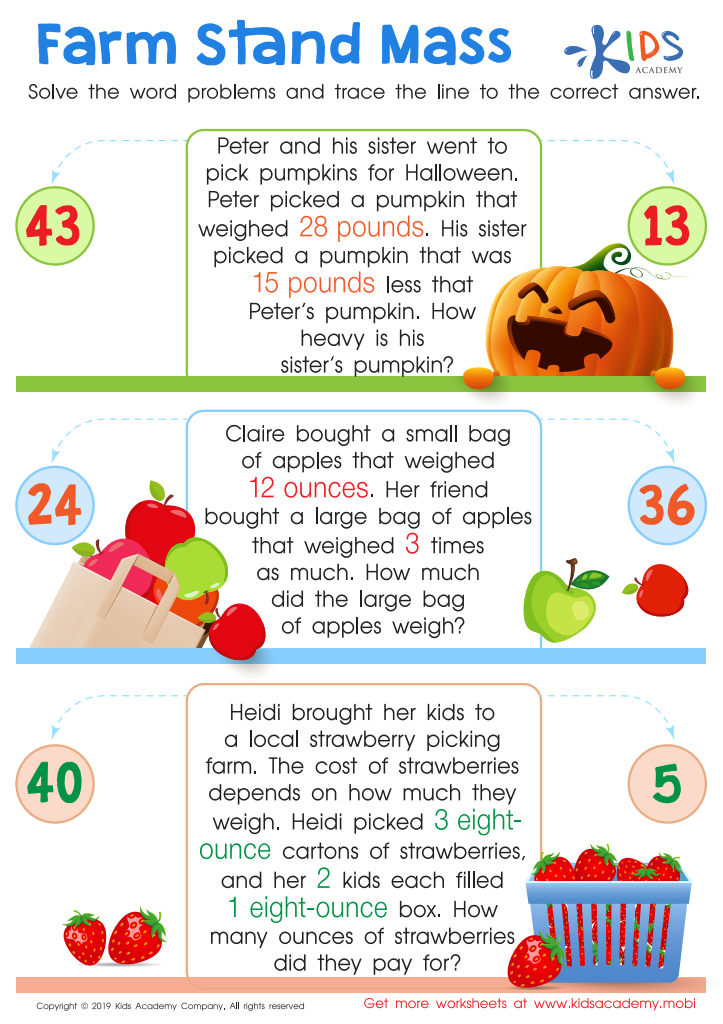
Farm Stand Mass Worksheet
Engage your kids in a fun learning adventure! Encourage them to practice what they learn in school using this worksheet. Look at the picture and read the problem together. Help them solve it and trace the line to the answer. Make learning enjoyable and your kids will be more motivated!
Farm Stand Mass Worksheet
Worksheet
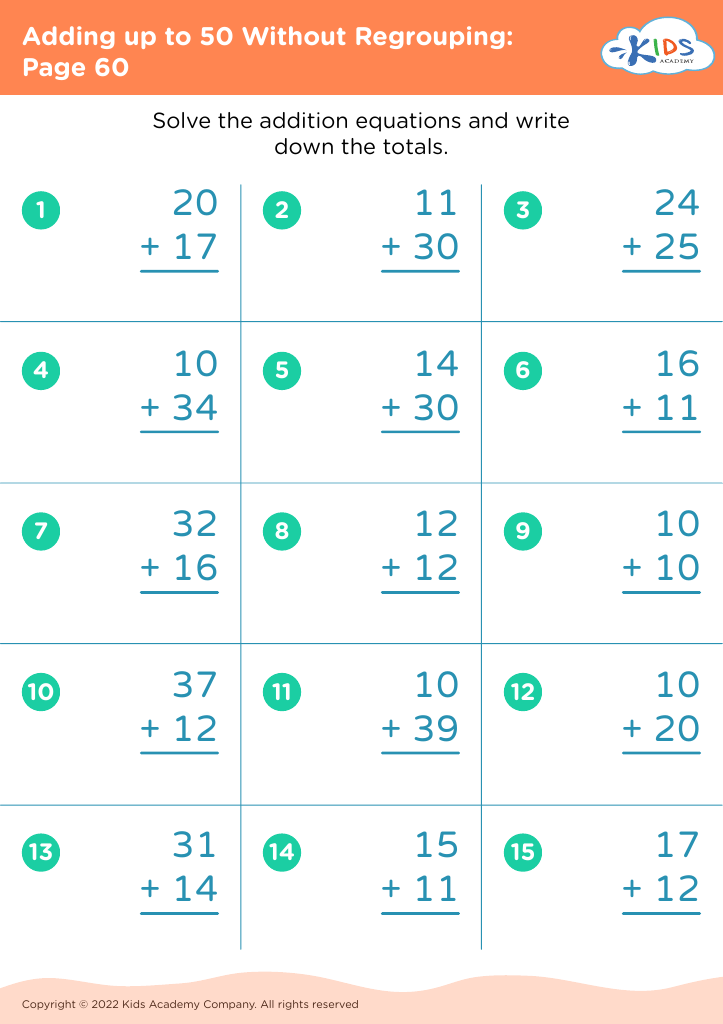
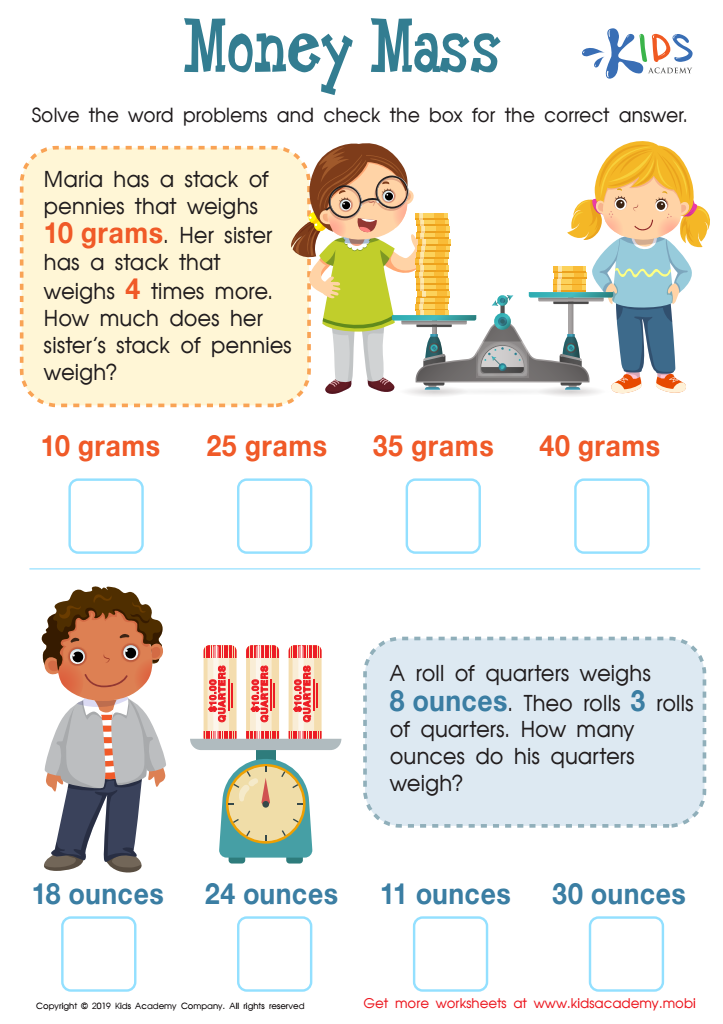
Money Mass Worksheet
By regularly working on math with your kids, they will become more confident. Ensure they understand the word problems in this printout, and help them solve it. Check the box for the correct answer of each to verify their work. With this practice, they will gradually get used to math and make progress.
Money Mass Worksheet
Worksheet
Join Kids Academy for Free
Who is primarily going to use this learning content?






Comparing weights is a fundamental math skill for children aged 6-9, crucial for their cognitive and practical development. At this stage, children are naturally curious and begin to explore the world around them, often asking questions about why and how things work. Introducing concepts like weight comparison helps to develop their critical thinking and problem-solving abilities.
By learning to compare weights, children improve their understanding of measurement, an essential component of everyday math. This skill lays a foundation for more complex math concepts they will encounter later in their education, such as addition and subtraction, number sense, and geometry.
Furthermore, comparing weights touches on elements of scientific inquiry. It encourages children to make observations, predictions, and conclusions, thus fostering a love of learning and curiosity about the natural world. It introduces them to basic tools like scales or balances, bridging the gap between abstract math and tangible learning.
From a practical perspective, understanding weight is important for everyday activities, such as shopping, cooking, or even packing a school bag. As children learn to estimate and compare weights, they become more adept at making sense of their physical environment, promoting independence and confidence in their abilities.
Therefore, both parents and teachers should take an active role in nurturing this skill, making math engaging and relevant to the child's daily life while laying the groundwork for more advanced educational pursuits.








