Conversion skills Math Worksheets for Ages 6-9
5 filtered results
-
From - To
Enhance your child's math abilities with our engaging Conversion Skills Math Worksheets, specially designed for ages 6-9. These worksheets focus on fundamental concepts such as unit conversions, measurement comparisons, and understanding value differences. Through enjoyable and interactive exercises, your child will build essential skills, gain confidence, and develop a strong mathematical foundation. Our resources are aimed at making learning fun, fostering a love for math, and promoting critical thinking. Perfect for classroom activities or home study, our printable worksheets provide parents and educators with easy-to-use materials that align with early learning standards. Explore our collection and watch your young learners thrive!
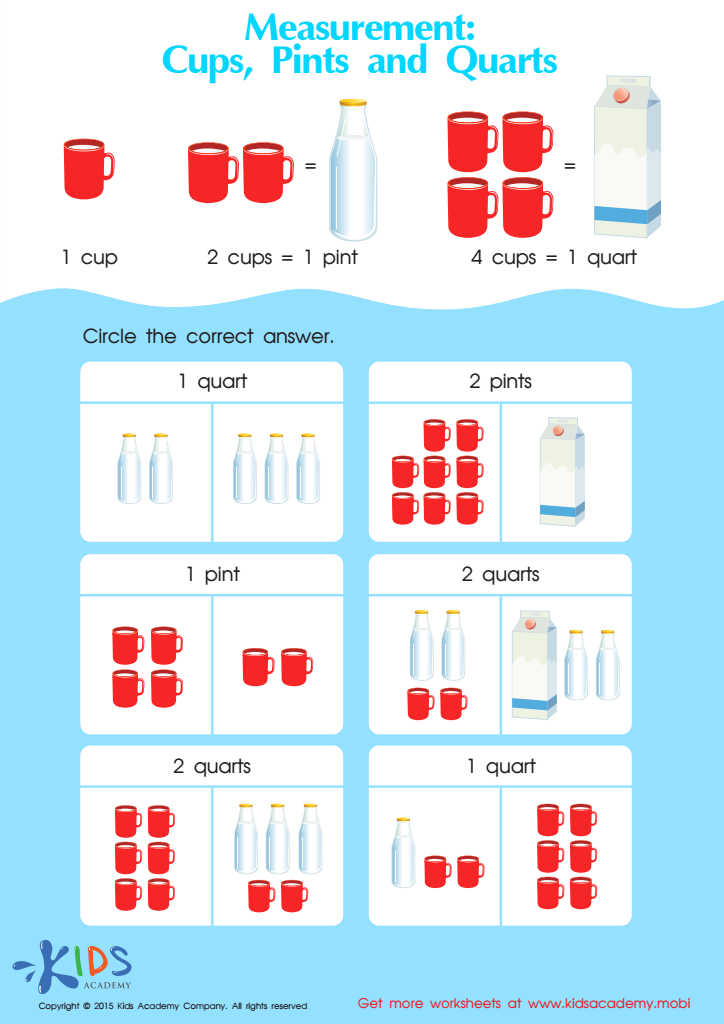
Cups, Pints and Quarts Worksheet
 Assign to My Students
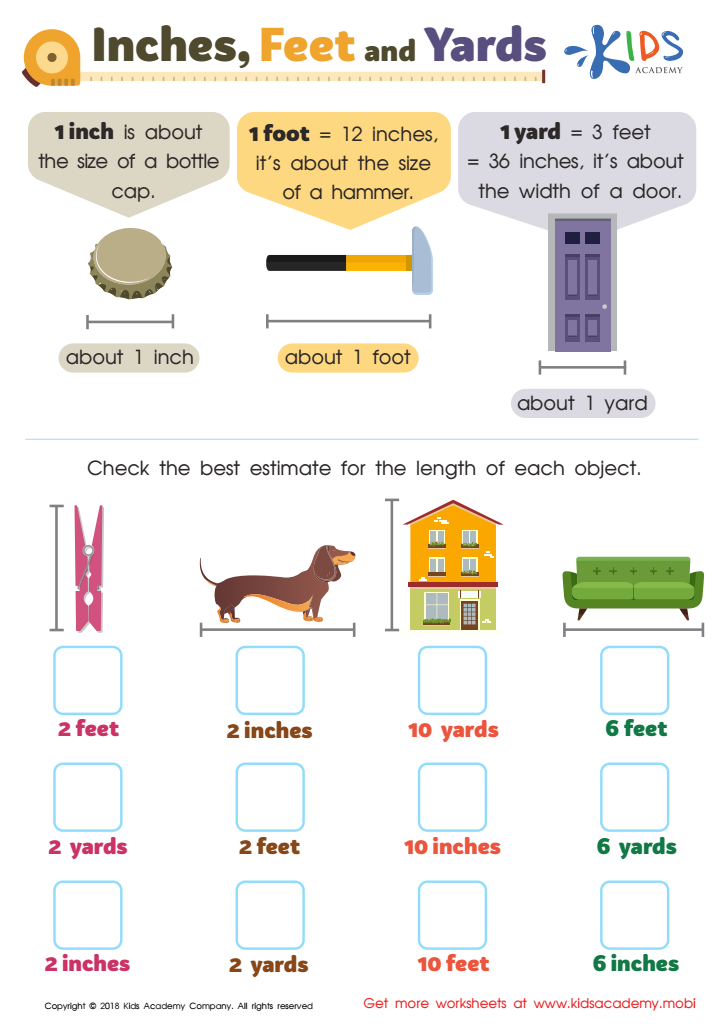
Inches, Feet and Yards Worksheet
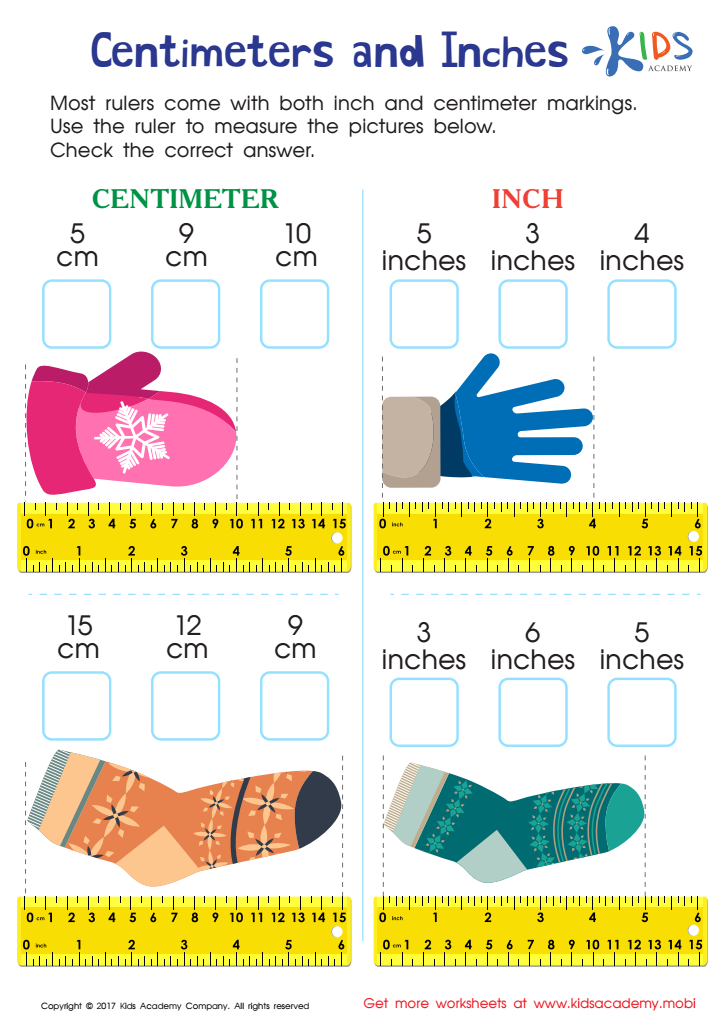
Centimeters and Inches Worksheet
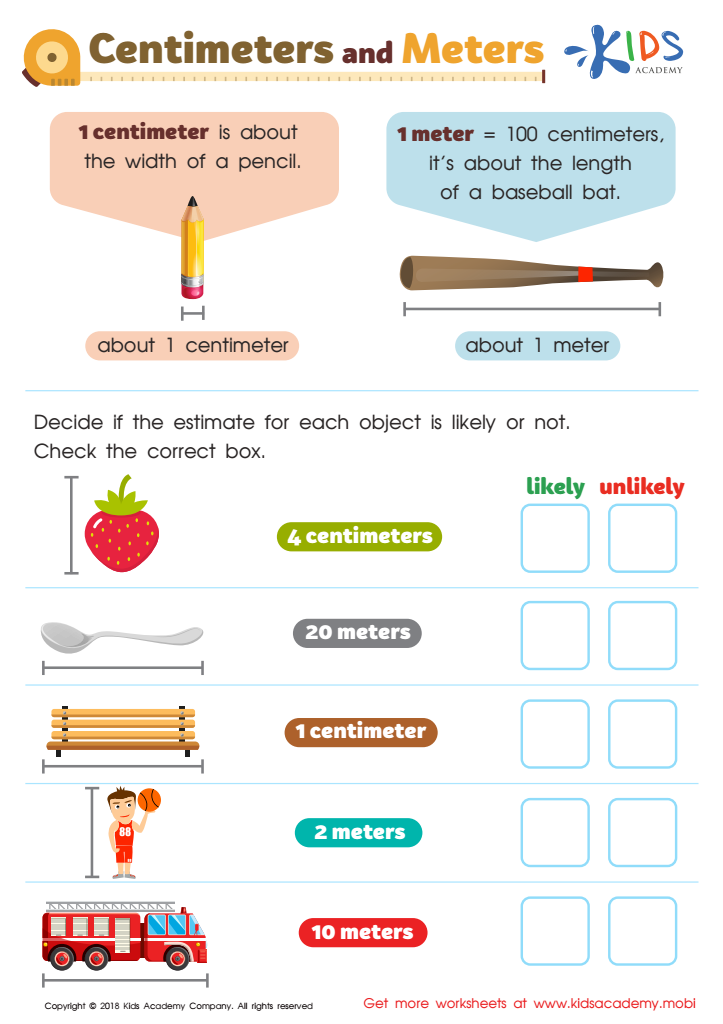
Centimeters and Meters Worksheet
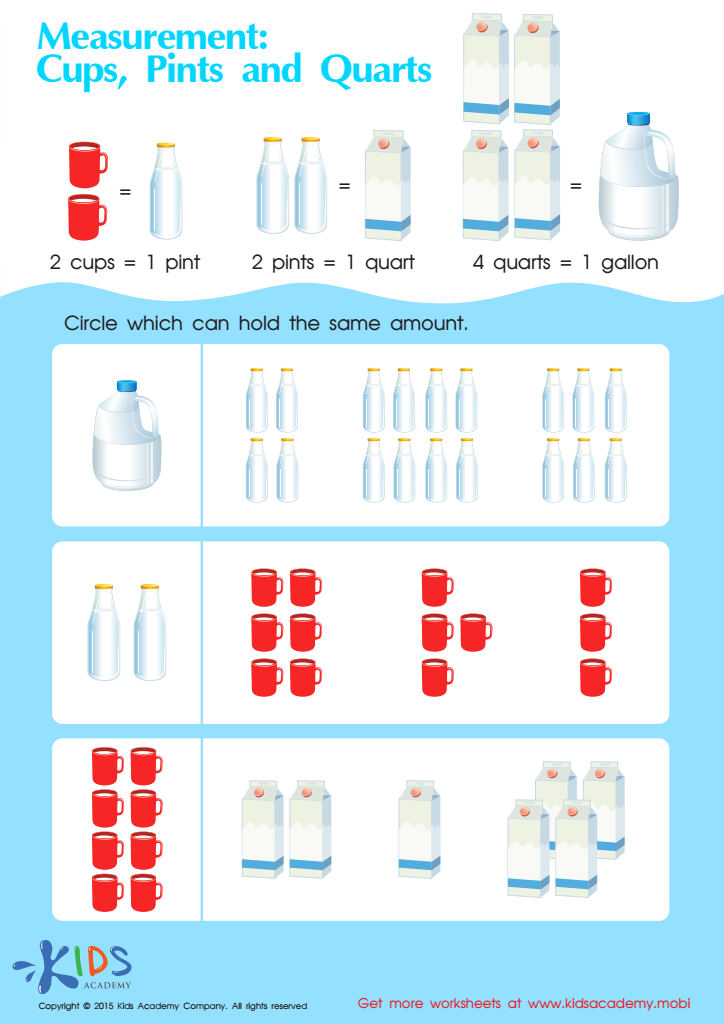
Cups, Pints and Quarts 2 Worksheet







Conversion skills in math are crucial for children ages 6-9 as they lay the foundation for broader mathematical understanding and problem-solving abilities. At this stage, children begin to grasp various units of measurement, understand relationships between different quantities, and engage with concepts such as time, money, and basic geometry. Mastering conversion skills fosters their ability to think critically and make connections between different mathematical concepts.
Additionally, acquiring these skills at an early age boosts confidence and enhances children's numerical fluency, making them more adept at handling real-world situations. Parents and teachers should recognize that children will encounter conversions in everyday life, from measuring ingredients in recipes to understanding the time and distance of travel.
Moreover, a solid grasp of conversion skills prepares children for more complex math in higher grades, ensuring that they develop a positive attitude toward learning mathematics. Encouraging practice in this area through engaging activities can help ignite their interest in STEM subjects. Ultimately, equipping children with conversion skills not only aids in their current education but also provides them with essential tools for future academic success and everyday problem-solving. Insum, these skills matter for lifelong learning and functionality in an increasingly quantitative world.








