Developing spatial awareness Math Worksheets for Ages 6-9
3 filtered results
-
From - To
Enhance your child's spatial awareness with our engaging math worksheets designed for ages 6-9. These resources focus on vital skills such as shape recognition, spatial reasoning, and visualization, laying a strong foundation for future math concepts. Each worksheet is carefully crafted to make learning fun and interactive, featuring vibrant illustrations and relatable scenarios that capture young minds. With activities ranging from identifying shapes to understanding complex spatial relationships, children will develop essential problem-solving skills while boosting their confidence in math. Perfect for classroom use or at-home learning, our worksheets ensure an enjoyable and effective educational experience for every child.
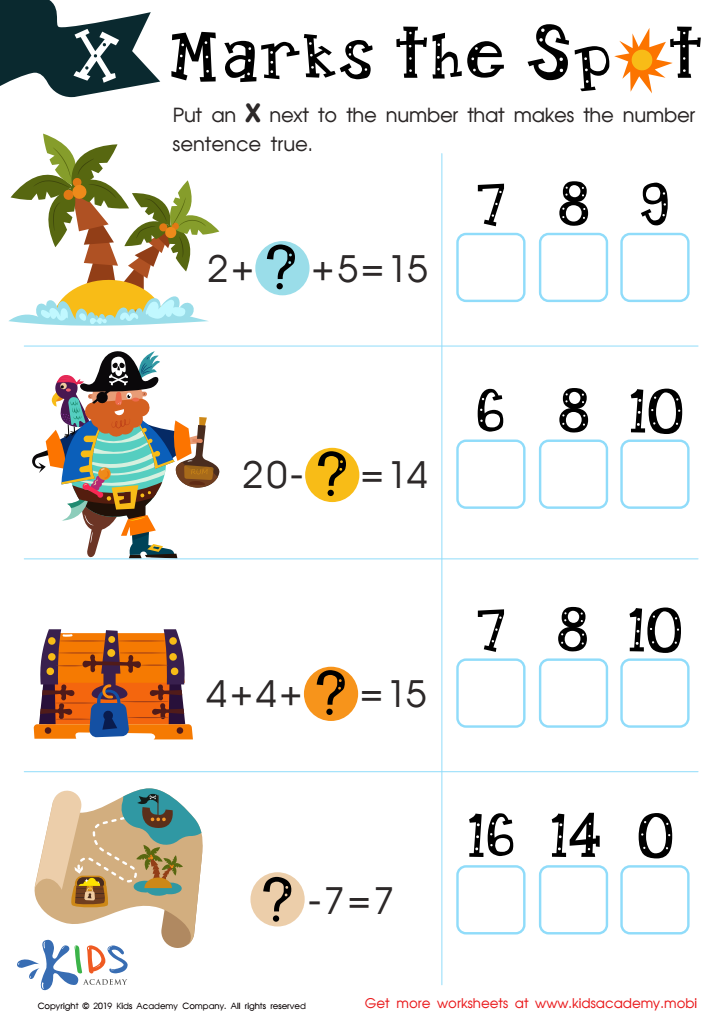
X Marks the Spot Worksheet
 Assign to My Students
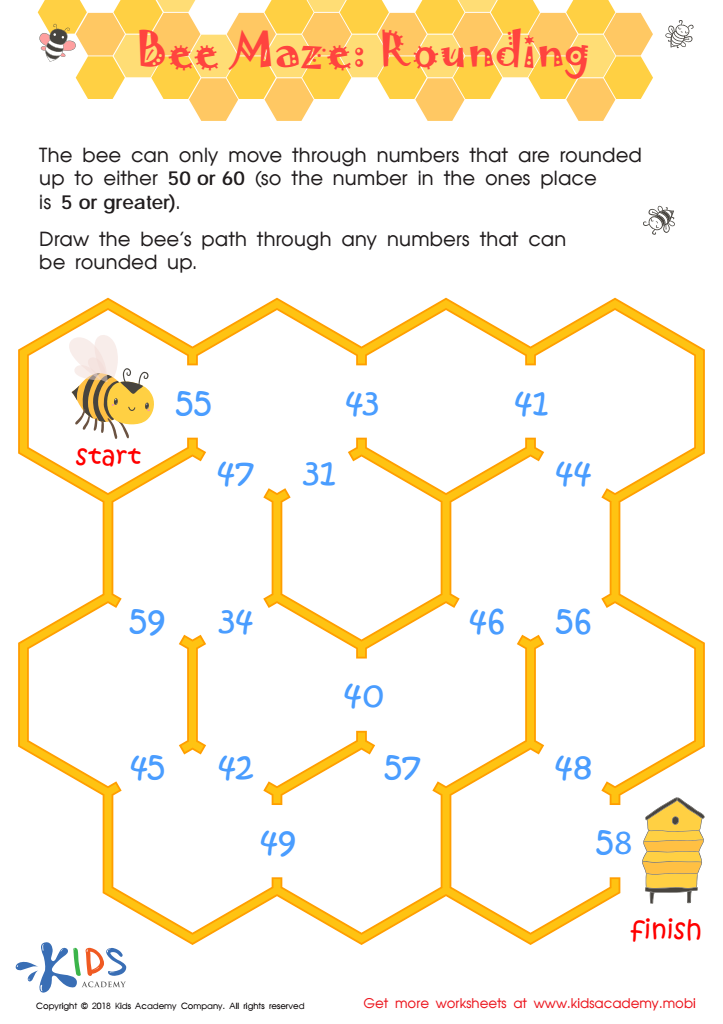
Bee Maze Rounding Worksheet
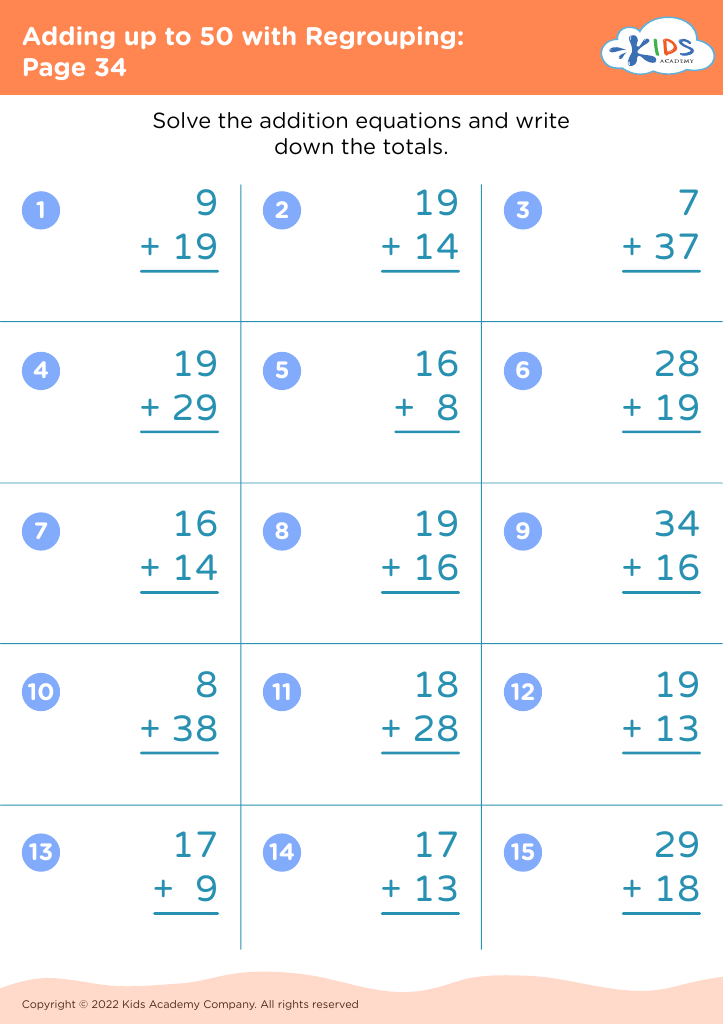




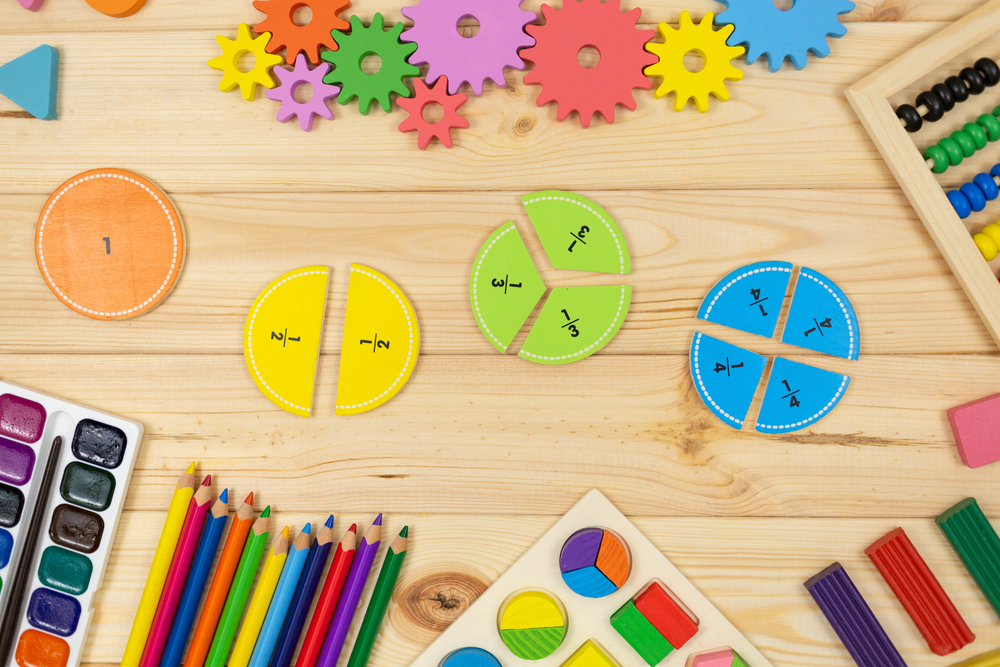



Developing spatial awareness in children aged 6-9 is crucial as it lays the foundation for success in both mathematics and everyday life. Spatial awareness involves understanding how different objects relate in space and includes skills such as visualization, reasoning, and manipulation of shapes.
At this young age, children are naturally curious and eager to explore. Engaging them in spatial activities like puzzles, block building, and map reading can enhance their critical thinking abilities and problem-solving skills. For parents and teachers, fostering spatial awareness can lead to improved performance in math and geometry, crucial subjects in later academic years.
Additionally, strong spatial skills correlate with success in STEM (Science, Technology, Engineering, and Mathematics) fields, which are increasingly vital in today's job market. By emphasizing spatial reasoning through playful and hands-on activities, adults can support children's cognitive development and encourage creativity.
Furthermore, spatial awareness connects with other subjects like art and science, enriching the learning experience. Ultimately, investing time and resources in developing these skills will equip children with the adaptive tools they need to excel both academically and in their everyday lives, paving the way for a brighter future.








