
Enhance problem-solving Math Worksheets for Ages 6-9
3 filtered results
Difficulty Level
Grade
Age
-
From - To
Subject
Activity
Standards
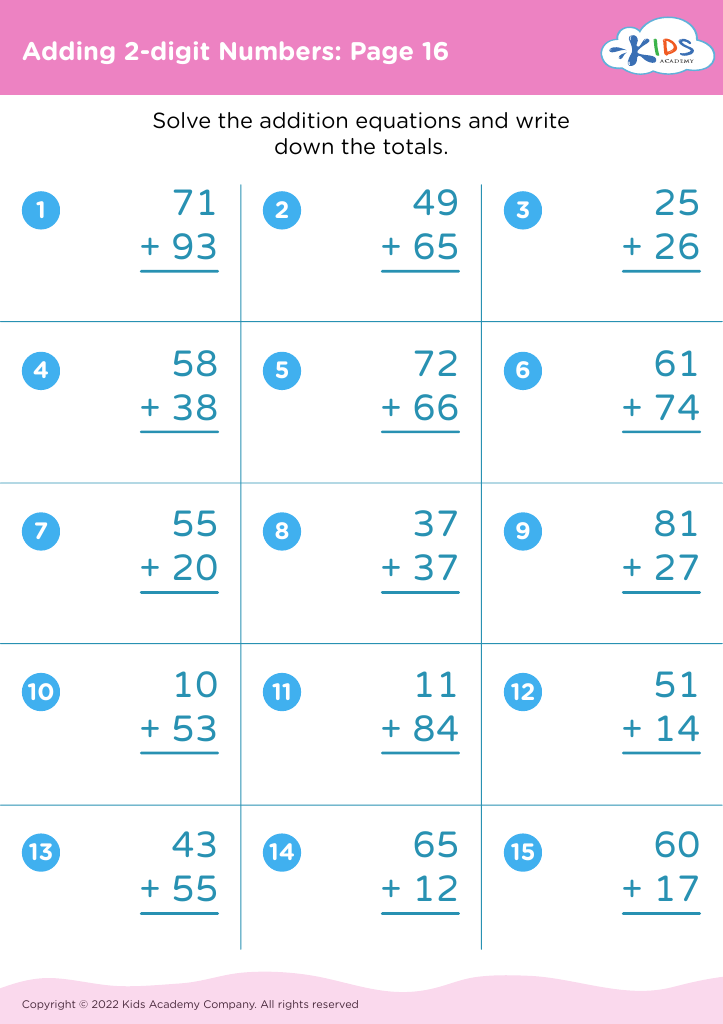
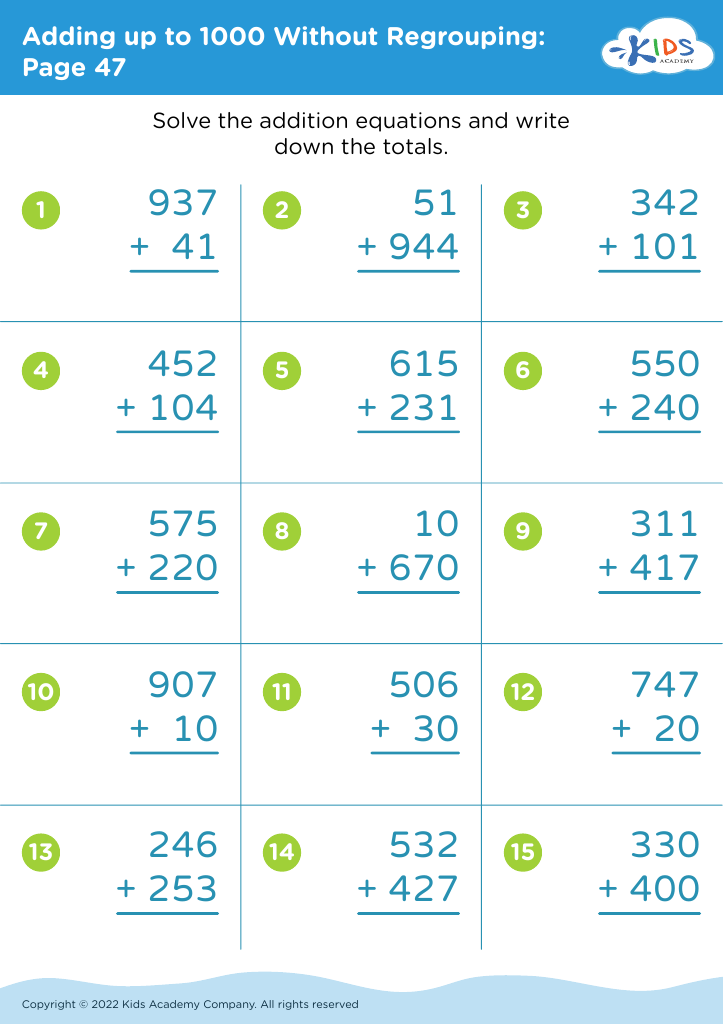
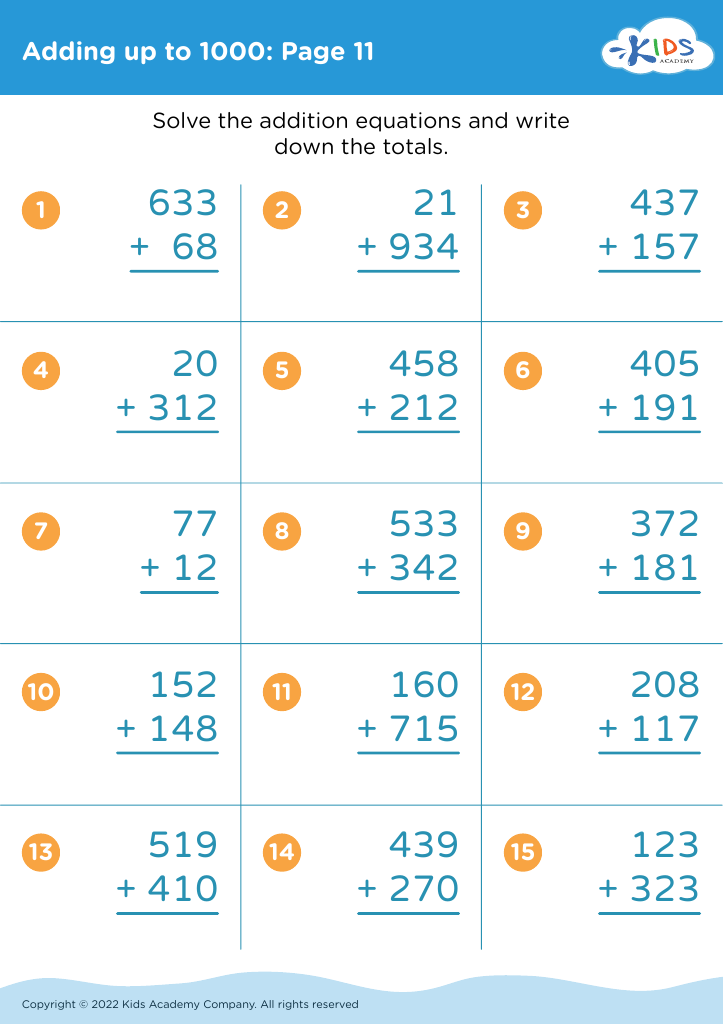
Discover our engaging "Enhance Problem-Solving Math Worksheets" designed specifically for ages 6-9, perfect for young learners eager to boost their math skills! Our thoughtfully crafted worksheets focus on developing critical thinking abilities while making math enjoyable and accessible. With a variety of fun problems ranging from basic addition and subtraction to introductory logic puzzles, children will strengthen their problem-solving techniques. These worksheets not only promote independent learning but also encourage exploration and creativity in mathematical thinking. Ideal for both classroom settings and home practice, our resources are sure to inspire confidence and enhance your child's math journey!
Favorites
With answer key
Interactive
Join Kids Academy for Free
Who is primarily going to use this learning content?








Parents and teachers should prioritize Enhance Problem-Solving Math for Ages 6-9 because these early years lay the foundation for a child's future learning and critical thinking skills. At this age, children are naturally curious and are developing cognitive abilities that are essential for grasping math concepts. Engaging in problem-solving activities fosters this curiosity, encouraging them to think creatively and approach challenges with resilience.
Enhanced problem-solving math goes beyond rote memorization; it helps develop analytical thinking by allowing children to explore different methods to arrive at a solution. This approach cultivates deep understanding and retention of mathematical concepts, which are crucial as they progress to more complex topics. Furthermore, it incorporates real-life scenarios and hands-on learning experiences, making math enjoyable and relevant, and helping children build confidence in their abilities.
By investing in problem-solving math, parents and teachers equip children with essential life skills such as perseverance, teamwork, and effective communication. These skills extend beyond math, preparing them for success in various areas of life. Ultimately, fostering a strong mathematical foundation nurtured through problem-solving is crucial for cultivating a generation of innovative thinkers and lifelong learners.








