
Enhancing creativity Math Worksheets for Ages 6-9
8 filtered results
Difficulty Level
Grade
Age
-
From - To
Subject
Activity
Standards
Discover our engaging Math Worksheets designed to enhance creativity in children ages 6-9. Kids Academy offers a variety of fun, imaginative activities that make mastering math skills an exciting adventure. Each worksheet combines foundational math concepts with creative tasks to stimulate young minds and develop critical thinking. Perfect for classroom use or at-home practice, our math worksheets not only strengthen arithmetic and problem-solving skills but also promote artistic expression and innovative thinking. Blending shapes, patterns, and numbers, these worksheets encourage kids to explore and enjoy math in a whole new light. Get started today and watch your child's creativity and confidence soar!
Favorites
With answer key
Interactive
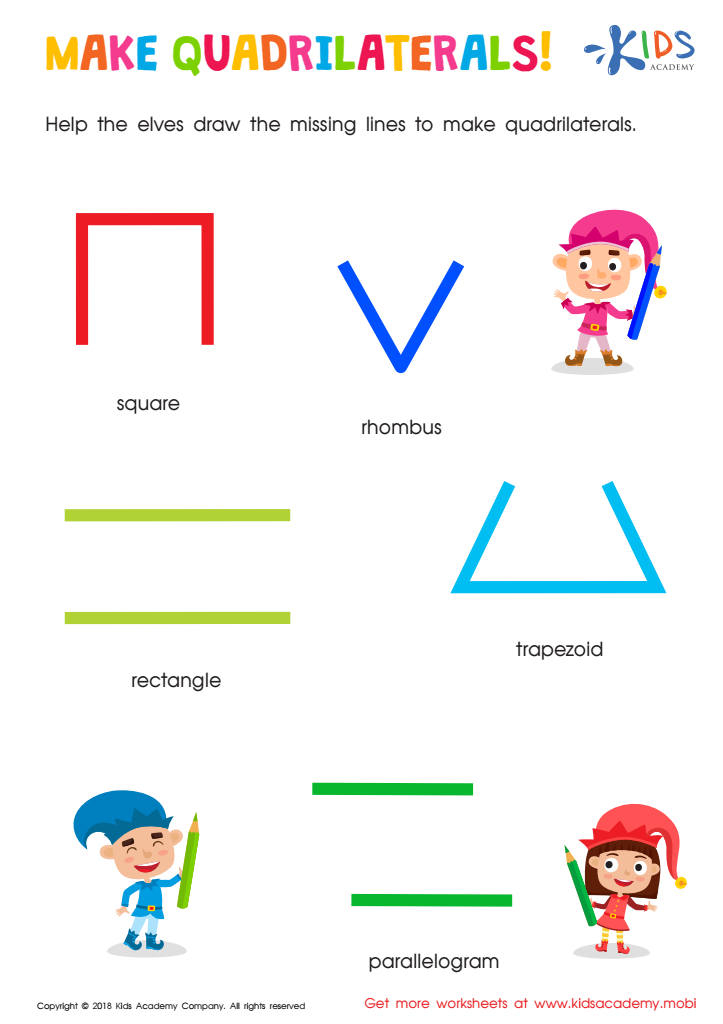
Make Quadrilaterals Worksheet
This fun and colorful worksheet will help your child understand and identify quadrilaterals. It's simple and encourages them to draw lines to create a square, rectangle, rhombus, trapezoid, and parallelogram. Stimulate their minds and watch them learn while they have fun!
 Assign to My Students
Make Quadrilaterals Worksheet
Worksheet
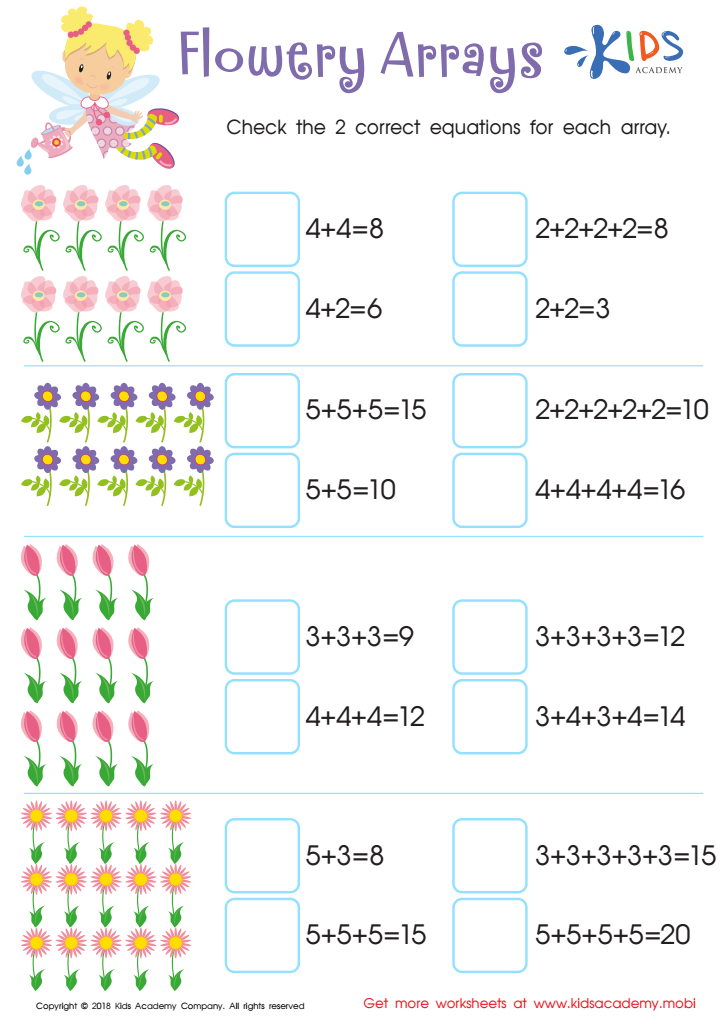
Flowery Arrays Worksheet
This worksheet helps your child learn to identify and represent arrays. For example, both 3+3+3+3=12 and 4+4+4=12 are arrays but the first is arranged in rows and the second in columns. Let your child use this knowledge to answer the four questions in this pdf and check the two correct equations.
Flowery Arrays Worksheet
Worksheet
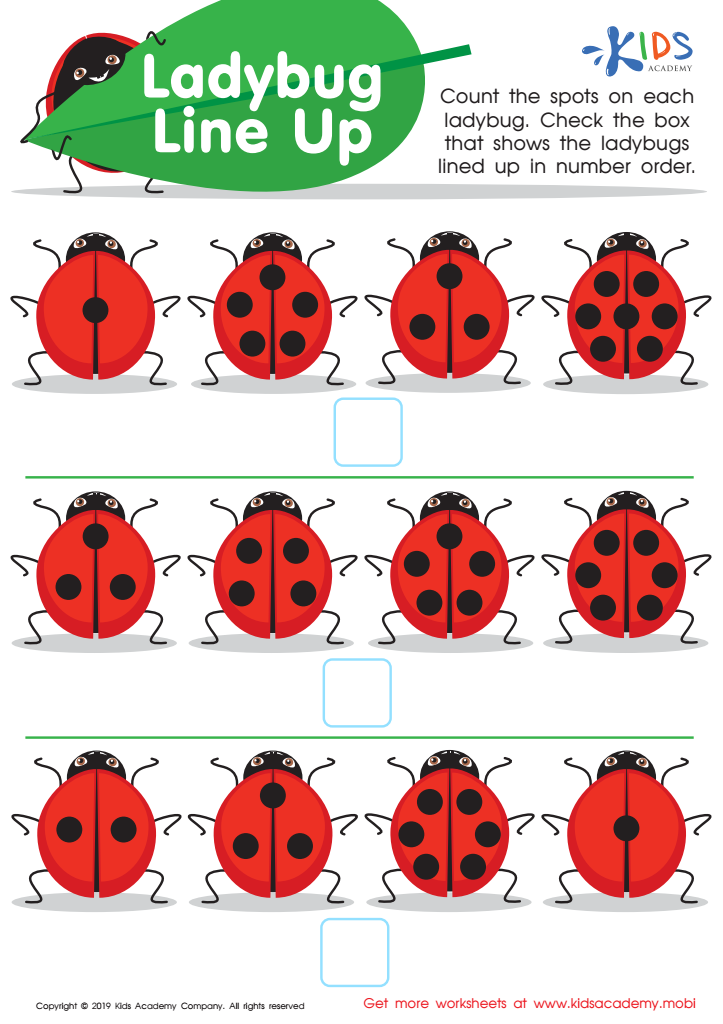
Ladybug Line Up Worksheet
Count the spots on the back of each ladybug in the three groups. Help kids check the box under each group that shows the ladybugs in proper number order. Ladybugs are an adorable insect with unique spots. This worksheet encourages counting and ordering.
Ladybug Line Up Worksheet
Worksheet
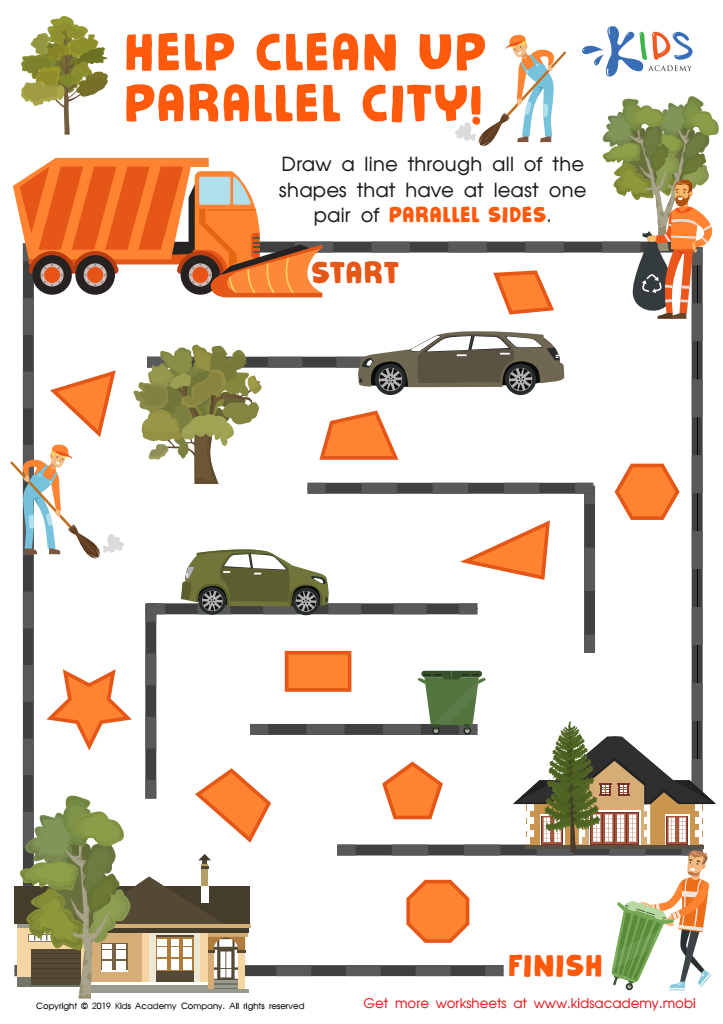
Help Clean Up Parallel City Worksheet
Explain to your kids what parallel sides are and have them identify the shapes with parallel sides in the picture. Then let them draw a line through all the shapes with at least one pair of parallel sides. This colorful worksheet will help them understand and practice this concept.
Help Clean Up Parallel City Worksheet
Worksheet
Join Kids Academy for Free
Who is primarily going to use this learning content?






.jpg)

Parents and teachers should prioritize enhancing creativity in math for children aged 6-9 because creativity not only adds excitement to learning but also fosters critical thinking and problem-solving skills. At this developmental stage, children's brains are highly adaptable and receptive to new ideas. Introducing creative math activities can help them see numbers and problems in multiple ways, improving their ability to navigate complex concepts later in life. Children with strong creative thinking skills are more adept at thinking outside the box, which is invaluable for solving real-world problems.
Furthermore, creativity in math can significantly boost a child's confidence and interest in the subject. When children find joy and satisfaction in figuring things out, they are more likely to develop a positive attitude toward learning. This positive reinforcement helps in establishing a solid foundation in math, which is crucial for academic success. In addition, teaching math in a creative manner helps cater to different learning styles. Some children excel with traditional methods, whereas others thrive when math includes games, art, and storytelling.
Lastly, incorporating creativity into math education makes the learning environment more inclusive. It encourages collaboration and communication, essential life skills that stretch beyond academia. By fostering creativity in early-grade math, we prepare children not just to be better students, but also innovative thinkers and resilient problem-solvers in the future.








